
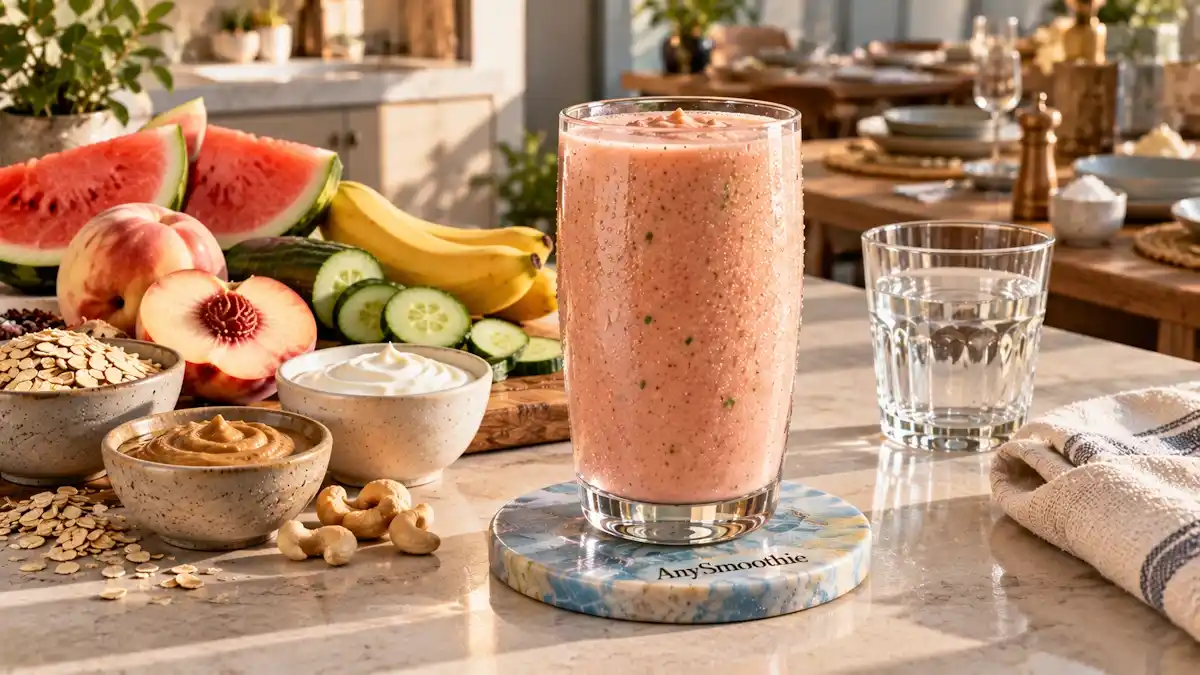
That familiar thirst after a salty dinner can make any cold drink sound good. If you’re considering smoothies after a very salty meal, a blend of produce and unsalted ingredients can be a satisfying choice. Still, a smoothie is food and fluid, not a way to erase sodium or replace the water you’re thirsty for.
Start with water if you want it. Then pick a smoothie for its taste, using the three combinations below as a starting point.
What Smoothies Can Actually Do After a Salty Meal
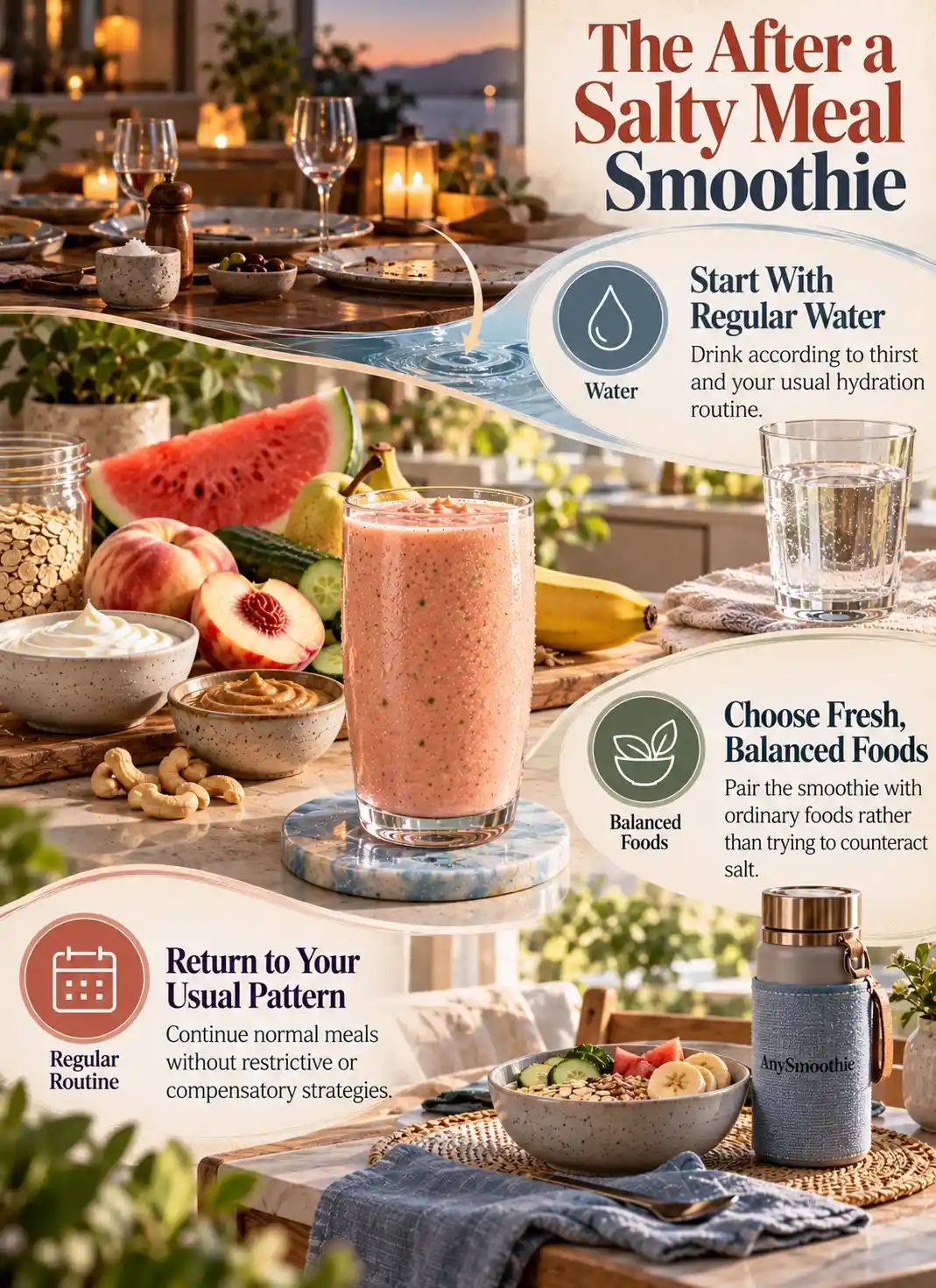
Your body adjusts its balance of sodium and water through thirst and kidney function. A smoothie won’t quickly cancel out a salty meal. Instead, drink water according to thirst and choose a smoothie with mostly whole foods and little or no added salt. There’s no need to treat dinner like a problem your blender has to solve.
Why you may feel thirsty after salty food
Salt adds sodium to a meal. As the concentration of dissolved particles in body fluids changes, your body can respond with thirst. Drinking water helps you respond to that signal, while your kidneys manage water and sodium over time. A scientific review of thirst and hydration physiology describes the coordinated roles of osmolality, thirst, hormones, and kidney function.
If your mouth feels dry after takeout or a salty snack, have some water and pay attention to your thirst. A special ingredient isn’t required.
Choose whole foods and skip extra salt
Fruit, plain yogurt, and milk without added salt make easy smoothie bases. Water or an unsweetened milk alternative works, too. Bananas, spinach, and yogurt naturally contain potassium, which has a role in normal fluid balance. That doesn’t make any of them an instant sodium fix.
Check the sodium line on packaged ingredients, even if they don’t taste salty. Kefir and milk alternatives vary by brand, and flavored products may add sugar you didn’t want. Fresh fruit or plain frozen fruit keeps the shopping list simple.
3 Smoothies After a Very Salty Meal
These smoothies after a very salty meal are refreshing snacks, not treatments. Each recipe makes one generous serving; add more water for a thinner drink, or share it if you’d prefer a smaller portion. No added salt is needed.
Here’s a quick way to choose among them.
| Smoothie | Key ingredients | Potassium-containing ingredients | Flavor | Prep time |
|---|---|---|---|---|
| Banana, spinach, and yogurt | Banana, spinach, plain yogurt | Banana, spinach, yogurt | Mild and creamy | About 5 minutes |
| Cucumber, melon, and mint | Cucumber, melon, mint | Melon, cucumber | Light and fresh | About 5 minutes |
| Berry and kefir | Berries, plain kefir | Berries, kefir | Tart and creamy | About 5 minutes |
The cucumber blend is the lightest of the three. Choose the banana or berry option when you want something creamier.
For more produce-based combinations, see fruit and vegetable smoothie formulations.
Banana, spinach, and plain yogurt smoothie
Ingredients
- 1 medium banana
- 1 small handful spinach
- 1/2 cup plain yogurt
- 1/2 cup cold water
Steps
Blend the banana, spinach, plain yogurt, and cold water until smooth. Add a few ice cubes if you like a colder, thicker drink. Blend until the spinach disappears into the mixture, then add a splash more liquid if needed.
Banana supplies most of the sweetness, while yogurt gives the smoothie its mild, creamy texture. For a colder thicker version, use a frozen banana.
Estimated Nutrition per Serving
- Calories: ~190 kcal
- Protein: ~7 g
- Carbohydrates: ~35 g
- Fat: ~2 g
- Fiber: ~3 g
- Sugars: ~22 g
Cucumber, melon, and mint smoothie
Ingredients
- 1/2 cup chopped cucumber
- 1 cup cubed melon
- 4–5 fresh mint leaves
- 1/2 cup cold water
Steps
Blend the cucumber, melon, mint leaves, and cold water until smooth. Add a handful of ice and blend until smooth. Honeydew or cantaloupe both work; use whichever tastes good to you.
The produce and mint give this drink its fresh flavor, so leave the salt out. Ripe melon usually provides enough sweetness on its own. If your cucumber has a thick or bitter peel, remove it before blending. You can also add more water for a lighter drink.
If you want more ideas built around fluids and produce, hydration smoothies for summer fatigue are another relevant place to continue.
Estimated Nutrition per Serving
- Calories: ~65 kcal
- Protein: ~1 g
- Carbohydrates: ~16 g
- Fat: ~0 g
- Fiber: ~2 g
- Sugars: ~13 g
I’d keep this one especially simple after a salty dinner: cold, light, and easy to sip without trying to make it do more than it needs to.
Berry and kefir smoothie
Ingredients
- 1 cup fresh or frozen berries
- 3/4 cup plain kefir
- 1/4 cup water
Steps
Blend the berries with the plain kefir and water until you like the texture. Add a few ice cubes if you prefer a colder drink. Strawberries make a milder drink; raspberries or blackberries taste tarter.
Choose unsweetened kefir when available, and check its label for sodium. If the berries are too tart for you, a small amount of honey is optional. For a thinner smoothie, add water a tablespoon at a time. The recipe also works with a mix of berries you already have.
Estimated Nutrition per Serving
- Calories: ~160 kcal
- Protein: ~8 g
- Carbohydrates: ~24 g
- Fat: ~4 g
- Fiber: ~5 g
- Sugars: ~17 g
How to enjoy a smoothie while keeping the meal in perspective
A large smoothie can feel like another meal, especially one made with yogurt or kefir. Pour a smaller glass if you’re only a little hungry, and save the rest in the refrigerator. Drink water according to thirst alongside it; you don’t have to get all your fluid from blended fruit.
Later, return to your usual balanced meals instead of skipping food to compensate. You might cook with vegetables and use herbs or lemon for flavor rather than adding more salt. Dietary guidance also emphasizes overall dietary patterns, including varied fruits and vegetables and foods prepared with little or no salt.
If a clinician has given you limits for sodium or potassium, choose ingredients that fit those instructions. Follow any fluid guidance you’ve received, too. For everyone else, the practical choice is straightforward: respond to thirst, enjoy a reasonable portion if it sounds good, and move on with your normal routine.
Conclusion: A refreshing choice, not a reset
Water can answer the thirst that follows a salty meal. A produce-based smoothie can be an enjoyable, low-sodium food choice, but neither drink undoes what you ate.
Pick the recipe that appeals to you, whether that’s creamy banana or cool melon. Then let your usual eating pattern, rather than one smoothie, guide the rest of the day.
🛡️ Safety Notes & Dietary Interactions
- Fluid Guidance: A smoothie can provide fluid but should not replace water when thirst follows a salty meal. If a clinician has prescribed fluid limits, follow those instructions rather than increasing drinks.
- Potassium Restrictions: Bananas, spinach, melon, berries, and dairy products can contribute potassium. Anyone following a potassium-restricted diet should choose ingredients according to their clinician’s guidance rather than assuming these foods are appropriate.
- Kefir and Dairy: Yogurt and kefir vary in sodium content between brands. Check labels when sodium intake matters, and consider plain versions without added salt or unnecessary added sugars.
- Digestive Comfort: A large smoothie immediately after a heavy meal may feel uncomfortable. Start with a smaller portion, especially with yogurt or kefir, and save the remainder refrigerated if you’re not hungry.
FAQs
Should I drink water or a smoothie first after a salty meal?
If you’re thirsty, water is the straightforward response to that thirst. A smoothie can be enjoyed afterward or alongside it as food and fluid, but it does not rapidly remove sodium from the body. Your kidneys and normal fluid-regulation mechanisms handle sodium and water balance over time.
Which of the three smoothies is the lightest?
The Cucumber, Melon, and Mint Smoothie is the lightest option in the article. It uses mostly water-rich produce with no yogurt or kefir, creating a fresh, relatively simple drink. If you are already full from dinner, you can also make a smaller portion rather than drinking the entire generous serving.
Does potassium in these smoothies cancel out sodium from dinner?
No. Although bananas, spinach, melon, berries, yogurt, and kefir contain potassium, adding potassium-rich foods to a smoothie should not be viewed as a way to immediately counteract sodium from a particular meal. People with prescribed potassium restrictions should follow their individualized dietary guidance.
Why does the article recommend checking sodium on kefir and milk alternatives?
Packaged products can differ substantially in their nutrient composition, even when they taste relatively mild. Kefir and milk alternatives may contain different amounts of sodium, and flavored versions can also contain added sugars. Checking the nutrition label helps you choose a product that fits your overall eating pattern.
Can I have one of these smoothies if I’m still full from dinner?
Yes, but you don’t need to finish a full serving simply because the recipe makes one. The article suggests using a smaller glass when hunger is limited and refrigerating the remainder. This avoids turning the smoothie into an unnecessary additional meal while still letting you enjoy it later.

Medical Disclaimer: AnySmoothie content is for educational purposes only and is not a substitute for professional medical advice. Consult a healthcare provider for personalized guidance. See our full Disclaimer & Terms of Use. AI Transparency: AnySmoothie may use AI to support content development. All content undergoes human editorial review for accuracy, clarity, and editorial quality. See our full AI Transparency.