
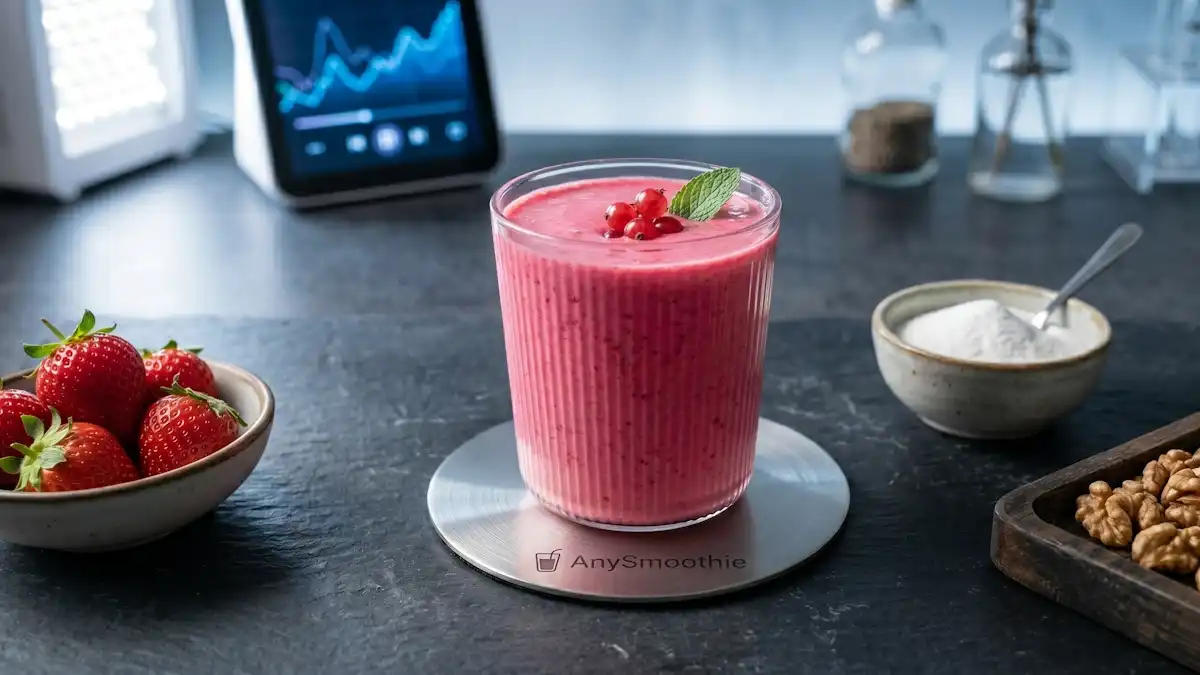
A morning smoothie can do more than fill you up. When you build it with myo inositol, protein, fiber, and the right minerals, you give your cells a cleaner signal before the day starts.
That matters if you want steadier energy, better nutrient use, and less of the crash that follows a sugar-heavy breakfast. A smart smoothie for insulin priming is simple, not fussy, and it works best when the ingredients support normal signaling instead of flooding the system.
The sections below break down how myo inositol works, what to blend with it, and how to keep the formula practical.
How Myo Inositol Helps Your Cells Respond to Insulin
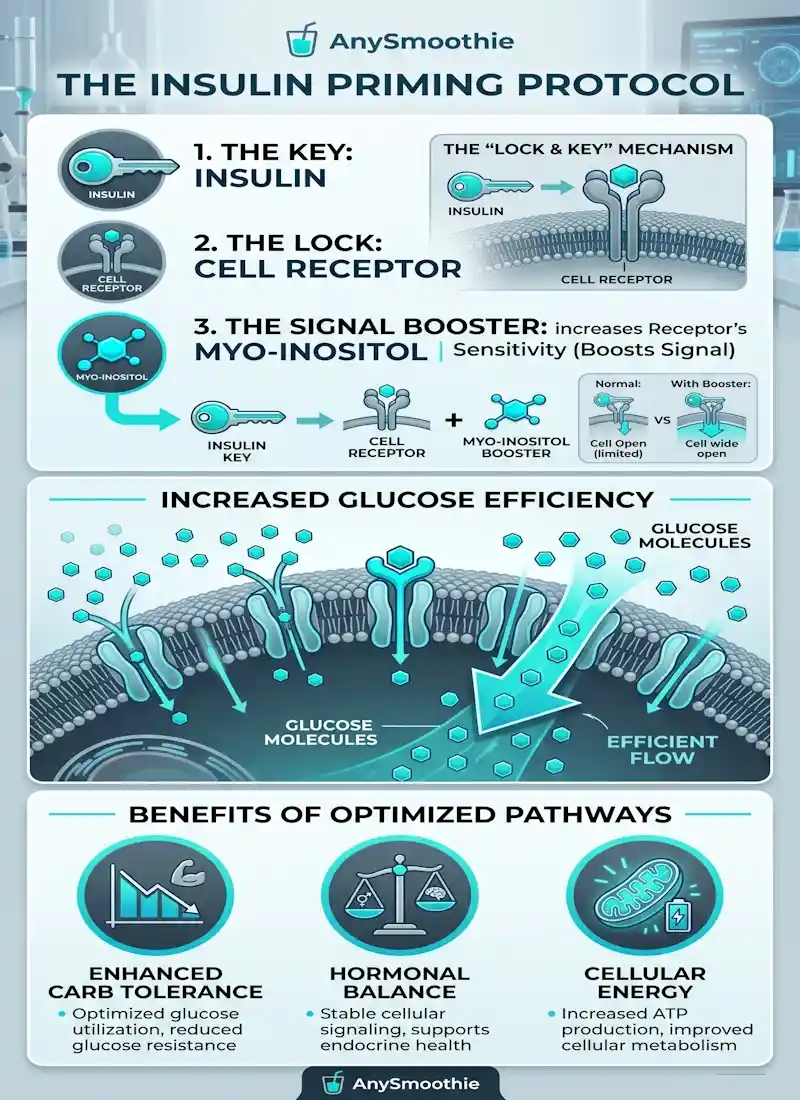
Myo inositol is a naturally occurring compound that plays a role in cell signaling. In plain terms, it helps cells hear insulin’s message more clearly. That matters because insulin is one of the main signals that tells cells to move glucose out of the bloodstream and use it for energy.
Research on inositol signaling shows that inositol-containing messengers help pass that signal inside the cell. A good overview of this process is found in research on inositol glycans in insulin signaling. When that signaling works well, glucose transporters can move to the cell surface more efficiently, which supports normal metabolic flow.
The insulin messenger and inositol phosphoglycans
Insulin does not work like a light switch. It sends a chain of messages. Inositol phosphoglycans, or IPGs, are part of that chain. They help carry the signal inward after insulin binds to its receptor.
That signal connects with pathways tied to PI3K and glucose transporter recruitment. When those steps happen smoothly, cells can respond faster to glucose and use fuel more efficiently. In practical terms, that supports metabolic efficiency and cleaner nutrient handling after meals.
Think of insulin as the mail carrier. IPGs help deliver the envelope to the right room inside the cell.
Why the 40:1 myo to D-chiro ratio gets attention
Many formulas use a 40:1 ratio of myo inositol to D-chiro inositol. That ratio gets attention because it appears often in women’s health formulas and in studies on ovarian function. A PubMed trial on the 40:1 ratio reported useful results in a PCOS setting, which is why the blend shows up so often.
That said, the ratio is not a rule for everyone. It is one common way to combine the two forms while keeping the mix closer to natural physiology.
Beyond Glucose: Myo Inositol for Hormonal and Ovarian Homeostasis
Myo inositol is often discussed for insulin support, but its role goes further. Healthy insulin signaling also affects ovarian function, hormone balance, and how fuel gets handled across tissues. When the signal is cleaner, the body is less likely to push every calorie into storage at the wrong time.
That is where nutrient partitioning comes in. Good nutrient partitioning means more of your fuel can go where you want it, such as muscle and other active tissue, instead of lingering as excess. This is one reason a well-built smoothie can feel more like a controlled meal than a sugar hit.
If you want a quick reference on food ingredient status, Cornell’s inositol listing shows how inositol is recognized in U.S. food rules. That does not make every product equal, but it helps explain why myo inositol shows up in food and supplement formats.
What to Put in a Smoothie for Better Insulin Priming
A good smoothie for insulin priming needs more than the supplement powder. It works best when the rest of the ingredients slow digestion, support membrane structure, and keep the drink balanced.
The most useful add-ins are protein, fiber, a little fat, and targeted minerals. Protein helps with satiety and steady blood sugar. Fiber slows the rise of glucose. Magnesium and chromium support normal metabolic reactions. Berries add flavor without turning the cup into dessert.
Here’s a quick side-by-side look at three common compounds.
| Compound | Primary Mechanism | Main Physiological Focus | Best Smoothie Pairing | Synergistic Mineral |
|---|---|---|---|---|
| Myo-inositol | PI3K pathway support and glucose transporter signaling | Ovarian health, carb tolerance, and healthy insulin response | Berries, protein, magnesium, glycine-rich ingredients | Magnesium |
| D-chiro-inositol | Glucose handling and insulin signaling support | Systemic insulin response and carbohydrate metabolism | Lower-sugar blends with protein and fiber | Chromium |
| Berberine | AMPK activation and metabolic signaling support | Glucose control and broader metabolic support | Lower-carb or high-fiber smoothies | Magnesium |
The takeaway is simple. Myo inositol fits well with more balanced, protein-forward smoothies. D-chiro inositol often pairs well with mineral support. Berberine tends to fit lower-carb blends, since it can feel too intense in a sweet fruit-heavy mix.
Smart smoothie add-ins that support signal clarity
Choline helps support phospholipid structure, which matters for membrane integrity and signal clarity. Chromium supports normal glucose handling. Magnesium is one of the best all-around partners for inositol, and glycine-rich foods like collagen can make the blend more filling.
Berries, chia, flax, and leafy greens add fiber and micronutrients. Meanwhile, a small amount of fat from avocado, nut butter, or seeds can help slow digestion. Some people also choose liposomal choline because the delivery format may help absorption, but the base formula still matters more than the packaging.
3 Simple Myo Inositol Smoothie Formulas to Try
These are templates, not strict rules. Keep the structure, then adjust the flavor to fit your routine.
How to use it safely and make it fit your routine
Start with a small amount of myo inositol and see how your body responds. Timing matters too. Some people like it in the morning, while others prefer it before a meal or after training.
Choose the recipe that matches your goal. A fruit-forward blend fits active mornings, while a lower-carb version may feel better when you want a steadier energy curve.
If you are pregnant, taking medication, or managing a health condition, talk with a qualified professional before using a new supplement routine. That step keeps the plan simple and sensible.
Conclusion
A good smoothie for insulin priming does not need a long ingredient list. It needs the right mix of inositol, protein, fiber, and minerals so your cells get a cleaner signal. That is the real value here. You are supporting healthy signaling, steady energy, and better nutrient partitioning without overcomplicating breakfast. Pick one recipe, use it for a week, and adjust from there. The best version is the one you can repeat with ease.
⚠️ Safety Notes for Myo-Inositol & Insulin Priming Smoothies
Hypoglycemia Risk: If you are taking insulin or oral hypoglycemic agents (like Metformin), adding myo-inositol can potentiate their effect. Monitor your blood glucose closely to avoid sudden dips in sugar levels.
Gastrointestinal Distress: High doses of inositol (typically above 12g/day) can cause nausea, gas, or diarrhea. Stick to the common therapeutic dose of 2g to 4g per smoothie to maintain digestive comfort.
Bipolar Disorder Precaution: There is some evidence that high doses of inositol may trigger manic episodes in individuals with bipolar disorder. Consult your psychiatrist before incorporating inositol into your routine.
Phytic Acid Interaction: Inositol is related to phytic acid, which can bind to minerals like calcium, zinc, and iron. To ensure maximum mineral absorption, blend your smoothie thoroughly and consider rotating your mineral sources.
Pregnancy and Breastfeeding: While often used for gestational support, always consult your OB-GYN before starting inositol to ensure the dosage is appropriate for your specific metabolic needs.
FAQ
What is “Insulin Priming” and how does Myo-Inositol facilitate it
Insulin priming refers to the process of increasing the sensitivity of your cells’ receptors to insulin before a metabolic demand occurs. Myo-inositol acts as a structural component of secondary messengers in the signaling pathway. By providing this nutrient in a smoothie, you support the physiological systems responsible for “reading” insulin signals, allowing your body to manage glucose with less effort and more precision.
How does Myo-Inositol support nutrient partitioning
Nutrient partitioning is the body’s decision on where to store energy—either in the muscles as glycogen or in adipose tissue as fat. Myo-inositol optimizes the PI3K/Akt pathway, which is critical for the translocation of GLUT4 transporters to the cell surface. This biochemical mechanic ensures that glucose is effectively partitioned into the muscle cells for energy, supporting overall metabolic efficiency and physical performance.
Is Myo-Inositol beneficial for hormonal balance
Yes, particularly for supporting ovarian health and systemic hormonal homeostasis. Myo-inositol is a key regulator of the signaling pathways for several hormones, including FSH (Follicle-Stimulating Hormone) and insulin. By supporting the natural sensitivity of these receptors, inositol helps the body maintain a balanced hormonal landscape, supporting the physiological systems involved in the reproductive cycle and metabolic health.
Why pair Myo-Inositol with Magnesium and Chromium
These three nutrients act as a “Metabolic Trio.” While inositol works on the signaling pathway inside the cell, chromium supports the insulin receptor’s function on the outside, and magnesium is a necessary co-factor for the enzymes that process glucose. Including all three in your smoothie ensures that the entire pathway—from the initial signal to the final energy conversion—is biochemically optimized.
Can I take Myo-Inositol in my morning smoothie if I’m fasting
Consuming myo-inositol in a smoothie that contains other nutrients will technically break a fast; however, because inositol has a negligible impact on insulin levels itself, it is an excellent tool for “breaking” your fast. It primes your system for the nutrients contained in the smoothie, ensuring that your first meal of the day is processed with maximum metabolic efficiency and minimal glycemic stress.

Medical Disclaimer: AnySmoothie content is for educational purposes only and is not a substitute for professional medical advice. Consult a healthcare provider for personalized guidance. See our full Disclaimer & Terms of Use. AI Transparency: AnySmoothie may use AI to support content development. All content undergoes human editorial review for accuracy, clarity, and editorial quality. See our full AI Transparency.