
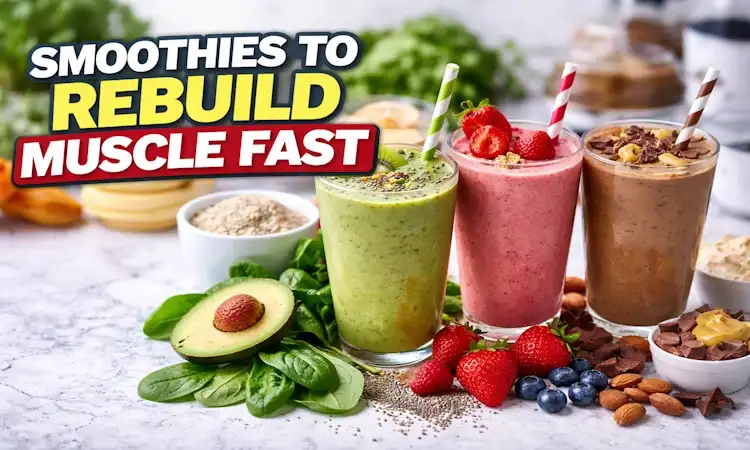
Sore legs after squats, tight shoulders after pressing, that “I’m hungry but I’m too busy” feeling on the drive home, it’s a familiar combo. When you want results, recovery can’t be an afterthought. A well-built smoothie is one of the easiest ways to get nutrients in fast, even when you don’t feel like cooking.
In real life, smoothies to rebuild muscle fast means three things: support muscle repair, refill training fuel, and reduce muscle breakdown between meals. The blender does the busy work. You just choose the right parts.
Weight Loss Programs
Diet & Weight Loss
Diet & Weight Loss

Diet & Weight Loss
Diet & Weight Loss
This guide gives you a clear smoothie formula, smart ingredient picks, and four quick recipes that taste good. Keep one thing in mind, though: smoothies work best when you also hit enough daily protein, sleep well, and train consistently.
What your muscles need after a workout (and why a smoothie works)
Hard training creates tiny muscle damage. That’s not a problem, it’s the signal your body uses to rebuild. The catch is you need the raw materials. If you finish a workout and then go hours without eating, your body has less to work with.
A good post workout muscle rebuild drink covers the basics in one cup:
- Protein to provide amino acids for repair.
- Carbs to refill glycogen (your muscles’ stored fuel).
- Fluids and minerals to replace sweat losses and support performance next time.
Smoothies help because they’re quick, easy to digest for many people, and simple to scale up or down. You can make one that’s light after a short session, or dense enough to replace a full meal after a long lift and conditioning day.
Timing matters, but not in a rigid way. Having protein and carbs soon after training can help, especially if your next meal will be delayed. Still, your full day of nutrition matters more than a perfect 20-minute window. If you want a deeper breakdown of dose and timing, see this overview of protein after workout types, timing, and doses.
Protein for repair: how much to aim for in one shake
For most active adults, a practical target is 25 to 40 grams of protein in a high protein smoothie for recovery. That range fits many body sizes and training styles. Smaller athletes often do fine near 20 to 30 grams. Teens should start lower, then adjust with a parent or clinician if needed.
Why does protein quality matter? Muscle building needs enough essential amino acids, and leucine helps flip the “build” switch. You don’t need to obsess over grams of leucine, though. Pick leucine-rich proteins most days and you’ll usually cover it.
Easy options that blend well:
- Whey protein (fast and convenient)
- Casein (slower digesting, great when you won’t eat soon)
- Greek yogurt or skyr
- Cottage cheese (surprisingly good in smoothies)
- Soy milk or soy yogurt
- Pea and rice blends (often better than pea alone)
If your smoothie has plenty of fruit but only 10 grams of protein, it’s a snack, not a recovery drink.
Carbs, fluids, and minerals: the recovery pieces people forget
Protein gets the attention, but carbs and hydration often decide how you feel tomorrow.
Carbs refill muscle glycogen. That matters more if you trained hard, trained long, or plan to train again within 24 hours. Simple smoothie carbs include banana, berries, oats, dates, and a small amount of honey or maple syrup.
Fluids keep blood volume up and help you perform in your next session. If you sweat a lot, plain water may not be enough.
Minerals (electrolytes) help hold onto fluids and support muscle function. Potassium shows up in bananas, dairy, and coconut water. Sodium is the big one many people underdo after sweaty workouts. A small pinch of salt can make a difference.
Creatine is an optional add-in for strength-focused lifters. Research supports it for power and lean mass in many healthy adults. If you’re pregnant, nursing, or managing kidney disease, talk with a clinician before using creatine or making major supplement changes.
Build your own fast muscle recovery smoothie with the 5-part formula
If you’ve ever made a “healthy smoothie” that tasted fine but left you hungry an hour later, it probably missed one of the core parts. Use this five-part template and you can build a fast muscle recovery smoothie on autopilot.
The goal is not perfection. The goal is repeatability. When you can make the same base 20 different ways, you’ll actually do it.
The 5 parts: protein base, carbs, color, healthy fat, and a booster
Think of your blender like a plate. You’re just stacking the essentials in drink form.
1) Protein base (pick 1 to 2)
Whey, Greek yogurt, kefir, cottage cheese, soy milk, soy yogurt, or a plant protein blend.
2) Carb source (pick 1 to 2)
Banana, berries, oats, dates, cooked and cooled rice (yes, it blends), or a spoon of honey.
3) Color (pick 1)
Spinach (you won’t taste it in most mixes), frozen cherries, cocoa powder, pumpkin purée, or cooked beets.
4) Healthy fat (optional, use when you need more calories)
Peanut butter, almond butter, chia seeds, ground flax, avocado, or whole milk dairy.
5) Booster (optional, keep it simple)
Cinnamon, ginger, turmeric plus black pepper, creatine monohydrate, or collagen peptides. Collagen can support joints and tendons, but it’s not a complete protein, so don’t count it as your main protein source.
Two “make-it-actually-drinkable” tips:
- For a thick shake without watering it down, use frozen fruit instead of ice.
- If it tastes flat after a hard, sweaty session, add a pinch of salt and blend again.
One caution: right after a brutal session, too much fat and fiber can sit heavy. If your stomach gets upset, keep nut butters and chia small, then add calories later in the day.
For more real-world examples of how people build a smoothie for muscle repair and growth, this post-workout smoothie idea is a helpful reference.
Portion guide for different goals: lean gain, hard gainer, and cutting
Use this as a starting point. Adjust based on your body size, training volume, and appetite.
Here’s a simple portion guide you can screenshot.
| Goal | Protein | Carbs | Fats | Liquid base | What to focus on |
|---|---|---|---|---|---|
| Lean gain | 25 to 40 g | 30 to 60 g | small (0 to 10 g) | milk or soy milk | Keep protein steady, add carbs as needed |
| Hard gainer | 30 to 50 g | 60 to 100 g | moderate (10 to 25 g) | whole milk or soy milk | Add oats, nut butter, extra fruit |
| Cutting | 30 to 45 g | 20 to 40 g | small (0 to 10 g) | water, low-fat milk, or unsweetened almond milk | Keep protein high, use berries and spinach |
Takeaway: protein stays high in all three. You mainly change carbs and fats.
Tracking does not need to be intense. Watch your weekly averages. If weight and strength don’t move after 2 to 3 weeks, add 150 to 250 calories per day. If fat gain feels too fast, pull back a similar amount.
4 recovery smoothie recipes you can make in 5 minutes
Each recipe below uses frozen fruit for thickness and includes a clear protein anchor. Consider them “base recipes.” Once you’ve made them once, you’ll start swapping ingredients without thinking.
If you want more variety for quick recovery drinks after workout, this roundup of post-workout smoothie recipes can spark ideas.
Chocolate banana whey recovery smoothie (classic, high protein)
Ingredients
- 1 scoop whey protein (or whey isolate)
- 1 frozen banana
- 1 tbsp unsweetened cocoa powder
- 1 cup milk (or soy milk)
- 1 tsp peanut butter (optional)
- Pinch of salt (optional, after sweaty sessions)
Directions
Blend everything until creamy. Add a splash more milk if it’s too thick.
Why it works
You get an easy 30 to 45 grams of protein (depending on scoop and milk), plus carbs from banana for refueling. Want more carbs? Add 1/4 cup oats. Prefer whole-food protein? Swap whey for 3/4 to 1 cup Greek yogurt.
Tart cherry berry smoothie for muscle repair and growth (soreness-friendly)
Ingredients
- 1 cup frozen tart cherries (or 1/2 cup tart cherry juice plus ice)
- 1 cup frozen mixed berries
- 3/4 cup Greek yogurt (or soy yogurt for dairy-free)
- 1 cup water or milk
- 1/2 tsp grated ginger (optional)
Directions
Blend until smooth. If using juice, start with less liquid, then thin as needed.
Why it works
Tart cherries are popular because their natural compounds may help soreness and sleep quality for some athletes. If you want to scan research context, see this open-access review on tart cherry juice and exercise-induced muscle damage. The yogurt adds protein to turn a fruit smoothie into a real recovery drink.
Tropical coconut lime recovery drink (hot weather, extra electrolytes)
Ingredients
- 1 cup coconut water
- 1/2 to 1 frozen banana
- 1 cup frozen pineapple or mango
- 1 scoop whey isolate or a plant protein blend
- Squeeze of lime (about 1 to 2 tbsp)
- Pinch of salt
Directions
Blend until smooth and pourable. Add more coconut water if needed.
Why it works
This one shines after high-sweat training. Coconut water and a little salt help replace fluid and sodium. Fruit brings fast carbs, so it works well as a post workout muscle rebuild drink when you need to bounce back quickly.
Oats and peanut butter blender shake (easy calories for hard gainers)
Ingredients
- 1 cup milk or soy milk
- 1 scoop protein powder (or 3/4 cup Greek yogurt)
- 1/3 cup rolled oats (start with 1/4 cup if your stomach is sensitive)
- 1 tbsp peanut butter
- 1 frozen banana
- Cinnamon (optional)
Directions
Blend oats first for 10 seconds. Then add the rest and blend until smooth.
Why it works
Oats plus peanut butter add calories without needing a huge volume of food. That’s gold if you struggle to eat enough. It’s an easy “fast muscle recovery smoothie” when your appetite lags but your training doesn’t.
Conclusion
You don’t need a complicated plan to recover well. The best smoothies to rebuild muscle fast follow a simple pattern: hit a solid protein dose, add carbs to refuel, and include enough fluids and minerals to feel good in the next session. Start by picking one recipe from this list and making it three times this week. Then adjust portions to match your goal, whether that’s lean gain, hard gainer calories, or cutting.
If you have diabetes, kidney disease, food allergies, or you take prescription meds, talk with a clinician or dietitian first. This matters before you make major diet changes or add supplements like creatine, even if you’re following a smoothie guide.

The AnySmoothie team is all about smarter smoothie recipes made with whole-food ingredients. Everything we share centers on balanced nutrition, steady energy, and low-glycemic choices, so you can sip a smoothie that keeps you full, feels good, and helps you avoid sugar crashes.
- Disclaimer: This content is for educational use only. These smoothie recipes and nutrition details aren’t a substitute for medical advice from a licensed health professional. Please read our full Medical Disclaimer here.
Dietary Supplements
Dietary Supplements

Dietary Supplements

Dietary Supplements
Dietary Supplements
GlucoBerry – Daily Support for Healthy Blood Sugar and Energy