
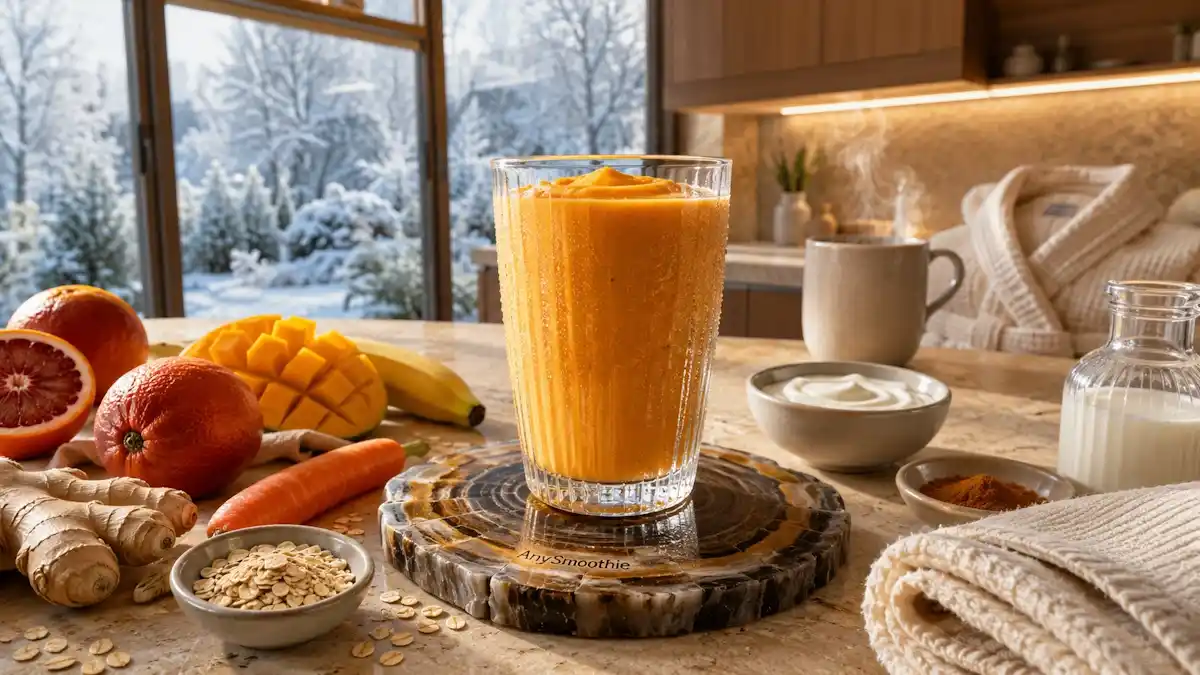
A cold plunge, winter swim, or windy outdoor workout can leave you shaky, thirsty, and not ready for a heavy meal. Recovery smoothies after cold exposure can offer a comfortable mix of fluids, carbohydrates, protein, and familiar whole-food ingredients once you’ve returned to a safe environment and started warming up.
A smoothie is not a substitute for dry clothes, appropriate rewarming, or medical care when cold-related illness is suspected. However, after mild recreational cold exposure or exercise, the right one can fit neatly into a calm post-cold routine. Your best choice depends on how long you were cold, how hard you exercised, and what your stomach tolerates afterward.
How Recovery Smoothies After Cold Exposure Fit Your Routine
Cold exposure requires the body to conserve and produce heat. If you also trained, swam, or hiked, the activity itself may increase your fluid and energy needs. Carbohydrates provide an accessible source of energy, while protein supplies amino acids used in normal tissue maintenance.
Once you’re safely out of the cold, a smoothie at a comfortable temperature can contribute fluid and nutrition. A small amount of sodium may also fit after exercise involving substantial sweating. Berries, citrus, ginger, and greens add flavor and plant compounds without turning the drink into a complicated project.
The CDC’s winter weather guidance makes the bigger priority clear: cold-related illness can become dangerous. Food and drinks belong within a broader recovery plan, not in place of appropriate first aid or medical care.
A smoothie can provide recovery nutrition after mild cold exposure, but it should never be relied upon to treat suspected hypothermia.
Keep the first steps simple:
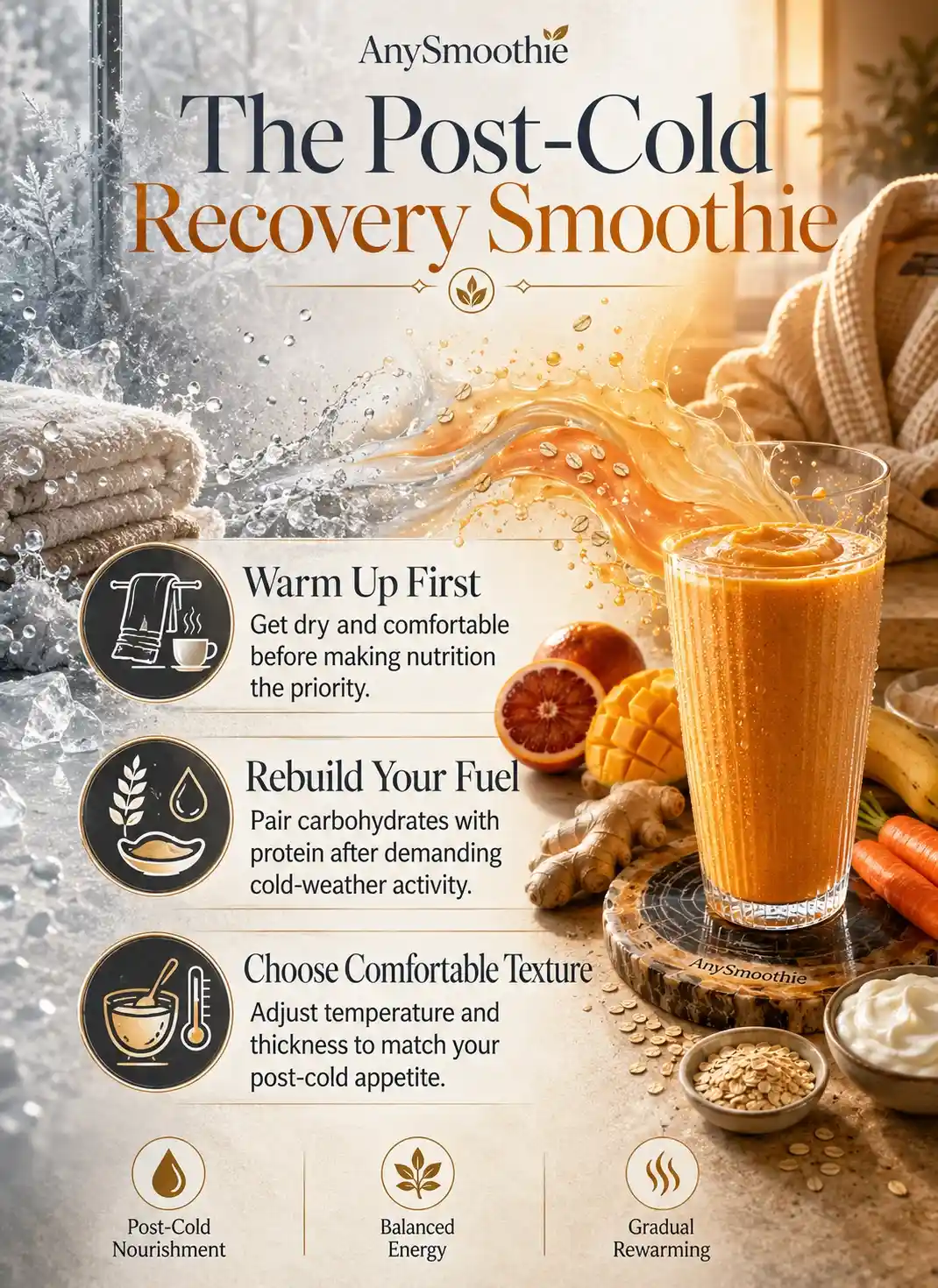
- Move into a safe, sheltered environment and replace wet clothing with dry layers.
- Begin appropriate rewarming before making nutrition the priority.
- Skip alcohol, since it increases heat loss and can interfere with safe recovery.
Choose Ingredients That Match Your Recovery Needs
Build recovery smoothies after mild cold exposure with one liquid, one carbohydrate source, and one protein source. Milk and fortified soy milk usually bring more protein and calories than coconut water or plain water. Kefir adds protein with a tangy flavor, while coconut water contributes fluid and some potassium. Labels vary, so check the carton when sodium or protein matters to you.
Use banana, oats, dates, or berries for carbohydrates. Greek yogurt, silken tofu, soy yogurt, and nut butter can add protein or staying power. Pumpkin seeds, chia, cinnamon, and fresh ginger work well in smaller amounts. For another adaptable option, try this banana spinach protein smoothie.
Large amounts of fiber, fat, or unfamiliar ingredients can sit heavily after an intense session. Start moderate, then adjust next time.
3 Recovery Smoothies After Cold Exposure
Each recipe makes roughly a 12- to 16-ounce serving. If an ice-cold drink feels unappealing after being outdoors, let frozen fruit soften slightly before blending. Adjust the thickness with extra liquid and change sweetness only if you want it.
| Smoothie | Main Ingredients | Carbohydrate and Protein Focus | Best Use | Key Adjustment |
|---|---|---|---|---|
| Banana oat | Banana, oats, yogurt, milk | Higher carb and protein | Longer cold session or workout | Use tofu for dairy-free |
| Berry citrus | Berries, orange, coconut water, yogurt | Lighter carb and moderate protein | Mild exposure or low appetite | Skip salt if needed |
| Ginger cocoa | Banana, cocoa, nut butter, yogurt | Moderate carb and richer protein | When you want more satiety | Use softened fruit |
The banana oat blend is the most filling, while berry citrus stays lighter. Ginger cocoa lands in the middle with a richer flavor.
Banana Oat Protein Smoothie for Fast, Steady Fuel
Ingredients:
- 1 ripe banana
- 1/3 cup quick oats
- 3/4 cup plain Greek yogurt or silken tofu
- 1 cup milk or fortified soy milk
- 1 tablespoon almond butter
- A pinch of cinnamon
Blend until smooth, adding more milk if it feels too thick.
Banana and oats provide carbohydrates, while the yogurt, tofu, and milk add protein. This works well after a longer swim, outdoor session, or cold-weather workout once you’re safely warm and comfortable enough to eat or drink. If dairy doesn’t agree with you, use silken tofu or soy yogurt.
Estimated Nutrition per Serving
Estimated with 2% dairy milk, plain nonfat Greek yogurt, one medium banana, quick oats, and almond butter.
- Calories: ~590 kcal
- Protein: ~34 g
- Carbohydrates: ~79 g
- Fat: ~18 g
- Fiber: ~9 g
- Sugars: ~35 g
This is deliberately the most substantial of the three blends, and the oats make that obvious after it sits for a few minutes. If you’ve just come inside and don’t feel ready for a thick drink, use a little extra milk rather than forcing down the original consistency.
Berry Citrus Smoothie for a Lighter Reset
Ingredients:
- 1 cup mixed berries
- 1/2 orange or 2 tablespoons orange juice
- 3/4 cup coconut water
- 1/2 cup plain yogurt or unsweetened soy yogurt
- 1 tablespoon chia seeds
- A small pinch of salt, optional
Blend until smooth.
This smoothie offers fluid, carbohydrate, and protein without the heavier texture of oats. Coconut water contributes potassium but should not automatically be treated as a complete electrolyte replacement. Skip added salt if it doesn’t fit your usual diet or you’ve been advised to limit sodium.
Estimated Nutrition per Serving
Estimated with mixed berries, half a medium orange, unsweetened coconut water, plain low-fat yogurt, chia seeds, and without optional salt.
- Calories: ~290 kcal
- Protein: ~11 g
- Carbohydrates: ~47 g
- Fat: ~7 g
- Fiber: ~12 g
- Sugars: ~29 g
For more ideas built around fluid-rich ingredients and lighter textures, these hydration smoothie recipes offer additional combinations that can be adapted to your preferred serving temperature.
Ginger Cocoa Recovery Smoothie for Comfort and Satiety
Ingredients:
- 1 cup milk or soy milk
- 1/2 banana, softened if frozen
- 1 tablespoon unsweetened cocoa powder
- 1 tablespoon peanut or almond butter
- 1/2 cup plain Greek yogurt or silken tofu
- A small piece of fresh ginger
- 1 teaspoon maple syrup, optional
Blend until smooth.
Cocoa and nut butter give this version a rounder, richer taste. Use ingredients that aren’t excessively cold if that feels more comfortable after being outdoors, then sip it slowly once you’re warm, alert, and feeling well.
Estimated Nutrition per Serving
Estimated with 2% dairy milk, plain nonfat Greek yogurt, peanut butter, half a medium banana, cocoa, fresh ginger, and without optional maple syrup.
- Calories: ~365 kcal
- Protein: ~24 g
- Carbohydrates: ~41 g
- Fat: ~14 g
- Fiber: ~5 g
- Sugars: ~25 g
Fresh ginger behaves differently here than in a bright fruit smoothie: cocoa and nut butter can initially hide some of its sharpness. Start with a genuinely small piece and taste after blending, because adding more is much easier than correcting an unexpectedly fiery glass.
When to Drink a Recovery Smoothie and When to Use Caution
After mild recreational cold exposure or cold-weather exercise, first get into a safe environment, remove wet clothing, and begin warming up. Once you’re alert, comfortable, and able to drink normally, a smoothie can serve as a convenient post-activity snack or meal bridge.
After exercise combined with cold, timing does not need to become another source of stress. Your overall food and fluid intake, appetite, exercise duration, and access to your next meal matter more than hitting an exact 30- or 60-minute window.
For a short cold shower or brief plunge, a smaller berry smoothie may be enough if you want one at all. After a demanding winter hike or swim, a more substantial option such as the banana oat smoothie may better match your appetite and energy needs. For additional ideas after demanding activity, these smoothies for post-workout recovery provide other combinations of carbohydrate and protein.
Simple Mistakes That Can Undercut Post-Cold Recovery
Don’t force an ice-cold drink if it feels uncomfortable after you’ve been chilled. Fruit alone may also be less substantial after demanding exercise, while excessive chia, oats, or nut butter can feel heavy when your stomach is unsettled.
Don’t use alcohol as a way to feel warmer. Mayo Clinic’s hypothermia guidance explains that alcohol causes blood vessels to expand, which can speed heat loss from the skin.
Warning signs can include intense or persistent shivering, slurred speech, confusion, drowsiness, slow or shallow breathing, clumsiness, or loss of coordination. A person with suspected hypothermia requires appropriate first aid and urgent medical attention.
People with health conditions that can affect temperature regulation or make planned cold exposure riskier should discuss cold exposure with a qualified healthcare professional before making it part of a routine.
Conclusion: A Better Post-Cold Routine Starts With Comfort
The most useful recovery smoothie pairs a fluid base with enough carbohydrate and protein for your session, then adds flavors you enjoy. Choose banana oat for a filling option, berry citrus for a lighter drink, or ginger cocoa when you want something richer.
Above all, prioritize getting safely out of the cold and pay attention to symptoms. Test one recipe after a mild cold session first, so you know what feels comfortable before a longer or more demanding day outdoors.
🛡️ Safety Notes & Dietary Interactions
- Rewarming Comes First: A smoothie should follow—not replace—dry clothing, shelter, and gradual rewarming after meaningful cold exposure. Severe shivering, confusion, unusual drowsiness, weakness, or poor coordination requires prompt attention rather than nutritional recovery alone.
- Drink Temperature: Ice-cold smoothies may feel unpleasant when you remain chilled after swimming, hiking, or training. Allow frozen ingredients to soften or use room-temperature components, then sip gradually once you are warm enough to drink comfortably.
- Sodium and Health Needs: The optional salt in the berry-citrus smoothie may suit some exercise situations but is unnecessary for everyone. People following sodium restrictions or individualized cardiovascular, kidney, or metabolic guidance should adjust ingredients accordingly.
- Cold-Exposure Risk: Planned cold plunges and winter swimming can create cardiovascular and hypothermia risks independent of nutrition. People with relevant health conditions, pregnancy, or circulation concerns should seek appropriate professional guidance before intentionally undertaking significant cold exposure.
FAQs
Should I drink a recovery smoothie immediately after a cold plunge or winter swim?
Rewarming should take priority. Move somewhere sheltered, remove wet clothing, put on dry layers, and allow breathing and comfort to stabilize before focusing on the smoothie. Once you feel able to drink normally, small sips can provide fluid and nutrients. A smoothie should never delay appropriate action when cold-related illness is suspected.
Which smoothie is best after cold exposure combined with exercise?
The banana oat protein smoothie is the most substantial option for a demanding winter workout, swim, or hike because it combines banana and oats for carbohydrate with yogurt, tofu, milk, or soy milk for protein. The appropriate amount still depends on exercise duration, intensity, appetite, and what else you plan to eat afterward.
Is coconut water enough for electrolyte replacement after a winter workout?
Not necessarily. Coconut water supplies fluid and potassium, but its electrolyte composition varies by product and it should not automatically be considered a complete replacement for everything lost through sweat. The amount of fluid and sodium needed after exercise depends on factors including workout duration, sweating, temperature, clothing, and individual physiology.
Why should I avoid an ice-cold smoothie when I already feel chilled?
The main reason in this context is comfort rather than a claim that cold ingredients prevent recovery. Someone who remains chilled may find a room-temperature or less-cold drink easier and more pleasant to consume. Allow frozen fruit to soften and prioritize getting warm and dry before deciding whether a smoothie feels appropriate.
Can ginger or cocoa make the body rewarm faster?
Ginger and cocoa can contribute flavor and plant compounds, but these recipes should not be presented as methods for treating hypothermia or accelerating medically meaningful rewarming. Their value here is primarily nutritional and sensory. Safe shelter, dry clothing, gradual rewarming, symptom awareness, and appropriate medical assistance remain the important responses to significant cold exposure.

Medical Disclaimer: AnySmoothie content is for educational purposes only and is not a substitute for professional medical advice. Consult a healthcare provider for personalized guidance. See our full Disclaimer & Terms of Use. AI Transparency: AnySmoothie may use AI to support content development. All content undergoes human editorial review for accuracy, clarity, and editorial quality. See our full AI Transparency.