
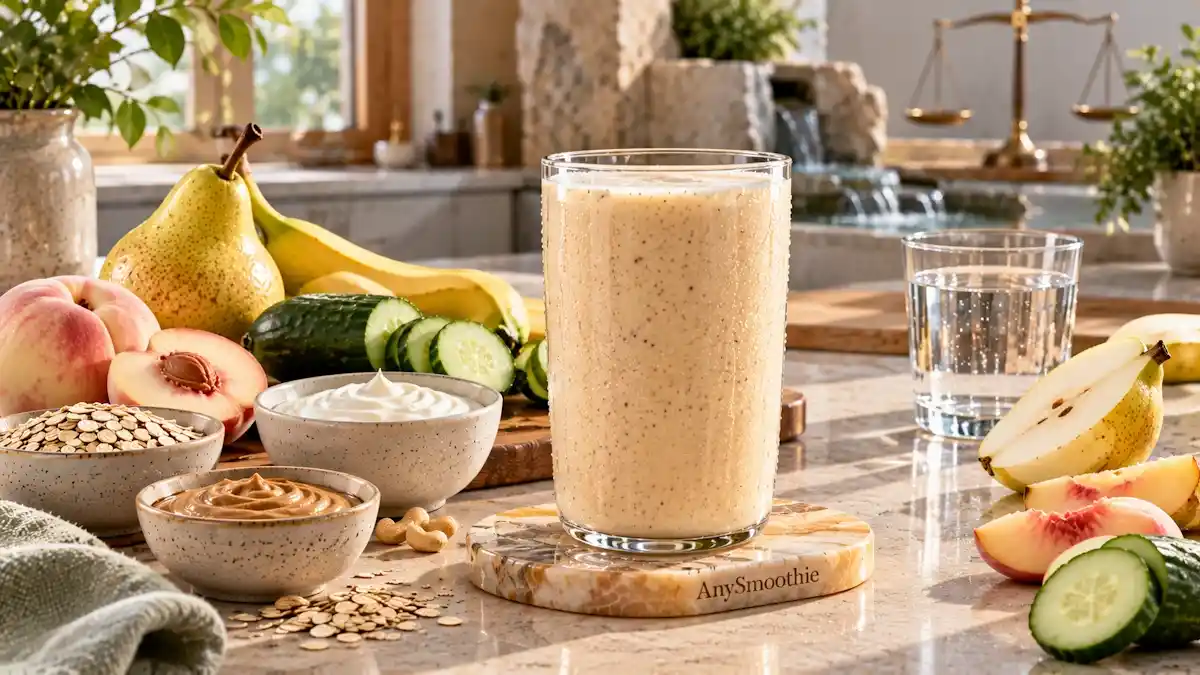
Should you add potassium bicarbonate to a smoothie to “balance acidity”? Leave the powder out unless a clinician has advised you to use it. A smoothie made with potassium-rich foods can be part of a balanced diet, but it cannot reliably change your blood pH.
The distinction matters because a banana and a concentrated potassium bicarbonate product affect what you consume in different ways. Start with what “acidity” means before choosing what goes in the blender.
What Potassium Bicarbonate Can and Cannot Do for Acidity Balance
Potassium bicarbonate is an alkaline compound. When dissolved, it provides potassium and bicarbonate. Bicarbonate is involved in the body’s acid-base balance, but that doesn’t make the powder a general-purpose fix for feeling “too acidic.” Your lungs and kidneys regulate blood pH, as described in Merck Manual’s overview of acid-base balance. Research on potassium and bicarbonate handling also shows that acid-base status and potassium regulation are closely connected, but this is not the same as using a smoothie ingredient to control blood pH.
Blood pH, stomach acid, and food acidity are not the same thing
Blood pH stays within a narrow range through normal body processes. Stomach acid has a different job: it helps break down food during digestion. Meanwhile, a tart berry tastes acidic because of compounds in the fruit. Eating it doesn’t mean your blood becomes acidic.
These distinctions matter if you’re trying to make sense of heartburn or another persistent symptom. A smoothie can’t tell you what’s causing discomfort, and changing its ingredients won’t replace medical advice.
Potassium-rich foods are different from potassium bicarbonate
Bananas, spinach, and yogurt contribute potassium alongside other nutrients as part of a meal. A potassium bicarbonate product supplies potassium in a concentrated form, so using it calls for extra caution.
The NIH guide to potassium identifies foods that contain the mineral and explains why supplement use can be a concern for some people. Food choices may also need individual guidance if you’ve been told to limit potassium. Research on potassium supplementation has found that oral potassium supplements can increase circulating potassium levels, although the effects vary with the population and clinical context.
For food-based options that focus on lower-acid ingredients rather than blood-pH claims, see non-acidic fruit smoothies for sensitive stomachs.
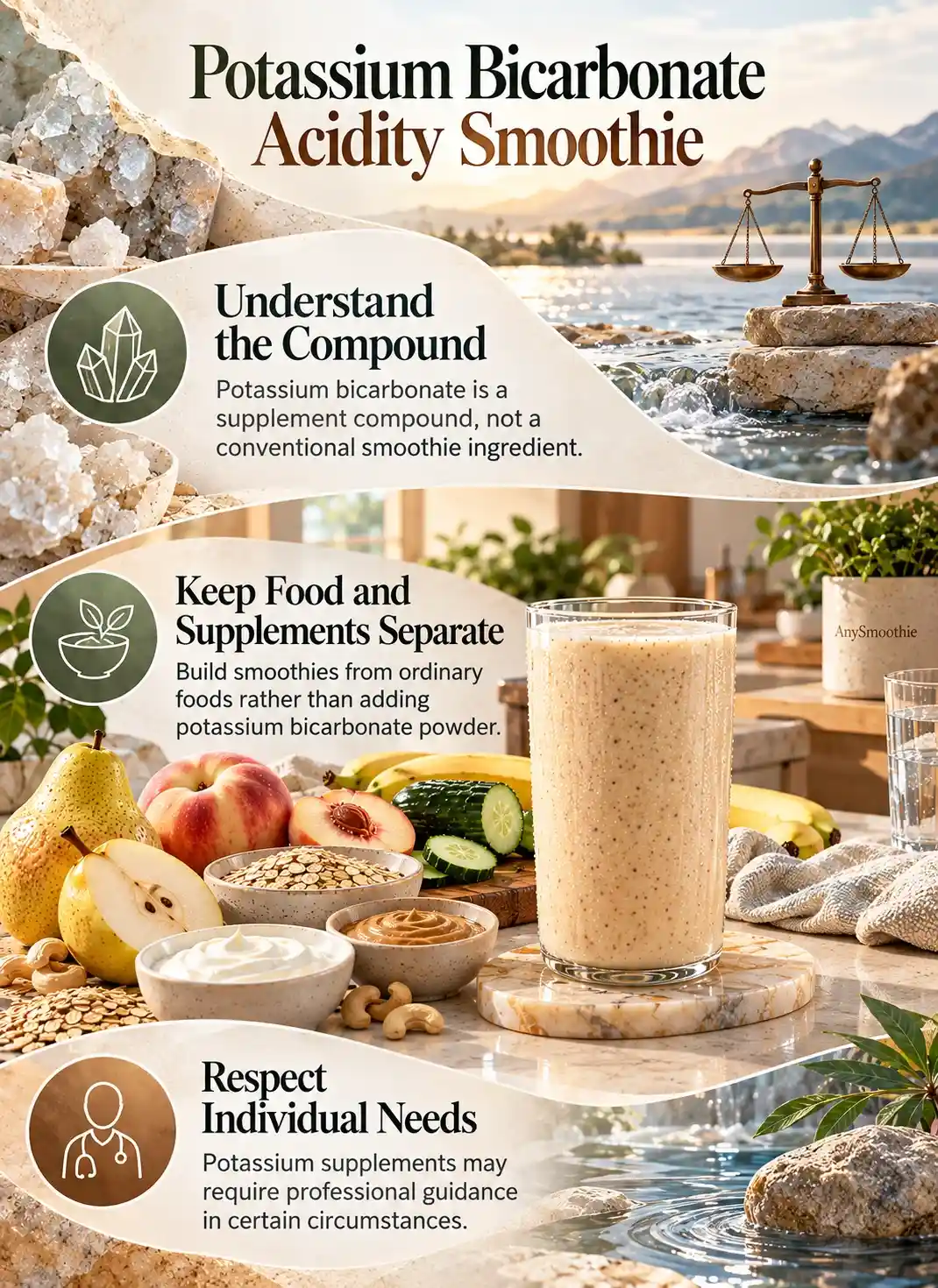
3 Potassium Bicarbonate Smoothies for Acidity Balance
Despite the name, these potassium bicarbonate smoothies contain no added potassium bicarbonate. They’re ordinary food-based recipes with potassium-containing ingredients. None treats acidity symptoms or reliably changes blood pH.
Each combination below makes one serving. Blend until smooth, adding a little more liquid if needed.
| Smoothie | Main ingredients | Potassium-containing ingredients | Flavor | Practical note |
|---|---|---|---|---|
| Banana, spinach, and yogurt | 1 banana, 1 cup spinach, 3/4 cup plain yogurt, 1/2 cup water or milk | Banana, spinach, yogurt | Mild and creamy | Use water for a thinner blend. |
| Avocado, pear, and kefir | 1/2 avocado, 1 small pear, 3/4 cup plain kefir, 1/2 cup ice | Avocado, kefir | Smooth and gently sweet | Check the kefir label for added sugar. |
| Berry, banana, and oat | 1 cup berries, 1/2 banana, 1/4 cup oats, 3/4 cup unsweetened milk or plain yogurt | Banana, oats, milk or yogurt | Fruity and filling | Let the oats soften if you prefer a smoother texture. |
Choose the blend that suits your appetite and dietary needs. The ingredients, rather than any claim about pH, are the reason to make one.
Banana, spinach, and yogurt smoothie
Ingredients
- 1 banana
- 1 cup spinach
- 3/4 cup plain yogurt
- 1/2 cup water
Steps
Blend the banana and spinach with plain yogurt and water. The banana softens the spinach’s flavor, while the yogurt gives the drink a creamy texture and protein. Banana and spinach both provide potassium.
If you prefer a colder smoothie, use a frozen banana. You can also start with less water and add more after blending. Neither adjustment changes the smoothie into a remedy for reflux or another acidity symptom.
Estimated Nutrition per Serving
- Calories: ~270 kcal
- Protein: ~14 g
- Carbohydrates: ~40 g
- Fat: ~6 g
- Fiber: ~6 g
- Sugars: ~27 g
Estimated using a medium banana and plain low-fat yogurt.
Avocado, pear, and kefir smoothie
Ingredients
- 1/2 avocado
- 1 small pear
- 3/4 cup plain kefir
- 1/2 cup ice
Steps
Blend avocado, pear, plain kefir, and ice until the mixture looks uniform. Avocado adds a thick texture and is a potassium-containing ingredient. Pear gives the smoothie sweetness without requiring sweetened kefir.
If you avoid dairy, choose a dairy-free base that works for you instead of kefir. Check its label if potassium content matters to your diet, since products vary. Add water as needed to help the fruit blend.
Estimated Nutrition per Serving
- Calories: ~280 kcal
- Protein: ~9 g
- Carbohydrates: ~36 g
- Fat: ~14 g
- Fiber: ~9 g
- Sugars: ~23 g
Estimated using half a medium avocado, one small pear, and plain whole-milk kefir.
If I wanted this as a simple food-based option, I’d keep the recipe exactly as written rather than adding a concentrated potassium ingredient.
Berry, banana, and oat smoothie
Ingredients
- 1 cup mixed berries
- 1/2 banana
- 1/4 cup rolled oats
- 3/4 cup unsweetened milk
Steps
Combine berries, banana, oats, and unsweetened milk. The oats add body, and the banana balances tart berries. If whole oats leave more texture than you like, let them sit in the liquid before blending.
Frozen berries work well when you want a cold drink without ice. Adjust the berries or base to suit your taste and dietary needs. The blend is a food choice, not a way to neutralize stomach acid.
Estimated Nutrition per Serving
- Calories: ~250 kcal
- Protein: ~8 g
- Carbohydrates: ~48 g
- Fat: ~4 g
- Fiber: ~8 g
- Sugars: ~24 g
Estimated using unsweetened 2% dairy milk and a mixed berry blend.
How to Use Potassium Bicarbonate Safely
Don’t add potassium bicarbonate powder to a smoothie casually or use it as a home remedy. A scoop can look small, but its potassium content depends on the product and amount used. Smoothie recipes cannot account for your kidney function, medications, or other sources of potassium.
If you’re considering a potassium bicarbonate product, speak with a clinician or pharmacist first. They can assess whether it’s appropriate for you. This matters even if the product is sold as a supplement rather than prescribed.
Who should ask a clinician before using it
Check before using potassium bicarbonate if you have kidney disease, a heart condition, or take medicine that affects potassium levels. Some medicines can raise blood potassium, including ACE inhibitors, angiotensin receptor blockers, and the diuretic spironolactone.
Kidneys normally help remove extra potassium. When that process is impaired, potassium can build up in the blood. Research reviews identify kidney dysfunction and renin-angiotensin-aldosterone system inhibitors as important risk factors for hyperkalemia, with potassium-sparing medications adding further risk.
For a separate discussion of smoothies where potassium intake may need tighter dietary control, see smoothies for kidney health.
Too much potassium can be dangerous, so guessing at a supplement amount isn’t a safe approach.
If a clinician has advised you to limit potassium, ask about the food-based smoothies too. Whole-food ingredients are different from powder, but they still contribute to your daily intake.
When acidity symptoms need more than a recipe change
Frequent reflux, ongoing stomach discomfort, or symptoms that keep returning deserve medical guidance. Tell a clinician what you feel, when it happens, and whether eating or drinking seems to affect it. That information is more useful than trying to judge your body’s pH by the taste of a smoothie.
If a particular ingredient bothers you, leave it out while you seek advice. Avoid relying on potassium bicarbonate or a recipe change to explain persistent symptoms.
If the practical concern is choosing lower-acid smoothie ingredients rather than changing blood chemistry, low-acid smoothies for mucosal protection covers that narrower food-selection question.
Conclusion
Potassium-rich smoothie ingredients can fit into a balanced diet, but they won’t reliably alter blood pH or treat acidity symptoms. Whole foods and potassium bicarbonate powder call for different decisions, even when both provide potassium.
If you’re considering the supplement, check with a health professional before adding it to your smoothie.
🛡️ Safety Notes & Dietary Interactions
- Potassium Bicarbonate: Do not add potassium bicarbonate to these smoothies unless a clinician specifically advises it. Its concentrated potassium content differs substantially from potassium obtained through ordinary food ingredients.
- Kidney and Heart Conditions: Kidney disease and some heart conditions can affect potassium handling. Anyone with these conditions should seek individualized guidance before using potassium-containing supplements or regularly increasing dietary potassium.
- Medication Interactions: ACE inhibitors, angiotensin receptor blockers, and spironolactone can affect blood potassium. Discuss potassium bicarbonate use with a clinician or pharmacist before adding it to a smoothie or supplement routine.
- Potassium Restrictions: Bananas, spinach, avocado, yogurt, kefir, oats, and milk can contribute potassium. If you’ve been told to restrict potassium, assess the complete smoothie and daily intake according to your individualized dietary guidance.
FAQs
Why don’t these smoothies actually contain potassium bicarbonate?
The recipes intentionally contain no added potassium bicarbonate. They use ordinary potassium-containing foods instead, because the article distinguishes food-based potassium from concentrated potassium bicarbonate products. The smoothies are presented as everyday food choices, not as treatments for acidity or methods of reliably changing blood pH.
Can potassium-rich foods make my blood less acidic?
Not in the simple way suggested by the phrase “balance acidity.” Blood pH is tightly regulated by normal physiological processes involving the lungs and kidneys. Eating a banana, spinach, or yogurt does not reliably change blood pH, and food acidity is different from blood or stomach acidity.
Who should avoid adding potassium bicarbonate to a smoothie?
Anyone with kidney disease, certain heart conditions, or medication-related potassium concerns should seek professional guidance before using potassium bicarbonate. The article specifically highlights ACE inhibitors, angiotensin receptor blockers, and spironolactone because they can affect potassium levels. People with prescribed potassium restrictions should also follow their individualized guidance.
Which smoothie has the most substantial texture?
The Berry, Banana, and Oat Smoothie is the most filling-style option because oats add body alongside fruit and milk or yogurt. If the oats feel too coarse, letting them soften in the liquid before blending can produce a smoother texture without adding any supplement.
What should I do if I regularly experience acidity or reflux?
A recurring symptom deserves attention beyond changing smoothie ingredients. The article recommends discussing persistent or returning discomfort with a clinician and explaining when symptoms occur and whether eating or drinking affects them. Potassium bicarbonate and smoothie changes should not be used as a substitute for evaluating an ongoing problem.

Medical Disclaimer: AnySmoothie content is for educational purposes only and is not a substitute for professional medical advice. Consult a healthcare provider for personalized guidance. See our full Disclaimer & Terms of Use. AI Transparency: AnySmoothie may use AI to support content development. All content undergoes human editorial review for accuracy, clarity, and editorial quality. See our full AI Transparency.