

Picture flu season hitting hard. You’re wiped out, dragging through the day, and those high-dose vitamin C pills? They supercharge your immunity but leave your stomach in knots.
Then you try a liposomal vitamin C smoothie. It changes everything. No upset, just a smooth energy lift and faster recovery from sniffles.
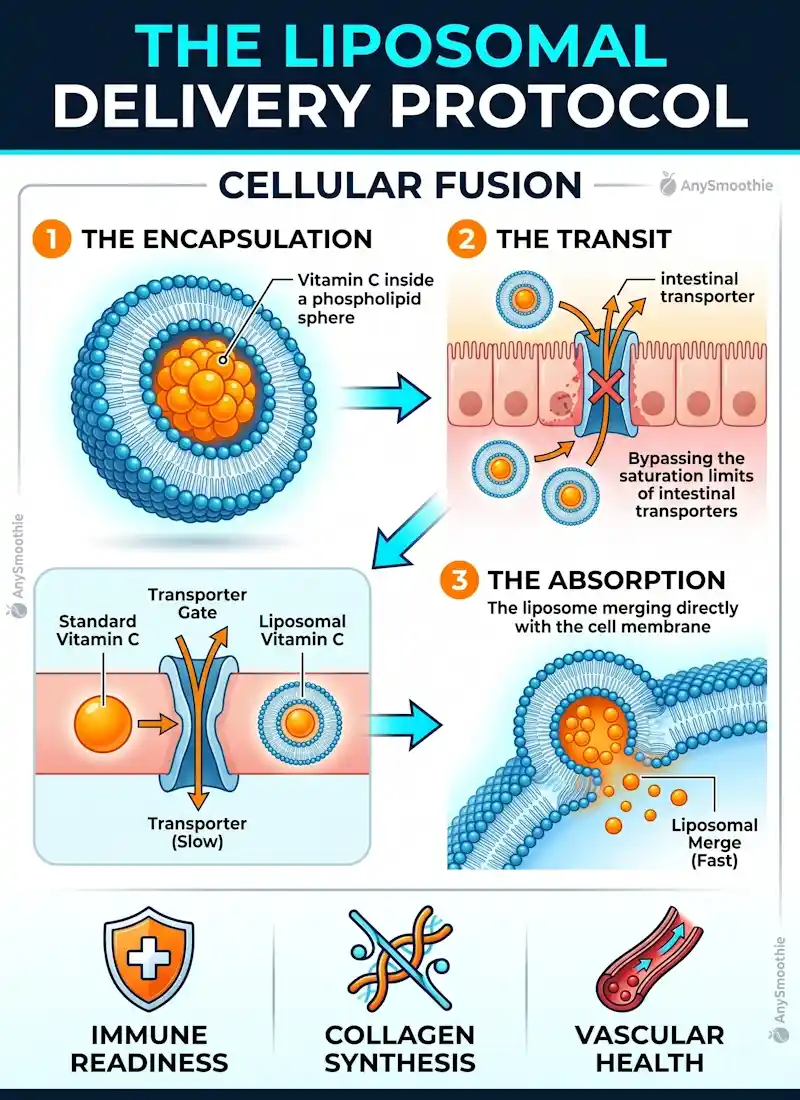
Here’s why it works. Liposomal vitamin C wraps the nutrient in tiny fat bubbles, or liposomes. Your body absorbs up to 90% of it, versus only 20% from regular supplements. Studies confirm about 5x better bioavailability, so more reaches your cells for real immune power.
You fight colds quicker, enjoy glowing skin, and build stronger defenses overall. Plus, it blends easily into tasty drinks without losing stability, even in the blender.
Ready to mix your own? We’ll break down the science, share tips on pairings like best fruits to pair with liposomal vitamin C, explain liposomal vs regular vitamin C absorption, and deliver three delicious liposomal vitamin C smoothie recipes.
Liposomal Vitamin C vs Regular: Why Absorption Makes All the Difference
You know how regular vitamin C often passes right through your system? Most of it breaks down before your body can use it. Liposomal vitamin C changes that. It uses fat-like liposomes to boost uptake, especially in a liposomal vitamin C smoothie where liquids speed delivery. This liposomal vs regular vitamin C absorption gap explains the real power for your immunity.
The Science Behind Better Uptake
Liposomes act like tiny shields. These fat layers wrap vitamin C, protecting it from harsh stomach acid and digestive enzymes. Regular vitamin C absorbs at just 14-30%, so much goes to waste. Liposomal versions hit 90% or higher, as shown in clinical trials.
Picture it this way: regular vitamin C fights a losing battle in your gut. Liposomes slip through intact, dumping vitamin C straight into your bloodstream. A double-blind study proved this edge, with higher plasma levels from liposomal forms.
Smoothies make it even better. The liquid base helps liposomes mix and travel fast, without breaking them down. Blending keeps stability high, so you get full benefits of liposomal vitamin C in smoothies. No gut upset, just pure absorption.
Immune Boost Unlocked in Liquid Form
High absorption means real results. You notice shorter colds and less fatigue because more vitamin C reaches your cells. People report bouncing back quicker from bugs.
Phospholipids in liposomes do double duty. They mimic your cell membranes, easing vitamin C inside for stronger immunity. This combo fights oxidative stress and supports white blood cells.
In a smoothie, it shines. The phospholipids pair with fruits, enhancing cell repair while you sip. Studies link this to better immune response, like reduced inflammation. So, your liposomal vitamin C smoothie turns daily drinks into defense boosters. Feel the difference next flu season.
Blending Without the Breakdown: Tips for Stable Liposomal Vitamin C Smoothies
You want your smoothie to pack full immune punch. But aggressive blending can rupture those protective liposomes, slashing absorption. Don’t worry. Simple tweaks keep stability intact. Follow these strategies, and you’ll mix drinks that deliver benefits of liposomal vitamin C in smoothies without waste.
Smart Mixing Order and Tools
Start right to protect liposomes. Add ingredients in layers. This prevents shear force from breaking them down.
First, pour in liquids like almond milk or water. They create a smooth base. Next, toss in soft fruits such as bananas or berries. They blend easily without excess friction.
Then, sprinkle powders like greens or protein. Blend briefly. Finally, drizzle liposomal vitamin C last. It mixes gently on top.
Pulse your blender. Use short bursts under 10 seconds each. High-speed models work best, but go gentle. Vitamix or Nutribullet shine here because they power through without overheating.
Quick steps for success:
- Liquids first (1 cup base).
- Fruits and veggies next.
- Powders in small amounts.
- Liposomal vitamin C at the end.
- Pulse 5-10 seconds total.
This order minimizes damage. Your liposomal vitamin C smoothie stays potent. Tests show brief blending preserves up to 95% integrity. No more wasted nutrients.
Ingredients That Protect or Harm Stability
Certain picks boost your liposomal vitamin C smoothie. Others sabotage it. Choose wisely for max stability.
Creamy bases shield liposomes. Avocado adds healthy fats that mimic the phospholipid coating. Nut milks like coconut or cashew create a buffer against acids. They pair perfectly, enhancing synergy.
Fats amplify benefits. Blend in chia seeds or a spoonful of nut butter. These lipids reinforce the liposomes, improving cell uptake. Berries work great too. Their mild pH supports structure.
Avoid pitfalls. Skip extreme citrus like pure lemon at the start; its acidity can destabilize early. Never use hot liquids. Heat above 104°F (40°C) melts the fat layers. Hold off on ginger or turmeric in high doses; they add harsh enzymes.
Instead, add fats post-blending if needed. Good choices build a stable mix. Harmful ones lead to breakdown. Test small batches. You’ll notice smoother texture and better energy.
Storage and Freshness Hacks
Drink your liposomal vitamin C smoothie fresh for peak power. Time erodes liposomes slowly. Consume within 30 minutes ideally.
Fridge it up to 24 hours if needed. Use airtight glass jars. Fill to the brim to limit air exposure. Oxidation speeds decay.
Shake well before sipping. Separation happens naturally. Cool temps below 40°F (4°C) slow breakdown.
Watch for spoilage. Off smells like sour milk mean toss it. Color shifts to dull brown signal oxidation. Texture turns watery or chunky? It’s gone bad.
Pro tip: freeze in ice cube trays for later. Thaw gently in fridge. This extends life without full loss. Fresh means full absorption. Store smart, and your immunity stays charged.
Top Fruits and Superfoods to Supercharge Your Liposomal Vitamin C Smoothie
You already know blending protects your liposomal vitamin C smoothie. Now add smart picks. These fruits and superfoods pack extra vitamin C, antioxidants, and fiber. They boost immunity without high acidity that harms liposomes. Plus, they taste great. Choose low-acid options first. Then balance with greens. Your drink turns into a powerhouse.
Berry Powerhouses for Antioxidant Overload
Blueberries lead the pack. They deliver more antioxidants than most fruits. Each cup adds 14% of your daily vitamin C needs. Low acid keeps liposomes stable. Toss in a handful for deep purple color and skin glow.
Strawberries follow close. One cup gives 98 milligrams of vitamin C, almost double your daily goal. Sweet yet gentle on the gut. They fight inflammation and support collagen.
Both shine in liposomal vitamin C smoothies. Berries enhance absorption because their flavonoids pair with phospholipids. You get stronger immunity and faster recovery.
Try this combo: Blend 1/2 cup blueberries, 1/2 cup strawberries, and your liposomal dose. Add banana for creaminess. A blueberry kiwi smoothie recipe shows how berries build glow from inside. Feel energized all day.
Tropical Twists and Veggie Heroes
Kiwi brings tropical punch. Two fruits pack 137 milligrams of vitamin C. Enzymes aid digestion, but mild acidity blends safe. Slice one for fuzzy texture and zing.
Mango sweetens naturally. Half a cup offers 30 milligrams of vitamin C plus beta-carotene. Creamy flesh balances bold flavors. It supports eye health too.
Spinach and kale add earthiness. A cup of spinach sneaks in iron and folate without overpowering taste. Kale boosts with vitamin K for bone strength. Both neutralize excess sweetness.
These create harmony in your liposomal vitamin C smoothie. Fruits mask greens, so you sip nutrients easily. For example, mix kiwi, mango chunks, handfuls of spinach or kale. The result? Immune support with steady energy.
Start simple. Use frozen mango for chill. Your body thanks you with better defenses.
3 Game-Changing Liposomal Vitamin C Smoothie Recipes for Ironclad Immunity
You have the blending tips and top fruits ready. Now blend them into action. These three liposomal vitamin C smoothie recipes deliver benefits like faster absorption and steady energy. Each one starts your day strong or powers through afternoons. They protect liposomes during mixing, so you get full immune support. Pick your favorite, or rotate them. Your body will thank you with fewer sniffles and more pep.
Conclusion
Liposomal vitamin C smoothies deliver superior absorption, far outpacing regular forms. You get real immune power because liposomes protect the nutrient through your gut. Plus, easy blending tips and top fruits like berries keep stability high.
These recipes turn daily drinks into defense boosters. No stomach upset, just steady energy and quicker recovery. As spring allergies ramp up in April 2026, they give you that edge.
Try one tomorrow morning. Share your results in the comments below, and subscribe for more immune recipes. Your body fights back stronger, sip by sip.
⚠️ Specific Safety Notes
Kidney Stones: High doses of Vitamin C are metabolized into oxalates. If you have a history of calcium-oxalate kidney stones, consult your doctor before exceeding 1,000mg daily, even in liposomal form.
Iron Overload (Hemochromatosis): Vitamin C significantly enhances the absorption of non-heme iron. If you have hemochromatosis or high ferritin levels, avoid drinking these smoothies during or near iron-rich meals.
Copper Balance: Chronic, very high doses of Vitamin C can interfere with the body’s copper absorption. If you use high-dose liposomal C daily for months, ensure your diet is rich in copper or speak with a nutritionist.
Blood Sugar Testing: High levels of Vitamin C in the bloodstream can sometimes cause false readings (both high and low) on certain glucose monitors and urine dipstick tests.
Stability Check: Liposomal Vitamin C is sensitive to heat. Never add it to a warm smoothie or leave your drink in a hot car, as the phospholipid shield will melt, turning your expensive supplement back into regular, low-absorption Vitamin C.
FAQ
How does “Liposomal Encapsulation” bypass the gastric absorption limit?
Standard vitamin C (ascorbic acid) relies on sodium-dependent transporters in the small intestine, which become saturated at high doses, leading to a typical absorption rate of only 14-30%. Biochemically, liposomal vitamin C is encapsulated in a phospholipid bilayer that mimics cell membranes, allowing it to move through the digestive tract largely intact. Supporting this physiological system through liposomal delivery facilitates the biochemical mechanics of “passive diffusion,” enabling absorption rates of 90% or higher directly into the bloodstream.
Why are “Phospholipids” considered a dual-action component in smoothies?
Phospholipids used in liposomal formulations serve both as a protective shield and as a structural nutrient. Biochemically, these lipids integrate into cellular membranes, supporting membrane fluidity and integrity. Supporting this physiological system through lipid-rich smoothies (adding avocado or nut butters) optimizes the natural pathways of cell repair. This synergy ensures that the biochemical mechanics of the liposome remain stable while providing the “raw materials” necessary for white blood cell function.
How does “Low-Shear Blending” preserve the integrity of liposomes?
Liposomes are delicate structures that can be ruptured by excessive heat or high mechanical stress. Biochemically, if the phospholipid shell is broken before consumption, the vitamin C reverts to its free form, losing its superior absorption profile. Supporting this physiological system by adding the liposomal dose at the end of the blending process and using short, low-speed pulses optimizes the natural pathways of delivery. This ensures that the biochemical mechanics of encapsulation are preserved until they reach the gut.
What is the synergy between “Berry Flavonoids” and Liposomal Vitamin C?
Berries like blueberries and strawberries are rich in polyphenols and flavonoids that work in tandem with vitamin C. Biochemically, these compounds help recycle “spent” vitamin C back into its active antioxidant form. Supporting this physiological system through low-acid fruit pairings optimizes the natural pathways of redox balance. This ensures that the biochemical mechanics of cellular protection are sustained, facilitating a more robust defense against oxidative stress and seasonal bugs.
Why should “Thermal Stress” be avoided in liposomal smoothie protocols?
Phospholipid bilayers are sensitive to temperature changes; heat exceeding 40°C (104°F) can melt the liposomal shell and trigger premature release of the nutrient. Biochemically, this degradation negates the advantage of the liposomal format. Supporting this physiological system by using frozen fruits and chilled liquid bases optimizes the natural pathways of nutrient stability. This strategy ensures that the biochemical mechanics of the liposome remain functional, delivering maximum immune support without gastric irritation.

Medical Disclaimer: AnySmoothie content is for educational purposes only and is not a substitute for professional medical advice. Consult a healthcare provider for personalized guidance. See our full Disclaimer & Terms of Use. AI Transparency: AnySmoothie may use AI to support content development. All content undergoes human editorial review for accuracy, clarity, and editorial quality. See our full AI Transparency.