
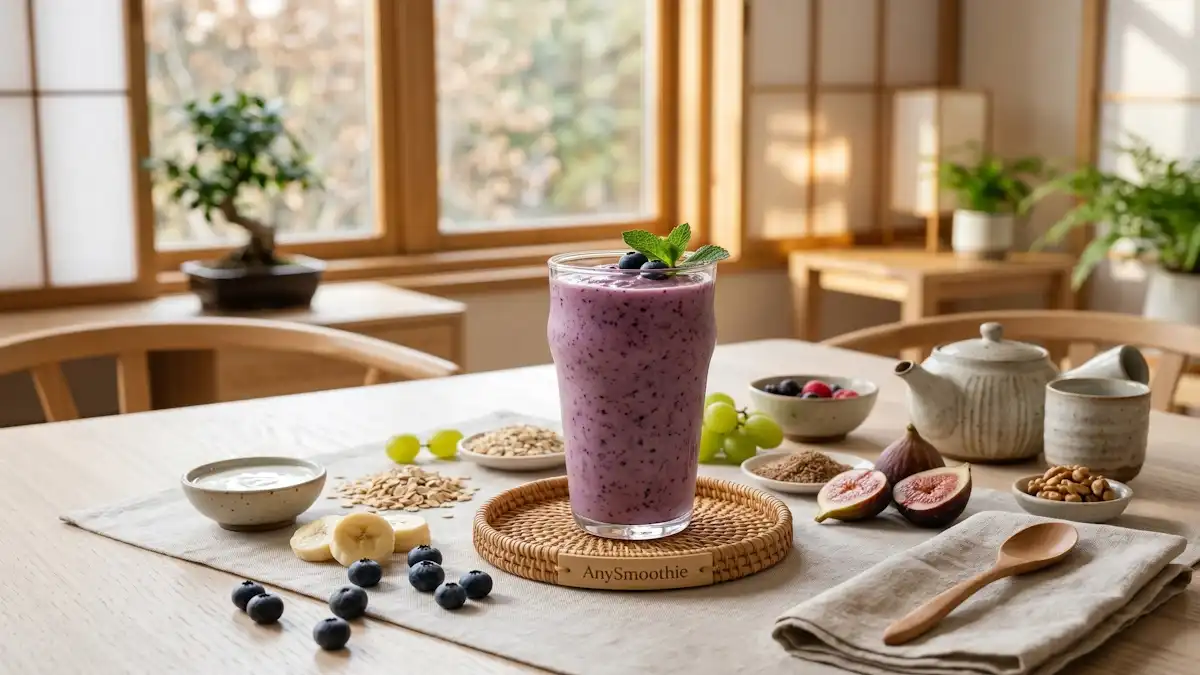
GOS in a smoothie gives gut microbes a small, fermentable fuel source. For many people, that makes it a useful food-first habit for supporting a gut setting where Bifidobacterium can do well.
Bifido matters because it helps shape a balanced microbiome and supports short-chain fatty acid production. Those compounds are part of normal gut function. If you are new to GOS, the main job is to keep the blend simple, tasty, and easy to tolerate.
The best place to start is with how GOS works, then move into smoothies that fit real life.
How GOS works in a smoothie and why Bifido responds
Galactooligosaccharides are prebiotic fibers, so they are not handled like regular sugar. They pass through the small intestine, reach the colon, and become food for certain microbes there. A review of galacto-oligosaccharide activity describes this fermentable path well.
That matters because Bifidobacterium species tend to use GOS efficiently. When they ferment it, they make compounds such as acetate and lactate. Those compounds help shape the local microbial mix and support the chemistry of a healthy colon environment.
What galactooligosaccharides are, in simple terms
GOS are short chains of sugar units. They show up in some foods, and they also appear in supplements or fortified products. Your body does not break them down like table sugar, so they travel farther down the gut.
That is why GOS behaves more like fiber than like sweetener. In a smoothie, it can ride along with other ingredients until it reaches the microbes that can use it.
Why Bifidobacterium tends to thrive on GOS
Bifido species have the tools to ferment GOS well. That gives them an edge when the diet includes enough of this fiber. A prebiotic evaluation of a GOS mixture also shows that different GOS blends can behave a little differently, which is why dose and product type matter.
The result depends on the full picture. Diet, total fiber, and personal tolerance all shape what happens next.

How to build a smoothie that actually supports bifido growth
A good smoothie does more than taste good. It gives GOS a stable home in a mix that is easy to drink and not too harsh on digestion. Start with a liquid base, add fruit for flavor, then use fiber and fat to smooth out the texture.
Bananas, berries, kiwi, oats, yogurt, kefir, chia, flax, and nut butter all work well. These ingredients add body and slow the quick sugar rush from fruit. They also make the smoothie more filling, which helps it fit into breakfast or a snack slot.
If your gut feels sensitive, the first fix is usually dose, not complexity.
Pick the right base, fruit, fiber, and fat
Choose a base that matches the texture you want. Milk, oat milk, almond milk, yogurt, and kefir all work. Then build around one or two fruits instead of piling on too many.
For more balance, add oats, chia, flax, or avocado. A spoon of nut butter helps too. The goal is a smooth, steady blend that feels like food, not dessert.
Start low and adjust for comfort
Some people notice gas or bloating when they add too much GOS too fast. That does not mean the idea is wrong. It usually means the starting dose was too high.
Begin with a small amount, then increase slowly if the smoothie feels fine. Keep the rest of the recipe steady while you test your response.
3 Galactooligosaccharide smoothies for bifido growth
These galactooligosaccharide smoothies for bifido growth are easy to repeat and easy to tune. Each one keeps the ingredient list short.
Berry Banana Bifido Starter Smoothie
Ingredients
- 3/4 cup unsweetened yogurt or dairy-free yogurt
- 1 cup frozen berries
- 1/2 medium banana
- GOS, according to the product label
- 1 tablespoon chia seeds, optional
- Water or unsweetened milk, as needed
Blend until smooth and creamy.
This is the gentlest place to start because the fruit is familiar and the flavor stays mild.
Estimated Nutrition per Serving
Estimated with plain nonfat Greek yogurt, mixed berries, half a medium banana, and optional chia seeds included. GOS contribution varies by product and is not included.
- Calories: ~350 kcal
- Protein: ~22 g
- Carbohydrates: ~53 g
- Fat: ~7 g
- Fiber: ~14 g
- Sugars: ~29 g
Frozen berries and chia can make this much thicker after only a few minutes. When introducing GOS, keeping the smoothie slightly looser also makes the fiber-rich blend easier to sip without increasing the portion size.
Green Kiwi and Flax Smoothie for a Lighter Blend
Ingredients
- 1 kiwi, peeled
- 1 cup spinach
- 1/2 cucumber or 1/4 avocado
- GOS, according to the product label
- 1 tablespoon ground flaxseed
- 1 cup water or unsweetened almond milk
Blend until completely smooth.
The taste is fresher and less sweet, which works well if you want a cleaner feel in the morning.
Estimated Nutrition per Serving
Estimated with kiwi, spinach, half a cucumber, ground flaxseed, and unsweetened almond milk. GOS contribution varies by product and is not included.
- Calories: ~175 kcal
- Protein: ~6 g
- Carbohydrates: ~21 g
- Fat: ~8 g
- Fiber: ~8 g
- Sugars: ~9 g
Tropical Kefir Smoothie With GOS
Ingredients
- 1 cup plain kefir
- 1 cup pineapple or mango
- GOS, according to the product label
- 1 tablespoon chia seeds or hemp seeds, optional
Blend until smooth.
This version brings fermented ingredients and prebiotic fiber into one glass, but it still works best in moderate portions.
Estimated Nutrition per Serving
Estimated with plain low-fat kefir, pineapple, and optional chia seeds included. GOS contribution varies by product and is not included.
- Calories: ~330 kcal
- Protein: ~13 g
- Carbohydrates: ~49 g
- Fat: ~10 g
- Fiber: ~8 g
- Sugars: ~37 g
Pineapple keeps the kefir combination brighter and more tart, while mango produces a softer, creamier flavor. If using chia as well as GOS, add it last and blend briefly so you can judge the texture before it begins to thicken.
How to get the most from your smoothie routine
Timing matters less than consistency. Some people like a GOS smoothie in the morning, while others use it after a walk or as a mid-afternoon snack. The key is to keep the pattern steady for a few days so your gut has a chance to respond.
The table below shows a few simple ways to match base, fiber, and flavor.
| Smoothie base | GOS source | Fiber support | Flavor profile | Best use case |
|---|---|---|---|---|
| Kefir and berries | GOS powder | Chia | Tart and creamy | Breakfast or post-walk |
| Oat milk and banana | GOS powder | Oats and flax | Mild and sweet | First-time GOS users |
| Almond milk and cocoa | GOS powder | Nut butter and oats | Rich and thick | Meal-style smoothie |
| Coconut water and kiwi | GOS powder | Spinach and seeds | Light and bright | Smaller snack |
The best blend is the one you can repeat and digest well. For a broader primer on GOS prebiotics, the Springer overview of GOS prebiotics gives useful background.
What to track after a few days or weeks
Pay attention to how you feel after the smoothie and later in the day.
- Notice comfort in the gut.
- Notice regularity and stool pattern.
- Notice fullness after meals.
- Notice energy and focus after eating.
Patterns matter more than one-off reactions. A food that feels fine twice and rough once may just need a smaller serving.
Who should be careful with GOS smoothies
People with sensitive digestion often do better with a smaller dose and a simpler recipe. A smoothie with several fibers can feel heavy if you stack too much at once. If that happens, reduce the GOS first, then trim back the extra seeds or oats.
A plain base, one fruit, and a small amount of GOS is enough to start. You can build from there once the blend feels easy.
Conclusion
GOS smoothies are an easy, food-first way to support a gut environment where Bifidobacterium can do well. Start small, keep the ingredients balanced, and listen to how your body responds.
One solid recipe repeated often is better than a perfect formula you never finish. Try one blend, then adjust the fruit, fiber, and GOS dose until it feels right.
🛡️ Safety Notes & Dietary Interactions
- Prebiotic Adaptation Pace: GOS ferments efficiently in the colon. Starting with smaller servings may support digestive comfort while allowing gradual microbial adaptation.
- Microbial Fuel Diversity: Pairing GOS with fruits, seeds, and whole-food fibers creates a broader substrate profile than relying on a single prebiotic source alone.
- Fiber Load Awareness: Combining GOS with large amounts of oats, chia, and flax may feel heavy for sensitive digestion. Simpler formulas are often easier to tolerate.
- Cultured Base Integration: Kefir and yogurt complement GOS-based smoothies by supporting a balanced texture, improved satiety, and a more complete nutritional structure
FAQ
What are galactooligosaccharides and why are they used in gut-health smoothies?
Galactooligosaccharides, commonly called GOS, are prebiotic fibers that travel through the small intestine largely undigested before reaching the colon. There, they serve as a fermentable food source for certain beneficial microbes. The article focuses on GOS because of their association with Bifidobacterium growth and broader microbiome-supportive nutrition patterns.
Why is Bifidobacterium discussed so often in relation to GOS?
Bifidobacterium species possess the enzymatic tools needed to efficiently utilize GOS as a fuel source. During fermentation, they produce compounds such as acetate and lactate that participate in the chemistry of the gut environment. This relationship is one reason GOS frequently appears in discussions about microbiome diversity and digestive wellness routines.
Why does the article recommend starting with a small amount of GOS?
Introducing too much fermentable fiber at once may lead to digestive discomfort for some individuals. The article recommends beginning with a modest amount and increasing gradually if tolerated well. This slower approach helps distinguish normal adaptation from excessive fiber intake while making it easier to identify an appropriate personal serving size.
Which ingredients pair best with GOS in a smoothie?
Bananas, berries, kiwi, oats, yogurt, kefir, chia, flax, avocado, and nut butters are highlighted because they provide texture, fiber, protein, or healthy fats without making the smoothie overly complicated. These ingredients also help create a more balanced nutritional structure that supports satiety and makes the smoothie easier to repeat consistently.
What is the most important lesson from the article?
The article repeatedly emphasizes simplicity, consistency, and personal tolerance. A straightforward smoothie with a moderate amount of GOS, a few supportive ingredients, and a repeatable routine is often more useful than an elaborate formula packed with multiple fibers and supplements. Sustainable habits and gradual adjustments are presented as the foundation of long-term success.

Medical Disclaimer: AnySmoothie content is for educational purposes only and is not a substitute for professional medical advice. Consult a healthcare provider for personalized guidance. See our full Disclaimer & Terms of Use. AI Transparency: AnySmoothie may use AI to support content development. All content undergoes human editorial review for accuracy, clarity, and editorial quality. See our full AI Transparency.