
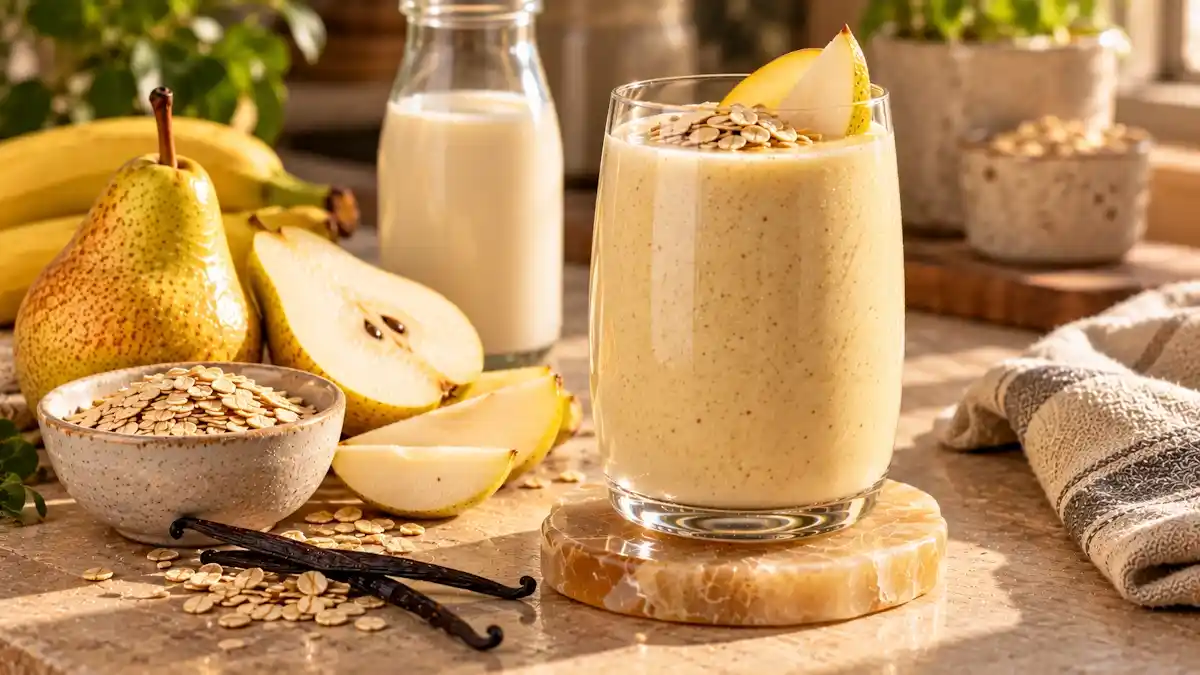
A smoothie can work when you have trouble digesting lactose, but its ingredients won’t increase lactase, the enzyme that breaks down lactose. Lactose-free choices can make the drink a better fit for your diet, although individual tolerance varies.
Start with the milk or yogurt base, since that choice determines much of a smoothie’s lactose content. These three recipes offer lactose-free dairy and plant-based options.
What Lactase Does, and Why Smoothie Ingredients Matter
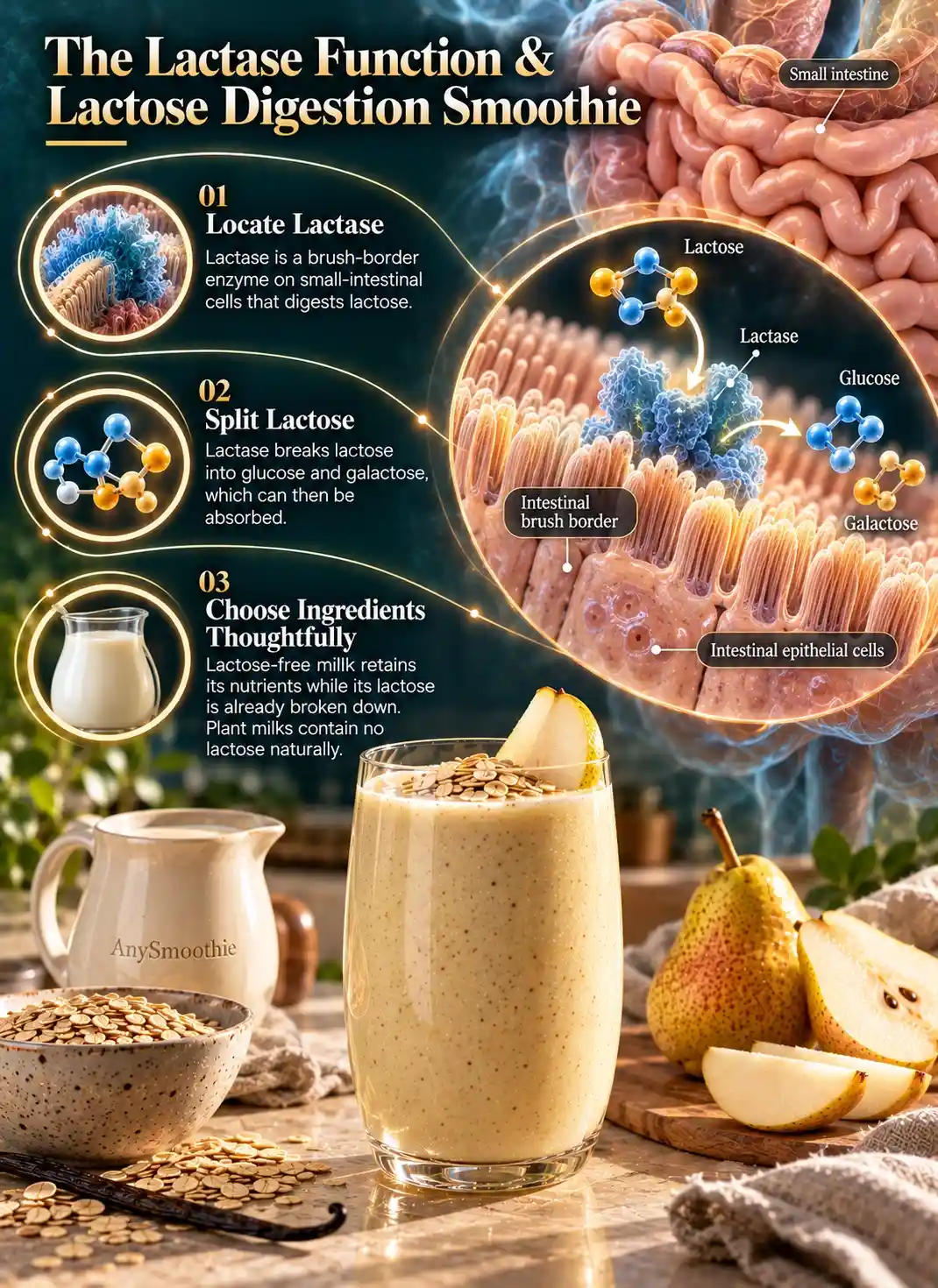
Lactase is an enzyme made in the small intestine. It splits lactose, the sugar in milk, into glucose and galactose. Your intestine can then absorb these simpler sugars.
When lactase activity is low, some lactose can pass undigested into the colon. Bacteria break it down there, producing gas; undigested lactose also draws in fluid. For a related look at fermentable fibers that reach colonic microbes, see galactooligosaccharide smoothies for bifido growth.
This process can cause bloating, gas, or diarrhea for some people. For practical food ideas during diarrhea recovery, see smoothies for diarrhea recovery.
However, lactose malabsorption and lactose intolerance aren’t interchangeable: not everyone who malabsorbs lactose develops symptoms.
No smoothie ingredient is proven to increase the body’s lactase production. Berries, oats, chia seeds, and tofu provide nutrients, but they don’t supply a demonstrated way to boost this enzyme. For a broader discussion of gut-microbiome-oriented smoothie ideas, see delicious smoothies for weight loss: gut-microbiome fix.
Blending regular milk with fruit doesn’t break down its lactose. A smoother texture doesn’t mean the milk sugar has changed.
Instead, choose ingredients with less lactose or none. Regular dairy yogurt can still contain lactose, including Greek yogurt without a lactose-free label. Choosing lactose-free dairy changes the lactose you consume without increasing your own enzyme production.
3 Smoothies for Lactase Function and Lactose Digestion
Lactose-free dairy has had most or all of its lactose broken down, usually with added lactase. Soy milk and tofu are naturally lactose-free, so the tropical recipe avoids dairy entirely.
Each recipe makes one serving. Nutrition estimates are approximate and can vary by brand, fruit size, and the products you choose.
Berry and Chia Lactose-Free Yogurt Smoothie
Ingredients
- 1 cup (170 g) plain lactose-free Greek yogurt
- 1 cup strawberries, fresh or frozen
- 1/2 cup blueberries, fresh or frozen
- 1 tablespoon chia seeds
- 1/2 cup water, plus more as needed
Instructions
Add all ingredients to a blender and blend until smooth. Add a little more water if needed to reach your preferred texture.
Estimated Nutrition (per serving)
- Calories: ~250 kcal
- Protein: ~21 g
- Carbohydrates: ~33 g
- Fat: ~4 g
- Fiber: ~11 g
- Sugars: ~21 g
Banana Oat Smoothie With Lactose-Free Milk
Ingredients
- 1 cup lactose-free 2% milk
- 1 medium banana
- 1/4 cup rolled oats
- 1 tablespoon peanut butter
- 1/4 teaspoon cinnamon
Instructions
Blend the milk, banana, oats, peanut butter, and cinnamon until creamy. Let the smoothie sit for a few minutes if you prefer softer oats, then blend again briefly.
Estimated Nutrition (per serving)
- Calories: ~400 kcal
- Protein: ~15 g
- Carbohydrates: ~56 g
- Fat: ~15 g
- Fiber: ~6 g
- Sugars: ~26 g
Tropical Mango, Pineapple, and Tofu Smoothie
Ingredients
- 1 cup unsweetened soy milk
- 1/2 cup silken tofu
- 3/4 cup pineapple chunks, fresh or frozen
- 1/2 cup mango chunks, fresh or frozen
- 1/2 cup ice, optional
Instructions
Blend the soy milk, tofu, pineapple, and mango until smooth. Add ice for a thicker, colder drink and blend again.
Estimated Nutrition (per serving)
- Calories: ~280 kcal
- Protein: ~13 g
- Carbohydrates: ~37 g
- Fat: ~9 g
- Fiber: ~3 g
- Sugars: ~24 g
Compare the Three Smoothies at a Glance
Choose according to your preferred base, texture, and appetite.
| Smoothie | Lactose profile | Nutrition standout | Texture and flavor | Best fit |
|---|---|---|---|---|
| Berry and chia yogurt | Made with lactose-free dairy | Higher protein and fiber | Thick, tart, and berry-forward | A filling snack with a creamy base |
| Banana oat | Made with lactose-free dairy | More carbohydrates and energy | Creamy, mild, and gently sweet | A hearty breakfast-style drink |
| Tropical tofu | Uses lactose-free soy ingredients | Plant-based protein | Smooth, tropical, and fruit-sweet | A dairy-free option with a soft texture |
The dairy-based recipes offer familiar creamy flavors, while the tofu version suits someone avoiding dairy altogether.
How to Choose a Smoothie That Fits Your Lactose Tolerance
Look for explicit lactose-free wording on dairy milk and yogurt. “Plain,” “organic,” and “Greek” don’t mean lactose-free. Also read ingredient lists on flavored bases and protein powders for added milk, milk powder, or whey ingredients that may contribute lactose.
If your tolerance is uncertain, start with a modest serving rather than the whole blender portion. Keep the rest refrigerated, then notice how that amount fits your usual eating pattern. A smaller portion also means less of every ingredient, including fiber.
Change one ingredient at a time when adjusting a recipe. For example, keep the fruit unchanged while switching the base. This makes personal patterns easier to notice, though it doesn’t diagnose the cause of digestive symptoms.
Remember that lactose-free dairy still contains milk proteins. As University Hospitals explains in its milk allergy diet guidance, lactose-free milk isn’t suitable for someone with a milk allergy. For a broader topic involving intestinal barrier nutrition, see colostrum smoothies: benefits for gut seal and immunity.
Persistent or severe digestive symptoms deserve advice from a qualified health professional rather than repeated recipe changes.
Conclusion: Choose the Base That Fits You
Smoothies can’t increase lactase function, but their ingredients determine how much lactose ends up in your glass. Lactose-free dairy or plant-based bases give you practical options without promising symptom relief.
Use these recipes as starting points, adjust one ingredient at a time, and pay attention to your own tolerance. The right choice is one that fits both your preferences and dietary needs.
🛡️ Safety Notes & Dietary Interactions
- Lactose-Free Labels: Choose products explicitly labeled lactose-free rather than assuming Greek, plain, or organic dairy contains little lactose. Regular milk and yogurt can still contribute lactose despite their texture or processing.
- Milk Allergy: Lactose-free milk and yogurt still contain milk proteins. They are unsuitable for people with a milk allergy, so a soy-based smoothie may be more appropriate if soy is tolerated.
- Portion Size: Even lactose-free smoothies contain fiber, fruit sugars, and other ingredients that may cause digestive discomfort in larger amounts. Start with a modest serving when tolerance is uncertain.
- Ingredient Changes: Peanut butter, chia, oats, tofu, and fruit alter the overall nutritional and digestive profile. Change one ingredient at a time so your personal response is easier to observe.
FAQs
Which smoothie contains the most protein?
The Berry and Chia Lactose-Free Yogurt Smoothie provides the most estimated protein, at about 21 grams per serving. The Banana Oat Smoothie provides approximately 15 grams, while the Tropical Mango, Pineapple, and Tofu Smoothie provides about 13 grams. These figures depend on the specific dairy and plant-based products used.
Does lactose-free milk increase lactase production?
No. Lactose-free dairy has already had most or all of its lactose broken down, usually through added lactase. It reduces the lactose reaching your digestive system but does not increase your body’s own lactase production. The article specifically distinguishes choosing lower-lactose foods from changing lactase function.
Is lactose-free dairy safe for someone with a milk allergy?
No. Lactose-free milk and yogurt can still contain milk proteins, so removing lactose does not make them suitable for someone with a milk allergy. The Tropical Mango, Pineapple, and Tofu Smoothie avoids dairy entirely, although soy ingredients introduce their own allergy considerations.
Which smoothie is best if I want to avoid dairy completely?
The Tropical Mango, Pineapple, and Tofu Smoothie is the dairy-free option. It uses unsweetened soy milk and silken tofu instead of milk or yogurt, providing approximately 13 grams of protein. It is still important to check product labels and confirm that soy is tolerated.
Can blending regular milk with fruit make the lactose easier to digest?
No. Blending changes the texture and combines the ingredients, but it does not break lactose into simpler sugars. If lactose is the concern, choose explicitly lactose-free milk or yogurt, or use a naturally lactose-free base such as soy milk rather than relying on blending to change the lactose content.

Medical Disclaimer: AnySmoothie content is for educational purposes only and is not a substitute for professional medical advice. Consult a healthcare provider for personalized guidance. See our full Disclaimer & Terms of Use. AI Transparency: AnySmoothie may use AI to support content development. All content undergoes human editorial review for accuracy, clarity, and editorial quality. See our full AI Transparency.