
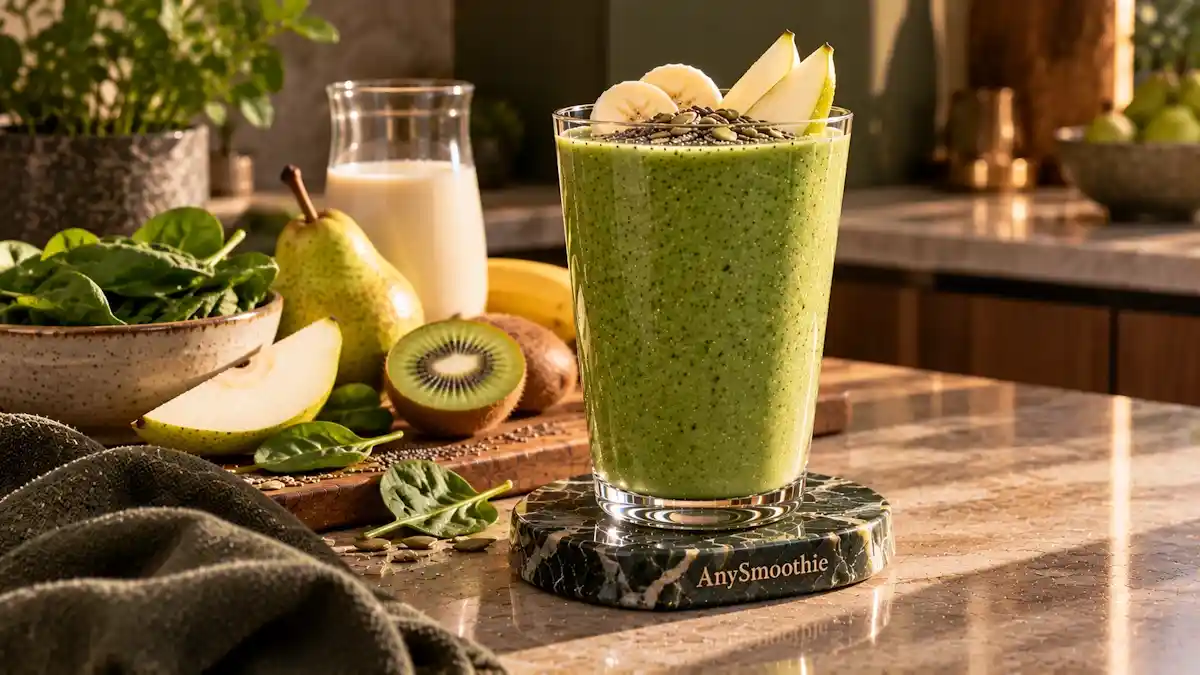
A smoothie can be a convenient way to include vitamin K-rich foods, but it doesn’t guarantee a change in protein carboxylation. Your body manages that process through enzymes and a vitamin K recycling cycle.
Dietary fat helps with vitamin K absorption, while protein contributes to broader nutrition. Three smoothie styles offer different ways to fit these foods into your overall eating pattern, with extra care needed if you take warfarin. Start with the biology to understand what a smoothie can reasonably support.
How smoothies for vitamin K cycle support normal protein carboxylation
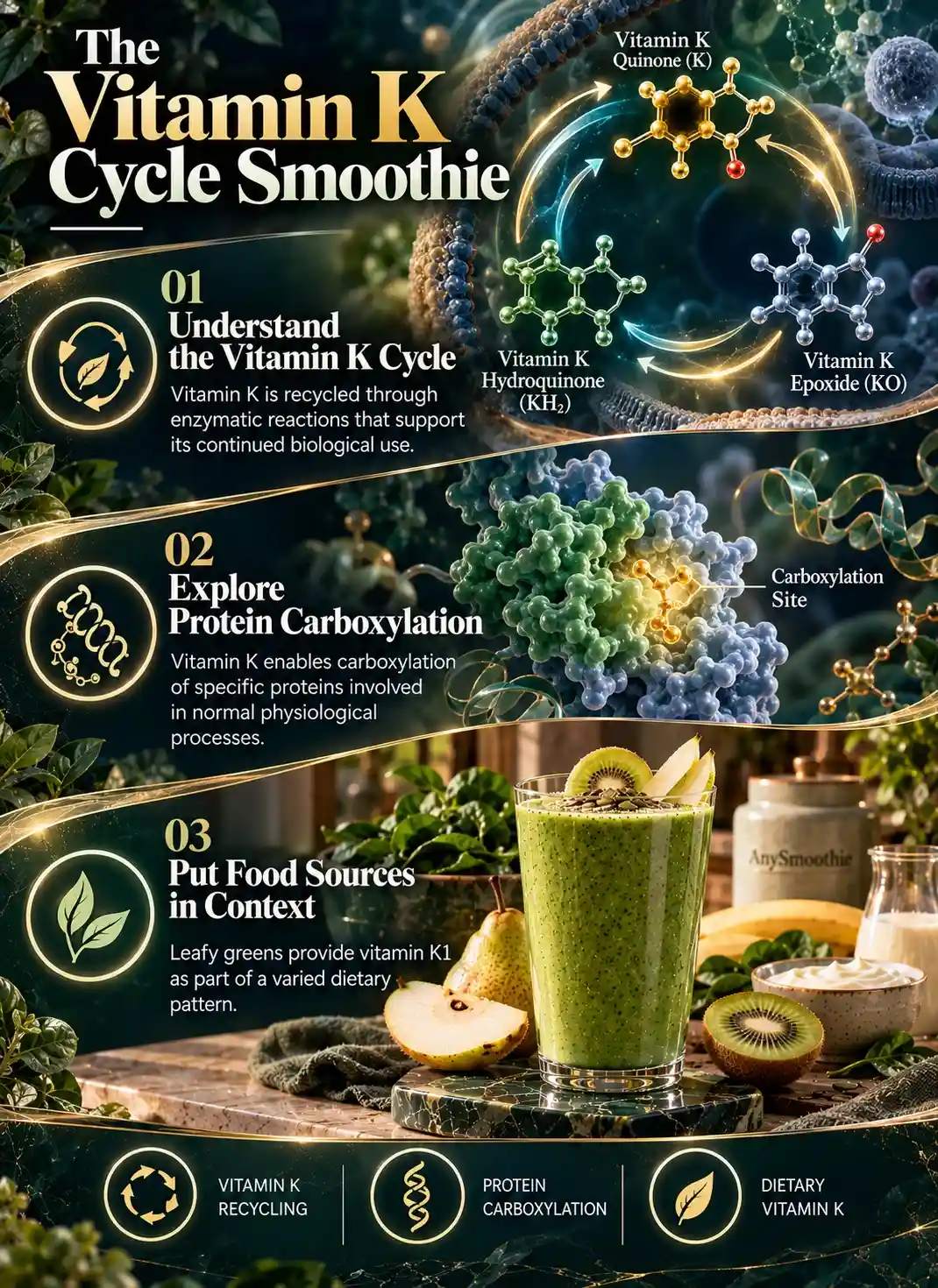
Vitamin K is a cofactor for an enzyme that modifies certain proteins through carboxylation. This modification helps those proteins bind calcium, which supports their normal functions.
The NIH vitamin K fact sheet describes its role in proteins involved in blood clotting and bone metabolism. For a related bone-focused discussion, see smoothies supporting osteoblast mineralization. Getting vitamin K through food supports normal physiology, but doesn’t establish how much carboxylation occurs.
How the body recycles vitamin K
During carboxylation, the active, reduced form of vitamin K becomes oxidized. The body then recycles it through chemical steps that make it available for reuse.
An enzyme called vitamin K epoxide reductase, encoded by the VKORC1 gene, participates in this recycling process. Recycling helps conserve vitamin K, although dietary intake still matters. For a related but distinct topic on cellular lipid signaling, see smoothies for sphingolipid signaling.
A smoothie supplies nutrients that enter normal digestion and metabolism. It doesn’t directly control VKORC1 activity or determine the carboxylation of individual proteins. Eating more vitamin K also doesn’t automatically produce a measurable improvement in these processes.
Why vitamin K and dietary fat belong in the same conversation
Vitamin K is fat-soluble, so dietary fat can support its absorption. During digestion, bile and fat-containing particles help the intestine absorb fat-soluble vitamins.
Including a suitable fat source in a smoothie or the accompanying meal therefore makes nutritional sense. However, a high-fat drink isn’t necessary, and adding fat doesn’t guarantee a particular absorption rate.
Keep absorption and carboxylation separate: absorption brings vitamin K into the body; enzyme-driven reactions use it afterward. Neither dietary fat nor protein directly causes those reactions.
For a separate food-planning topic involving a blood donation appointment, see smoothies before blood donation. Preparing for donation and managing vitamin K intake while taking medication are different concerns.
3 Smoothies for Vitamin K Cycle and Protein Carboxylation
Each recipe makes one serving. Nutrition estimates vary by brand.
Green smoothie with leafy greens and yogurt
Ingredients
- 1 cup raw spinach (30 g)
- 3/4 cup plain nonfat Greek yogurt (170 g)
- 1/2 medium banana
- 1 tablespoon almond butter
- 1/2 cup water
Instructions
Blend water and spinach first. Add yogurt, banana, and almond butter; blend until smooth.
Estimated Nutrition (per serving)
- Calories: ~260 kcal
- Protein: ~22 g
- Carbohydrates: ~24 g
- Fat: ~9 g
- Fiber: ~4 g
- Sugars: ~14 g
Blend the spinach with water first for a smoother texture. Serve chilled for a refreshing, creamy smoothie with a hint of nuttiness.
Berry smoothie with greens and kefir
Ingredients
- 1 cup chopped raw kale (21 g)
- 1 cup plain low-fat kefir
- 3/4 cup frozen blueberries
- 1 tablespoon ground flaxseed
Instructions
Blend kale with kefir until finely broken down. Then add blueberries and flaxseed; blend until creamy.
Estimated Nutrition (per serving)
- Calories: ~220 kcal
- Protein: ~13 g
- Carbohydrates: ~28 g
- Fat: ~6 g
- Fiber: ~6 g
- Sugars: ~20 g
Avocado and spinach smoothie with soy protein
Ingredients
- 1 cup raw spinach (30 g)
- 1 cup unsweetened soy milk
- 50 g avocado
- 100 g silken tofu
- 1 tablespoon lime juice
Instructions
Blend all ingredients until smooth. If the mixture is too thick, add a splash of water and blend again.
Estimated Nutrition (per serving)
- Calories: ~230 kcal
- Protein: ~14 g
- Carbohydrates: ~14 g
- Fat: ~14 g
- Fiber: ~6 g
- Sugars: ~2 g
Smoothie styles can overlap, so these categories describe priorities rather than fixed formulas. Their vitamin K content depends on food choices; neither thickness nor high protein content establishes vitamin K value.
| Smoothie style | Vitamin K focus | Nutritional balance | Texture and flavor | Best suited for |
|---|---|---|---|---|
| Greens-forward | Greater emphasis on dietary K1 | Protein and fat vary | Lighter, earthy, sometimes bitter | Prioritizing leafy-food intake |
| Protein-focused | Vitamin K contribution varies | Greater emphasis on protein | Fuller-bodied, often mild | Meeting broader protein goals |
| Creamy plant-based | K1 contribution depends on choices | Fat may be more prominent; protein varies | Richer, smooth, adaptable sweetness | Dairy-free preferences and fuller texture |
Choose according to the nutritional gap you’re trying to address, rather than assuming one style supports carboxylation better. For example, a protein-focused drink may fit your protein goals while contributing little vitamin K. These descriptions don’t establish nutrient amounts or physiological outcomes.
Build a smoothie that fits your nutrition goals
Start with the role you want the drink to play in your day. A snack and a meal-sized drink have different nutritional demands, so vitamin K shouldn’t be the only consideration. Appetite, food preferences, and the rest of your diet matter too.
Choose greens, fat, and protein with balance in mind
Leafy greens such as spinach and kale provide vitamin K1, also called phylloquinone. Vitamin K2 describes menaquinones found in some fermented and animal foods, although amounts vary considerably. Harvard’s guide to vitamin K foods explains these distinctions.
For a complementary food-focused discussion of nutrients associated with mineralized oral structures, see smoothies for healthy gums and strong teeth.
For dietary fat, consider options that fit your preferences, such as avocado or nut butter. Protein-rich foods, including yogurt or soy-based choices, can contribute to overall nutrition and satisfaction.
These food groups have different jobs. Protein provides amino acids, but extra protein cannot replace vitamin K’s cofactor role. Likewise, a fermented food isn’t automatically a dependable source of K2.
Let flavor and texture support a regular habit
Choose flavors you enjoy enough to return to without relying on excessive sweetness. Leafy greens can taste grassy or bitter, while richer foods can soften their flavor and create a fuller texture.
Also consider how the smoothie fits alongside your other meals. A drink that regularly displaces varied meals may narrow your food choices, even if it contains greens.
You don’t need every nutritional goal covered in one glass. Regular dietary patterns offer more useful context than judging a single smoothie by its vitamin K content alone.
Keep vitamin K intake steady and use smoothies wisely
If you take warfarin, consistency in vitamin K intake matters. Sudden dietary changes can affect how the medication works, including a new habit of drinking green smoothies.
The NIH consumer guidance on vitamin K advises people taking warfarin to keep their vitamin K intake consistent. Talk with your prescriber before making major changes, including adding vitamin K supplements. Don’t stop or change your medication yourself.
For a separate food-focused perspective on vascular wellness, see hesperidin smoothies for vascular wellness. This is a complementary nutrition topic, not guidance on warfarin or vitamin K management.
Consistency doesn’t mean avoiding leafy greens. It means keeping a reasonably steady pattern that your care team can account for.
Smoothies remain a food choice, not a treatment or a guaranteed way to alter protein carboxylation.
Conclusion: Choose a balanced smoothie within a varied diet
Vitamin K helps certain proteins bind calcium, and the body’s recycling cycle makes vitamin K available for reuse. A smoothie can contribute dietary vitamin K, while fat can support its absorption.
Choose a drink that fits your appetite and broader nutrition needs. Keep variety and consistency in view, and seek professional guidance when changes in vitamin K intake could affect medication management. A balanced smoothie belongs within that larger eating pattern.
🛡️ Safety Notes & Dietary Interactions
- Warfarin consistency: Leafy greens such as spinach and kale provide vitamin K1. If you take warfarin, keep vitamin K intake reasonably consistent and discuss major dietary changes with your prescriber.
- Allergen awareness: The recipes include dairy, almonds, soy, and flaxseed. Check labels and choose substitutions that fit your allergies or dietary restrictions rather than assuming every alternative is suitable.
- Fat and absorption: Vitamin K is fat-soluble, so foods such as almond butter, avocado, and flaxseed provide dietary fat alongside vitamin K-containing ingredients. More fat isn’t necessary to guarantee greater absorption.
- Supplement caution: Vitamin K supplements should not be added simply to pursue greater protein carboxylation. If you use supplements or medications affected by vitamin K intake, seek individualized professional guidance.
FAQs
Why are spinach and kale included in these smoothies?
Spinach and kale provide vitamin K1, also called phylloquinone. Vitamin K serves as a cofactor for enzymes involved in protein carboxylation, but eating more leafy greens doesn’t directly control the amount of carboxylation occurring in individual proteins.
Does adding fat make vitamin K carboxylation work better?
Dietary fat can support absorption of vitamin K because it is fat-soluble. Ingredients such as almond butter, avocado, and flaxseed provide fat within the recipes. However, improved absorption should not be confused with directly controlling the vitamin K recycling cycle or protein carboxylation.
Which smoothie is best if I take warfarin?
There isn’t a universally best recipe. The key consideration is consistency in vitamin K intake. Green smoothies containing spinach or kale can contribute vitamin K1, so discuss your usual intake and any planned dietary changes with your prescriber rather than suddenly adding or removing large amounts of leafy greens.
Can a high-protein smoothie replace vitamin K-rich foods?
No. Protein and vitamin K have different nutritional roles. Greek yogurt, kefir, tofu, and soy milk can contribute protein, while leafy greens supply vitamin K1. Increasing protein doesn’t substitute for vitamin K’s cofactor role, and a protein-focused smoothie may contain relatively little vitamin K.
Does drinking a vitamin K smoothie directly increase protein carboxylation?
Not necessarily. The smoothie provides vitamin K-containing foods that enter normal digestion and metabolism, but enzyme-driven carboxylation is regulated within physiological systems. The article specifically separates dietary intake from the cellular process and does not establish that a particular smoothie measurably increases carboxylation.

Medical Disclaimer: AnySmoothie content is for educational purposes only and is not a substitute for professional medical advice. Consult a healthcare provider for personalized guidance. See our full Disclaimer & Terms of Use. AI Transparency: AnySmoothie may use AI to support content development. All content undergoes human editorial review for accuracy, clarity, and editorial quality. See our full AI Transparency.