
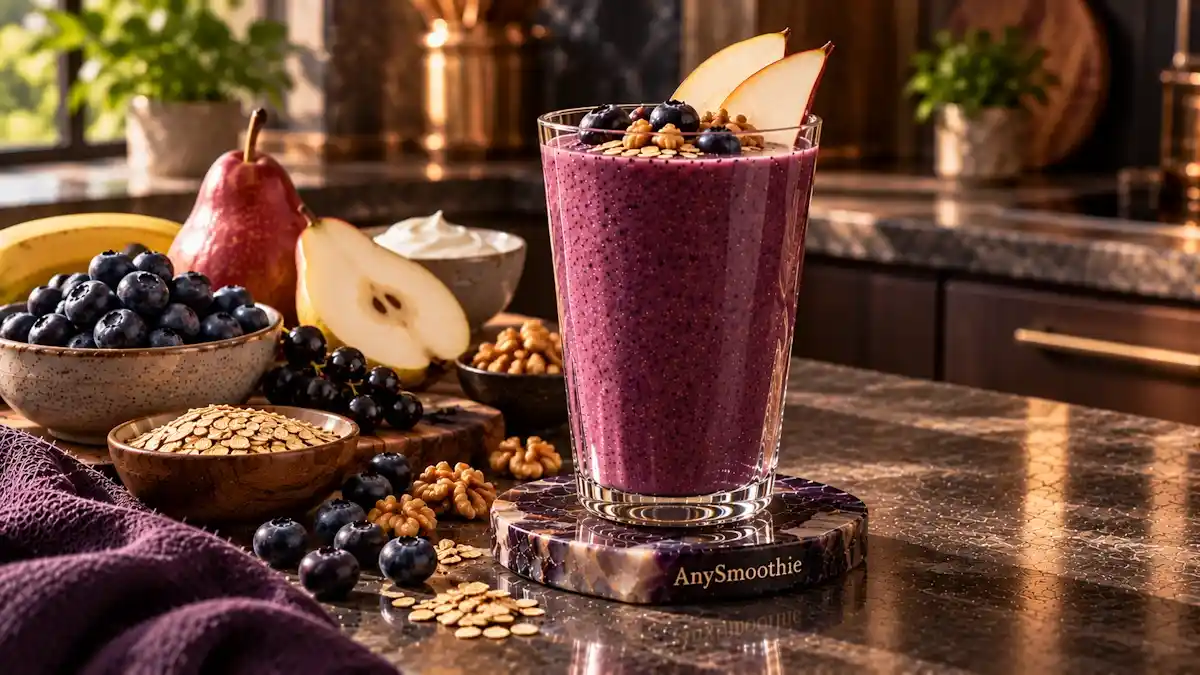
A smoothie can supply nutrients for everyday energy, but it can’t switch adenosine signaling on or off. If you’ve seen recipes promoted as smoothies for adenosine signaling, that distinction matters.
Your body needs balanced nourishment to support normal energy metabolism, while adenosine has its own complex role in cellular communication. Understanding that difference makes it easier to choose among three practical blends and fit them into your routine without expecting a specific effect on adenosine.
What adenosine signaling has to do with energy
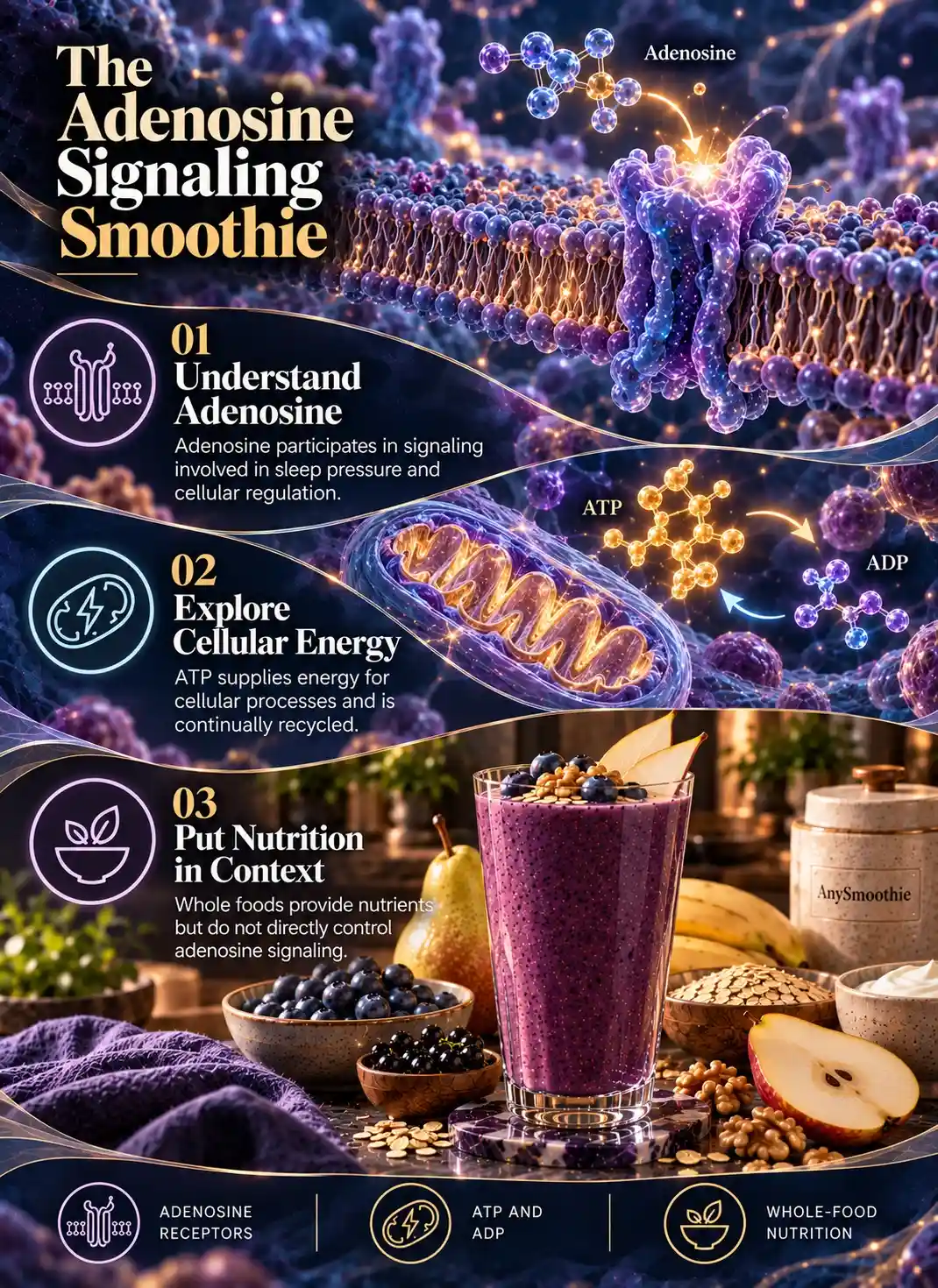
Adenosine is a molecule that helps cells communicate. Its production and receptor activity relate to energy use and the body’s response to wakefulness.
How the body uses adenosine and ATP
Cells use adenosine triphosphate, or ATP, to power processes such as muscle contraction and active transport. As cells use ATP, they remove phosphate groups; further breakdown can produce adenosine.
The physiology of ATP connects this molecule with the energy cells need for ordinary functions. For a related look at how nutrients contribute to cellular energy metabolism, see smoothies for mitochondrial ATP production. However, eating ingredients that supply energy doesn’t give you direct control over ATP breakdown or adenosine levels.
Why a smoothie can’t target this pathway
Adenosine receptors help cells respond to changing conditions. In the brain, adenosine also contributes to sleep pressure during wakefulness. Sleep timing involves other processes as well; for a complementary topic, see blue light recovery smoothies for sleep rhythms. Light exposure and adenosine are related to sleep in different ways, and a smoothie cannot control either process directly.
These processes depend on tissue activity and other biological controls. A recipe can’t reliably produce a chosen receptor response. Its useful role is supplying food and fluids that support normal physiology.
3 Smoothies for Adenosine Signaling and Energy Regulation
Each combination makes one generous serving and supports normal energy metabolism through food. None is designed to control adenosine signaling.
The nutrition estimates below assume plain nonfat Greek yogurt, water in the berry-oat recipe, ground flaxseed and 2% dairy milk in the banana-spinach recipe, and peanut butter with 2% dairy milk in the cocoa-cherry recipe. Substituting milk alternatives or chia seeds can change the values.
Berry, oat, and yogurt smoothie
Ingredients
- 1/2 cup berries
- 1/4 cup rolled oats
- 3/4 cup plain Greek yogurt
- 1/2 cup water or milk
Steps
Blend the berries, oats, Greek yogurt, and water or milk until smooth. Add more liquid if needed.
Berries and oats contribute carbohydrates and fiber, while Greek yogurt supplies protein. For a dairy-free version, choose an unsweetened soy yogurt with protein listed on its nutrition label.
Estimated Nutrition per Serving
- Calories: ~220 kcal
- Protein: ~20 g
- Carbohydrates: ~30 g
- Fat: ~3 g
- Fiber: ~6 g
- Sugars: ~13 g
Banana, spinach, and seed smoothie
Ingredients
- One banana
- 1 cup spinach
- 1 tablespoon ground flaxseed or chia seeds
- 1 cup milk or fortified unsweetened soy milk
Steps
Combine the banana, spinach, ground flaxseed or chia seeds, and milk or fortified unsweetened soy milk. Blend thoroughly.
This mix brings together fruit, greens, fluids, and fats. Milk or soy milk also contributes protein. If you use chia, drink it soon after blending or add liquid as it thickens.
Estimated Nutrition per Serving
- Calories: ~270 kcal
- Protein: ~10 g
- Carbohydrates: ~41 g
- Fat: ~9 g
- Fiber: ~5 g
- Sugars: ~28 g
A ripe banana makes this green smoothie naturally creamy, while the seeds add a subtle nutty touch.
Cocoa, cherry, and nut butter smoothie
Ingredients
- 3/4 cup pitted cherries
- 1 tablespoon unsweetened cocoa
- 1 tablespoon nut butter
- 1 cup milk or unsweetened soy milk
Steps
Blend the pitted cherries, unsweetened cocoa, nut butter, and milk or unsweetened soy milk until smooth. Frozen cherries make a thicker drink.
The base supplies protein, while nut butter contributes fats. Cocoa contains some caffeine, so check product information if you avoid it, or leave it out entirely.
Estimated Nutrition per Serving
- Calories: ~310 kcal
- Protein: ~14 g
- Carbohydrates: ~37 g
- Fat: ~14 g
- Fiber: ~6 g
- Sugars: ~25 g
Compare the blends by their ingredients and preparation needs.
| Smoothie | Key ingredients | Nutritional contribution | Caffeine content | Preparation note |
|---|---|---|---|---|
| Berry, oat, and yogurt | Berries, oats, Greek yogurt | Carbohydrates, protein, fiber | None added | Soak oats for a smoother texture |
| Banana, spinach, and seed | Banana, spinach, flax or chia | Carbohydrates, fats, fluids | None added | Blend spinach thoroughly |
| Cocoa, cherry, and nut butter | Cherries, cocoa, nut butter, milk | Protein, carbohydrates, fats | Some from cocoa | Use pitted cherries |
Choose by taste, appetite, and caffeine preference rather than expecting different adenosine effects.
How smoothies for adenosine signaling can support everyday energy
Smoothies combine several food groups in one serving. Their nutritional value depends on the ingredients and portions, not a special effect on cellular signaling.
Choose ingredients for balanced nourishment
Start with fruit or oats for carbohydrates, which your body can use for energy. Then add plain yogurt, milk, or a protein-rich soy food.
Protein supplies amino acids for tissue maintenance and enzymes involved in metabolism. Seeds or nut butter add fats, which provide energy and support absorption of fat-soluble vitamins.
Berries and leafy greens contribute fiber and micronutrients. Together, these foods support physiological systems through ordinary nutrition; they don’t directly regulate adenosine receptors.
Keep caffeine and added sugar in perspective
Coffee, tea, chocolate, and some energy powders can add caffeine. Caffeine binds to adenosine receptors and blocks some of adenosine’s effects, as described in this review of adenosine, caffeine, and sleep regulation.
For more caffeine-free morning recipe ideas, see 5 best morning smoothies for energy without caffeine. These recipes offer another approach to choosing ingredients without relying on caffeinated drinks, although they don’t directly control adenosine signaling.
That action differs from supplying nutrients for energy metabolism. Check ingredient labels if caffeine matters to you. Also, choose unsweetened bases where practical, since flavored yogurt, sweetened milk alternatives, and syrups can add sugar.
Make a smoothie part of a realistic energy routine
Portion size matters because a small snack and a full breakfast meet different needs. A fruit-and-water blend may leave you hungry sooner than a blend containing protein and fats. If your smoothie replaces a meal, include enough food to satisfy your appetite.
A simple way to find a comfortable portion is to prepare one recipe on an ordinary morning first, then adjust its thickness or serving size before relying on it during a busy day.
Also, consider what you eat throughout the day. A smoothie can add variety, but it doesn’t need to replace meals you already enjoy. Drinking water regularly, getting enough sleep, and staying physically active also matter to everyday energy.
Adjust texture and ingredients to suit you. For example, use lactose-free milk if that’s your preference, or choose soy milk when you want a dairy-free protein source. Nut allergies require a different fat source.
For personal dietary concerns, consult a registered dietitian or another qualified health professional. Persistent, unexplained tiredness also deserves professional attention rather than another ingredient added to the blender.
Conclusion: Keep the focus on balanced nourishment
Smoothies can’t directly control adenosine signaling, but balanced recipes can supply nutrients that support normal energy metabolism. Their role fits within your overall eating pattern.
Try the berry, banana, or cherry combination, then adjust the liquid and texture to your taste. Choose caffeine-containing ingredients deliberately, and keep expectations grounded in what these blends provide: practical nourishment for everyday life.
🛡️ Safety Notes & Dietary Interactions
- Caffeine awareness: The cocoa-cherry smoothie contains cocoa, which contributes some caffeine. If caffeine affects your sleep or you intentionally limit it, omit the cocoa or account for other daily caffeine sources.
- Fiber and thickening: Oats, flax, chia, berries, and spinach contribute fiber, while chia absorbs liquid after blending. Increase fiber gradually if needed and add liquid when the smoothie becomes too thick.
- Allergen awareness: The recipes may contain dairy, soy, peanuts, tree nuts, flax, or chia depending on ingredient choices. Check labels carefully and use substitutions appropriate for your allergies and dietary needs.
- Energy expectations: These smoothies supply carbohydrates, protein, fats, and fluids for normal nutrition, but they cannot directly regulate adenosine receptors. Persistent unexplained tiredness warrants professional attention rather than additional smoothie ingredients.
FAQs
Does any of these smoothies directly control adenosine signaling?
No. The article explains that adenosine signaling depends on cellular activity, receptor responses, ATP metabolism, and other biological controls. These smoothies provide nutrients that support ordinary energy metabolism, but no recipe is established as a way to switch adenosine signaling on or off.
Which smoothie should I choose if I want to avoid caffeine?
The berry, oat, and yogurt smoothie and the banana, spinach, and seed smoothie contain no intentionally added caffeine according to the article. The cocoa-cherry blend contains some caffeine from cocoa, so it may be preferable to omit cocoa if you deliberately avoid caffeine.
Why does the banana-spinach smoothie use flax or chia?
Both provide fats and fiber while complementing the banana, spinach, and milk or soy milk. Chia has an additional texture consideration because it absorbs liquid after blending. If using chia, drink the smoothie soon after preparation or add enough liquid to maintain a comfortable consistency.
Can I use soy milk instead of dairy milk?
Yes. The recipes specifically allow fortified unsweetened soy milk as an alternative. It can provide protein, but nutritional values vary between products, so check the label. Other plant-based drinks may contain considerably less protein and therefore change the nutritional contribution of the smoothie.
Is the cocoa-cherry smoothie better for energy because it contains cocoa?
Not according to the article. Cocoa adds flavor and some caffeine, but the smoothie is not shown to improve energy through adenosine signaling. Its nutritional contribution comes from the cherries, milk or soy milk, nut butter, and cocoa rather than a demonstrated cellular effect.

Medical Disclaimer: AnySmoothie content is for educational purposes only and is not a substitute for professional medical advice. Consult a healthcare provider for personalized guidance. See our full Disclaimer & Terms of Use. AI Transparency: AnySmoothie may use AI to support content development. All content undergoes human editorial review for accuracy, clarity, and editorial quality. See our full AI Transparency.