
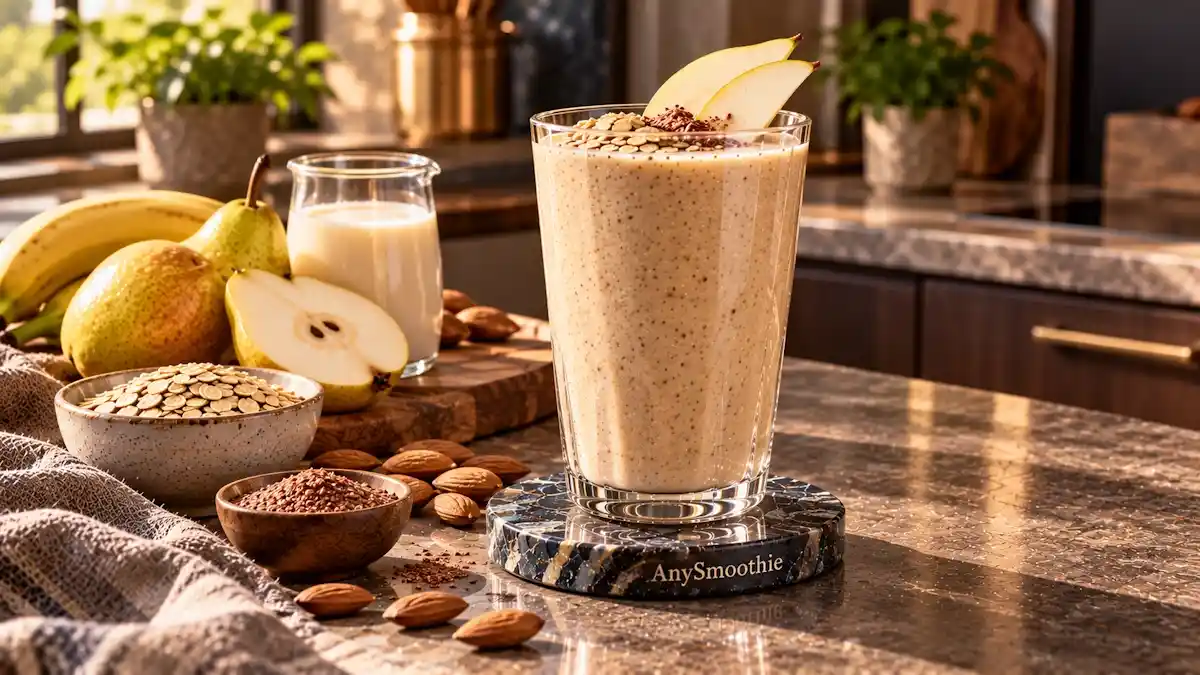
A smoothie can make nutrient-dense foods easy to combine, but no smoothie can repair myelin or treat a health condition. Dietary fats, protein, and vitamins supply nutrients your body uses in normal cell maintenance and metabolism.
Smoothies for myelin lipid support are best understood as convenient food combinations, without a promised neurological benefit. Start with the nutrients involved in everyday physiological processes, then choose ingredients that fit your preferences and overall diet.
What Myelin Lipids Need from Your Diet
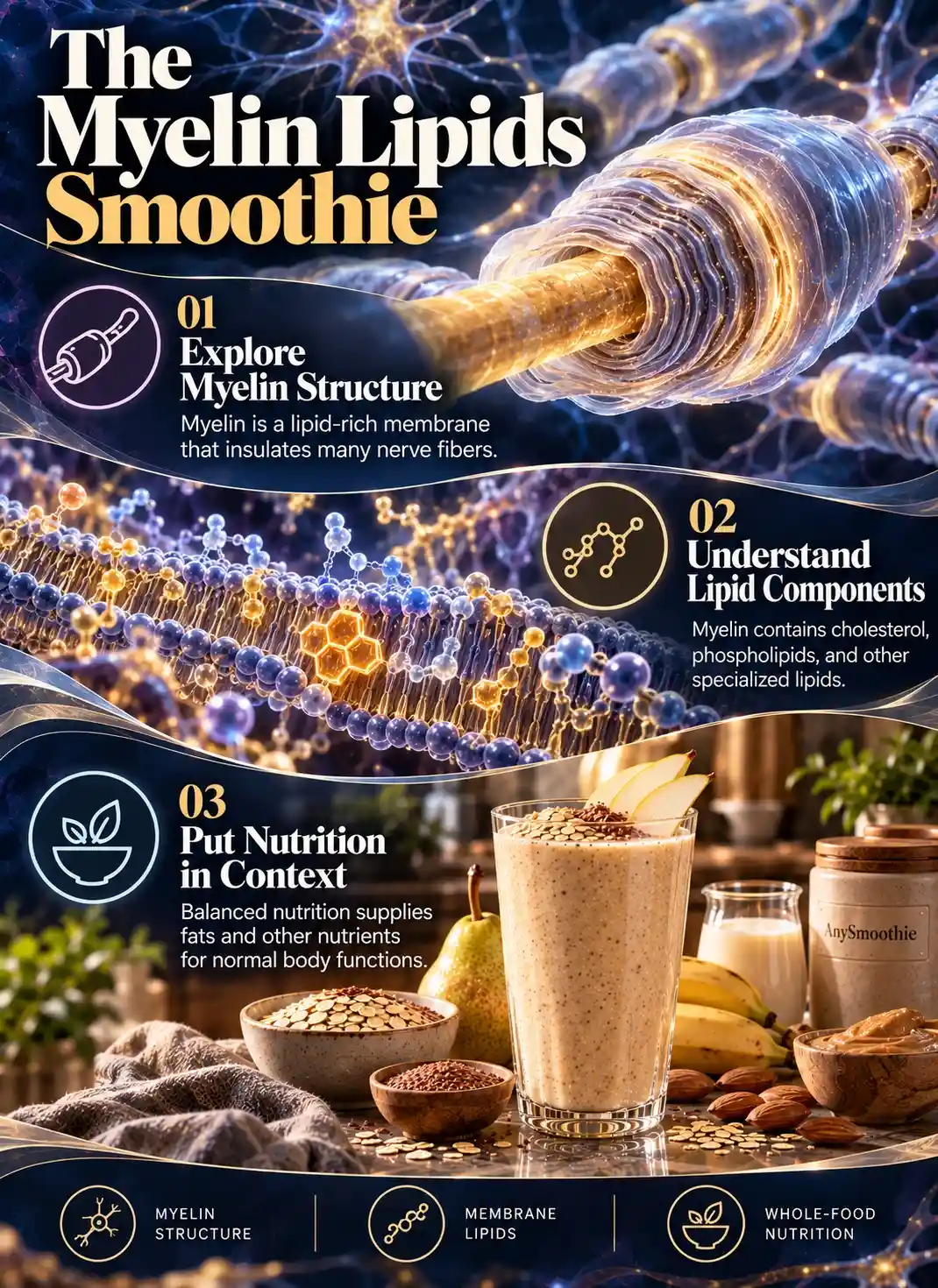
Myelin is a fatty covering around many nerve fibers that helps electrical signals travel efficiently. Its composition includes cholesterol, phospholipids, and sphingolipids, as described in this review of myelin lipid metabolism.
Phospholipids also participate in other cellular processes, including signaling. For a related but distinct topic, see phospholipid smoothies for second messenger signaling.
However, eating these fats doesn’t deliver them directly to myelin. The body digests food, absorbs nutrients, and regulates their use through complex metabolic pathways.
Key nutrients to include in a myelin-supportive eating pattern
Avocado, hemp hearts, and walnuts provide unsaturated fats. Chia seeds and walnuts also supply alpha-linolenic acid (ALA), a plant omega-3 fatty acid. Fats contribute to cell membrane structure and provide energy.
Soy foods provide choline, which the body uses to produce certain membrane phospholipids. The NIH describes these functions in its choline fact sheet. Choline also participates in acetylcholine synthesis, a separate biological process explored in smoothies to optimize choline acetyltransferase.
Yogurt and B12-fortified soy milk contribute vitamin B12 for normal nervous system function. Meanwhile, sunflower seeds provide vitamin E, which helps protect cells against oxidative damage. Protein supplies amino acids for enzymes and structural proteins; yogurt, soy milk, and hemp hearts are useful smoothie sources.
Protein folding is another cellular process, distinct from supplying lipids for myelin. For a complementary topic, see trehalose smoothies for protein folding.
A related aspect of nervous system physiology is the blood-brain barrier, which serves a different function from myelin. Read more in smoothies for blood-brain barrier support.
Why a balanced diet matters more than one ingredient
Leafy greens add folate and variety, while different protein and fat sources broaden your nutrient intake. These foods support normal physiological systems through established nutrient functions.
Still, nutrient intake doesn’t guarantee a neurological outcome. Your body controls lipid synthesis and transport, including cholesterol production within the central nervous system.
3 Smoothies for Myelin Lipid Support
Each recipe makes one generous serving or two smaller portions. Blend until smooth, adding water as needed. Frozen fruit creates a thicker texture without requiring ice.
The nutrition estimates below are approximate and assume unsweetened fortified soy milk, plain low-fat dairy yogurt, and the specified ingredient quantities. Different brands, fortification levels, and substitutions can change the values.
Creamy blueberry avocado smoothie
Ingredients
- 3/4 cup frozen blueberries
- 1/4 medium avocado
- 1 cup unsweetened fortified soy milk
- 1 tablespoon hemp hearts
Steps
Blend the liquid and avocado first, then add the remaining ingredients. Blend until smooth.
Avocado makes this smoothie creamy, while hemp hearts and soy milk contribute plant protein. Both avocado and hemp hearts supply unsaturated fats. Choose soy milk fortified with vitamin B12, calcium, and vitamin D rather than assuming every plant-based drink contains them.
For a thinner drink, add a little cold water. A pinch of cinnamon works well without added sugar.
Estimated Nutrition per Serving
- Calories: ~260 kcal
- Protein: ~12 g
- Carbohydrates: ~24 g
- Fat: ~15 g
- Fiber: ~6 g
- Sugars: ~13 g
The creamy texture makes this smoothie especially enjoyable when served cold, with a sprinkle of hemp hearts on top for a subtle nutty finish.
Walnut, banana, and yogurt smoothie
Ingredients
- 3/4 cup plain low-fat dairy yogurt
- 1/2 banana
- 1 tablespoon chopped walnuts
- 1 tablespoon chia seeds
- 1/2 cup water
Steps
Blend the yogurt, banana, walnuts, chia seeds, and water until smooth. Let it stand briefly if you prefer a thicker consistency, because chia absorbs liquid.
Dairy yogurt contributes protein and vitamin B12. This vitamin supports normal neurological function and DNA synthesis, according to the NIH’s vitamin B12 guidance. Walnuts and chia add unsaturated fats, including ALA, plus fiber.
For a dairy-free version, use unsweetened soy yogurt fortified with B12 and calcium. Protein content varies between products, so choose one with a meaningful protein contribution.
Estimated Nutrition per Serving
- Calories: ~270 kcal
- Protein: ~11 g
- Carbohydrates: ~31 g
- Fat: ~13 g
- Fiber: ~6 g
- Sugars: ~19 g
Cocoa spinach and sunflower seed smoothie
Ingredients
- 1 cup fortified milk or unsweetened fortified soy milk
- 1 cup loosely packed spinach
- 1 tablespoon sunflower seed butter
- 1 tablespoon unsweetened cocoa
- 1/2 banana
Steps
Blend the liquid and spinach first, then add everything else. Blend until smooth.
Sunflower seed butter supplies fats and vitamin E. Milk or soy milk adds protein, while cocoa brings a chocolate flavor without requiring sweetened chocolate syrup.
Spinach adds folate and variety. The banana softens cocoa’s bitterness; use it frozen for a colder, thicker drink.
Estimated Nutrition per Serving
- Calories: ~290 kcal
- Protein: ~14 g
- Carbohydrates: ~33 g
- Fat: ~15 g
- Fiber: ~6 g
- Sugars: ~20 g
These estimates use fortified 2% dairy milk. Unsweetened fortified soy milk will change the nutrition values, so check the product label when making substitutions.
These recipes offer different combinations of familiar foods.
| Smoothie | Main ingredients | Key nutrients | Nutrient role | Best fit |
|---|---|---|---|---|
| Blueberry avocado | Blueberries, avocado, soy milk, hemp | Unsaturated fats, protein | Membrane structure and protein synthesis | Creamy, dairy-free option |
| Walnut banana | Yogurt, banana, walnuts, chia | B12, protein, ALA | Normal nerve function and cell structure | Tangy, thicker texture |
| Cocoa spinach | Cocoa, spinach, sunflower butter, milk | Vitamin E, folate, protein | Cell protection and normal metabolism | Chocolate flavor with greens |
Choose by taste and dietary needs; none has a demonstrated myelin-repair advantage.
How to fit these smoothies into a balanced routine
Portions matter because nuts, seeds, and avocado pack substantial energy into small amounts. A large smoothie may suit breakfast, while a smaller serving can accompany another food.
Balance fats, protein, and fiber in each glass
Pair whole fruit with yogurt or soy milk, then add a measured portion of seeds, nuts, or avocado. This combination supplies protein, fat, and fiber, which can make a smoothie more filling.
Use unsweetened liquids and plain yogurt to limit added sugar. Whole fruit retains its fiber when blended, although drinking it can be faster than eating it. Adjust portions to your appetite rather than automatically finishing a large blender jar.
Make swaps that match your needs
For a walnut allergy, omit walnuts and use a tolerated seed ingredient. However, seeds can also cause allergies. For dairy avoidance, fortified soy products can contribute protein and B12.
Keep varied meals alongside smoothies, including vegetables, grains, and other protein sources. A smoothie can’t replace a complete eating pattern. Discuss supplements or major dietary changes with a qualified health professional when you have a diagnosed condition, suspected deficiency, or prescribed dietary restrictions.
Conclusion: A Convenient Way to Add Nutrient Variety
These smoothies combine fats, protein, and vitamins that participate in normal physiological pathways. Their value comes from their ingredients and convenience, without a promise of repairing myelin.
Choose a recipe you enjoy and vary the ingredients across your week. Keep it alongside balanced meals, and remember that food combinations aren’t treatments or substitutes for medical care.
🛡️ Safety Notes & Dietary Interactions
- Neurological expectations: These smoothies provide nutrients involved in normal cell maintenance, but they cannot repair myelin or guarantee a neurological benefit. Treat them as food choices rather than targeted neurological interventions.
- Allergen awareness: The recipes contain soy, dairy, hemp, walnuts, chia, and sunflower seeds or their products. Check labels carefully and replace only with ingredients that meet your allergy and dietary requirements.
- Fortified products: Vitamin B12, calcium, and vitamin D levels vary substantially among plant-based beverages and yogurts. Check labels rather than assuming a product provides the same nutrients as fortified soy milk.
- Fiber and energy density: Chia, walnuts, hemp hearts, avocado, and sunflower seed butter contribute fiber and concentrated energy. Adjust portions to your appetite and increase fiber-containing ingredients gradually if they’re unfamiliar.
FAQs
Can these smoothies repair damaged myelin?
No. The article specifically presents them as convenient combinations of nutrients involved in normal physiology, not treatments for myelin damage. Dietary fats, protein, vitamin B12, folate, and other nutrients have established physiological roles, but eating them does not directly deliver nutrients to myelin or guarantee neurological repair.
Which smoothie provides vitamin B12?
The walnut, banana, and yogurt smoothie provides vitamin B12 through dairy yogurt. The blueberry avocado and cocoa spinach recipes can also provide B12 when made with appropriately fortified soy milk or other fortified products. Check the label because fortification varies between brands and plant-based beverages.
Why are chia seeds and walnuts included?
Both provide unsaturated fats, and both contribute ALA, a plant omega-3 fatty acid. They also add fiber. Their inclusion reflects general nutrient variety rather than a demonstrated ability to increase myelin production or deliver these fats directly into nervous-system myelin.
Can I make the walnut smoothie dairy-free?
Yes. The article suggests unsweetened fortified soy yogurt as a dairy-free alternative, preferably one that provides meaningful protein and is fortified with B12 and calcium. Nutritional values vary between products, so check the label rather than assuming a plant-based yogurt matches dairy yogurt.
Should I add more nuts, seeds, or avocado for greater myelin support?
Not necessarily. These ingredients are nutrient-dense and can substantially increase calories and fiber in relatively small portions. The article does not establish that larger amounts provide greater myelin-related benefits. Use measured portions that fit your appetite and vary nutrient sources across your overall diet.

Medical Disclaimer: AnySmoothie content is for educational purposes only and is not a substitute for professional medical advice. Consult a healthcare provider for personalized guidance. See our full Disclaimer & Terms of Use. AI Transparency: AnySmoothie may use AI to support content development. All content undergoes human editorial review for accuracy, clarity, and editorial quality. See our full AI Transparency.