
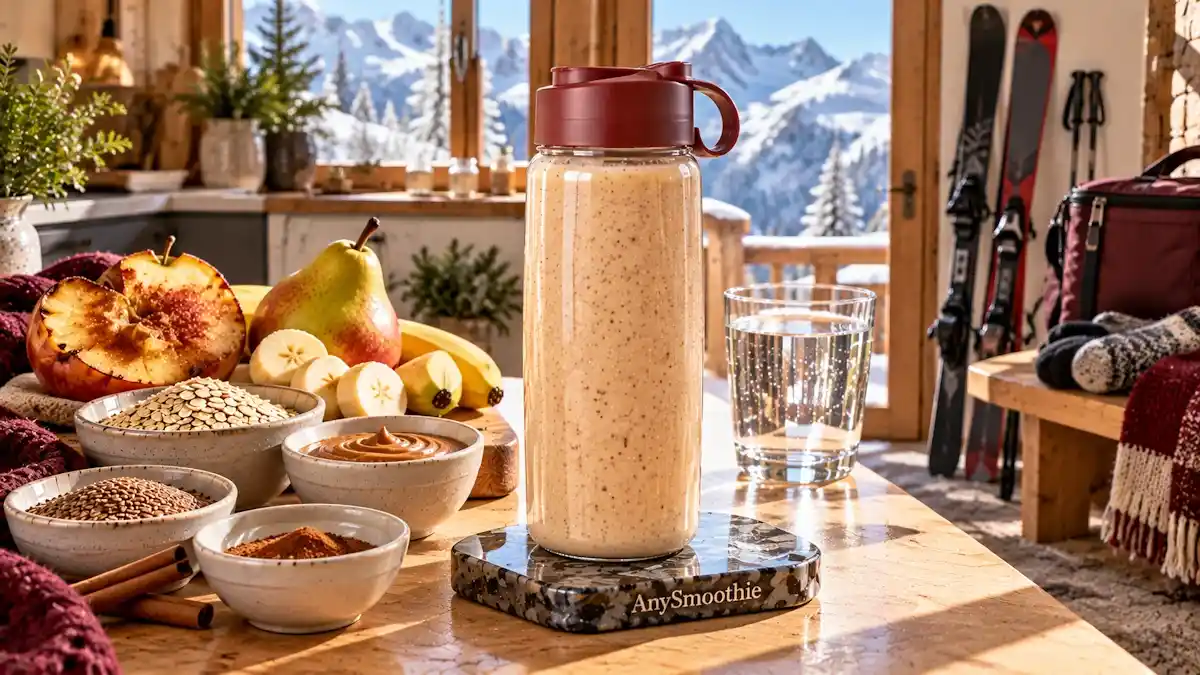
An early ski start can leave breakfast squeezed between finding your gloves and loading the car. Smoothies for weekend skiing offer a convenient breakfast or snack, with carbohydrates, protein, fats, and fluids in one drink.
They’re one part of a balanced day of eating, so you’ll still need water and enough food for your plans. A comfortable portion matters, too, especially when you’re heading straight outdoors.
Start with these three single-serving recipes, then adjust your timing and packing for a morning on the slopes or a snowy neighborhood walk.
When to Drink a Ski-Day Smoothie
Timing depends on your appetite, your schedule, and what else you’re eating. The same recipe can work at breakfast or as an afternoon snack.
Before skiing, keep it easy to digest
When possible, allow time between breakfast and heading onto the slopes. Your usual eating habits are a useful starting point, because stomach comfort varies.
Choose familiar ingredients and a portion that feels manageable. Carbohydrates with some protein make a practical combination; a large drink with generous nut butter may feel too rich before activity.
If you’re eating close to departure, start with a smaller portion. You can have additional food during a break instead of forcing down a full bottle.
Also, test ingredient changes at home rather than trying an unfamiliar breakfast before a full ski day.
Pack a snack and keep sipping fluids
Bring water alongside your smoothie. Cold, dry weather and activity can make drinking easy to overlook, so take regular water breaks.
For a more hydration-focused smoothie approach, see our smoothie for cellular hydration and electrolyte balance
A leakproof insulated bottle helps with transport. However, insulation alone doesn’t guarantee safe storage. Keep perishable drinks at 40°F or below, following USDA’s cold food guidance.
Pack a compact snack, such as crackers or a granola bar, for hunger between meals. If a smoothie leaves you hungry, add solid food rather than treating it as a complete meal.
After skiing, the chocolate recipe can fit before dinner. Let appetite and your next meal guide the portion.
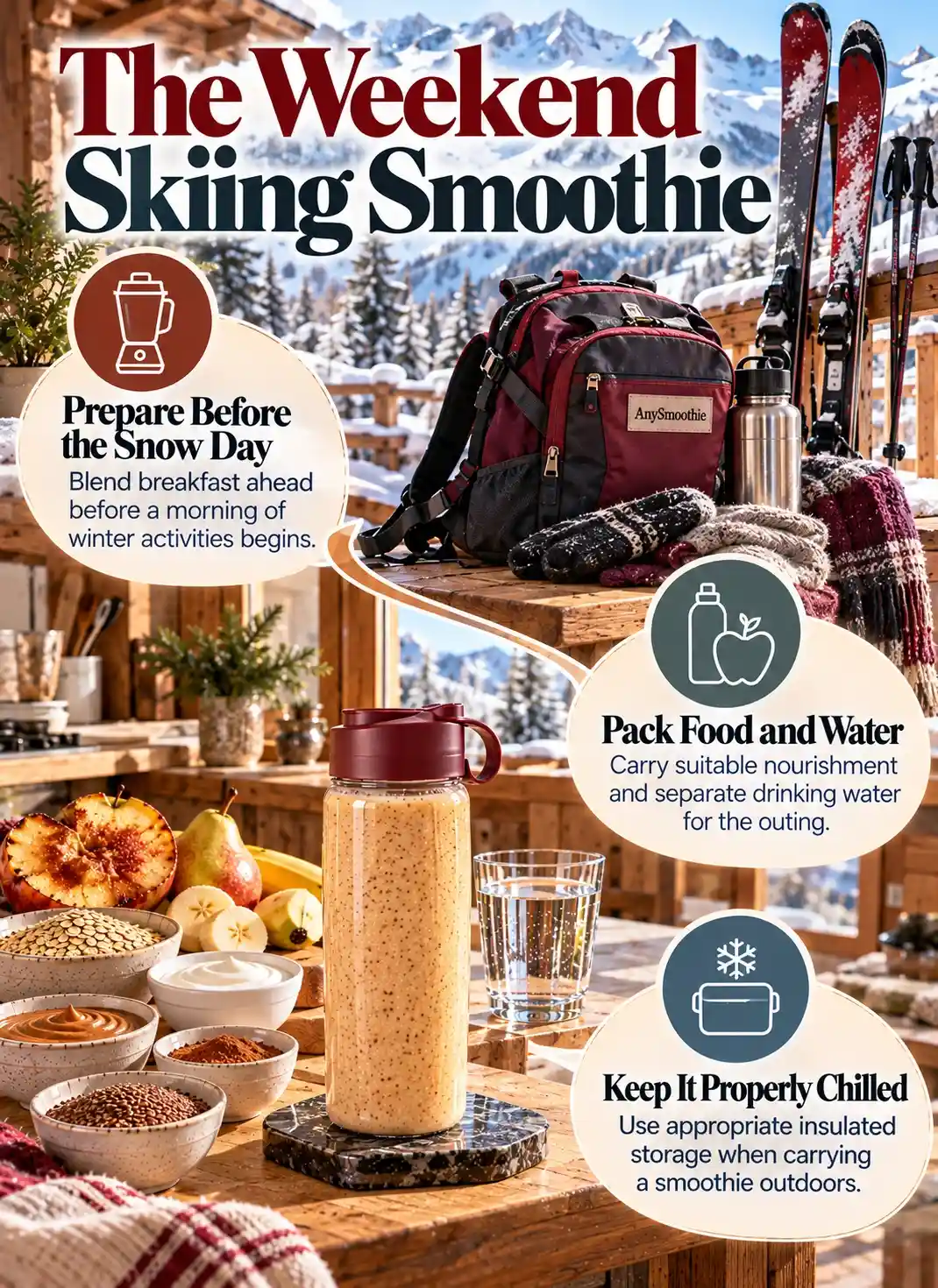
3 Smoothies for Weekend Skiing and Snow Days
Banana Oat Smoothie for an Early Start
Ingredients
- 1 medium banana
- 1/4 cup rolled oats
- 3/4 cup milk
- 1 tablespoon nut butter
Steps
Blend the banana, rolled oats, milk, and nut butter until smooth.
The flavor is mild and creamy. Digestion breaks carbohydrates into sugars that cells use for energy. Protein and fat add staying power to breakfast.
For a busy morning, soak the oats in the milk overnight in the refrigerator. Add the remaining ingredients and blend before leaving.
Estimated Nutrition per Serving
- Calories: ~370 kcal
- Protein: ~13 g
- Carbohydrates: ~53 g
- Fat: ~14 g
- Fiber: ~6 g
- Sugars: ~25 g
If I were making this before an early ski start, I’d keep the portion moderate and the texture slightly thinner so it is easier to drink before leaving.
Berry Yogurt Smoothie for a Filling Breakfast
Ingredients
- 3/4 cup berries
- 1/2 cup plain Greek yogurt
- 1/2 cup milk
- 1 teaspoon chia seeds
Steps
Blend the berries, plain Greek yogurt, milk, and chia seeds until smooth.
Berries provide carbohydrates and fiber, while yogurt supplies protein. Protein provides amino acids for normal tissue maintenance; fiber supports normal digestive function.
Frozen berries are convenient and give this smoothie a thick, tart texture. Taste before adding any sweetener.
Estimated Nutrition per Serving
- Calories: ~210 kcal
- Protein: ~17 g
- Carbohydrates: ~25 g
- Fat: ~5 g
- Fiber: ~6 g
- Sugars: ~18 g
Chocolate Peanut Butter Smoothie for After the Slopes
Ingredients
- 1 medium banana
- 1 tablespoon unsweetened cocoa
- 1 tablespoon peanut butter
- 3/4 cup milk
- 1/4 cup plain Greek yogurt
Steps
Blend the banana, unsweetened cocoa, peanut butter, milk, and plain Greek yogurt until smooth.
This tastes chocolatey with a mild peanut flavor. It’s a satisfying snack after activity, with carbohydrates and protein, rather than a recovery treatment.
For a peanut-free version, use sunflower seed butter. Check every ingredient’s label when managing an allergy.
Estimated Nutrition per Serving
- Calories: ~340 kcal
- Protein: ~18 g
- Carbohydrates: ~44 g
- Fat: ~13 g
- Fiber: ~6 g
- Sugars: ~27 g
These recipes use familiar ingredients and offer different flavors. Choose the one that fits your appetite and the food you’ll eat later.
| Smoothie | Main ingredients | Best timing | Nutrition focus | Cold-weather tip |
|---|---|---|---|---|
| Banana oat | Banana, oats, milk, nut butter | Early breakfast | Carbohydrates and fats | Pre-chill the bottle |
| Berry yogurt | Berries, Greek yogurt, milk | Breakfast | Protein and fiber | Pack with an ice pack |
| Chocolate peanut butter | Banana, cocoa, peanut butter, milk, yogurt | After skiing | Carbohydrates and protein | Skip extra ice |
Make Smoothies for Weekend Skiing Easy to Prep and Carry
A little preparation saves morning effort. Keep ingredients organized, protect perishable drinks during travel, and leave room to adjust the consistency.
Prep ingredients ahead and chill them safely
Measure oats, cocoa, or seeds the night before. Store dry ingredients separately from refrigerated milk and yogurt, or freeze portioned fruit for blending.
If you blend ahead, refrigerate the smoothie promptly in a sealed container. USDA’s safe storage guidance calls for refrigerating perishable food within two hours, or one hour above 90°F.
For more detailed preparation and storage considerations, see our smoothie storage and micronutrient stability.
For your morning departure:
- Start with a thoroughly chilled smoothie and a clean bottle.
- Tighten the lid and test for leaks before packing.
- Use an ice pack or cooler to maintain safe chilling during travel.
Snow outside doesn’t guarantee safe temperatures inside a warm car. Meanwhile, stored smoothies may separate or thicken; shake or reblend before drinking.
Adjust the texture, sweetness, and ingredients
For a dairy-free drink, fortified soy milk is an option with protein. Check the label for calcium and vitamin D, since plant-based drinks differ.
Choose dairy-free yogurt if needed, but compare protein content rather than assuming every yogurt alternative matches Greek yogurt. For nut-free preferences, use seed butter and check labels for cross-contact warnings.
To reduce sweetness, use unsweetened milk and yogurt, then taste before adding honey or syrup. A ripe banana may provide enough sweetness.
More oats or yogurt makes a thicker drink. Extra milk thins it, while fruit changes sweetness and carbohydrate content. Add liquid gradually so the smoothie remains easy to pour and drink.
Conclusion: Choose a Smoothie That Fits Your Day
A smoothie can make an early breakfast or an afternoon snack easier to manage. Choose the flavor and portion that fit your timing, appetite, and ingredients you enjoy.
Keep perishable drinks cold, bring water and other food, and leave room for meals throughout the day. That way, breakfast can fit comfortably into your plans before the gloves go on.
🛡️ Safety Notes & Dietary Interactions
- Cold-weather hydration: Skiing can make fluid needs easy to overlook, even in cold conditions. Bring water separately from the smoothie and take regular drinking breaks throughout the day.
- Cold storage: Milk, yogurt, and prepared smoothies remain perishable despite outdoor snow or freezing temperatures. Keep drinks at 40°F or below using appropriate chilling during travel.
- Digestive comfort: Large portions of nut butter, oats, or yogurt may feel heavy before skiing. Use familiar ingredients, smaller portions when eating close to departure, and adjust texture gradually.
- Allergen awareness: The recipes include dairy, peanuts, tree nuts, soy, and optional seed-butter substitutions. Check labels and cross-contact warnings, particularly when preparing food for shared ski trips.
FAQs
Which smoothie is best before skiing?
The banana oat smoothie is a practical early-breakfast option, combining banana, oats, milk or fortified soy milk, and nut butter. If you’re eating shortly before heading outside, use a smaller portion and keep the texture comfortable. The article emphasizes choosing familiar foods rather than testing a new combination before a full ski day.
Should I drink a smoothie immediately before skiing?
Not necessarily. Timing depends on your appetite, usual eating habits, and how close you are to departure. A large drink may feel uncomfortable during activity, particularly when it contains generous amounts of nut butter. If breakfast is close to skiing, a smaller portion may be easier to tolerate.
Does snow keep a smoothie safely cold during a ski day?
No. Outdoor snow does not guarantee safe food temperatures because the smoothie may spend time inside a warm car, lodge, or bag. Perishable drinks should remain at 40°F or below. Use an insulated bottle with an ice pack or cooler rather than relying on the surrounding weather.
Is the chocolate peanut butter smoothie only for after skiing?
The article positions it as an after-ski snack, but timing remains flexible. It provides carbohydrates and protein and can fit before dinner. It is not presented as a recovery treatment. Portion size should depend on your appetite and what you expect to eat at the next meal.
What can I use instead of peanut butter for a ski-day smoothie?
Use sunflower seed butter for a peanut-free version, as suggested in the article. If dairy is also an issue, choose suitable dairy-free yogurt and a fortified soy milk if appropriate. Check labels carefully for allergens and cross-contact warnings, because substitutions can have substantially different protein and nutrient profiles.

Medical Disclaimer: AnySmoothie content is for educational purposes only and is not a substitute for professional medical advice. Consult a healthcare provider for personalized guidance. See our full Disclaimer & Terms of Use. AI Transparency: AnySmoothie may use AI to support content development. All content undergoes human editorial review for accuracy, clarity, and editorial quality. See our full AI Transparency.