
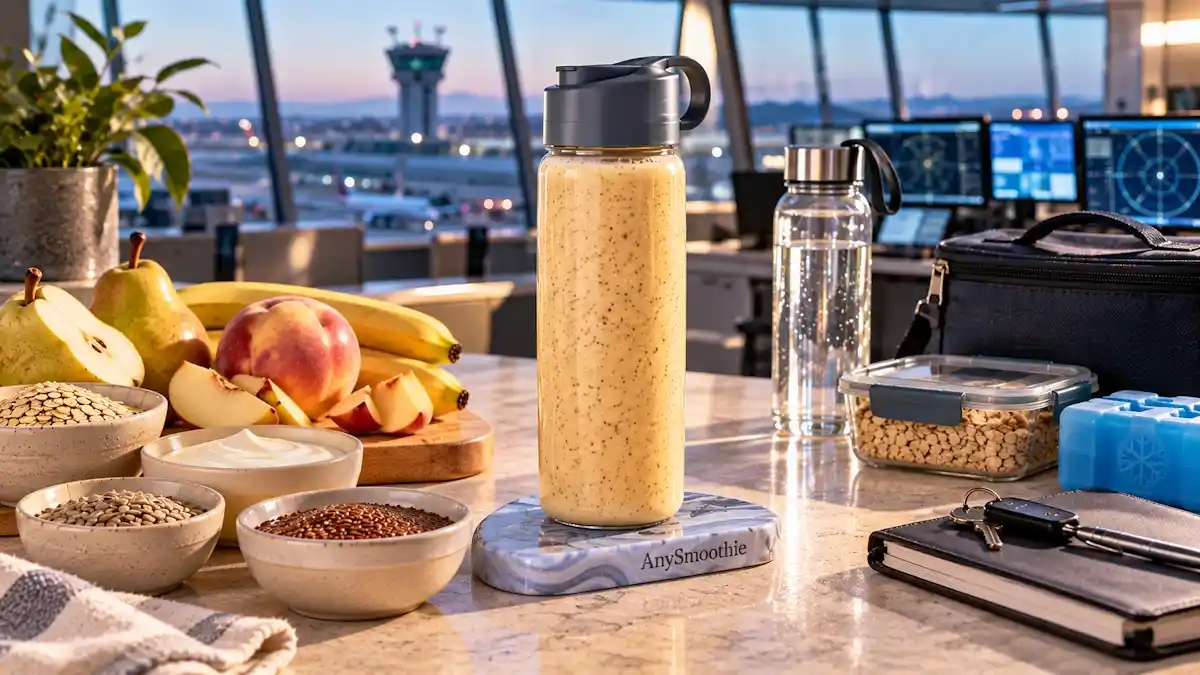
Finding satisfying food gets harder when a long shift stretches out or your break moves. Smoothies for air traffic controllers can offer a practical, make-ahead food option, with ingredients you can adjust to your appetite and taste.
They don’t replace meals, sleep, or workplace safety practices, and no recipe promises better alertness or job performance. The useful starting point is a manageable portion made with familiar ingredients.
Start with these three combinations, then plan how you’ll keep your drink cold until your break.
How to Choose and Pack Smoothies for a Long Shift
Your appetite, available break time, and access to refrigeration matter more than choosing a particular recipe. Start with a portion you can comfortably finish.
Build a Smoothie That Fits Your Break
Use fruit or oats for carbohydrates, yogurt or soy milk for protein, and enough liquid to blend. Nut or seed butter is optional; a tablespoon adds fat and changes the texture.
Because fruit ripeness affects sweetness, taste the blended drink before adding sweeteners. Plain yogurt and unsweetened milk alternatives give you more control over added sugar. Check the Nutrition Facts panel and ingredient list rather than assuming every plant-based product has comparable protein.
If a large drink feels too filling, halve the recipe. For a short break, a smaller bottle may be easier to finish without rushing.
Blend Ahead and Keep It Food-Safe
Wash your hands and use a clean blender, lid, and container. You can blend the night before, seal the drink, and refrigerate it promptly.
The USDA’s refrigeration and food safety guidance recommends keeping refrigerated food at 40°F or below. Transport your smoothie in an insulated bag with ice packs, then use a workplace refrigerator when available. Follow workplace rules about food storage and designated eating areas.
Discard a perishable smoothie left above refrigerator temperature for more than two hours, or one hour when temperatures exceed 90°F. If you can’t establish that it stayed safely chilled, discard it rather than tasting it.
A smoothie that looks or smells normal can still be unsafe after improper storage.
Separation and thickening can happen even during proper refrigeration. Shake before drinking, or stir in a little chilled milk if the oats have absorbed liquid.

3 Smoothies for Air Traffic Controllers on Long Shifts
Each recipe makes one portion, which you can divide into smaller servings. Before blending, wash fresh produce under running water, following the FDA’s safe food handling guidance. Use frozen fruit according to its package instructions.
Berry, Oat, and Yogurt Smoothie
Ingredients
- 1 cup berries
- 1/4 cup rolled oats
- 1/2 cup plain Greek yogurt
- 3/4 cup milk
Steps
Add the milk first, followed by the Greek yogurt, oats, and berries. Blend until smooth, adding a tablespoon of liquid at a time if needed.
Fruit and oats supply carbohydrates, which digestion breaks down into sugars that enter cellular energy pathways. They also provide fiber, which isn’t digested like starch. Yogurt contributes protein, a source of amino acids used to build and maintain body tissues.
For a dairy-free version, use plain soy yogurt and fortified soy milk. Check labels because protein amounts vary.
Estimated Nutrition per Serving
- Calories: ~310 kcal
- Protein: ~20 g
- Carbohydrates: ~47 g
- Fat: ~7 g
- Fiber: ~10 g
- Sugars: ~25 g
Banana, Peanut Butter, and Cocoa Smoothie
Ingredients
- 1 medium banana
- 1 tablespoon peanut butter
- 1 teaspoon unsweetened cocoa powder
- 3/4 cup milk
Steps
Peel and slice the banana first. Add the milk, banana, peanut butter, and cocoa powder to the blender. Blend everything until the cocoa disperses and no banana pieces remain.
Banana provides carbohydrate, while peanut butter adds protein and fat. Protein supplies amino acids; dietary fats provide energy and fatty acids used in cell structures. Together, these ingredients make a more substantial drink than banana and water alone.
Peanuts are an allergen. Substitute sunflower seed butter if it suits your dietary needs, and check its label for allergens and cross-contact warnings.
Estimated Nutrition per Serving
- Calories: ~300 kcal
- Protein: ~12 g
- Carbohydrates: ~40 g
- Fat: ~12 g
- Fiber: ~4 g
- Sugars: ~23 g
If I were preparing this for a short break, I’d keep the portion moderate so it is easy to finish without feeling rushed.
Mango, Spinach, and Ginger Smoothie
Ingredients
- 1 cup mango pieces
- 1/2 cup loosely packed spinach
- 1/4 teaspoon freshly grated ginger
- 1/2 cup plain yogurt
- 1/2 cup milk
Steps
Blend the milk and spinach first, then add the mango, ginger, and plain yogurt. Blend again until smooth.
Mango keeps the flavor fruity, while this small ginger portion adds a mild bite. The produce supplies carbohydrates and micronutrients, including vitamin C and folate. These nutrients participate in normal processes such as collagen formation and DNA synthesis.
Replace the yogurt and milk with plain soy alternatives if preferred. Add more ginger only after tasting.
Estimated Nutrition per Serving
- Calories: ~270 kcal
- Protein: ~13 g
- Carbohydrates: ~43 g
- Fat: ~5 g
- Fiber: ~4 g
- Sugars: ~37 g
Here’s how the recipes compare.
| Smoothie | Main ingredients | Nutrient focus | Flavor | Prep or storage note |
|---|---|---|---|---|
| Berry, oat, and yogurt | Berries, oats, yogurt, milk | Carbohydrates, fiber, protein | Tart and creamy | Oats thicken during storage |
| Banana, peanut butter, and cocoa | Banana, peanut butter, cocoa, milk | Carbohydrates, protein, fat | Chocolate and peanut | Shake after chilling |
| Mango, spinach, and ginger | Mango, spinach, ginger, yogurt | Carbohydrates, vitamins, protein | Fruity with mild ginger | Start with little ginger |
Choose by flavor and appetite; each combination offers a different texture.
Fit Your Smoothie Into a Balanced Eating Plan
A smoothie is one food option within your eating routine. It doesn’t replace the variety of foods and meals you need across the day. Consider what else you’ve packed before deciding how much yogurt, fruit, or nut butter to include.
Also, plan for a delayed break. Keep the bottle refrigerated until you’re ready to drink it rather than leaving it at your station. If you can’t reliably keep food cold, choose another option that meets your workplace’s rules.
You don’t need to add powders or unfamiliar ingredients. Familiar foods make it easier to judge flavor, portion size, and suitability for your dietary needs.
Conclusion: Choose a Recipe That Fits Your Routine
A simple recipe, suitable ingredients, and safe cold storage make smoothies easier to fit into long shifts. Keep your choice grounded in appetite and convenience, without expecting changes in alertness or performance.
Test flavors and portions on a day off or during a low-pressure break. Then keep the combination that tastes good, travels well, and fits your routine.
For additional guidance on preparing, chilling, and storing smoothies ahead of time, see smoothie storage and micronutrient stability.
🛡️ Safety Notes & Dietary Interactions
- Cold-chain safety: Yogurt, milk, soy alternatives, and prepared fruit are perishable. Keep smoothies at 40°F or below with refrigeration or ice packs, especially when breaks are delayed.
- Workplace storage: Keep the smoothie refrigerated until the planned break rather than leaving it at the workstation. Follow workplace rules for designated food areas and shared refrigerators.
- Allergen awareness: The recipes include dairy, peanuts, soy alternatives, and potentially seed-butter substitutions. Check labels and cross-contact warnings, particularly when preparing food in shared facilities.
- Portion and texture: Oats can thicken the berry smoothie during refrigeration, while peanut butter makes the cocoa blend richer. Smaller portions may be easier to finish during short or delayed breaks.
FAQs
Which smoothie is best for a long air traffic control shift?
The berry, oat, and yogurt smoothie is the most substantial option, providing approximately 20 grams of protein and 10 grams of fiber according to the article’s estimates. Its oats can make it thicker during storage, so shake it before drinking and adjust the liquid if necessary.
Can I prepare these smoothies the night before a shift?
Yes. Blend the smoothie, seal it, and refrigerate it promptly. Keep it at 40°F or below, then transport it in an insulated bag with ice packs. If a workplace refrigerator is available, use it until your break. If you cannot establish that the smoothie stayed safely chilled, discard it.
What should I do if my break is delayed?
Keep the smoothie refrigerated rather than leaving it at your workstation while waiting. The article emphasizes that a delayed break does not change the food-safety requirements. If the smoothie has remained above safe refrigeration temperature for more than the stated time limits, discard it rather than relying on its appearance or smell.
Which smoothie is easiest for a short break?
The banana, peanut butter, and cocoa smoothie can work well when portioned moderately, particularly because the article specifically suggests keeping the serving manageable for a short break. If you use a larger portion, it may feel harder to finish quickly. Shake it after chilling if separation occurs.
Can I make these smoothies without dairy or peanuts?
Yes. The article suggests plain soy yogurt and fortified soy milk for dairy-free versions of the berry and mango smoothies. For the peanut-containing recipe, sunflower seed butter can replace peanut butter when appropriate. Always check labels because protein content, allergens, and cross-contact information vary between products.

Medical Disclaimer: AnySmoothie content is for educational purposes only and is not a substitute for professional medical advice. Consult a healthcare provider for personalized guidance. See our full Disclaimer & Terms of Use. AI Transparency: AnySmoothie may use AI to support content development. All content undergoes human editorial review for accuracy, clarity, and editorial quality. See our full AI Transparency.