
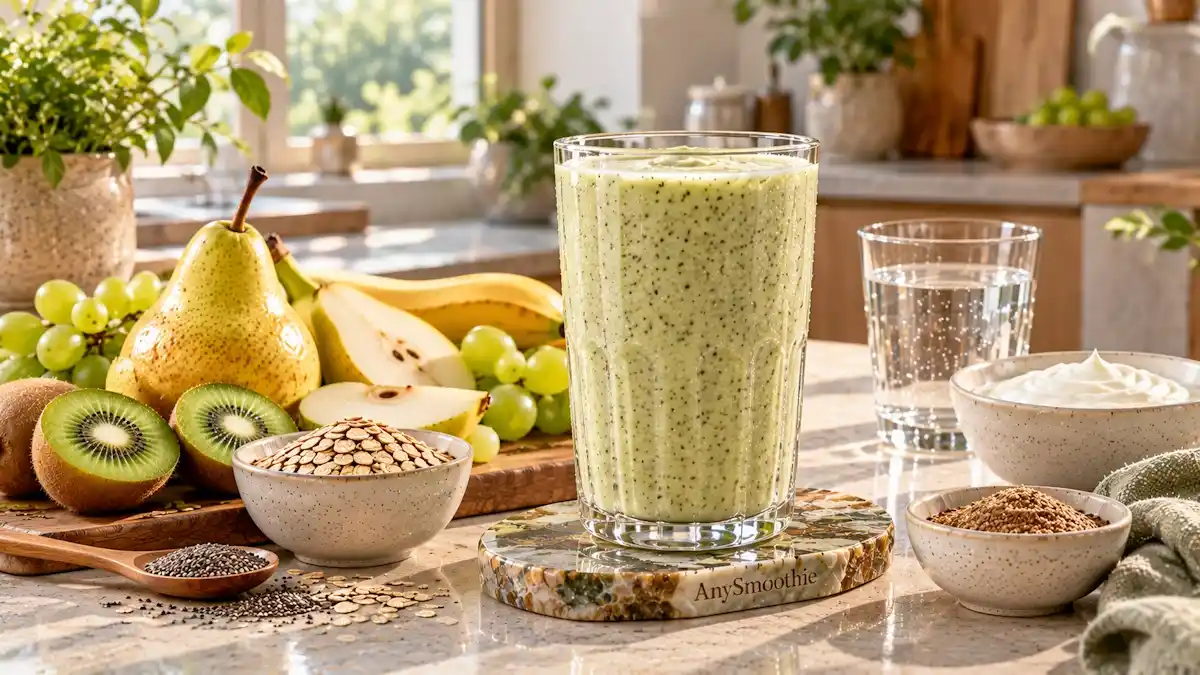
A smoothie can make fruit, fiber, and fluid easier to fit into a busy morning. If you’re considering smoothies for constipation relief, whole fruit and a manageable amount of fiber are good places to start.
Even a well-made smoothie can’t guarantee a bowel movement. Your usual diet and tolerance for different ingredients matter, too. A few simple choices can make the drink easier to enjoy and adjust.
How smoothies can support healthy bowel regularity
Fiber affects stool in more than one way. Some types hold water, while others add bulk; both can support movement through the digestive tract. Fluids help fiber do its job, especially as you add more of it to your diet.
The NIDDK’s guidance on fiber and fluids lists 22 to 34 grams of fiber a day for adults, depending on age and sex. That amount comes from your whole diet, not one smoothie. If you’re eating little fiber now, increase it gradually.
For more ways to build a smoothie around fiber-rich ingredients, see these high-fiber smoothies.
Choose whole fruits and keep the fiber
Blend the fruit itself rather than juicing and straining it. Straining removes much of the pulp, along with fiber you would otherwise drink. Berries, pears with their skin, kiwi, and prunes all fit easily into a blender.
The amount of fiber depends on what you add and how much you use. A smoothie made with a few berries won’t have the same fiber content as one with a whole pear and oats. Keep portions comfortable rather than packing every high-fiber ingredient into one glass.
Add enough liquid without overloading the recipe
Water, milk, or an unsweetened milk alternative can help the blades move and make a smoothie pleasant to drink. Start with enough liquid to blend, then add a splash if it turns out too thick.
Drink fluids throughout the day according to your needs. Extra water alone isn’t a guaranteed answer to constipation, and a smoothie doesn’t replace the rest of your usual fluid intake.
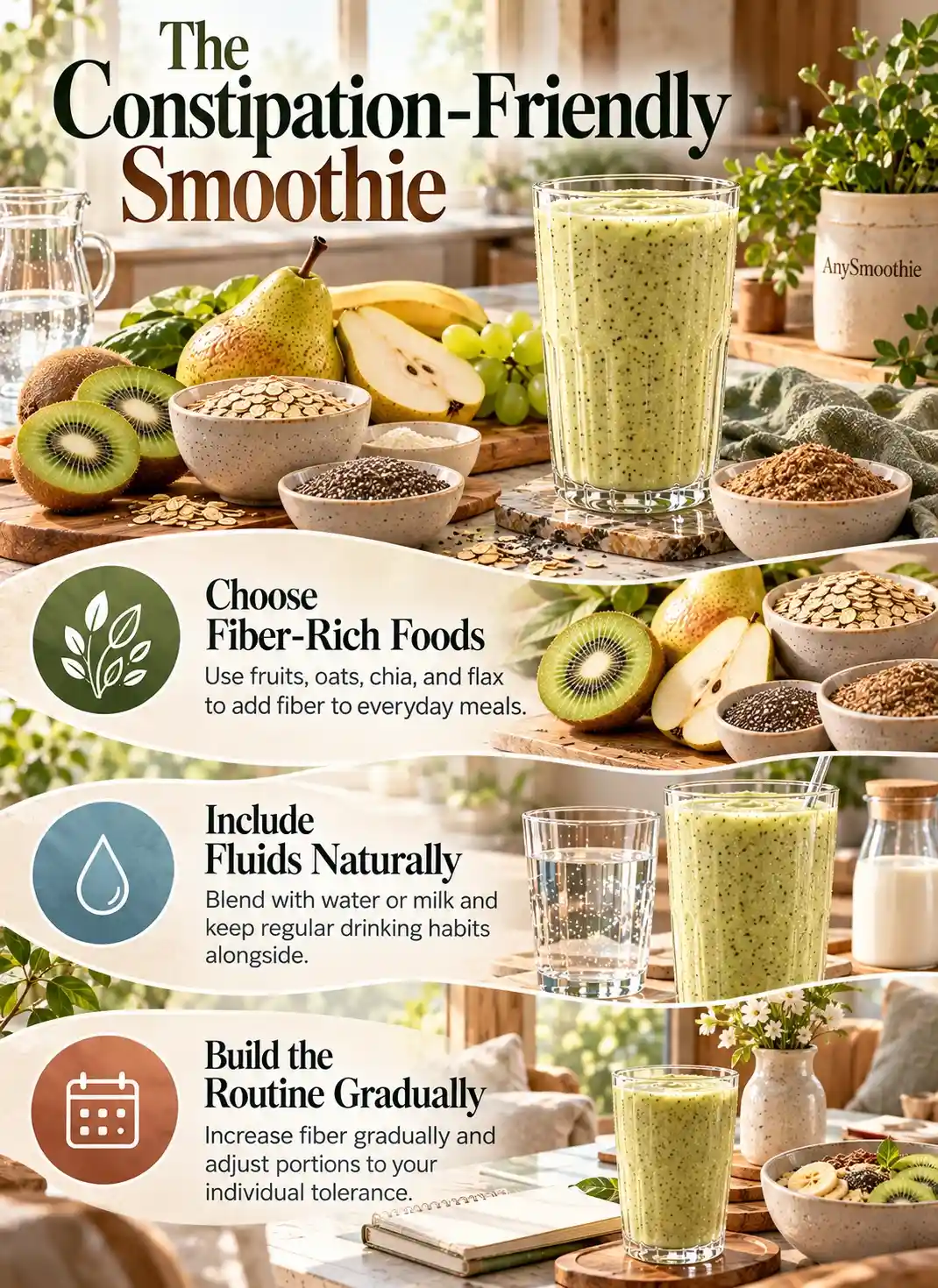
3 Smoothies for Constipation Relief
Each recipe makes one regular smoothie or two smaller servings. Blend until smooth, adding a little more liquid if needed. The table offers a quick way to choose by ingredients and texture.
| Smoothie | Main ingredients | Fiber sources | Flavor | Best fit |
|---|---|---|---|---|
| Prune, pear, and yogurt | Prunes, pear, plain yogurt | Prunes, pear skin | Sweet and tangy | A creamy blend |
| Kiwi, spinach, and berry | Kiwi, berries, spinach | Fruit, spinach | Bright and tart | A lighter blend |
| Oat, banana, and chia | Oats, banana, chia | Oats, chia, banana | Mild and creamy | A thicker breakfast |
If you’re new to adding fiber to drinks, begin with the recipe that appeals to you and pour a smaller glass.
Prune, pear, and yogurt smoothie
Ingredients
- 3 pitted prunes
- 1/2 cored pear with skin
- 1/2 cup plain yogurt
- 1/2 cup water
Steps
Add the prunes, pear, plain yogurt, and water to a blender. Blend until the prune pieces disappear. Add more liquid if the pear makes the mixture too thick.
The prunes and pear provide fiber. Prunes also contain sorbitol, a naturally occurring sugar alcohol that can draw water into the intestine. Larger amounts may feel uncomfortable for some people; the American College of Gastroenterology’s discussion of prunes and kiwifruit notes that prunes may increase bloating. Start with the recipe as written before adding more.
Estimated Nutrition per Serving
- Calories: ~195 kcal
- Protein: ~5 g
- Carbohydrates: ~44 g
- Fat: ~2 g
- Fiber: ~7 g
- Sugars: ~28 g
Kiwi, spinach, and berry smoothie
Ingredients
- 1 peeled kiwi
- 1/2 cup berries
- 1 small handful spinach
- 3/4 cup water or an unsweetened milk alternative
Steps
Blend the kiwi, berries, spinach, and liquid until smooth. Frozen berries make a colder, thicker drink; add a splash of liquid if they slow the blender.
Kiwi and berries bring most of the fruit flavor, while the spinach adds a little fiber without dominating the taste. You can use strawberries, blueberries, or a mix. This is a good choice when you want a fruit-forward drink without yogurt, oats, or seeds.
A clinical trial in adults with chronic constipation found that green kiwifruit and prunes improved several constipation-related outcomes, including stool consistency and straining. The study used whole-food portions larger than the amount in this smoothie, so this recipe should not be treated as an equivalent intervention.
For another approach to digestive movement, smoothie protocols for gastrointestinal motility provide a different ingredient and texture framework.
Estimated Nutrition per Serving
- Calories: ~90 kcal
- Protein: ~2 g
- Carbohydrates: ~20 g
- Fat: ~1 g
- Fiber: ~5 g
- Sugars: ~12 g
Oat, banana, and chia smoothie
Ingredients
- 1/2 ripe banana
- 2 tablespoons rolled oats
- 1 teaspoon chia seeds
- 3/4 cup unsweetened almond milk
Steps
Combine the banana, rolled oats, chia seeds, and almond milk in a blender. Blend thoroughly so the oats break down and the seeds spread evenly. A pinch of cinnamon works well if you like it.
Oats, chia, and banana each contribute fiber. Chia absorbs liquid and thickens the mixture as it sits, so drink it soon after blending or stir in more liquid later. Start with the teaspoon of chia rather than adding a large scoop.
If I were making this as a regular breakfast, I’d keep the chia at the amount written here and adjust the liquid rather than immediately adding more fiber.
Estimated Nutrition per Serving
- Calories: ~185 kcal
- Protein: ~5 g
- Carbohydrates: ~31 g
- Fat: ~6 g
- Fiber: ~7 g
- Sugars: ~9 g
How to use these smoothies comfortably and safely
Choose a recipe based on what you enjoy eating, then try a smaller serving first. If it sits well with you, adjust the portion or fiber ingredients over time. A sudden increase in fiber can cause gas or bloating, even when the ingredients are familiar.
People looking for smoothies for constipation relief sometimes focus on a single drink. Your meals across the day matter as well. Fruit, vegetables, beans, and whole grains can all contribute to a fiber-rich eating pattern.
Adjust ingredients to your needs
If regular milk or yogurt bothers you, use lactose-free yogurt or a plant-based option you tolerate. You can also leave out an ingredient that causes discomfort rather than forcing it into the recipe. For example, make the oat smoothie without chia and keep the oats, banana, and liquid.
Pay attention to total fiber, not only what goes into the blender. If you’ve already had several fiber-rich meals, you may prefer a smaller smoothie. Add enough liquid for a texture you enjoy, and drink according to your usual needs.
Know when a smoothie is not enough
Ongoing constipation deserves a conversation with a healthcare professional, particularly if changes to your routine haven’t helped. A smoothie may support normal digestion, but it can’t tell you why symptoms continue or replace medical advice.
Seek medical care promptly if you have significant abdominal pain, vomiting, or blood in your stool. The NIDDK’s constipation information also explains when symptoms call for a doctor’s attention. You don’t need to wait for a food change to work when symptoms are concerning.
Conclusion: A comfortable place to start
A balanced smoothie can add fruit, fluid, and fiber to your day. Start with a recipe you like, keep the serving comfortable, and adjust the ingredients gradually.
Consistency matters more than loading one glass with fiber. If constipation persists or symptoms concern you, seek medical guidance rather than relying on a smoothie.

Medical Disclaimer: AnySmoothie content is for educational purposes only and is not a substitute for professional medical advice. Consult a healthcare provider for personalized guidance. See our full Disclaimer & Terms of Use. AI Transparency: AnySmoothie may use AI to support content development. All content undergoes human editorial review for accuracy, clarity, and editorial quality. See our full AI Transparency.