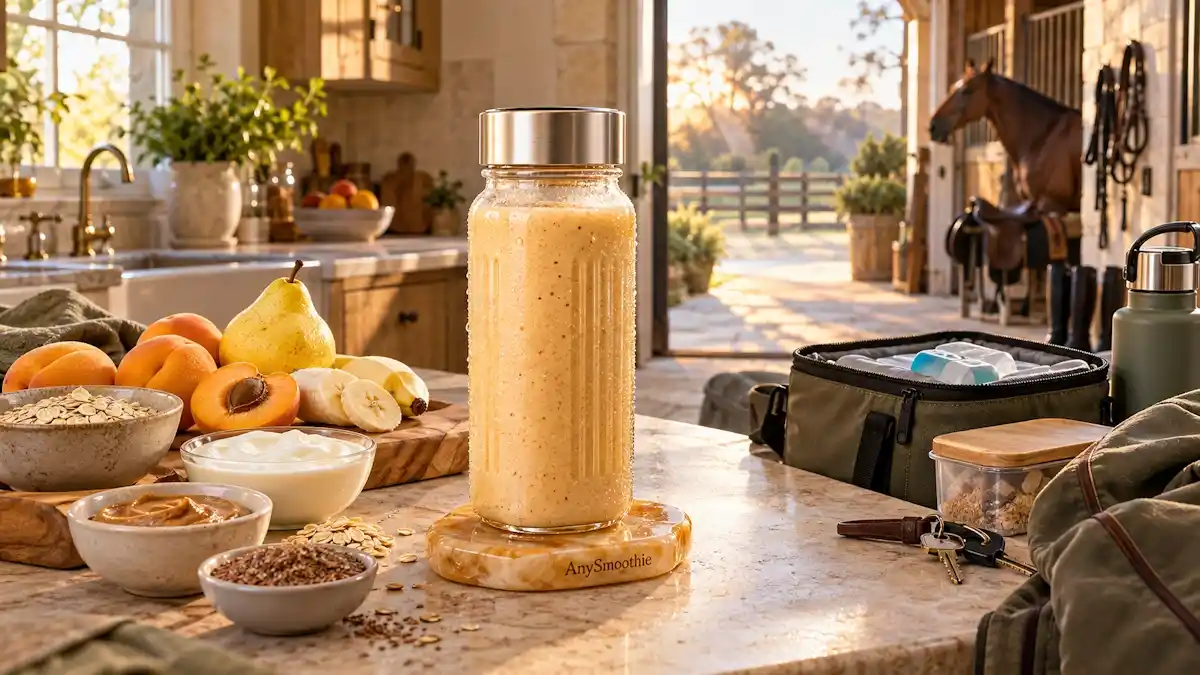
An early ride can leave you choosing between a heavy breakfast and leaving the house hungry. You need something convenient that tastes good and feels comfortable before you mount up. A drinkable breakfast can fit that gap: smoothies for horseback riding combine familiar foods in a portion you can adjust.
These three blends offer a filling banana option, a tart berry drink, and a fresh mango mix. Start with a simple ingredient formula, then give yourself time to see how it feels before your ride.
How to Build a Morning Smoothie Before a Ride
Start with fruit or oats for carbohydrates, then add a protein-rich ingredient such as plain yogurt, milk, fortified soy milk, or silken tofu. Finish with a small spoonful of nut or seed butter, or let the fruit and oats provide fiber. Carbohydrates are broken down into sugars that cells use to make ATP, a molecule involved in normal energy metabolism. Protein supplies amino acids for routine tissue upkeep.
The National Agricultural Library’s food composition resources can help you compare the nutrients in ingredients you use often.
Make the portion fit your morning
A small glass may suit you better than a large blender cup, especially if breakfast rarely sounds appealing before dawn. Add liquid a little at a time so the drink stays easy to sip. Your smoothie can be part of breakfast, but it doesn’t replace the rest of your eating and hydration routine.
If solid food feels unappealing early in the morning, you may also find ideas in morning smoothies when solid food feels too heavy.
Choose Ingredients That Blend Easily and Travel Well
For a dairy-free blend, use plain soy yogurt, fortified soy milk, or silken tofu. Sunflower seed butter works in place of peanut or almond butter when you need a nut-free option. If you prefer less sweetness, choose unsweetened yogurt and milk, skip added sweetener, or use a smaller fruit portion.
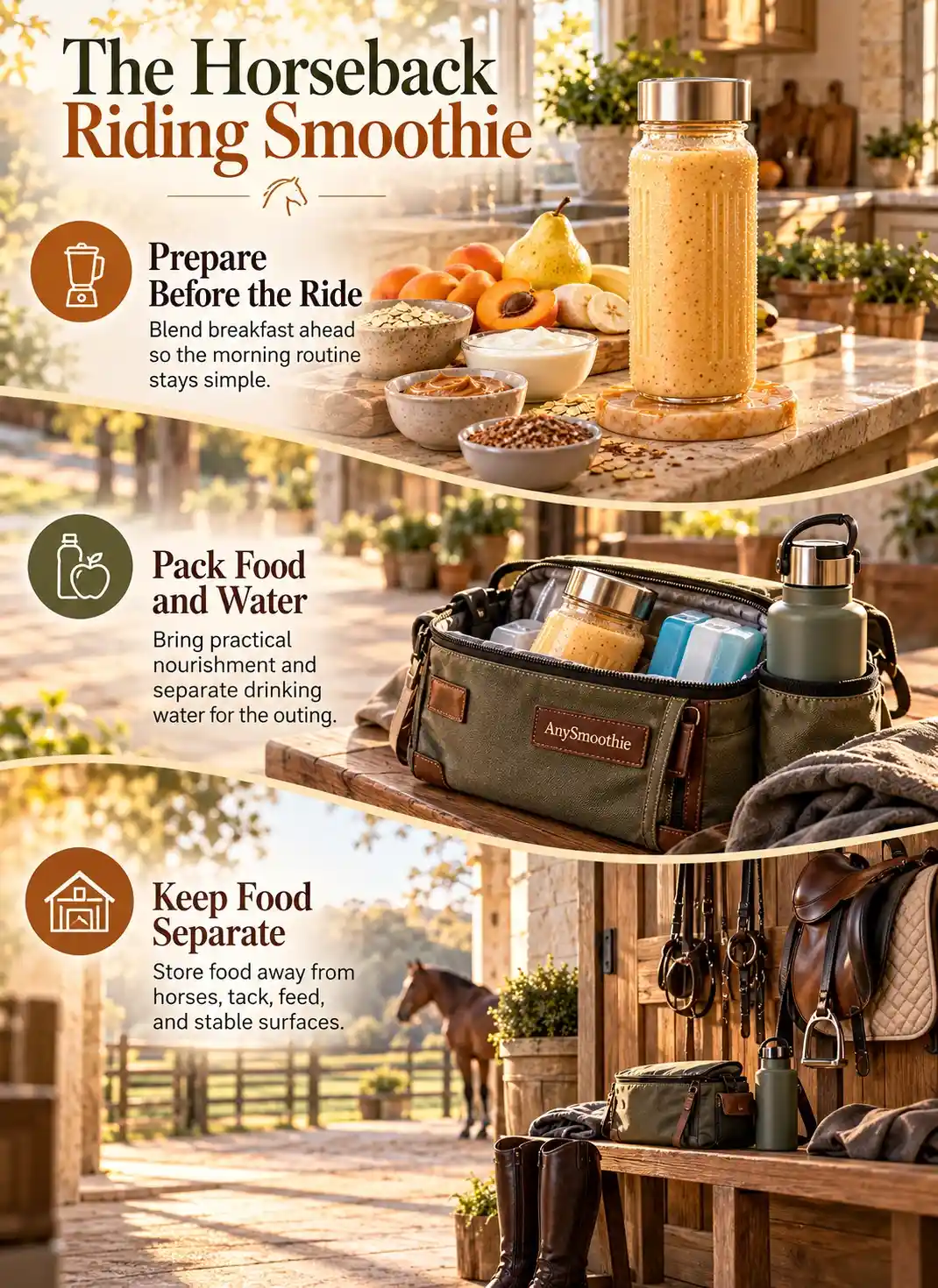
Blend rolled oats briefly with the liquid before adding other ingredients for a smoother drink. Frozen fruit makes the texture thicker. If you’re taking a smoothie to the barn, keep yogurt, milk, and tofu blends cold.
3 Morning Smoothies for Horseback Riding
Each recipe makes one modest serving. Add a splash more liquid if your blender needs help, particularly with frozen fruit. The table can help you pick a blend based on appetite and texture.
| Smoothie | Main ingredients | Primary nutrient sources | Texture or flavor | Best fit |
|---|---|---|---|---|
| Banana-oat | Banana, oats, yogurt, seed butter | Carbohydrates from banana and oats; protein from yogurt | Creamy and substantial | A filling start |
| Berry-yogurt | Berries, yogurt, milk | Carbohydrates from berries; protein from yogurt and milk | Cool and tart | A lighter appetite |
| Mango-spinach | Mango, spinach, tofu, soy milk | Carbohydrates from mango; protein from tofu and soy milk | Smooth and mildly sweet | A fresh-tasting drink |
Banana-Oat Smoothie for a Filling Start
Ingredients
- 1/2 medium banana
- 2 tablespoons rolled oats
- 1/2 cup plain yogurt
- 1/4 cup milk
- 1 teaspoon peanut or sunflower seed butter
Steps
Combine the banana, rolled oats, plain yogurt, milk, and peanut or sunflower seed butter. Blend until the oats disappear into the drink, about 30 to 45 seconds. For an especially smooth texture, blend the oats and milk first.
The banana gives this blend a familiar sweetness, while the oats and butter make it thicker than the other two recipes. For a dairy-free version, use plain soy yogurt and fortified soy milk. Add a tablespoon or two of milk if you prefer a thinner drink.
Estimated Nutrition per Serving
- Calories: ~190 kcal
- Protein: ~8 g
- Carbohydrates: ~27 g
- Fat: ~7 g
- Fiber: ~3 g
- Sugars: ~14 g
Estimated using plain dairy yogurt, 2% milk, and peanut butter.
If I were making this before an early ride, I’d keep the portion modest first and adjust the thickness only after seeing how it feels during the morning.
Berry-Yogurt Smoothie for a Lighter Option
Ingredients
- 3/4 cup mixed berries
- 1/2 cup plain yogurt
- 1/4 cup milk
Steps
Add the mixed berries, plain yogurt, and milk to the blender. Blend until smooth. Frozen berries work well, though you may need an extra splash of milk to get them moving. Plain fortified soy yogurt and a milk alternative work if you avoid dairy.
This smoothie tastes brighter and tarter than the banana blend. Taste it before adding sweetener; if you want some, stir in a small amount of honey after blending. The berries supply carbohydrates, while yogurt contributes protein. Product ingredients vary, so USDA FoodData Central is useful when you want to compare foods.
Estimated Nutrition per Serving
- Calories: ~135 kcal
- Protein: ~7 g
- Carbohydrates: ~22 g
- Fat: ~3 g
- Fiber: ~4 g
- Sugars: ~15 g
Estimated using plain low-fat dairy yogurt and 2% milk, without added honey.
Mango-Spinach Smoothie with a Mild, Fresh Taste
Ingredients
- 1/2 cup ripe mango pieces
- 1/2 cup loosely packed spinach
- 1/2 cup plain yogurt
- 1/4 cup fortified soy milk
Steps
Blend the mango pieces, spinach, plain yogurt, and fortified soy milk. Stop once the spinach is finely blended. If the mango is frozen, let it soften briefly or add another splash of liquid.
Ripe mango adds sweetness, and its flavor keeps the spinach subtle. Yogurt gives the drink a tangier finish; silken tofu makes it milder. With soy milk and tofu, the blend stays dairy-free. These ingredients provide carbohydrates and protein used in normal physiological processes, without promising a particular result in the saddle.
Estimated Nutrition per Serving
- Calories: ~145 kcal
- Protein: ~8 g
- Carbohydrates: ~23 g
- Fat: ~3 g
- Fiber: ~2 g
- Sugars: ~18 g
Estimated using plain low-fat dairy yogurt and fortified unsweetened soy milk.
When to Drink It and How to Pack It Safely
Try a new smoothie on a morning when you have time to notice how it feels before riding. Drinking it well before you mount gives you room to adjust. Some riders prefer a smaller serving closer to departure; others want more time after breakfast. Your appetite, the recipe’s thickness, and your ride schedule are better guides than a fixed clock.
Bring water even if you’ve had a smoothie. A drink at breakfast doesn’t cover every opportunity to hydrate during a morning at the barn.
For another portable option suited to outdoor activity, see portable smoothies for day hikers.
When you’re packing smoothies for horseback riding, use an insulated bottle or cooler for blends containing yogurt, milk, soy milk, or tofu. Keep the drink cold until you’re ready to have it, and wash reusable bottles promptly afterward. If you follow individualized nutrition guidance for a dietary need, use that guidance when choosing ingredients and timing.
Conclusion: Find Your Go-To Morning Blend
The easiest pre-ride smoothie starts with a carbohydrate source, a protein-rich ingredient, and a little flavor or texture from fat or fiber. Your best choice depends on taste, appetite, schedule, and what feels comfortable before mounting.
Start with one recipe and make small changes to its portion or thickness. Keep water in your routine, too.
If you’re preparing for a morning that will keep you away from home for several hours, smoothies before a long day away from home offers another practical approach.
🛡️ Safety Notes & Dietary Interactions
- Pre-Ride Comfort: Oats, seed butter, yogurt, and larger portions can feel substantial before riding. Test a new smoothie on a less time-sensitive morning and adjust the portion or thickness if needed.
- Cold Storage: Yogurt, milk, soy milk, and tofu smoothies are perishable. Use an insulated bottle or cooler when taking them to the barn, and keep them cold until you’re ready to drink.
- Allergen Awareness: Peanut, almond, dairy, and soy ingredients can cause allergic reactions. Sunflower seed butter provides a nut-free alternative, but check labels carefully for allergens and cross-contact information.
- Hydration at the Barn: A breakfast smoothie contributes fluid but does not cover hydration throughout a morning at the barn. Bring water for riding and other outdoor activity, particularly during warmer conditions.
FAQs
How long before riding should I drink a smoothie?
There is no single timing that suits every rider. The article recommends trying a new smoothie when you have enough time to notice how it feels, then adjusting based on appetite, thickness, portion size, and your riding schedule. Some people prefer more time after breakfast, while others tolerate a smaller serving closer to departure.
Which smoothie is best if I don’t want a heavy breakfast?
The Berry-Yogurt Smoothie is the lighter choice among these three recipes. It uses berries, yogurt, and milk without oats or seed butter, giving it a thinner and brighter profile. If even that feels substantial before riding, reduce the portion and add enough liquid to make it comfortable to sip.
Can I prepare a smoothie the night before a riding lesson?
You can prepare ingredients ahead, but completed smoothies containing yogurt, milk, soy milk, or tofu need appropriate refrigeration. Portioning fruit and oats beforehand can save time in the morning. If you make the finished smoothie in advance, keep it cold in the refrigerator and transport it in an insulated bottle or cooler.
Why does the banana-oat smoothie use only a small amount of oats?
The recipe is designed as a modest pre-ride serving rather than an especially thick breakfast. Even two tablespoons of oats contribute texture and carbohydrates, while banana, yogurt, and seed butter make the drink more substantial. If the consistency becomes too thick, add a tablespoon or two of milk before drinking.
Can I make the smoothies nut-free?
Yes. The Banana-Oat Smoothie specifically allows sunflower seed butter instead of peanut or almond butter. The Berry-Yogurt and Mango-Spinach recipes do not require nuts. When preparing food at a shared barn or for someone with an allergy, check labels and cross-contact information rather than assuming a product is allergen-free.

Medical Disclaimer: AnySmoothie content is for educational purposes only and is not a substitute for professional medical advice. Consult a healthcare provider for personalized guidance. See our full Disclaimer & Terms of Use. AI Transparency: AnySmoothie may use AI to support content development. All content undergoes human editorial review for accuracy, clarity, and editorial quality. See our full AI Transparency.