
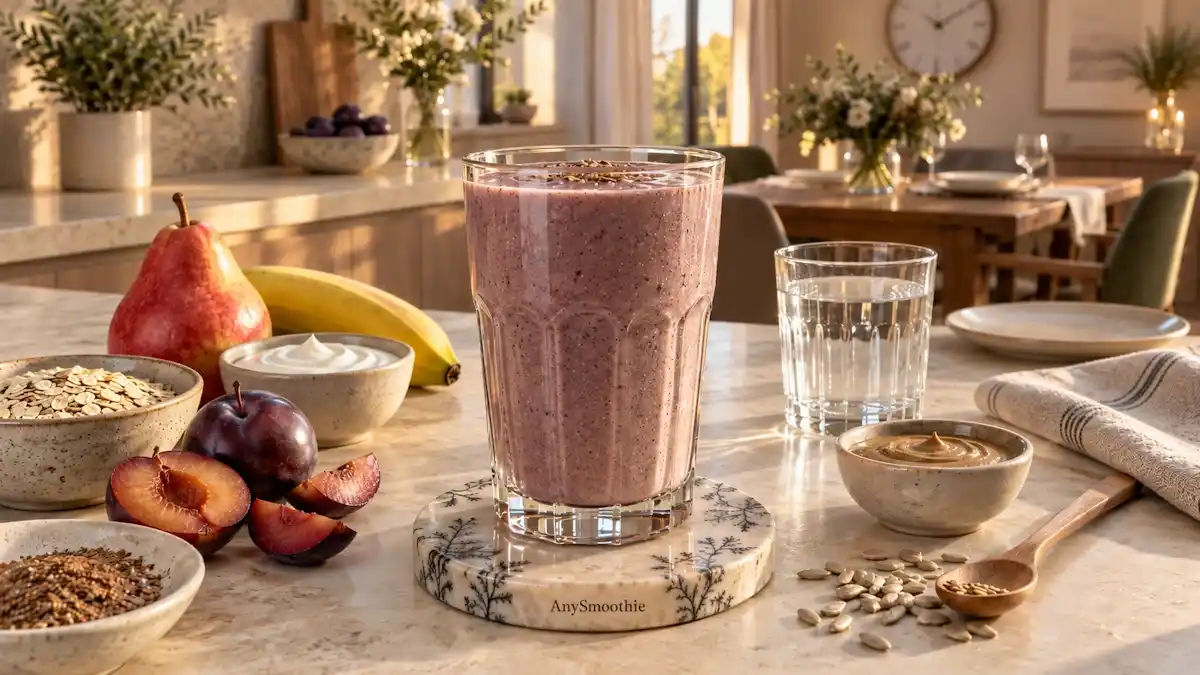
A missed meal can leave you hungry, unfocused, and short on patience, especially when the next full meal is still hours away. A smoothie can bridge that gap, but fruit and juice alone often drink more like a snack than a meal.
The most useful smoothies after missing a meal include carbohydrates, protein, fats or fiber, and fluid. That mix supplies fuel for normal energy metabolism while giving the drink enough substance to feel satisfying. Start with a balanced base, then match the portion to your appetite.
Building a Balanced Smoothie After a Missed Meal
The goal is to replace key parts of a meal without ending up with a blender full of ingredients that feels too heavy. Carbohydrates from fruit, oats, or milk provide glucose, which cells use in normal energy-producing pathways. Protein supplies amino acids used for ongoing tissue maintenance. Fat and fiber add body and can help a smoothie feel more substantial.
A practical starting point is:
- About 1 cup of fruit or another carbohydrate source
- 3/4 to 1 cup milk or a fortified plant alternative
- One protein serving, such as Greek yogurt, tofu, or protein powder
- One tablespoon seeds, nut butter, or ground flax
Your needs can change based on activity, appetite, and how long ago you missed the meal. A small smoothie may be enough after a delayed lunch, while a larger blend may fit better when breakfast never happened.
For more ideas built around a smoothie that needs to carry more of a meal, filling meal replacement smoothies guide can offer another useful framework for combining protein, produce, fiber, and liquid.
Choose Ingredients That Work Together
Use a simple formula: liquid, fruit or another carbohydrate, protein, fat or fiber, then flavor boosters. Greek yogurt, silken tofu, dairy milk, and soy milk create a protein base. Oats, chia, flax, and nut butter add texture. Spinach, cinnamon, vanilla, and unsweetened cocoa change the flavor without turning the drink into dessert.
Blending makes ingredients easier to drink, but it doesn’t change the need for balanced portions. Whole fruit also usually provides more fiber than juice.
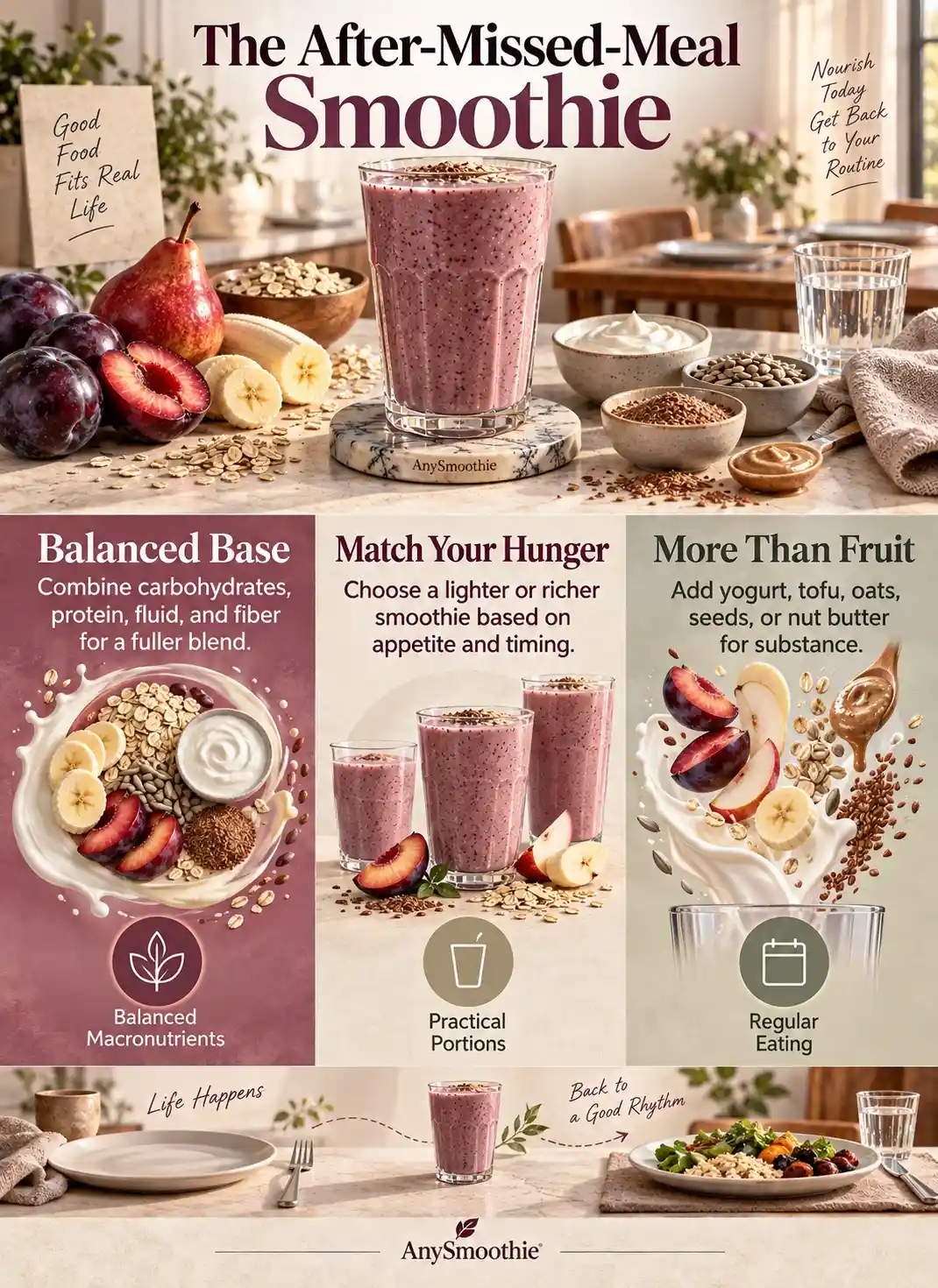
Skip a Fruit-and-Juice-Heavy Blend
A smoothie made mostly with juice, sweetened yogurt, dates, and several bananas can provide quick carbohydrates. However, it may contain little protein, fat, or fiber to round out the meal.
Keep the ingredients you enjoy, then add plain yogurt, silken tofu, milk, oats, chia, or nut butter. Also check packaged protein powders and sweetened plant milks for serving size and added sugar. A label can make a small ingredient seem minor when it adds more sweetness than expected.
3 Smoothies After Missing a Meal
These recipes make one filling serving, roughly 16 to 24 ounces depending on ice and liquid.
| Smoothie | Main Ingredients | Protein Source | Best Fit | Easy Adjustment |
|---|---|---|---|---|
| Berry oat and yogurt | Berries, oats, milk | Greek yogurt | Missed breakfast or lunch | Add milk to thin |
| Peanut butter banana | Banana, peanut butter, milk | Yogurt or tofu | Bigger hunger | Use sunflower butter |
| Green mango tofu | Mango, spinach, lime | Silken tofu | Lighter appetite | Use yogurt instead |
The table makes the choice simple: pick the berry blend for familiar comfort, peanut butter banana for a heartier option, or mango tofu when you want something fresher.
Berry Oat and Yogurt Smoothie for a Balanced Meal
Ingredients
- 1 cup frozen mixed berries
- 3/4 cup plain Greek yogurt
- 1/4 cup rolled oats
- 3/4 cup milk or fortified soy milk
- 1 teaspoon chia seeds
- Pinch of cinnamon, optional
- Small amount of maple syrup, optional
Steps
Add the milk or soy milk first, followed by the Greek yogurt, berries, oats, chia seeds, and optional cinnamon.
Blend until completely smooth. Add a splash more liquid if the oats make the smoothie thicker than you prefer. Taste before adding any maple syrup.
Berries and oats contribute carbohydrate and fiber, while yogurt and milk bring protein. If the berries are unusually tart, use a small amount of maple syrup only if needed.
This familiar combination works well when breakfast or lunch slipped away. For another version, try this berry Greek yogurt smoothie.
Estimated Nutrition per Serving
- Calories: ~355 kcal
- Protein: ~26 g
- Carbohydrates: ~49 g
- Fat: ~8 g
- Fiber: ~9 g
- Sugars: ~24 g
Estimate uses plain nonfat Greek yogurt, unsweetened fortified soy milk, chia seeds, and no optional maple syrup.
If I knew the next full meal was still several hours away, I’d keep the oats and chia rather than turning this into a thinner berry-and-yogurt drink.
Peanut Butter Banana Smoothie for Bigger Hunger
Ingredients
- 1 medium banana
- 1 cup milk or unsweetened soy milk
- 1 tablespoon natural peanut butter
- 1/2 cup plain yogurt or silken tofu
- 2 tablespoons rolled oats
- 1 teaspoon unsweetened cocoa powder, optional
Steps
Add the milk or soy milk first, followed by the yogurt or tofu, banana, peanut butter, oats, and optional cocoa powder.
Blend until smooth and creamy. Add a splash of liquid if the oats make the texture too thick.
Banana and oats provide carbohydrate, while peanut butter and the protein ingredient create a richer texture. Use sunflower seed butter for a nut-free version.
Sip slowly and pause when comfortably satisfied, since liquid meals are easy to finish faster than solid food.
Estimated Nutrition per Serving
- Calories: ~395 kcal
- Protein: ~19 g
- Carbohydrates: ~51 g
- Fat: ~15 g
- Fiber: ~6 g
- Sugars: ~25 g
Estimate uses unsweetened soy milk, plain low-fat yogurt, natural peanut butter, and no optional cocoa.
For days when hunger is the main issue rather than convenience alone, smoothie for satiety signaling and nutrient density can offer additional ideas for building a more substantial blend.
Green Mango Tofu Smoothie for a Fresh, Light Option
Ingredients
- 1 cup frozen mango
- 1 packed cup spinach
- 1/2 cup silken tofu
- 3/4 cup unsweetened soy milk
- 1 teaspoon fresh lime juice
- 1/8 teaspoon freshly grated ginger
Steps
Add the soy milk first, followed by the silken tofu, spinach, mango, lime juice, and ginger.
Blend until completely smooth. Start with the small ginger amount, then add more only after tasting.
Tofu supplies plant protein, and mango adds carbohydrate with bright flavor. Spinach increases plant variety without making the smoothie taste strongly green. Plain yogurt can replace tofu.
This option fits when you want food but don’t feel ready for a dense, creamy blend.
Estimated Nutrition per Serving
- Calories: ~245 kcal
- Protein: ~15 g
- Carbohydrates: ~37 g
- Fat: ~6 g
- Fiber: ~5 g
- Sugars: ~27 g
Estimate uses unsweetened fortified soy milk and silken tofu.
If my appetite were still low, I’d start with this lighter recipe and add solid food later rather than forcing a denser smoothie immediately.
How to Drink a Smoothie Without Feeling Overfull
Blend close to the time you plan to drink it. If you missed a meal only recently, begin with a smaller serving and give yourself time before making more. A smoothie is flexible, so you can thin it with water or milk rather than forcing a thick portion.
If you’re still hungry, pair it with whole-grain toast, a boiled egg, or a small handful of nuts. Balanced eating includes a mix of food groups over time, as described in the NHS guidance on eating a balanced diet.
Refrigerate smoothies with dairy, tofu, or other perishable ingredients, and drink them promptly rather than leaving them at room temperature.
Choose ingredients that fit your personal needs if you manage food allergies, digestive sensitivities, or a special diet.
Conclusion: A Better Bridge Between Meals
Smoothies after missing a meal work best when they contain more than fruit and liquid. Combine a carbohydrate source with protein, fluid, and a little fat or fiber for a drink that better resembles a meal.
The three recipes offer flexible starting points. Adjust the liquid, protein, and serving size based on your hunger, taste, and what you already have in the kitchen. A balanced smoothie should feel practical, not complicated.

Medical Disclaimer: AnySmoothie content is for educational purposes only and is not a substitute for professional medical advice. Consult a healthcare provider for personalized guidance. See our full Disclaimer & Terms of Use. AI Transparency: AnySmoothie may use AI to support content development. All content undergoes human editorial review for accuracy, clarity, and editorial quality. See our full AI Transparency.