
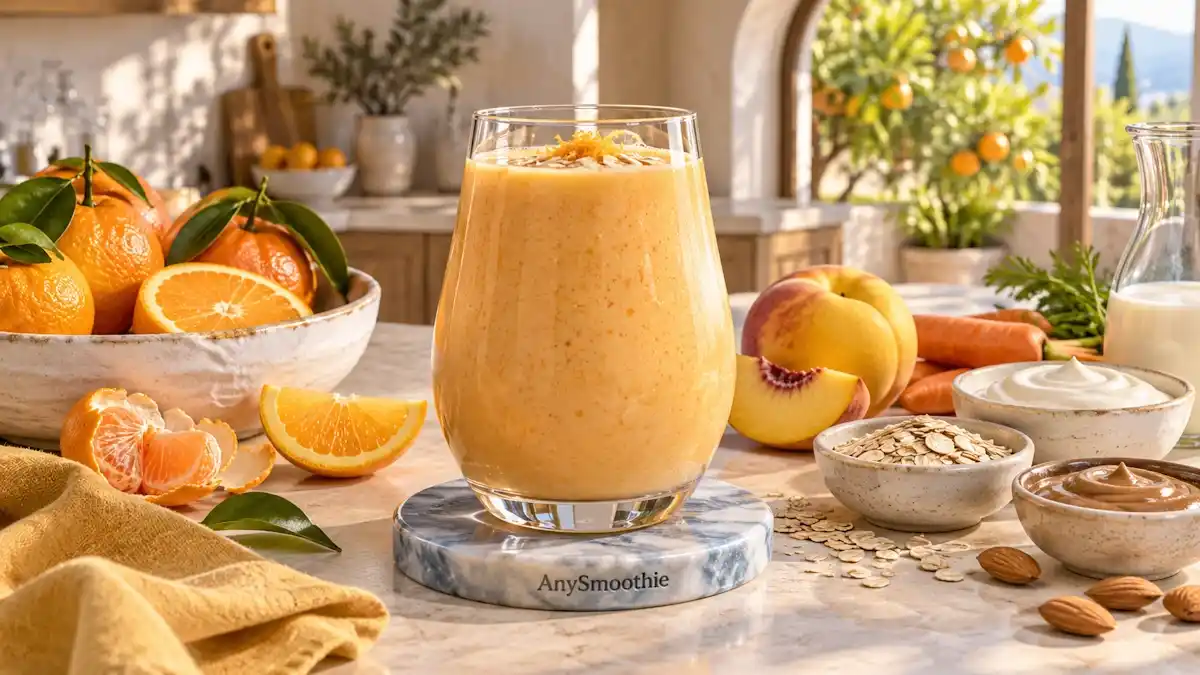
A bright citrus smoothie can make a nutrient-dense habit feel easy rather than clinical. A hesperidin smoothies for vascular wellness adds citrus fruit, fiber, fluids, and satisfying ingredients to your day without relying on sweetened juice.
Hesperidin is a flavonoid found mainly in citrus, especially oranges and lemons. These recipes support normal physiological pathways, but they do not treat blood pressure problems, circulation concerns, or heart disease.
How Hesperidin May Support Healthy Vascular Function
Hesperidin is a plant flavonoid found in oranges, mandarins, lemons, and grapefruit. Citrus plants produce flavonoids as protective compounds, and people consume them when they eat the fruit.
Research suggests hesperidin and its metabolites may support antioxidant defenses, normal endothelial function, and a healthy inflammatory balance. The endothelium is the thin cell layer lining blood vessels. It helps regulate vessel tone and blood flow through signals that include nitric oxide. A study on citrus flavonoids and nitric oxide explored this pathway, although a homemade smoothie cannot reproduce a controlled research intervention.
For a related vascular pathway topic, smoothies to support nitric oxide provides a useful companion article.
Food works within a broader pattern. Regular movement, adequate sleep, hydration, balanced meals, blood pressure monitoring, and prescribed medical care all matter for vascular wellness.
Whole Citrus Gives the Blend More Than Juice
Use peeled citrus segments instead of bottled orange juice when possible. Whole fruit brings water, vitamin C, potassium, and fiber, while juice is easier to consume in large amounts.
Leave a little of the white pith on orange or mandarin segments if the texture does not bother you. The pith contains fiber and plant compounds, and a high-speed blender breaks it down well. Remove seeds and thick peel first.
A smoothie can support a food-first routine, but it should not replace care for diagnosed cardiovascular conditions.
For another article focused on blood-vessel structure and nutrition, smoothies for endothelial glycocalyx support offers a complementary angle.
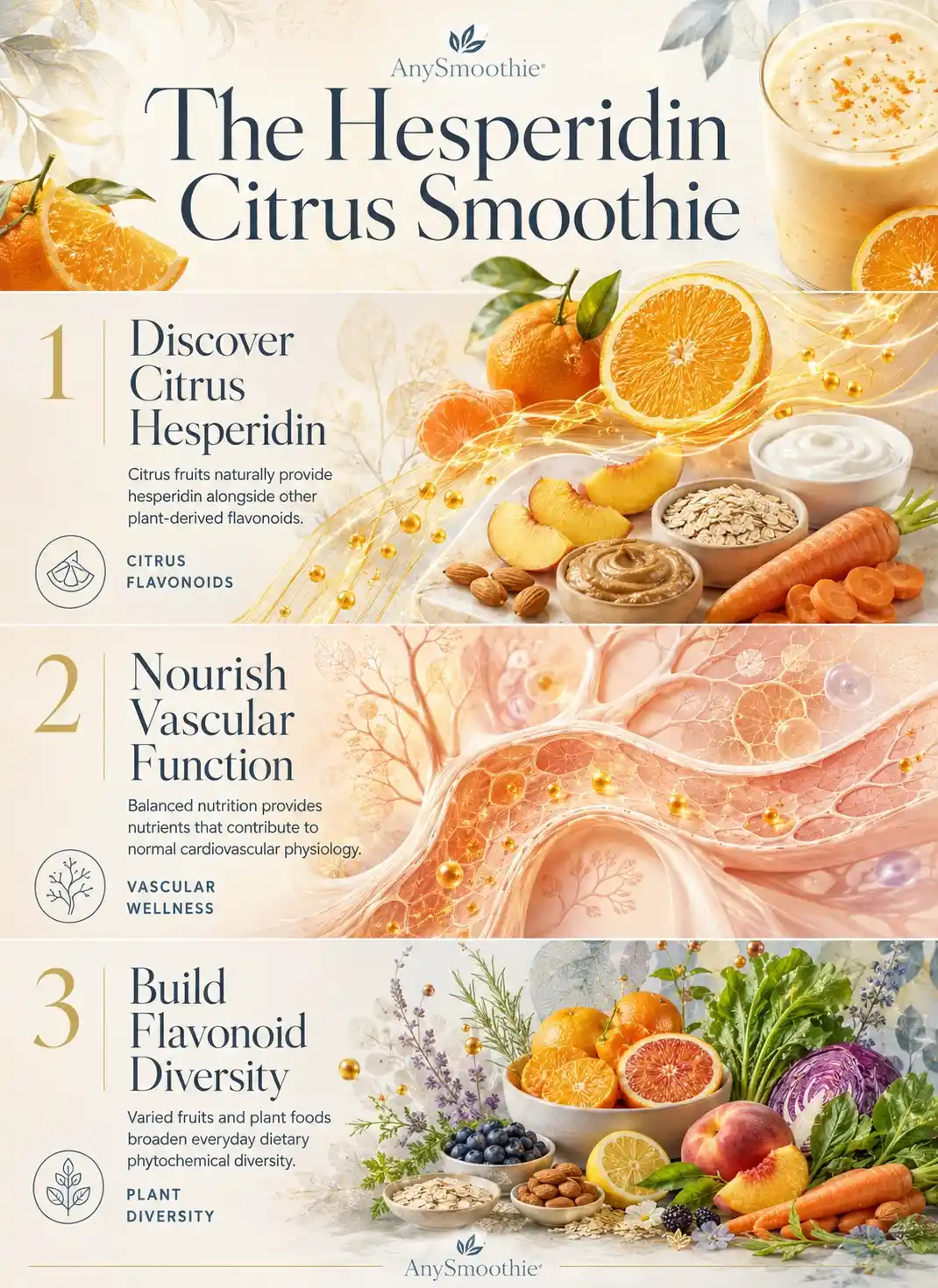
3 Hesperidin Smoothies for Vascular Wellness
Each hesperidin smoothies for vascular wellness recipe uses whole citrus and no added sugar. Blend liquids first, then add fruit, greens, seeds, and ice. Stop to scrape down the sides if needed.
| Recipe | Main Citrus Source | Supporting Ingredients | Flavor Profile | Key Nutrition Focus |
|---|---|---|---|---|
| Orange Berry Citrus Fiber | Orange | Berries, yogurt, chia | Creamy and tangy | Fiber and protein |
| Mandarin Ginger Green | Mandarins | Spinach, banana, ginger | Bright and fresh | Potassium and leafy greens |
| Lemon Citrus Avocado | Orange and lemon | Avocado, cucumber | Light and creamy | Fluids and unsaturated fat |
Orange Berry Citrus Fiber Smoothie
Ingredients
- 1 peeled orange
- 1/2 cup frozen berries
- 3/4 cup plain Greek yogurt or unsweetened soy yogurt
- 1 tablespoon chia seeds
- Ice as needed
- Splash of water, if needed
Steps
Blend until smooth, adding a small splash of water if your blender needs help.
Berries add color, fiber, and additional plant compounds. Greek yogurt or soy yogurt supplies protein, so the drink feels more filling than fruit alone. Keep some orange pith attached when practical for a little extra fiber.
This is a useful breakfast option or afternoon snack when you need something cold and substantial.
Estimated Nutrition per Serving
Estimated with plain nonfat Greek yogurt and no additional sweetener.
- Calories: ~280 kcal
- Protein: ~21 g
- Carbohydrates: ~41 g
- Fat: ~5 g
- Fiber: ~10 g
- Sugars: ~24 g
Mandarin Ginger Green Smoothie
Ingredients
- 2 peeled mandarins
- 1 cup spinach
- 1/2 frozen banana
- 1 teaspoon grated fresh ginger
- 3/4 cup unsweetened milk or soy milk
- Ice as needed
Steps
Blend until the spinach is fully smooth.
Spinach adds leafy green nutrients, while banana gives the drink body and potassium. Fresh ginger adds a clean, sharp edge, but it is there for flavor, not as a treatment. If ginger tastes too spicy, swap it for a few fresh mint leaves.
A 2024 systematic review and meta-analysis of citrus flavonoid supplementation found evidence of improved flow-mediated dilation across randomized trials, while also noting the need for larger and longer studies. Supplement findings should not be assumed to equal the effect of a whole-food smoothie.
Estimated Nutrition per Serving
Estimated with unsweetened soy milk and no added sweetener.
- Calories: ~220 kcal
- Protein: ~8 g
- Carbohydrates: ~40 g
- Fat: ~4 g
- Fiber: ~7 g
- Sugars: ~25 g
If I wanted this one especially smooth, I’d blend the spinach with the milk first, then add the mandarins, banana, and ginger. That keeps small leafy pieces from collecting around the citrus membranes.
Lemon Citrus Avocado Smoothie
Ingredients
- Juice and zest of 1/2 lemon
- 1 peeled orange
- 1/4 avocado
- 1/2 cup cucumber
- 1 cup cold water
- Ice as needed
Steps
Blend until creamy and smooth. Use only well-washed lemon zest from fruit suitable for zesting.
Avocado creates a creamy texture and adds unsaturated fat. Meanwhile, cucumber keeps the smoothie light and boosts its fluid content. Add more water for a thinner drink, or a few ice cubes for a colder finish.
Grapefruit can interact with some prescription medicines. Grapefruit can interact with some prescription medicines. The FDA advises checking with a clinician or pharmacist because grapefruit can alter how certain medicines are absorbed or metabolized.
Estimated Nutrition per Serving
Estimated with one medium orange, 1/4 avocado, cucumber, lemon, and water.
- Calories: ~160 kcal
- Protein: ~3 g
- Carbohydrates: ~28 g
- Fat: ~6 g
- Fiber: ~8 g
- Sugars: ~16 g
The avocado can dull the citrus flavor if too much is used. I’d keep it to the measured quarter and add extra cucumber or water before increasing the avocado.
Make Your Hesperidin Smoothie Fit a Healthy Daily Routine
Build the base around whole fruit, unsweetened dairy or plant milk, and ingredients with texture. Chia seeds, oats, berries, spinach, and avocado can make a smoothie more satisfying without added syrups or sweetened juice.
Smoothies go down quickly, so portion size still matters. If a blend is not replacing a meal, drink it alongside eggs, whole-grain toast, beans, or another balanced food rather than treating it as unlimited hydration.
For another vascular-wellness perspective that focuses more broadly on food patterns, balanced smoothies for varicose vein wellness habits is also relevant.
Wash produce under running water before blending. Refrigerate leftovers promptly in a sealed container, and use them within about 24 hours for the best flavor and quality. Shake or reblend before drinking because separation is normal.
People with kidney disease, diabetes, citrus allergies, swallowing concerns, or prescribed medicines should choose ingredients with a qualified clinician or pharmacist.
Conclusion: A Citrus Habit That Supports the Bigger Picture
A hesperidin smoothies for vascular wellness is a convenient way to eat more citrus, fiber-rich plants, and fluid-rich foods. The strongest choice is the one you enjoy enough to make regularly, without loading it with added sugar.
Citrus smoothies support healthy routines alongside movement, nourishing meals, quality sleep, and appropriate medical care. Anyone managing a health condition or taking medication should ask a clinician or pharmacist which ingredients fit their needs.
🛡️ Safety Notes & Dietary Interactions
- Grapefruit and Medications: Grapefruit can substantially alter the metabolism of certain prescription medicines. Do not substitute it for orange or mandarin without checking compatibility with a pharmacist, especially when taking cardiovascular, cholesterol-lowering, or other daily medications.
- Citrus and Digestive Comfort: Orange, lemon, mandarin, and ginger can feel irritating for people prone to reflux, mouth sensitivity, or gastrointestinal discomfort. Reduce acidic ingredients or choose a milder recipe if citrus-heavy blends repeatedly cause symptoms.
- Kidney and Potassium Considerations: Citrus, banana, spinach, yogurt, and avocado can contribute meaningful potassium. People with kidney disease or prescribed potassium restrictions should not assume these smoothies fit their usual diet without individualized guidance from their clinician or dietitian.
- Vascular Health Expectations: Hesperidin is an interesting citrus flavonoid, but these smoothies cannot treat hypertension, impaired circulation, or cardiovascular disease. Keep prescribed treatment, blood-pressure monitoring, movement, sleep, and balanced meals central rather than relying on citrus intake alone.
FAQs
Which smoothie contains the most useful source of hesperidin?
All three recipes use citrus, but the article does not provide measured hesperidin values, so they cannot be ranked precisely. Oranges and mandarins are relevant whole-food sources, especially when some white pith remains attached. Actual hesperidin content varies with citrus variety, growing conditions, processing, and the portion used in each smoothie.
Is whole orange better than orange juice for a hesperidin smoothie?
Whole orange generally fits this article’s goal better because it retains more of the fruit’s structure and fiber, especially when some pith is blended in. Juice can still contain citrus flavonoids, but it is easier to consume quickly and in larger quantities. Whole fruit therefore makes portion control and fiber intake simpler.
Can hesperidin smoothies lower blood pressure?
These recipes should not be presented as a way to lower blood pressure. Research on hesperidin and citrus flavonoids has examined vascular outcomes under controlled conditions, often using specific products or doses. A homemade smoothie is better viewed as a nutrient-dense food that can complement an overall heart-supportive lifestyle and appropriate medical care.
Why is grapefruit treated differently from orange or mandarin?
Grapefruit contains compounds that can interfere with enzymes and transporters involved in processing certain medicines, sometimes increasing or decreasing drug exposure. That interaction does not apply equally to every citrus fruit. Because medication combinations differ, grapefruit should be checked specifically rather than treated as an interchangeable substitute for orange or mandarin.
Is it better to use hesperidin supplements instead of citrus fruit?
Not necessarily. Supplement studies often use concentrated forms and doses that do not match ordinary food intake, so their findings should not be transferred directly to smoothies. Whole citrus also provides water, vitamin C, potassium, fiber, and other plant compounds. For a food-first routine, whole fruit is the more practical starting point.

Medical Disclaimer: AnySmoothie content is for educational purposes only and is not a substitute for professional medical advice. Consult a healthcare provider for personalized guidance. See our full Disclaimer & Terms of Use. AI Transparency: AnySmoothie may use AI to support content development. All content undergoes human editorial review for accuracy, clarity, and editorial quality. See our full AI Transparency.