

After a night with little sleep, even making coffee can feel like a major task. Smoothies after a sleepless night offer an easy way to take in fluid, carbohydrates, protein, fiber, and nutrients when a full breakfast sounds unappealing.
They can’t replace the restorative work of sleep. Still, a balanced blend can feel gentler than a sugary drink or an empty stomach. Focus on hydration, practical fuel, comfortable digestion, and nutrients involved in normal energy metabolism.
What to Put in a Smoothie After Poor Sleep
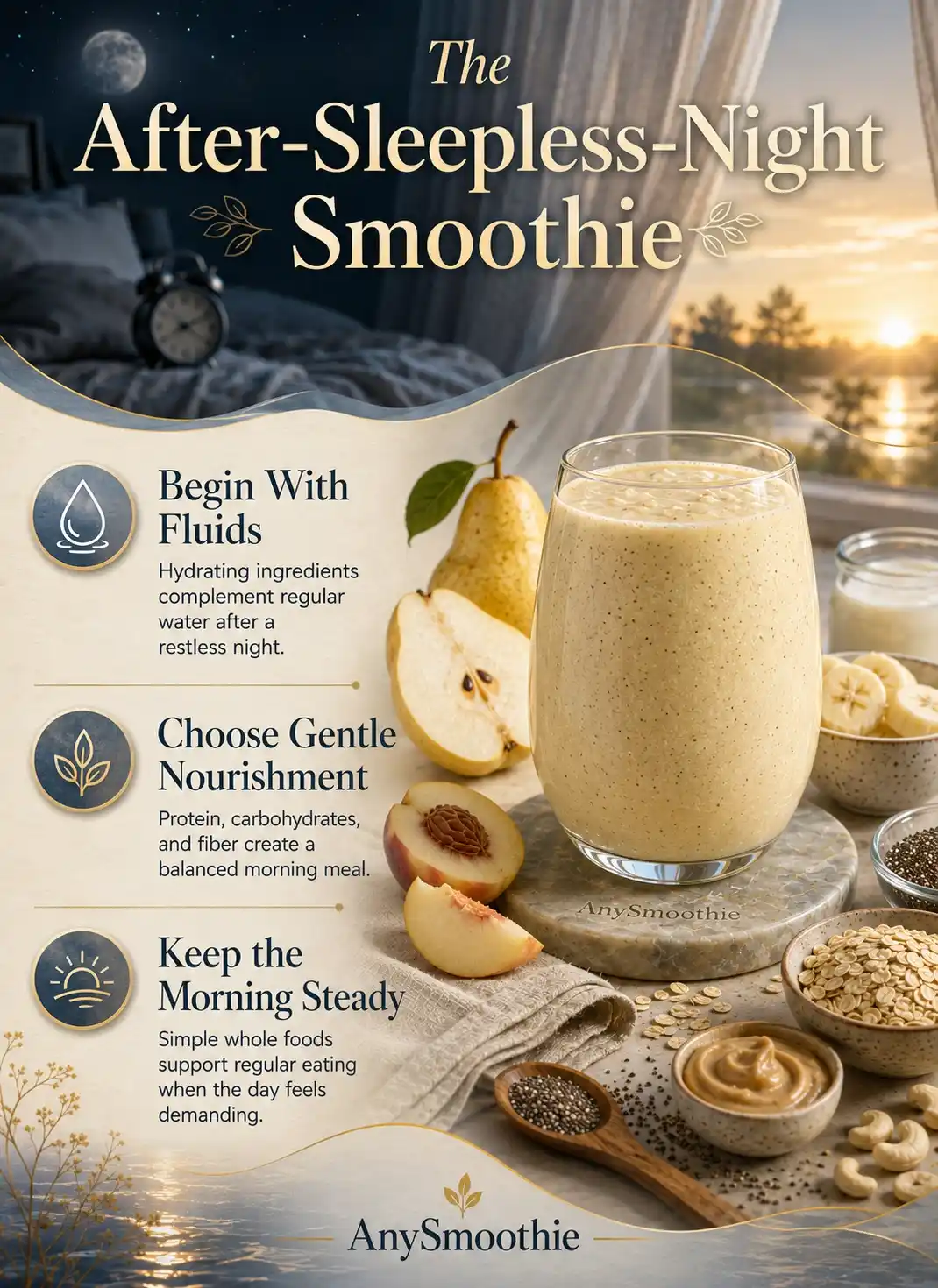
Start with fluids, then add ingredients that give your body usable fuel. Water, milk, or unsweetened soy milk make a practical base, especially if you woke up thirsty or skipped dinner.
Caffeine may feel necessary, but a large coffee on an empty stomach can bring jitters or stomach discomfort for some people. Caffeine consumed later in the day may also interfere with tonight’s rest. The National Heart, Lung, and Blood Institute notes that caffeine is a stimulant whose effects can last for hours as part of its healthy sleep habits.
A smoothie is food, not a fix for exhaustion. If sleep trouble happens often or affects daily life, speak with a qualified health professional.
Build a More Balanced Morning Smoothie
Fruit and oats provide carbohydrates, which the body breaks down into glucose for normal cellular activity. Greek yogurt and silken tofu add protein and amino acids. Nut butter and chia seeds contribute fat and fiber, while greens add fiber and micronutrients.
Combining carbohydrate-containing foods with protein, fiber, and fat can create a more substantial breakfast than juice alone and may help the smoothie feel satisfying for longer.
Use this simple formula:
- Start with 1 cup liquid, such as water, dairy milk, or unsweetened soy milk.
- Add 1 cup fruit or vegetables, fresh or frozen.
- Include one protein source, such as Greek yogurt or tofu.
- Finish with one fiber or healthy-fat source, such as oats, chia, or nut butter.
For another easy morning option, try this banana smoothie with milk and yogurt, then add oats if you need a more filling breakfast.
Choose Familiar Foods for a Low-Energy Morning
Banana, berries, kiwi, spinach, and oats bring different nutrients without requiring a long ingredient list. Bananas and milk provide potassium, while pumpkin seeds offer magnesium. Oats, dairy, and soy foods contribute various B vitamins involved in normal energy metabolism.
Kiwi and berries provide vitamin C, and yogurt, tofu, and nut butter supply protein and other nutrients. These foods contribute to ordinary physiological processes, but one smoothie won’t instantly erase fatigue caused by insufficient sleep.
Keep the blend modest when your stomach feels off. Large amounts of juice, added sweeteners, seeds, or rich add-ins may be less comfortable when appetite is low.
3 Smoothies After a Sleepless Night
Each recipe makes one breakfast-sized serving. Blend until completely smooth, using frozen fruit for a colder, thicker drink or adding a few ice cubes if needed.
| Recipe | Main Ingredients | Protein Source | Practical Feature | What to Watch |
|---|---|---|---|---|
| Berry Yogurt | Berries, milk, Greek yogurt, oats | Greek yogurt | Balanced and substantial | Oats thicken after blending |
| Banana Almond | Banana, milk, almond butter, chia | Milk and almond butter | Mild and creamy | Richer when appetite is low |
| Green Kiwi | Spinach, kiwi, water, silken tofu | Silken tofu | Lighter, produce-forward | Kiwi may feel tart |
Berry Yogurt Morning Smoothie
Ingredients
- 1 cup frozen mixed berries
- 3/4 cup milk or unsweetened soy milk
- 1/2 cup plain Greek yogurt
- 1/4 cup rolled oats
- Water as needed
Steps
Blend until completely smooth. Add a small amount of water if the oats make the mixture thicker than you prefer.
Berries provide carbohydrates and colorful plant compounds, oats contribute fiber, and Greek yogurt adds protein. This makes the recipe more substantial than a fruit-and-liquid-only smoothie.
Estimated Nutrition per Serving
Estimated with 2% dairy milk and plain nonfat Greek yogurt.
- Calories: ~340 kcal
- Protein: ~23 g
- Carbohydrates: ~51 g
- Fat: ~7 g
- Fiber: ~9 g
- Sugars: ~26 g
Oats keep absorbing liquid after the blender stops. On a morning when even breakfast preparation feels like work, I’d make this slightly thinner from the start so it stays easy to drink while getting ready.
Banana Almond Smoothie
Ingredients
- 1 medium banana
- 1 cup unsweetened almond milk
- 1 tablespoon almond butter
- 1 tablespoon chia seeds
- Ice, optional
Steps
Blend until smooth and creamy. Add ice if you want a colder drink or a splash of water if the chia makes it too thick.
Banana provides carbohydrate and a mild sweetness, while almond butter and chia contribute fats and fiber. This simple ingredient list may also be appealing when strong flavors sound uninviting after a poor night’s sleep.
Estimated Nutrition per Serving
Estimated with unsweetened almond milk, standard almond butter, and chia seeds.
- Calories: ~270 kcal
- Protein: ~7 g
- Carbohydrates: ~38 g
- Fat: ~12 g
- Fiber: ~9 g
- Sugars: ~16 g
A very ripe banana works particularly well here because almond milk and chia are fairly neutral. If appetite is low, I’d also start with less chia rather than making the smoothie unnecessarily thick first thing in the morning.
Green Kiwi Tofu Smoothie
Ingredients
- 1 packed cup baby spinach
- 1 kiwi, peeled
- 3/4 cup cold water
- 1/2 cup silken tofu
- 1/2 banana
- Ice, optional
Steps
Blend the spinach and water first, then add the kiwi, tofu, banana, and optional ice. Blend again until completely smooth.
Silken tofu provides protein while banana softens the tartness of kiwi and gives the smoothie more carbohydrate and body. Spinach adds micronutrients without requiring a large serving of greens.
For another familiar combination using leafy greens and banana, this banana spinach smoothie provides a useful alternative.
Estimated Nutrition per Serving
Estimated with plain silken tofu, one medium kiwi, and half a medium banana.
- Calories: ~190 kcal
- Protein: ~8 g
- Carbohydrates: ~32 g
- Fat: ~5 g
- Fiber: ~6 g
- Sugars: ~18 g
How to Adjust the Blend for Your Appetite and Schedule
Sip slowly if your stomach feels unsettled. Choose water or milk, ripe banana, yogurt, and a modest amount of oats, then reduce large portions of seeds or nut butter if they feel too heavy.
For a portable breakfast, blend the smoothie ahead and refrigerate it promptly at 40°F (4.4°C) or below. Perishable foods should not remain unrefrigerated for more than two hours, or one hour when temperatures are above 90°F (32.2°C).
If you need a larger meal, add extra oats or pair a smaller smoothie with toast, eggs, or another simple food you tolerate well.
Plan for Tonight, Not Just This Morning
A balanced breakfast can help you eat and drink normally after a difficult night, but nutrition cannot substitute for sufficient sleep.
Keep caffeine earlier rather than relying on repeated doses throughout the day, especially if caffeine tends to affect your sleep. The larger goal is to avoid turning one poor night into another.
For a broader look at nutrition within a regular sleep-wake routine, the circadian smoothie for sleep quality provides a useful companion article.
Conclusion: Keep the Morning Simple After Poor Sleep
The best smoothies after a sleepless night begin with fluid and include produce, protein, carbohydrates, and fiber according to your appetite. Keep added sugar modest and choose a portion that feels comfortable rather than forcing a large breakfast.
A smoothie can contribute fluid and nutrients needed for normal metabolism, but consistent sleep is what helps restore normal functioning after sleep loss. Keep today’s breakfast simple, then give yourself adequate opportunity to sleep tonight.

Medical Disclaimer: AnySmoothie content is for educational purposes only and is not a substitute for professional medical advice. Consult a healthcare provider for personalized guidance. See our full Disclaimer & Terms of Use. AI Transparency: AnySmoothie may use AI to support content development. All content undergoes human editorial review for accuracy, clarity, and editorial quality. See our full AI Transparency.