
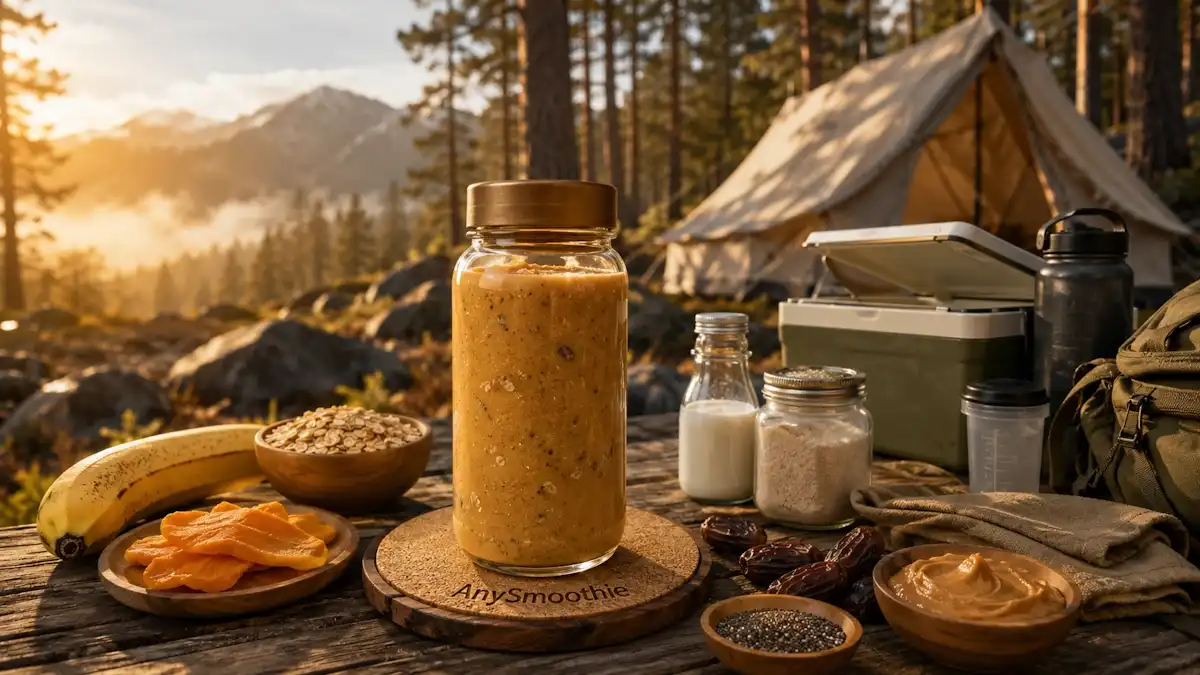
A campsite morning can make a simple breakfast feel complicated. Without a blender, outlets, or a full kitchen, no kitchen smoothies for camping trips need ingredients that travel well and mix without a motor.
The answer is a shaker bottle or wide-mouth jar, plus a few smart pantry staples. These three recipes use powders, pouches, oats, and soft fruit for filling drinks with minimal cleanup.
How to Make No Kitchen Smoothies for Camping Trips
Start with 1 cup of liquid in a wide-mouth jar or shaker bottle. Add a soft base, such as mashed banana or applesauce, or a powdered base like milk powder. Then add oats, seeds, nut butter, cocoa, or fruit for flavor and texture.
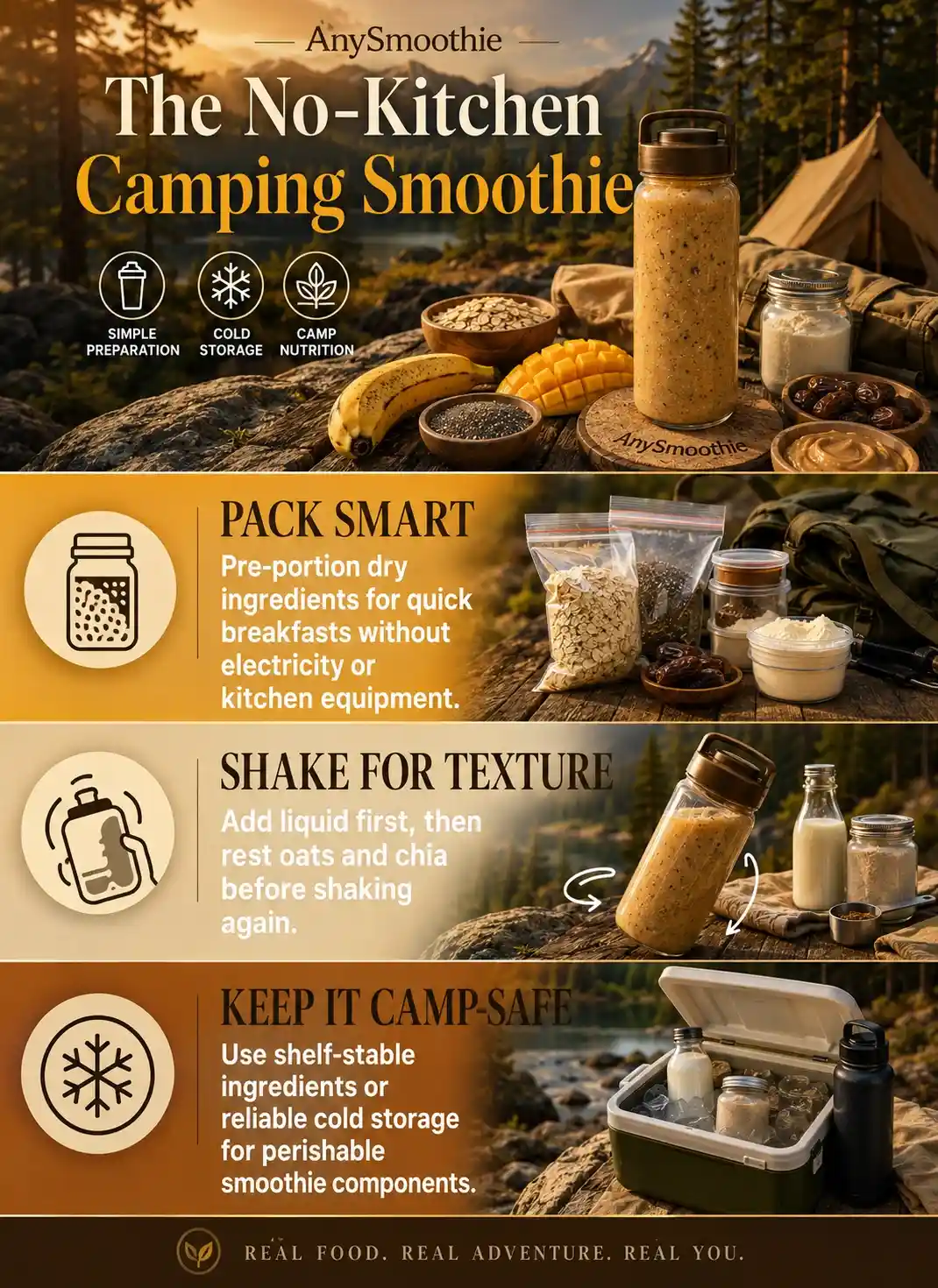
A spoon, small measuring cup, funnel, cooler, and leakproof jar make camp prep much easier. Pack dry ingredients in labeled single-serving bags at home, then carry shelf-stable liquids separately.
These no kitchen smoothies for camping trips are shaken, not blended. Therefore, choose finely ground powders, instant oats, powdered milk, applesauce pouches, soft fruit, and nut butter packets. For more trail ideas, browse these portable fruit smoothies for hikers.
Pack Ingredients That Stay Fresh Without a Kitchen
Powdered milk, coconut milk powder, protein powder, instant oats, chia seeds, cinnamon, cocoa, honey, and freeze-dried fruit can handle longer trips when sealed and kept dry. Nut or seed butter packets and shelf-stable milk boxes are also dependable.
Frozen fruit can double as an ice pack for the first day. However, use it early, before it thaws completely. When you have no cooler, ripe bananas, applesauce, fruit puree pouches, and freeze-dried berries are better choices.
Label every portion before leaving home. A bag marked “berry chia” saves time when breakfast is happening beside a tent in low light.
If you expect a predawn start, keep the first morning’s packet and shaker near the top of your food bag. Finding individual ingredients by headlamp is much less convenient than preparing one labeled packet at home.
Use the Right Liquid and Texture for Shaking
Cold water, shelf-stable milk, and coconut water all work as a base. Add liquid first, since dry powder sticks less to the bottom and corners of the container.
Shake in short bursts, then let oats or chia sit for three to five minutes. Their starches and soluble fiber absorb water, which thickens the drink. Add more liquid for a thinner texture, or another spoonful of milk powder or oats for more body.
A shaken smoothie will have some texture. Instant oats, softened chia, and fully mixed powder make that texture pleasant instead of gritty.
3 Smoothies for Camping Trips
Each recipe makes one serving. These combinations provide carbohydrates for activity, plus protein, fats, and fiber that help the drink feel more substantial.
| Smoothie | Main Ingredients | Best Liquid | Texture | Camping Benefit |
|---|---|---|---|---|
| Peanut Butter Banana Oat | Banana, nut butter, instant oats | Milk or water | Creamy and thick | Filling fuel for a morning hike |
| Berry Yogurt With Chia | Berries, milk powder, chia | Cold water | Bright and lightly thick | Fruit flavor with fiber and protein |
| Chocolate Coconut Camp | Coconut powder, cocoa, oats | Water | Smooth with soft oat texture | Dessert-like option with pantry staples |
The table makes the choice simple: use banana for creaminess, berries for fruit flavor, or cocoa and coconut when you want something richer.
Peanut Butter Banana Oat Smoothie
Ingredients:
- 1 mashed ripe banana
- 2 tablespoons peanut butter
- 1/4 cup instant oats
- 1 cup milk or water
- A pinch of cinnamon
Add the ingredients to a jar. Shake hard for 30 seconds, rest for three minutes, then shake again.
If your cooler has room, a ripe banana makes the creamiest version. Otherwise, use banana chips and let them soften in the liquid for five minutes before shaking. Sunflower seed butter makes a practical nut-free swap.
This smoothie has oats for carbohydrates and fiber, while the nut or seed butter adds fat and protein. It works well before a morning hike because it is filling without requiring cookware.
Estimated Nutrition per Serving
Estimated using dairy milk and regular peanut butter. Powdered peanut butter or water will substantially change the values.
- Calories: ~520 kcal
- Protein: ~19 g
- Carbohydrates: ~61 g
- Fat: ~24 g
- Fiber: ~7 g
- Sugars: ~30 g
Berry Yogurt Smoothie With Chia
Ingredients:
- 1/3 cup powdered yogurt or milk powder
- 1 tablespoon chia seeds
- 1 teaspoon honey
- 1 cup cold water
- 2 tablespoons freeze-dried berries, or a berry fruit puree pouch
Shake, let the jar rest for five minutes, and shake once more. Chia seeds absorb water and create a thicker texture, while the berries bring tart flavor without ice or a blender.
Check labels for dairy, seed, and sweetener preferences before packing. The milk powder supplies protein, which provides amino acids used throughout normal physiological systems.
For other ways to use chia, oats, and similar ingredients to add body and fiber, these high-fiber smoothie combinations provide useful examples.
Estimated Nutrition per Serving
Estimated using nonfat milk powder and freeze-dried berries. Powdered yogurt or a fruit puree pouch will change the values.
- Calories: ~195 kcal
- Protein: ~11 g
- Carbohydrates: ~32 g
- Fat: ~4 g
- Fiber: ~6 g
- Sugars: ~22 g
Chocolate Coconut Camp Smoothie
Ingredients:
- 1/3 cup coconut milk powder
- 1 tablespoon cocoa powder
- 2 tablespoons instant oats
- 1 tablespoon nut or seed butter powder
- 1 to 2 teaspoons honey or maple sugar
- 1 cup water
At home, mix the coconut milk powder, cocoa powder, instant oats, nut or seed butter powder, and honey or maple sugar in a dry packet.
At camp, pour 1 cup water into a jar, add the packet, and shake until the cocoa disappears into the liquid. Let it sit for three minutes so the oats soften, then shake again.
Mixing cocoa with the other dry ingredients first prevents stubborn clumps. This is a dessert-like choice for cool mornings or for a break after setting up camp.
Test this one in your actual camping jar before packing it. Coconut milk powders vary in how easily they dissolve, and a little extra water can make the difference between pleasantly creamy and chalky.
Estimated Nutrition per Serving
Estimated with representative coconut milk powder and nut-butter powder and 1 teaspoon honey. Coconut milk powders vary considerably by brand.
- Calories: ~430 kcal
- Protein: ~8 g
- Carbohydrates: ~32 g
- Fat: ~31 g
- Fiber: ~6 g
- Sugars: ~14 g
Keep Camping Smoothies Safe, Cold, and Easy to Clean Up
Powders, unopened shelf-stable milk, sealed nut butter, and unopened fruit pouches need no refrigeration. Once you open dairy milk, plant milk, yogurt, or a puree that requires chilling, follow its package label and keep it cold.
Pack perishable items under 40 F in a well-insulated cooler with plenty of ice or frozen gel packs. The USDA’s cooler packing guidance recommends using a thermometer to check that temperature. Keep the cooler closed as much as possible.
Make only what you plan to drink soon. The USDA explains that foods between 40 F and 140 F sit in the food safety danger zone, where bacteria can multiply rapidly. Discard perishable leftovers that have been left out too long, especially in hot weather.
Use clean water, sealed jars, leakproof bags, and a small trash bag for empty packets. For long trips, rely on shelf-stable powders. Use frozen fruit on the first morning, then shift to fruit pouches or water-based recipes when cooler space is tight.
Conclusion: A Blender-Free Breakfast Worth Packing
A useful camp smoothie starts with a jar, a reliable liquid, and ingredients that can soften or dissolve. Prep dry portions at home, then match fresh ingredients to the space in your cooler.
The peanut butter banana oat, berry yogurt chia, and chocolate coconut options each bring a different texture and flavor. Test your favorite no kitchen smoothie for camping trips in a jar before your next outing, so camp breakfast feels familiar from the first shake.
🛡️ Safety Notes & Dietary Interactions
- Water Safety: Camping smoothies prepared with powdered ingredients depend on safe water. Use potable water from a verified source or water appropriately treated for backcountry use, since shaking ingredients does not make contaminated water safe.
- Opened Ingredients: Shelf-stable milk, fruit puree, and similar products may require refrigeration after opening. Follow each package label, keep opened perishables properly chilled, and avoid saving partially used products when safe storage is unavailable.
- Allergy and Label Checks: Dairy powders, coconut products, chia, peanuts, and other nut or seed ingredients may cause allergic reactions. Check individual packets and powdered mixes for allergens and cross-contact warnings before packing them together.
- Camp Food Hygiene: Shaker bottles and jars can retain milk powder, oats, chia, and nut butter residue. Wash them with safe water after use and allow them to dry rather than repeatedly refilling an inadequately cleaned container.
FAQs
Which smoothie works best when I have no cooler at all?
The chocolate coconut camp smoothie is the most practical starting point because its ingredients can be pre-portioned as dry pantry staples. Keep the powder mixture sealed and dry, then add safe water immediately before drinking. Confirm that the specific coconut and nut or seed butter powders you purchase are labeled for unrefrigerated storage before opening.
Can I prepare these camping smoothies the night before?
Only when you have dependable refrigeration or cooler storage for the finished drink. The better blender-free approach is usually to portion dry ingredients at home and add liquid immediately before breakfast. This also prevents oats and chia from absorbing excessive liquid overnight and creating a texture that is difficult to shake or drink.
Are banana chips really suitable for a no-blender smoothie?
They are less convenient than a ripe banana because they do not become completely smooth simply by shaking. Allowing them to soak can soften their texture, but expect pieces rather than a conventional blended consistency. For a smoother no-kitchen option, mashed ripe banana or a shelf-stable banana puree that fits your storage conditions works better.
How do I stop powdered ingredients from clumping in a shaker bottle?
Add the liquid first, followed gradually by the pre-mixed dry ingredients. Shake vigorously, allow instant oats or chia several minutes to hydrate, and shake again. Mixing cocoa with milk, coconut, or nut-butter powder before leaving home also helps distribute fine ingredients instead of creating concentrated cocoa clumps against the container.
How should I clean a smoothie jar when camping without running water?
Use potable or appropriately treated water and remove food residue as soon as practical, paying particular attention to the lid, threads, seals, and corners where thick ingredients collect. Follow the sanitation practices appropriate to your campsite or backcountry setting, and dispose of wastewater according to local rules rather than leaving smoothie residue around camp.

Medical Disclaimer: AnySmoothie content is for educational purposes only and is not a substitute for professional medical advice. Consult a healthcare provider for personalized guidance. See our full Disclaimer & Terms of Use. AI Transparency: AnySmoothie may use AI to support content development. All content undergoes human editorial review for accuracy, clarity, and editorial quality. See our full AI Transparency.