
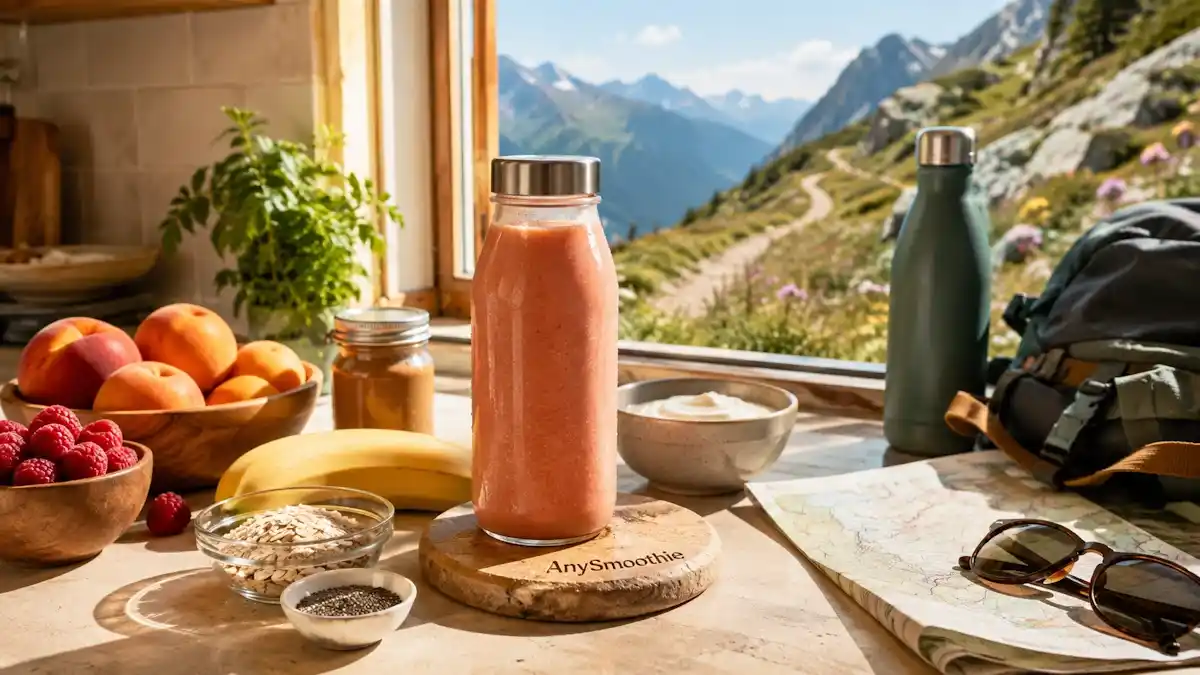
A good hiking snack has to earn its space. It should travel without leaks, bulky wrappers, or a mess at the trailhead.
Portable smoothies for day hikers can bring fluid, carbohydrates, protein, and fats together in one compact bottle. With the right recipe and cold storage, they work well beside water and solid snacks on shorter outings.
What Makes a Smoothie Work on a Day Hike?
Trail-ready smoothies need a drinkable texture that stays pleasant after a few hours. Frozen fruit, oats, yogurt, nut butter, chia, and silken tofu all add body without requiring a spoon.
Carbohydrates provide readily available energy during a climb, while protein and fat help make the smoothie more substantial. Protein supplies amino acids used in normal tissue maintenance, while fats raise the calorie density without adding much volume. The combination can make a small bottle feel more substantial than juice alone.
Still, portable smoothies for day hikers aren’t a complete trail-food plan. Bring plain water, plus easy solid foods such as pretzels, fruit, or a sandwich. Liquids go down easily, but chewing can feel more satisfying during a long break.
Choose a bottle built for movement
Use a wide-mouth, leakproof insulated bottle with a secure lid. A 16 to 20-ounce size fits most daypacks and is easier to finish while the drink is cold.
Fill the bottle almost to the top, but leave about an inch of space for shaking. For more make-ahead ideas, these smoothie storage tips can help you limit air exposure and keep texture more consistent.
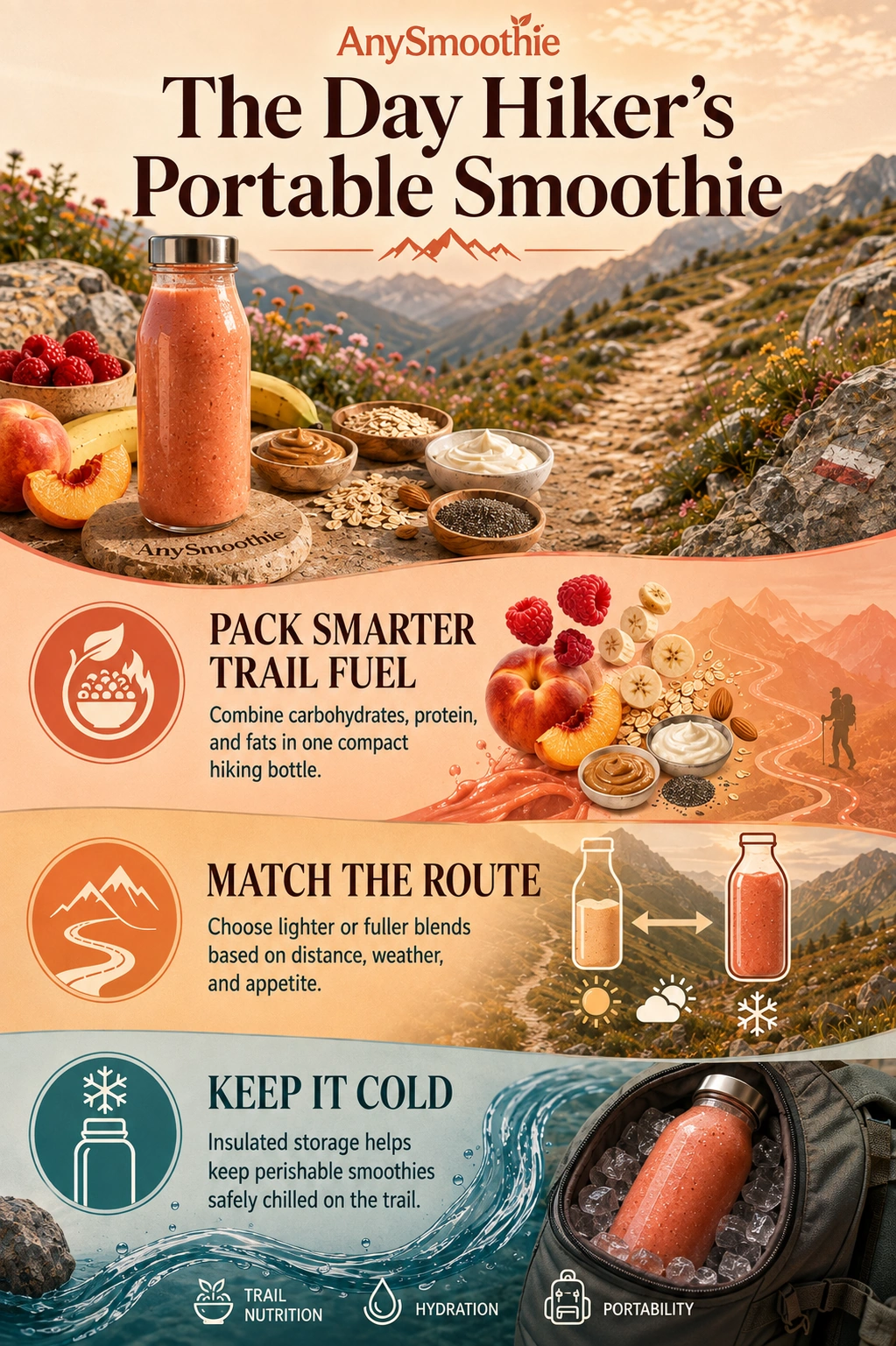
3 Portable Smoothies for Day Hikers
The calorie counts below are estimates. Brands, serving sizes, and milk choices can shift the total.
Banana Oat Peanut Butter Smoothie
Ingredients:
- 1 medium banana
- 1/3 cup rolled oats
- 1 tablespoon peanut butter
- 3/4 cup milk or soy milk
- 1/2 cup ice
- A pinch of salt
Blend until the oats disappear.
This is a thicker, breakfast-style option for an early trail start. Add 2 to 4 tablespoons of extra milk if it becomes too dense for your bottle.
Estimated Nutrition per Serving
Estimated with 2% milk and regular peanut butter.
- Calories: ~400 kcal
- Protein: ~16 g
- Carbohydrates: ~61 g
- Fat: ~13 g
- Fiber: ~7 g
- Sugars: ~26 g
This one can turn surprisingly thick after even a short rest because the oats continue soaking up liquid. If you’re carrying it on the trail, blending in a little extra milk from the start usually makes it much easier to drink later.
Berry Chia Smoothie
Ingredients:
- 1 cup frozen mixed berries
- 3/4 cup milk
- 1 tablespoon chia seeds
- 1 teaspoon honey, if desired
Let it sit for five minutes after blending so the chia can thicken the drink.
The berries give this smoothie a bright flavor, while yogurt adds protein. Pack it in an insulated bottle, since dairy needs reliable cold storage.
Estimated Nutrition per Serving
Estimated with 2% milk and without the optional honey.
- Calories: ~235 kcal
- Protein: ~10 g
- Carbohydrates: ~34 g
- Fat: ~8 g
- Fiber: ~10 g
- Sugars: ~20 g
Mango Coconut Lime Smoothie With Silken Tofu
Ingredients:
- 1 cup frozen mango
- 1/2 cup silken tofu
- 3/4 cup unsweetened coconut beverage
- 1 tablespoon lime juice
- A small pinch of salt
Add ice for a thicker drink or extra coconut beverage for an easier sip.
Estimated Nutrition per Serving
Estimated with plain silken tofu and unsweetened refrigerated coconut beverage.
- Calories: ~205 kcal
- Protein: ~8 g
- Carbohydrates: ~32 g
- Fat: ~7 g
- Fiber: ~4 g
- Sugars: ~24 g
Silken tofu makes this dairy-free smoothie smooth and adds protein without a strong flavor. A similar tropical mango coconut smoothie can offer another fruit-forward option for warm-weather hikes.
| Smoothie | Main ingredients | Approximate calories | Best use on the trail | Storage note |
|---|---|---|---|---|
| Banana oat peanut butter | Banana, oats, peanut butter, milk | 400 | Breakfast or a long approach | Shake before drinking |
| Berry yogurt chia | Berries, Greek yogurt, chia, milk | 300 | Midmorning snack | Keep cold throughout |
| Mango coconut lime tofu | Mango, silken tofu, coconut beverage | 260 | Light snack or post-hike drink | Use a leakproof insulated bottle |
The banana blend carries the most energy, while the mango option has the lightest texture.
Match the Smoothie to the Hike
A two-hour walk near home calls for a different plan than a sunny six-mile route with steep climbs. For a short morning outing, drink half a banana oat smoothie before leaving and carry the rest for later.
On a warm hike, berry or mango blends can feel lighter, especially when paired with salty solid food. However, don’t treat a smoothie as your only source of fluids. Sweating increases water loss, and a thick drink doesn’t replace steady sips of plain water. For warmer routes, these hydration smoothies for frequent travelers offer more ideas for combining fluid, fruit, and electrolytes around physical activity.
A smoothie that starts frozen may buy time in an insulated bottle, but it still needs to stay cold enough for its perishable ingredients.
For a post-hike meal, the yogurt or tofu smoothie works well when you want something easy to drink while you cool down. Add a more substantial meal later if the hike was long or you are still hungry.
How to Prep, Pack, and Drink Smoothies on the Trail
Blend the smoothie the night before or on the morning of the hike. Then pour it into a clean bottle, label the flavor if you are packing more than one, and chill it fully before leaving. An insulated bottle with an ice pack in the lunch pocket of your pack adds another layer of protection.
Keep the bottle near the top or side of the pack. You shouldn’t have to unpack rain gear and first-aid supplies to reach a drink during a brief stop.
Respect the cold-storage window
Yogurt, milk, and tofu make these drinks perishable. The USDA advises discarding perishable food left at room temperature for more than two hours, or more than one hour when temperatures exceed 90 F. Review the agency’s food safety guidance for the 40 F to 140 F range before relying on a bottle during a hot hike.
If a smoothie has warmed for too long, don’t save it for the drive home. Pack out the empty container, rinse it when you can, and keep any remaining food in a cooler.
Pair liquids with foods you can chew
Smoothies offer quick access to calories, yet some hikers feel hungry soon afterward. Carry one or two solid snacks that tolerate heat, such as roasted chickpeas, crackers, a nut butter packet, or a whole apple.
That pairing gives you texture, sodium, and something to eat if the smoothie spills. Most importantly, bring more plain water than you think you will need for the route and weather.
Conclusion: A Cold Bottle Makes the Difference
The best portable smoothies for day hikers are cold, balanced, easy to drink, and matched to the distance ahead. Banana oat peanut butter suits an early start, berry yogurt chia fits a midmorning break, and mango coconut lime tofu offers a dairy-free choice.
Keep perishable ingredients cold and drink the smoothie promptly. Prepare one bottle the night before your next hike, then test its texture in the exact container you plan to carry.
🛡️ Safety Notes & Dietary Interactions
- Cold Storage: Smoothies containing yogurt, milk, or silken tofu are perishable. Keep them reliably chilled in an insulated container, particularly during warm hikes, and discard drinks that have remained inadequately refrigerated.
- Trail Hydration: A thick smoothie should not replace the water carried for the hike. Hot weather, elevation, duration, pace, and individual sweat rate can substantially increase fluid needs during outdoor activity.
- Allergy Awareness: Peanut butter, dairy, soy, and chia appear across these recipes and may require substitutions. Hikers with significant allergies should also check packaged ingredients for cross-contact warnings before preparing trail food.
- Fiber and Digestion: Oats, chia, berries, and larger smoothie portions may cause fullness or gastrointestinal discomfort during strenuous walking. Test recipes on easier outings before carrying them on longer or steeper routes.
FAQs
How long can I safely carry a smoothie during a day hike?
The important factor is temperature rather than simply the number of hiking hours. Smoothies containing milk, yogurt, or tofu need dependable cold storage. Start with the drink thoroughly chilled and use an insulated bottle, ideally with additional cooling. If it becomes warm for an extended period, food safety should take priority over avoiding waste.
Should I freeze my smoothie before taking it hiking?
Partially freezing a smoothie can help it remain cold and refreshing longer, but test the method beforehand because oats and chia may become unusually thick as the drink sits. Leave some expansion space in the container, keep it insulated, and shake thoroughly before drinking. Freezing does not eliminate the need for safe temperature control.
Which of these smoothies is best before a longer hike?
The banana oat peanut butter smoothie is the most substantial option because it combines carbohydrate-rich banana and oats with peanut butter and milk or soy milk. Its thicker texture may work better before starting or during a longer break. If exercising with a full stomach feels uncomfortable, reduce the portion or drink it earlier.
Do I still need trail snacks if I bring a smoothie?
Usually, carrying some solid food is practical, particularly on longer outings. A smoothie provides convenient nutrition but may not feel as satisfying as chewing food, and relying on one bottle leaves little backup if it leaks or spoils. Crackers, fruit, pretzels, or another suitable portable snack can complement the smoothie and water.
Is coconut beverage a good hydration replacement for water while hiking?
No. The coconut beverage in the mango smoothie primarily serves as a recipe ingredient and liquid base. Your hiking hydration should still include adequate plain water appropriate for the route, weather, and activity level. During substantial sweating or prolonged activity, electrolyte and sodium needs may also require consideration beyond what a smoothie provides.

Medical Disclaimer: AnySmoothie content is for educational purposes only and is not a substitute for professional medical advice. Consult a healthcare provider for personalized guidance. See our full Disclaimer & Terms of Use. AI Transparency: AnySmoothie may use AI to support content development. All content undergoes human editorial review for accuracy, clarity, and editorial quality. See our full AI Transparency.