
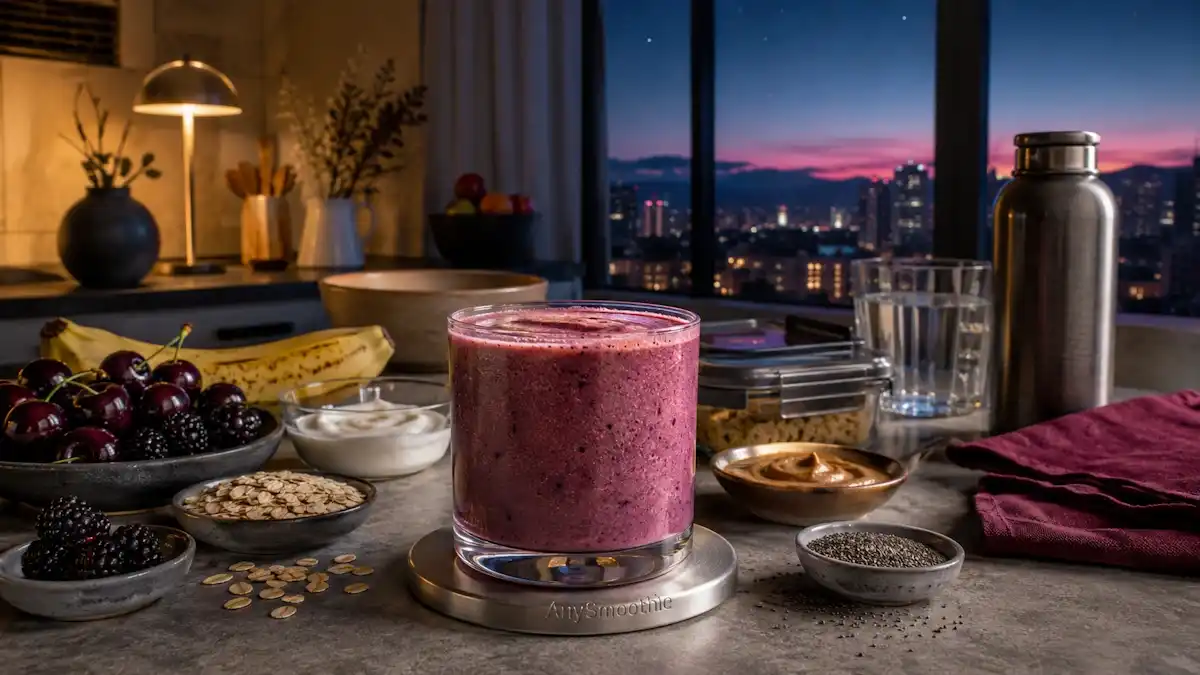
A 12-hour overnight shift can leave little time to eat, especially when breaks move or disappear. Smoothies for nurses working night shifts offer a portable way to combine fluids, carbohydrates, protein, fiber, and fats in one cup.
They won’t replace sleep or every regular meal, but a well-built smoothie can fit into a packed schedule without much prep. These recipes use familiar ingredients and flexible portions for real hospital nights.
How to Build Smoothies That Support a Long Night Shift
Use a simple base: 1 cup liquid, produce, protein, a fiber-rich ingredient, and an optional healthy fat. Water, milk, or fortified plant milk creates a drinkable texture. Fruit and vegetables provide carbohydrates, which the body breaks into glucose for cellular processes.
Protein sources such as Greek yogurt, tofu, or milk provide amino acids used in normal tissue maintenance. Meanwhile, oats, chia, flax, and fruit fiber absorb water and can slow digestion. Nut or seed butter adds fat and a fuller texture.
Adjust every ingredient for allergies, dietary needs, medications, and personal tolerance. A smoothie that feels good during a hectic shift is more useful than one built around a rigid formula.
Choose Ingredients That Are Easy to Sip Between Patient Rounds
Keep the ingredient list practical: Greek yogurt, milk or fortified plant milk, oats, nut or seed butter, frozen berries, bananas, spinach, chia seeds, and water all blend quickly. Frozen produce saves chopping time and makes a cold, thick smoothie without relying on much ice.
Protein powder is optional. If you use it, check the label for added sugar, allergens, and ingredients you don’t tolerate. For more ingredient ideas, browse these fiber-rich smoothie ingredients.
Keep coffee, tea, or energy drinks separate when possible. That makes it easier to control caffeine intake, especially when you want to protect daytime sleep after clocking out.
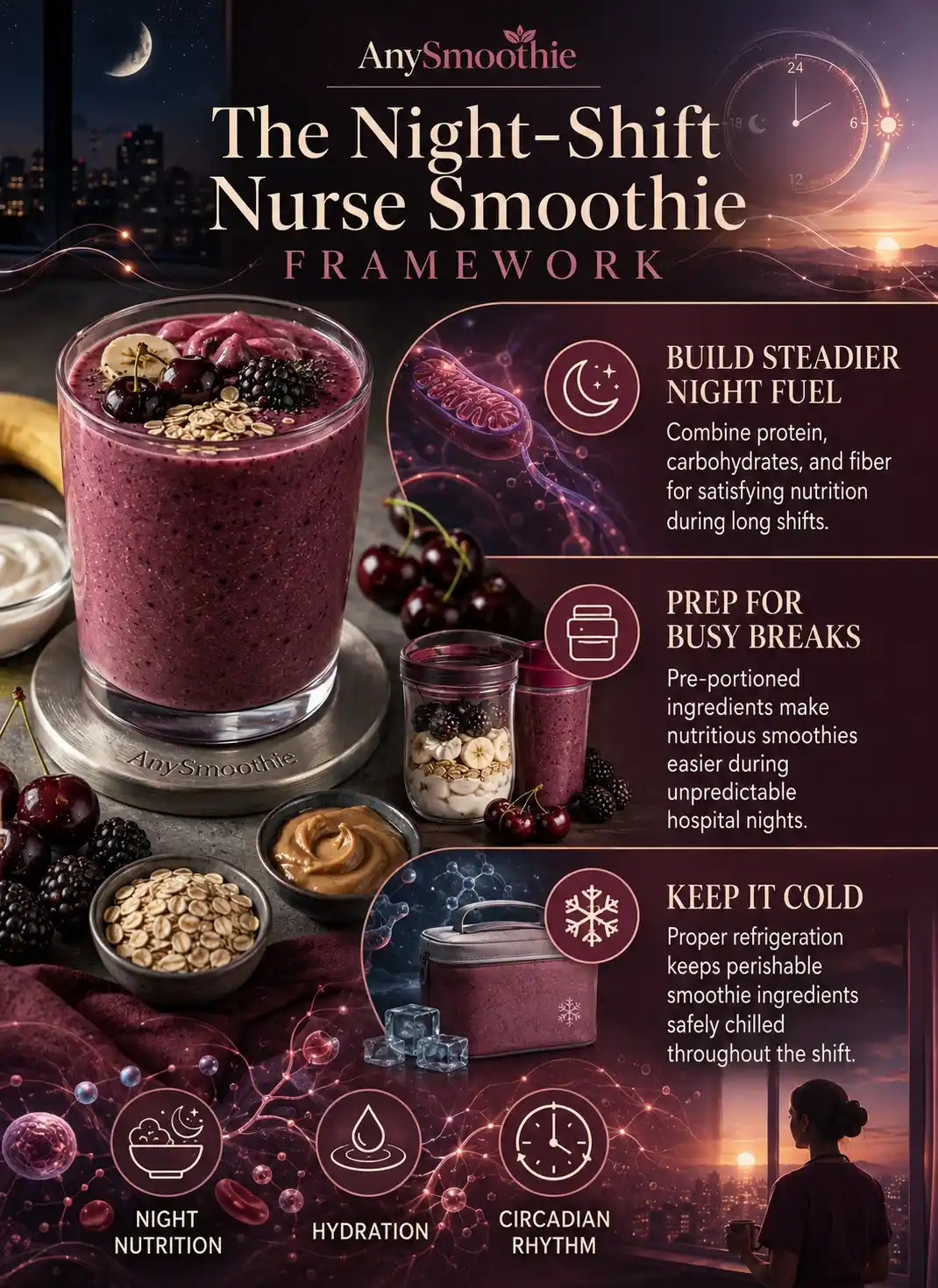
3 Smoothies for Nurses Working Night Shifts
These smoothies for nurses working night shifts make about 16 ounces each. Blend until smooth, then add water or ice to reach the texture you prefer.
| Smoothie | Main ingredients | Protein source | Best feature | Make-ahead time |
|---|---|---|---|---|
| Berry Oat | Berries, banana, oats, chia | Greek yogurt | Thick, familiar flavor | 5 minutes |
| Green Peanut Butter | Banana, spinach, peanut butter | Yogurt or tofu | Works as a quick meal break | 5 minutes |
| Tropical Yogurt | Mango, pineapple, flax, lime | Greek yogurt | Bright, fluid-forward option | 5 minutes |
The freezer-friendly fruit and dry ingredients can be portioned ahead, so blending takes only a few minutes before work.
Berry Oat Smoothie for Steady, Satisfying Fuel
Ingredients:
- 1 cup milk or unsweetened fortified soy milk
- 3/4 cup frozen berries
- 1/2 banana
- 1/4 cup rolled oats
- 1/2 cup plain Greek yogurt
- 1 teaspoon chia seeds
Add a splash of water if the mixture is too thick. You can blend the oats dry first for a smoother finish. For more filling combinations built around yogurt and other protein sources, explore these protein smoothie recipes.
Berries and banana provide carbohydrates, while oats and chia add fiber. Greek yogurt brings protein and a tangy flavor. This option fits well before the shift or during an earlier break, when you want something more substantial.
Green Peanut Butter Smoothie for a Quick Meal Break
Ingredients:
- 1 cup milk or unsweetened plant milk
- 1 banana
- 1 cup baby spinach
- 1 tablespoon peanut butter
- 1/4 cup Greek yogurt or silken tofu
- A handful of ice
Banana covers much of spinach’s mild flavor, while peanut butter and yogurt or tofu give the smoothie more body. Use sunflower seed butter if peanuts are off the menu. This recipe works when a meal break is short and solid food doesn’t sound appealing.
Tropical Yogurt Smoothie for Hydration and Fresh Flavor
Ingredients:
- 3/4 cup plain Greek yogurt
- 3/4 cup water or coconut water
- 1 cup frozen mango and pineapple
- 1 tablespoon ground flaxseed
- A squeeze of lime
The liquid contributes to fluid intake, fruit provides carbohydrates, yogurt adds protein, and flax brings fiber and fat. Coconut water is optional, regular water works well. Try this lighter-tasting blend during the middle or later part of a shift. For more fluid-focused combinations, these hydration smoothie recipes offer additional ideas for building lighter blends.
Prep, Pack, and Store Night-Shift Smoothies Safely
Portion frozen fruit, oats, chia, or flax into labeled freezer bags. Keep yogurt, tofu, and liquids refrigerated until blend time. You can blend before leaving home or use a planned break if your workplace has a suitable blender space.
Pack a finished smoothie in an insulated lunch bag with an ice pack. Dairy, yogurt, tofu, and cut produce need cold storage. USDA food-safety guidance recommends keeping perishable foods refrigerated and limiting the time they remain at room temperature.
Drink smoothies containing refrigerated ingredients soon after blending, rather than leaving them in a locker or car for an extended stretch.
Wash blender parts promptly, since dried nut butter, yogurt, and fruit pulp are harder to remove later. For a thinner drink, add water in small amounts. For a thicker one, use more frozen fruit or ice. Skip sweetened juice and flavored yogurt when reducing added sugar.
Adjust the Recipes for Allergies, Diets, and Sensitive Stomachs
Choose soy, dairy, oat, or pea milk based on your needs. Plain yogurt or silken tofu can replace protein powder, while sunflower seed butter replaces peanut butter. Berries or melon may suit people who prefer less acidic fruit.
Start with smaller amounts of chia, flax, oats, or greens if a high-fiber smoothie feels uncomfortable. Nurses with diabetes, kidney disease, food allergies, or other nutrition concerns should ask a qualified clinician or registered dietitian for personal guidance.
Smoothies should complement regular meals, snacks, water, and adequate rest, rather than automatically replacing them.
A Practical Smoothie for the Next Shift
The best night-shift smoothie is quick to prepare, easy to carry, enjoyable to drink, and made with ingredients your body tolerates well. Build it around liquid, produce, protein, and fiber, then adjust the portion to your hunger and access to other food.
Prep one recipe before your next shift. A small, familiar option is often easier to finish than a large smoothie you don’t look forward to drinking.
🛡️ Safety Notes & Dietary Interactions
- Keep Perishable Ingredients Cold: Smoothies containing yogurt, milk, tofu, or cut produce require reliable refrigeration. Store them in a refrigerator or adequately chilled insulated bag, and avoid leaving a prepared smoothie in a locker, vehicle, or other warm environment.
- Manage Caffeine Separately: Coffee, tea, energy drinks, pre-workout products, and some protein powders may contain caffeine. Keeping caffeinated products separate from smoothies makes total intake easier to track, particularly when protecting daytime sleep after an overnight shift.
- Adjust Fiber to Digestive Tolerance: Oats, chia, flaxseed, leafy greens, and berries can make smoothies more filling but may cause bloating or gastrointestinal discomfort in larger amounts. Begin with moderate portions and adjust fiber according to your usual intake and tolerance.
- Personalize for Dietary and Medical Needs: Diabetes, kidney disease, food allergies, medication-related restrictions, and other individual nutrition needs can change suitable ingredients and portions. Choose appropriate alternatives and seek individualized professional guidance when your usual dietary requirements need closer management.
FAQs
When is the best time to drink a smoothie during a night shift?
Timing depends on your hunger, workload, and access to regular meals. A more substantial smoothie with yogurt, oats, and fruit can work before the shift or during an early break. A lighter blend may fit later in the night when you want nutrition without a particularly large or heavy meal.
What should a filling night-shift smoothie contain?
Build the smoothie around a clear protein source, produce, fiber, and an unsweetened liquid. Greek yogurt, tofu, dairy or soy milk, berries, banana, oats, chia, and flaxseed are practical choices. A modest amount of nut or seed butter can add fat and make the drink more satisfying between meal opportunities.
Can nurses prepare their smoothies before starting a shift?
Yes. Frozen fruit and measured dry ingredients can be portioned ahead, and the complete smoothie can be blended before leaving home. Once yogurt, milk, tofu, or cut produce is included, dependable cold storage becomes important. Keep the finished drink refrigerated or adequately chilled until you are ready to consume it.
Are smoothies a good replacement for meals during busy night shifts?
A balanced smoothie can occasionally serve as a convenient light meal when breaks are limited, especially when it contains adequate protein, carbohydrates, fiber, and fat. However, relying on smoothies for every meal can reduce dietary variety. Regular meals and solid snacks should remain part of the overall eating pattern whenever practical.
How can I make a night-shift smoothie easier on my stomach?
Start with familiar ingredients and moderate portions, particularly if eating overnight already affects your digestion. Reduce chia, flax, oats, raw greens, or nut butter if the smoothie feels too dense. Adding more water can also create a lighter texture. Change one ingredient at a time to identify combinations you tolerate comfortably.

Medical Disclaimer: AnySmoothie content is for educational purposes only and is not a substitute for professional medical advice. Consult a healthcare provider for personalized guidance. See our full Disclaimer & Terms of Use. AI Transparency: AnySmoothie may use AI to support content development. All content undergoes human editorial review for accuracy, clarity, and editorial quality. See our full AI Transparency.