
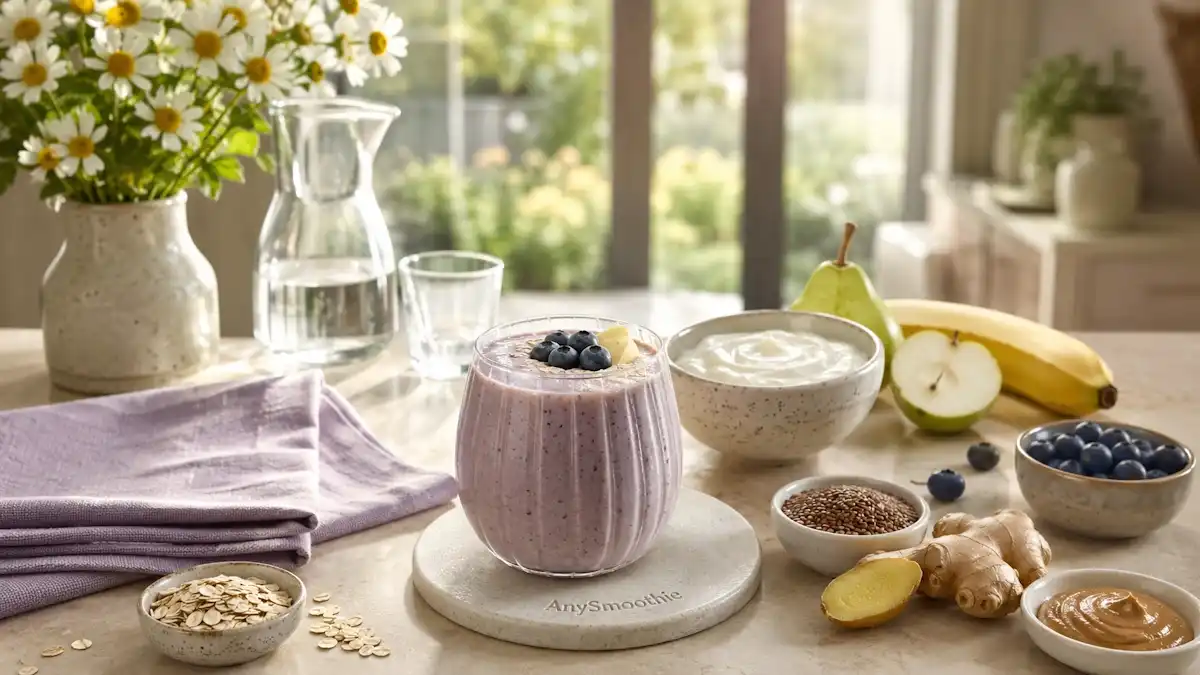
Getting your appetite, hydration, and everyday energy back after a viral illness can take time. Recovery smoothies for post viral wellness routines offer an easy way to combine fluid, carbohydrates, protein, fiber, and produce when a full meal feels like too much.
They are supportive food choices, not treatments for an infection or a replacement for medical care. Start with familiar ingredients, keep servings modest, and let your tolerance guide each blend.
How Recovery Smoothies Support a Post-Viral Wellness Routine
A recovery smoothie brings several nutrition basics into one drinkable meal or snack. Fluid supports hydration, while fruit, milk, or oats provide carbohydrates that the body can use as accessible fuel. Yogurt, tofu, or milk add protein and amino acids, which the body uses for normal tissue maintenance.
Fruits and vegetables also contribute fiber and micronutrients. However, more fiber is not always better when digestion feels unsettled. A thick, high-fiber smoothie can feel heavy if your appetite is low or nausea lingers.
Start small and adjust the texture
Begin with half a serving and sip slowly. Use more water, milk, or coconut water for a thinner drink. If berries, greens, oats, or seeds feel uncomfortable, reduce them and choose a smoother base such as banana and yogurt.
A smoothie should make eating and drinking feel easier, not become another task your body has to push through.
Food tolerance and energy needs differ after illness. If symptoms persist, contact a healthcare professional. Seek urgent care for dehydration, confusion, chest pain, trouble breathing, or an inability to keep fluids down. The CDC’s adult warning signs for flu include difficulty breathing, persistent chest pain, and signs of dehydration.
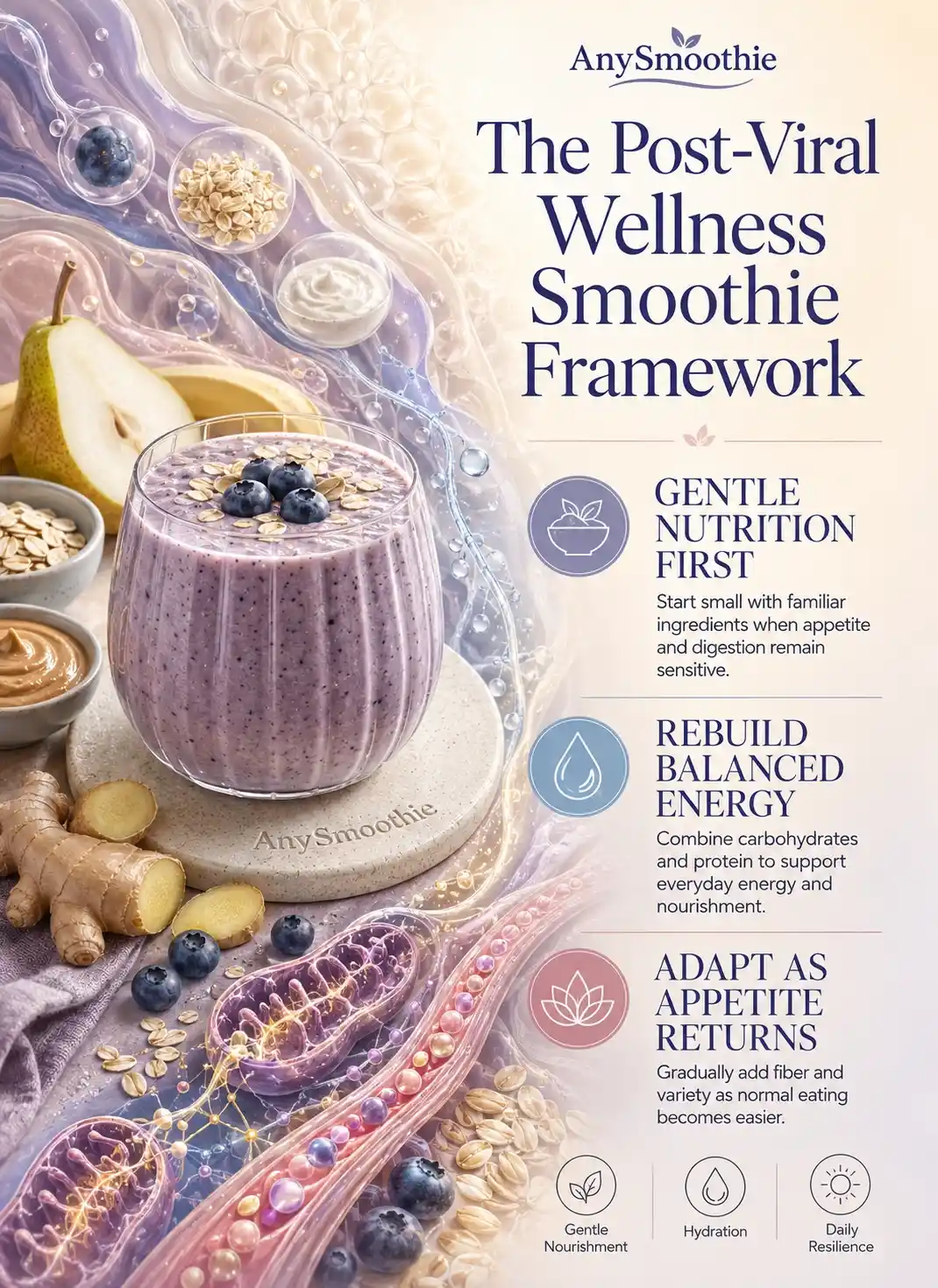
3 Recovery Smoothies for Post-Viral Wellness Routines
These recovery smoothies for post viral wellness routines use familiar grocery-store ingredients and make one moderate serving. Blend each recipe until completely smooth, then add more liquid if needed.
| Smoothie | Main ingredients | Protein source | Best for | Key adjustment |
|---|---|---|---|---|
| Gentle Berry Banana | Banana, berries, water, oats | Plain yogurt | Low appetite and mild flavor | Skip oats for less fiber |
| Tropical Ginger Protein | Mango, milk, ginger | Greek yogurt or silken tofu | A balanced snack | Leave out ginger if needed |
| Green Citrus Recovery | Spinach, orange, banana, avocado | Milk or fortified soy beverage | Produce variety and healthy fats | Use less spinach for a milder taste |
The first recipe is the lightest option, while the other two add more protein or fat for staying power.
Orange and banana soften the flavor of leafy greens, while avocado or chia adds unsaturated fat and a fuller texture. Peel the citrus well to avoid bitter pieces. For a gentler taste, cut the spinach to 1/2 cup. If you prefer a more protein-focused blend later, explore these high-protein smoothie recipes.
Build a Safe, Sustainable Smoothie Routine After Illness
Use smoothies alongside regular meals as appetite returns. A small smoothie in the morning may work well, followed by water throughout the day and a balanced meal later. Keep track of which ingredients feel comfortable, particularly dairy, acidic fruit, oats, and seeds.
Choose unsweetened yogurt, milk, or plant beverages when possible. Fruit already brings sweetness, so juice, syrups, and sweetened protein powders can quickly make a small drink much larger in sugar. For dairy-free needs, use soy yogurt, silken tofu, or fortified soy milk. For nut-free blends, skip nut butters and use avocado or oats instead.
Wash produce, refrigerate leftovers promptly, and discard a smoothie that has sat at room temperature for two hours. Supplements, herbs, and concentrated powders are not automatically safe with medications or health conditions. Cleveland Clinic’s dehydration guidance can help you recognize when home hydration efforts are not enough.
Conclusion
The best recovery smoothie is one you can digest, enjoy, and make consistently. Build it around liquid, produce, a protein source, and an optional source of fiber or healthy fat.
Make gradual changes rather than forcing a large, nutrient-dense drink when your appetite is still limited. Recovery smoothies for post viral wellness routines work best as flexible support, alongside fluids, regular meals, rest, and professional care when symptoms worsen or interfere with eating and drinking.
🛡️ Safety Notes & Dietary Interactions
- Prioritize Fluids and Food Tolerance: Recovery smoothies can contribute fluid, carbohydrates, protein, and micronutrients, but they should complement regular hydration and meals. Begin with smaller, thinner portions when appetite or digestion remains sensitive after illness.
- Adjust Fiber and Acidity Gradually: Berries, oats, chia, leafy greens, citrus, and pineapple may feel uncomfortable when digestion is unsettled. Reduce higher-fiber or acidic ingredients initially, then reintroduce them gradually as appetite and gastrointestinal tolerance improve.
- Use Supplements With Appropriate Caution: Concentrated herbs, vitamins, minerals, protein powders, and other supplements can interact with medications or be unsuitable for certain health conditions. Food-based ingredients are generally simpler, while regular supplement use may warrant professional guidance.
- Recognize When Nutrition Is Not Enough: Persistent vomiting, inability to keep fluids down, significant dehydration, confusion, chest pain, breathing difficulty, or worsening symptoms require appropriate medical assessment. Smoothies can support nutrition during recovery but should never delay necessary healthcare.
FAQs
Are smoothies good after recovering from a viral illness?
Smoothies can be useful when appetite remains limited because they combine fluid, carbohydrates, protein, and produce in an easy-to-consume format. They do not accelerate recovery from an infection directly, but a modest smoothie can help support normal nutrition while you gradually return to your usual meals and eating routine.
Which smoothie is best when my appetite is still low?
A simple banana and yogurt smoothie with plenty of liquid is often an easier starting point than a thick blend containing several seeds, greens, or oats. Begin with a small portion and sip slowly. If it feels comfortable, gradually introduce additional fruit, protein, fiber, and healthy-fat ingredients as your appetite returns.
Should recovery smoothies contain protein?
Including protein can make a recovery smoothie more nutritionally balanced and satisfying. Plain Greek yogurt, milk, fortified soy milk, silken tofu, or unsweetened soy yogurt are practical options. Protein supplies amino acids used for normal tissue maintenance, but the appropriate amount depends on your overall diet, appetite, and individual nutrition needs.
What should I avoid putting in a post-viral smoothie?
Avoid forcing large amounts of fiber, fat, acidic fruit, sweeteners, or unfamiliar supplements when your stomach remains sensitive. Very thick or oversized smoothies can also feel difficult to tolerate. Start with familiar foods and modify one ingredient at a time so you can identify which combinations work comfortably for your digestion.
When should I stop relying on smoothies and seek medical advice?
Seek professional guidance when persistent symptoms interfere with eating, drinking, or normal recovery. Inability to keep fluids down, significant dehydration, confusion, breathing difficulty, chest pain, or worsening symptoms need appropriate assessment rather than nutritional experimentation. Smoothies are supportive foods and cannot substitute for evaluation or treatment when concerning symptoms develop.

Medical Disclaimer: AnySmoothie content is for educational purposes only and is not a substitute for professional medical advice. Consult a healthcare provider for personalized guidance. See our full Disclaimer & Terms of Use. AI Transparency: AnySmoothie may use AI to support content development. All content undergoes human editorial review for accuracy, clarity, and editorial quality. See our full AI Transparency.