
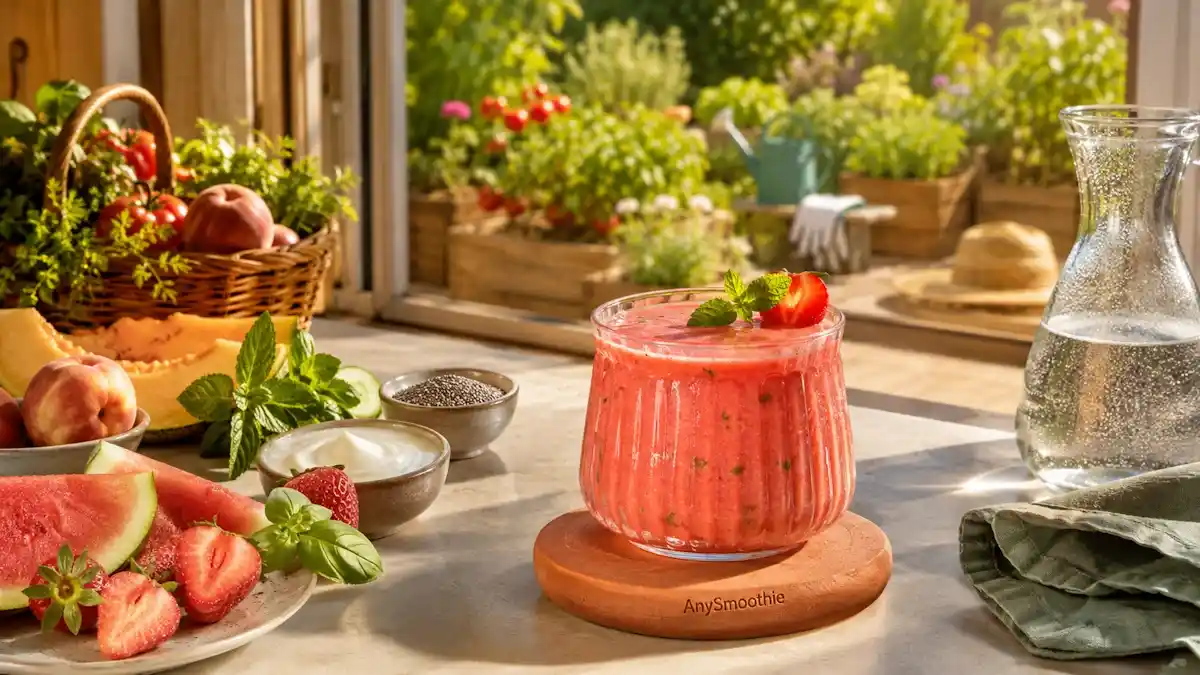
Morning gardening often means heat, sweat, and an early hunger that a heavy breakfast doesn’t always satisfy. Smoothies for gardeners offer a cold, fast option that combines fluid, produce, carbohydrates, and protein in one glass.
With the right ingredients, a smoothie can fit a short weeding session, a long morning of digging, or a post-garden snack. Start with hydration, then match the blend to the work ahead.
How smoothies for gardeners support hydration and steady energy
Fruit alone makes a pleasant drink, but it may not carry you through pruning, hauling soil, or turning compost. Water-rich cucumber, berries, melon, and citrus add fluid and flavor. Fruit and oats provide carbohydrates that the body can use for normal energy production.
Protein from Greek yogurt, milk, tofu, or seeds makes the drink more satisfying. Meanwhile, sodium helps regulate fluid balance, and muscles rely on electrolytes during normal movement. Coconut water contributes fluid and minerals, while a small pinch of salt can suit some people, depending on their usual diet. For a closer look at balancing fluids and minerals in a smoothie, these Hydration smoothies for electrolyte balance can provide additional ingredient ideas.
A smoothie works alongside regular water, shade breaks, and meals. The CDC’s heat guidance for outdoor workers is a useful reminder that outdoor heat raises dehydration and heat-illness risk.
Choose ingredients that can handle heat and hard work
Frozen fruit keeps the texture thick and cold without much ice. Add spinach for a mild green note, or use cucumber, mint, and basil for a drink that tastes like the garden.
A reliable formula is liquid, produce, protein, optional fiber or fat, and ice. Use yogurt, kefir, soy milk, or silken tofu for protein. Then add a spoonful of chia, ground flax, or oats when you need more staying power.
Too much nut butter, sweetener, or fiber can leave a drink dense and slow to sip in the heat. Keep the base light, especially before outdoor work.
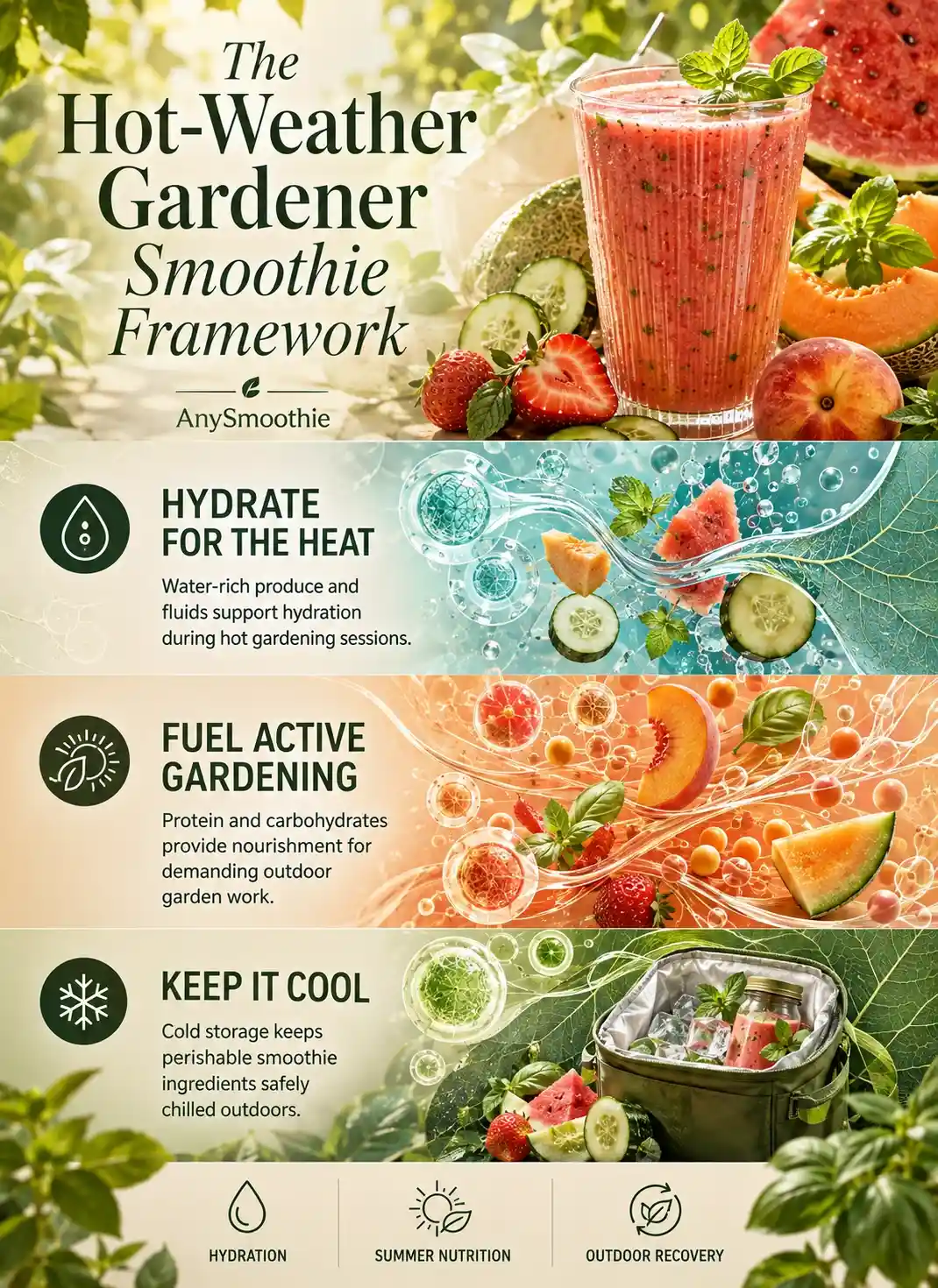
3 Smoothies for Gardeners on Hot Summer Days
These smoothies for gardeners use common summer produce and take only a few minutes to blend.
| Smoothie | Main ingredients | Hydration focus | Best time to drink | Helpful preparation note |
|---|---|---|---|---|
| Cucumber, melon, and mint | Melon, cucumber, mint, yogurt | Water-rich produce | Mid-morning break | Freeze melon cubes |
| Berry, spinach, and oat | Berries, banana, oats, spinach | Fluid plus fuel | Breakfast | Portion oats ahead |
| Peach, tomato, and basil | Peach, tomato, kefir, basil | Cold post-work snack | After gardening | Chill tomato first |
Match the Blend to Your Garden Schedule
A lighter smoothie often fits a 30-minute weeding session. Use fruit, cucumber, greens, and water or milk, then drink plain water before stepping outside.
Add substance for longer outdoor tasks
For several hours of lifting, digging, or mowing, include yogurt, tofu, oats, chia, or flax. Pair the smoothie with water and a solid snack, because liquid food may not cover the energy needs of a long workday
Thin a thick blend with water, milk, or coconut water. Cucumber and greens reduce sweetness, while citrus, ginger, mint, and basil brighten flavor without extra sugar. Choose ingredients that work with your dietary needs and avoid foods you can’t tolerate.
Prepare Smoothies Safely Before the Temperature Rises
Rinse garden produce under running water and cut away bruised or damaged areas. Chill washed ingredients, and keep yogurt, kefir, milk, and tofu cold until blending time.
Make the smoothie before going outside, then carry it in an insulated bottle if you plan to drink it later. Don’t leave a perishable blend in direct sun. Freezing measured fruit and vegetables in containers the night before also makes early starts easier.
Know when to stop gardening
Heat can build faster than expected when humidity is high or you are new to outdoor work. Stop, move to a cool place, and get help if you develop concerning symptoms such as confusion, fainting, severe weakness, or vomiting. OSHA’s heat-exposure guidance lists heat exhaustion and heat stroke among the risks of working in hot conditions.
A cold smoothie cannot treat heat illness. Water, rest, cooling, and prompt medical care when needed come first.
Conclusion: A Cooler Way to Fuel Garden Time
The most useful smoothies for gardeners follow a simple pattern: cold liquid, water-rich produce, protein, and optional fiber. Cucumber, herbs, berries, tomatoes, peaches, and zucchini all bring fresh summer flavor to that formula.
Prep a few freezer packs for busy mornings, then adjust each blend to the task ahead. Drink water, take shade breaks, and treat smoothies as convenient food for an active summer routine.
🛡️ Safety Notes & Dietary Interactions
- Prioritize Heat Safety and Hydration: Smoothies can contribute fluids and nutrients during summer gardening, but they cannot prevent or treat heat illness. Continue drinking water, take regular shade breaks, and stop outdoor activity if concerning heat-related symptoms develop.
- Keep Perishable Ingredients Properly Chilled: Smoothies containing yogurt, kefir, milk, tofu, or cut produce require reliable cold storage. Use an insulated container when necessary, avoid prolonged sun exposure, and discard perishable blends that have remained inadequately chilled.
- Adjust Electrolytes to Individual Needs: Coconut water and produce provide potassium, while small amounts of sodium may support fluid balance after sweating. People with kidney, heart, blood-pressure, or fluid-balance conditions should discuss significant electrolyte changes with a qualified healthcare professional.
- Match Portions to Gardening Intensity: A light smoothie may suit brief gardening, while longer periods of digging, mowing, or lifting require more substantial nutrition. Adjust protein, carbohydrates, fiber, and serving size while continuing to eat balanced meals throughout the day.
FAQs
What makes a good smoothie for gardening in hot weather?
A practical gardening smoothie combines fluid-rich produce with a protein source and enough carbohydrates to match your activity. Cucumber, melon, berries, peaches, yogurt, soy milk, tofu, and oats are useful options. Keep the blend relatively light before working outside, particularly when high temperatures or humidity make heavy foods uncomfortable.
Should gardeners drink a smoothie before or after working outside?
Either timing can work. A lighter smoothie can provide fluid and carbohydrates before a short gardening session, while a more substantial blend containing protein and carbohydrates may fit better afterward. For longer periods of outdoor work, continue drinking water and take appropriate rest and shade breaks rather than relying on smoothies alone.
Which smoothie ingredients are especially useful during summer gardening?
Watermelon, cantaloupe, cucumber, berries, peaches, tomatoes, and leafy greens provide water alongside carbohydrates and micronutrients. Yogurt, kefir, tofu, or soy milk can supply protein, while oats or seeds add fiber and staying power. Fresh mint and basil also provide garden-inspired flavor without requiring additional sugar.
How should I store a smoothie while working in the garden?
Prepare the smoothie with clean equipment and properly washed produce, then refrigerate it until needed. If you plan to take it outside, use a well-insulated bottle or cooler with adequate cold packs. Avoid leaving smoothies containing dairy, tofu, or cut produce sitting in direct sunlight or warm outdoor temperatures.
Can a smoothie replace water during hot-weather gardening?
No. Smoothies contribute to total fluid intake, but plain water should remain an important part of hydration during outdoor activity. Sweating and heat exposure can increase fluid needs considerably. Drink water regularly, use shade breaks, and respond promptly to dizziness, unusual weakness, confusion, vomiting, or other concerning heat-related symptoms.

Medical Disclaimer: AnySmoothie content is for educational purposes only and is not a substitute for professional medical advice. Consult a healthcare provider for personalized guidance. See our full Disclaimer & Terms of Use. AI Transparency: AnySmoothie may use AI to support content development. All content undergoes human editorial review for accuracy, clarity, and editorial quality. See our full AI Transparency.