
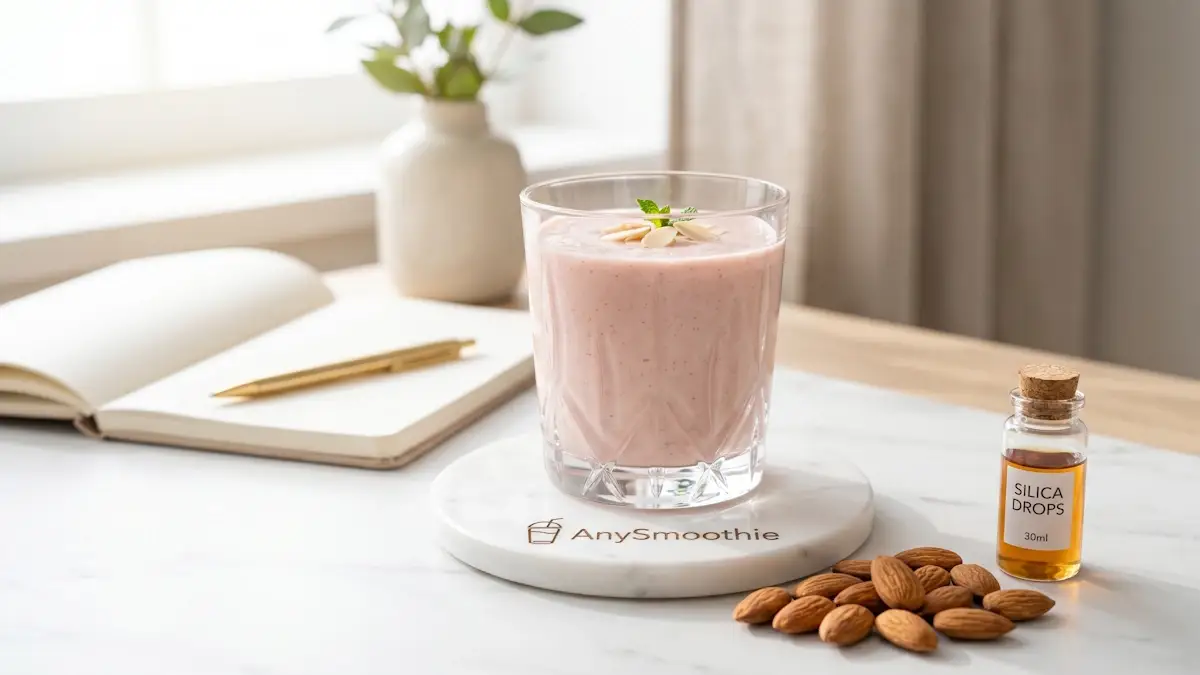
Brittle nails crack under daily stress. They split from poor diet or constant typing. You see ridges or slow growth, and it frustrates you.
A nutrient smoothie for resilient nails changes that. This daily drink supports keratin production right at the germinal matrix. It uses optimized nutrient partitioning and liposomal transport for better absorption. Smoothies beat pills because blending breaks down cell walls. Fats from ingredients create natural carriers that shuttle nutrients into your system.
Key players include MSM for sulfur bonds, biotin for enzyme action, silica for structure, and lipids for delivery. Biohackers focus on metabolic efficiency here. No fancy equipment needed. You get practical support for nail strength.
This post covers nail science, top nutrients, three recipes, and absorption tips.
The Keratin Matrix: Engineering Strength from the Germinal Matrix
Nails grow from the germinal matrix under your cuticle. Cells there push out keratin, the tough protein that forms nail plates. Strong keratin needs precise building blocks. Nutrient partitioning directs amino acids and minerals to this area first.
Sulfur compounds strengthen those bonds. Without them, nails stay weak. Think of keratin as a chain; disulfide links make it hold. Daily smoothies prime this process. They support keratin structure for less breakage.
Biohackers target the matrix with sulfur donors. This optimizes growth from the base.
Sulfur and Cysteine: The Disulfide Bonds of Nail Resilience
Sulfur from MSM and cysteine creates disulfide bonds. These links give nails toughness and flex, like chain-link fence wires that bend but don’t snap. MSM acts as a sulfur engine. It donates methyl groups for keratin synthesis and supports physiological systems.
Cysteine pairs with it to form those bonds. Smoothies deliver MSM via kale or powder. This aids nail resilience without overload.
Here’s a quick comparison of key compounds:
| Compound | Biological Role | Impact on Nail Texture | Best Food Source for Smoothies | Synergistic Pairing |
|---|---|---|---|---|
| Biotin (B7) | Enzyme co-factor | Smoother growth | Avocado/eggs | With zinc |
| MSM (Methylsulfonylmethane) | Sulfur donor | Harder, ridges reduced | Cruciferous veggies like kale | With biotin/cysteine |
| Silica | Structural cross-linker | Brittle prevention | Bamboo extract/shoots | With calcium |
MSM stands out as the sulfur engine.
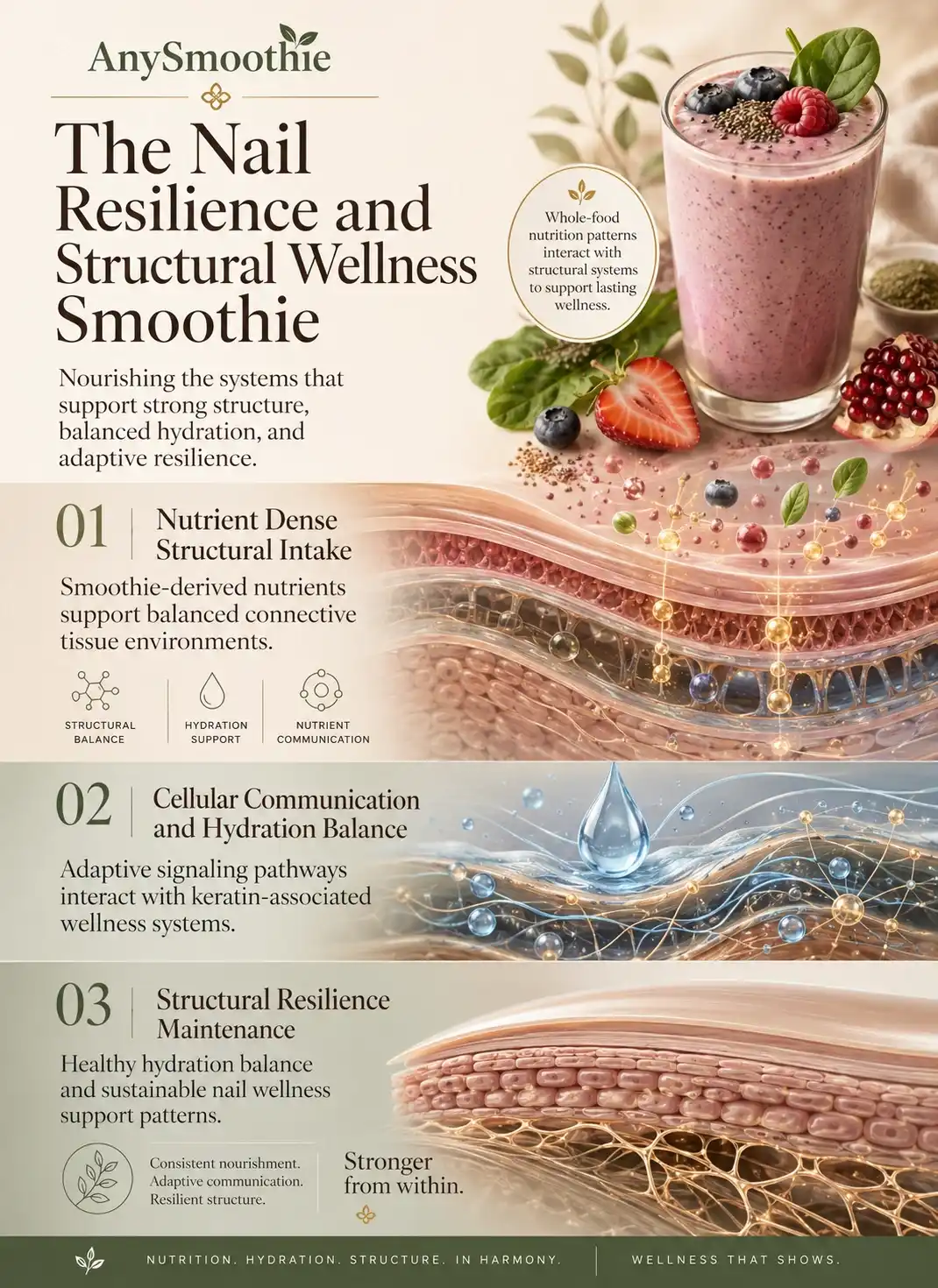
Micronutrient Catalysts: How Biotin and Zinc Drive Keratin Synthesis
Biotin works as a co-factor in carboxylase enzymes. It aids fatty acid synthesis, which nourishes keratin cells. Nails grow faster and thicker as a result.
Zinc supports over 300 enzymes in protein building. It primes mitochondria for energy in nail cells. Together, they catalyze keratin production.
Smoothies pack these from seeds and fruits. This boosts metabolic efficiency at the matrix. You notice less peeling after weeks.
Research shows biotin thickens brittle nails. Pair it with zinc for best results.
Silica and Calcium: Optimizing the Mineral Scaffolding
Silica builds collagen around the nail bed. It pairs with calcium for a mineral scaffold, like rebar in concrete. This prevents cracks and supports natural pathways.
Bamboo shoots or horsetail provide silica in smoothies. Calcium from yogurt adds density. Sulfur from MSM enhances the links.
Nails stay firm with this combo. It optimizes connective tissue health.
3 ‘Strong-Link’ Resilient Nail Smoothie Recipes
These recipes use whole foods for max absorption. Blending creates liposomal transport with natural fats. Each serves one, preps in under 5 minutes. Drink daily to support nail strength.
They taste great and target sulfur, minerals, and catalysts.
The ‘Silica-Spark’ Bamboo Extract and Berry Infusion
Ingredients
- Bamboo extract according to the product’s labeled serving, or 1 cup cooled horsetail tea
- 1/2 cup mixed berries
- 1 medium banana
- 1 tbsp chia seeds
- 1 cup unsweetened almond milk
- 1 cup spinach
Blend until smooth.
Bamboo and horsetail products can provide silica, although concentrations vary substantially between preparations. Berries contribute polyphenols, while chia provides fiber and ALA omega-3 fatty acids.
Estimated Nutrition per Serving
- Calories: ~260 kcal
- Protein: ~7 g
- Carbohydrates: ~46 g
- Fat: ~7 g
- Fiber: ~10 g
- Sugars: ~22 g
MSM-Powered Green Sulfur Surge
Ingredients
- 1 cup kale
- 1/2 avocado
- 1 medium apple
- MSM powder according to the product’s labeled serving or clinician guidance
- Juice of 1 lemon
- 1 cup unsweetened coconut water
Blend well.
MSM is an organosulfur compound, while kale naturally provides sulfur-containing compounds and other micronutrients. Avocado contributes unsaturated fats and fiber, and lemon provides vitamin C, which supports normal collagen formation.
Estimated Nutrition per Serving
- Calories: ~340 kcal
- Protein: ~7 g
- Carbohydrates: ~54 g
- Fat: ~13 g
- Fiber: ~14 g
- Sugars: ~29 g
I’d blend the kale with the coconut water first, then add the avocado, apple, and remaining ingredients. It breaks down the tougher leaves more completely and keeps the finished smoothie creamy rather than fibrous.
Biotin-Boost Tropical Keratin Kick
Ingredients
- 1 cup pineapple
- 1/2 cup plain Greek yogurt
- 1 tbsp pumpkin seeds
- 1 medium banana
- 1/4 cup rolled oats
- 1 cup unsweetened oat milk
Blend until creamy.
Greek yogurt, pumpkin seeds, oats, and banana contribute protein and a range of micronutrients, including some biotin. Pineapple is better known for vitamin C and manganese than as a particularly rich biotin source. Zinc from pumpkin seeds contributes to normal hair and nail maintenance.
Estimated Nutrition per Serving
- Calories: ~500 kcal
- Protein: ~21 g
- Carbohydrates: ~88 g
- Fat: ~10 g
- Fiber: ~10 g
- Sugars: ~48 g
Optimizing Absorption: The Role of Lipids in Nail Health
Fats in smoothies form liposomal delivery. They wrap fat-soluble nutrients for better blood flow to the nail bed. Avocado or chia create this naturally.
This enhances metabolic efficiency. Nutrients reach the matrix faster. Pair sulfur with lipids for peak partitioning.
MSM and silica combo supports nail health.
Iron and Oxygenation: Supporting Blood Flow to the Nail Bed
Iron from spinach fuels oxygen delivery. Vitamin C from fruits converts it to heme form. This supports uniform nail plate pigmentation and maintains the structural integrity of matrix cells.
Blending breaks plant walls for uptake. Greens plus lemon optimize circulation. Nails get steady fuel, like factories on a power grid.
Conclusion
MSM sulfur forms tough bonds. Biotin, zinc, and silica catalyze keratin and scaffold strength. The three smoothies deliver these with liposomal boost for absorption.
Try one daily for four weeks. Track growth and ridges. This biohacking routine builds resilient nails.
Strong nails boost your confidence. Keep the habit for lasting results.
⚠️ Safety Notes for Nail Resilience Smoothies
MSM and Blood Thinners: MSM (Methylsulfonylmethane) may have a mild anti-platelet effect. If you are taking anticoagulants like Warfarin or Aspirin, consult your doctor as it may slightly increase the risk of bruising.
Zinc-Copper Balance: While zinc is vital for nails, chronic high intake (above 40mg/day) can interfere with copper absorption. If you drink the “Biotin-Boost” daily, ensure your diet includes copper sources like cacao or cashews to maintain mineral equilibrium.
Horsetail and Kidney Health: If you use horsetail as your silica source, be aware it is a mild diuretic and can contain trace amounts of nicotine. It is not recommended for people with chronic kidney disease or those sensitive to diuretics.
Biotin and Lab Tests: High doses of biotin can interfere with certain blood tests, including thyroid (TSH) and cardiac troponin levels, leading to false results. Stop taking biotin-rich smoothies at least 72 hours before a blood draw.
Oxalate Awareness in Greens: Kale is lower in oxalates than spinach, but if you have a history of kidney stones, rotate your greens and maintain high hydration to ensure minerals are processed correctly.
FAQ
How can a smoothie improve the physical strength of my nails
Nails are composed of layers of a hardened protein called keratin. The strength of these layers depends on the availability of sulfur-containing amino acids and specific minerals that create cross-links between the protein strands. By delivering these nutrients in a bioavailable liquid form, you support the germinal matrix—the area where the nail is formed—ensuring that new growth is structurally sound and resilient to mechanical stress.
What is the role of MSM in nail resilience
MSM (Methylsulfonylmethane) serves as a primary organic sulfur donor. Sulfur is a critical component of the disulfide bonds that hold keratin fibers together. By increasing sulfur availability through your smoothie, you optimize the natural pathways responsible for the “hardness” and flexibility of the nail plate, helping to reduce the incidence of splitting and peeling.
Why is Biotin often paired with healthy fats in these blends
Biotin, or Vitamin B7, is a water-soluble co-enzyme necessary for the metabolism of fats and amino acids involved in keratin production. However, to optimize the physiological systems that transport these nutrients to the extremities, a baseline of healthy lipids (like those in avocado or walnuts) is essential. These fats support the integrity of the cell membranes in the nail bed, facilitating better nutrient partitioning.
Can silica really prevent nail brittleness
Silica is a trace mineral that acts as a structural cross-linker. It helps bind together the protein molecules into a stable architecture. Research into the biochemical mechanics of connective tissues shows that optimal silica levels are associated with higher concentrations of collagen and keratin, leading to nails that are less brittle and more resistant to bending or snapping.
How long before I see the results of a nail-support smoothie
Because nails grow slowly—roughly 3 millimeters per month—the benefits of improved nutrition are visible as the new nail emerges from the cuticle. While the internal biochemical pathways begin optimizing immediately, it typically takes 3 to 6 months to see a complete replacement of the nail plate with the new, nutrient-reinforced keratin structure.

Medical Disclaimer: AnySmoothie content is for educational purposes only and is not a substitute for professional medical advice. Consult a healthcare provider for personalized guidance. See our full Disclaimer & Terms of Use. AI Transparency: AnySmoothie may use AI to support content development. All content undergoes human editorial review for accuracy, clarity, and editorial quality. See our full AI Transparency.