
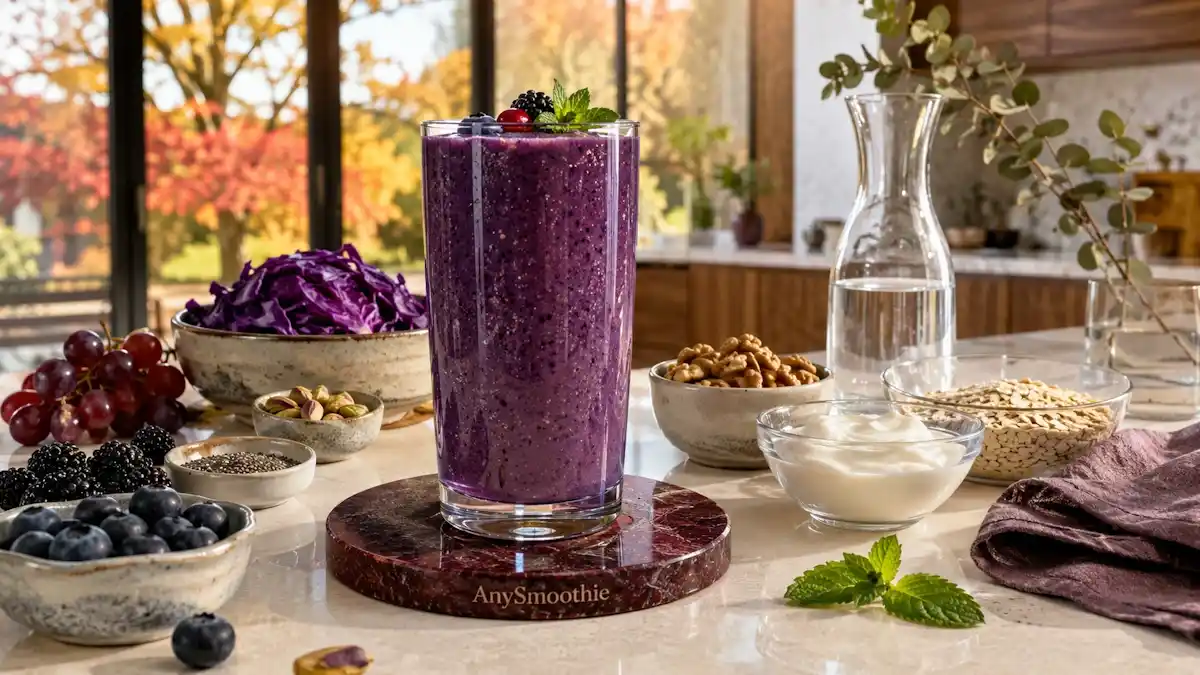
Daily food choices can support the body’s normal antioxidant defenses, energy production, and stress-response systems. Pterostilbene is a plant compound related to resveratrol, found in small amounts in foods such as blueberries and grapes.
A smoothie offers a convenient way to combine these foods with fiber, protein, healthy fats, and leafy greens. However, it isn’t a treatment, and human research on supplemental pterostilbene is still developing. The recipes below focus on food sources, balanced ingredients, practical preparation, and sensible safety points.
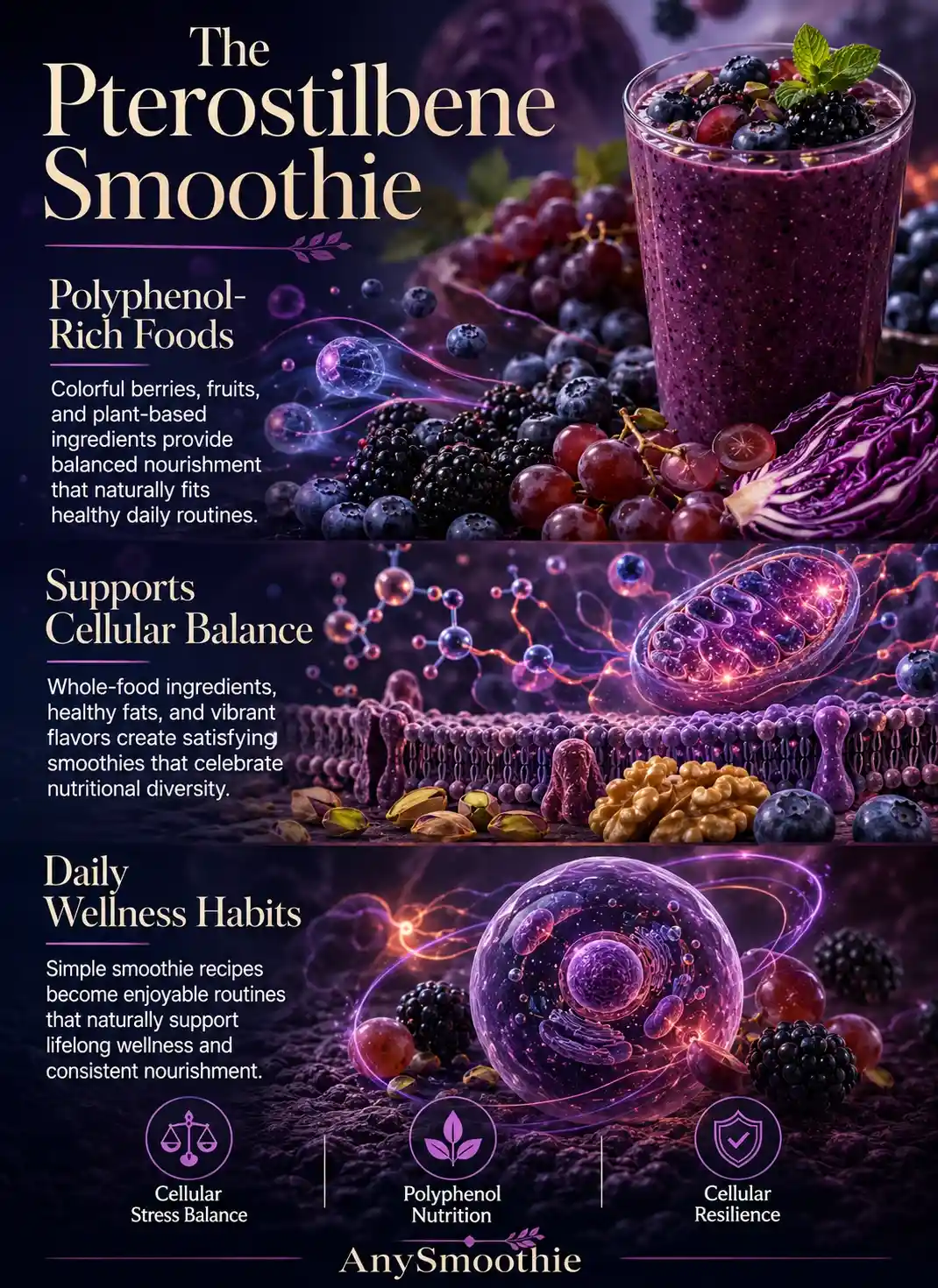
How Pterostilbene May Support Cellular Stress Balance
Every cell produces energy, and that process creates reactive molecules. Your body manages them through antioxidant enzymes, repair systems, and natural stress-response signaling. Oxidative pressure becomes a concern when production and defense stay out of balance over time.
Pterostilbene is a stilbene polyphenol, a type of plant compound that researchers study for its interaction with pathways linked to cellular maintenance. These include Nrf2, which relates to antioxidant-response genes, AMPK, which helps regulate cellular energy, and sirtuin-related signaling involved in metabolism and stress responses.
A review of pterostilbene antioxidant activity explore how pterostilbene interacts with cellular signaling pathways involved in oxidative stress, metabolism, and healthy aging, although most evidence still comes from laboratory and animal studies.
These mechanisms are areas of research, not proof that eating pterostilbene prevents or treats a health condition. Food amounts are also modest and vary by fruit, growing conditions, storage, and serving size.
A smoothie can still support a nutrient-dense eating pattern. Blueberries and grapes provide polyphenols, while leafy greens, seeds, and nuts add fiber, minerals, and other plant compounds. Unsweetened milk or yogurt can add protein. Together, these ingredients may help you build a more satisfying meal or snack.
The larger routine matters just as much. Smoothies can’t replace adequate sleep, regular movement, hydration, or a varied diet.
3 Pterostilbene Smoothies for Cellular Stress Balance
These food-first recipes pair blueberries or grapes with ingredients that support texture, fullness, and overall nutrient variety. None provides a precise pterostilbene dose.
| Smoothie name | Key ingredients | Flavor profile | Main nutrition strengths | Best time to enjoy it |
|---|---|---|---|---|
| Blueberry Walnut Polyphenol | Blueberries, walnuts, chia, milk | Tart, creamy, lightly spiced | Fiber, plant fats, polyphenols | Breakfast or snack |
| Grape Spinach Balance | Grapes, spinach, flax, kefir | Fresh, tangy, lightly sweet | Fiber, protein, micronutrients | Midday or with breakfast |
| Berry Cocoa Recovery-Style | Mixed berries, cocoa, soy milk, pumpkin seeds, banana | Chocolatey, smooth, naturally sweet | Protein, fiber, polyphenols | After activity or as a meal |
The best choice depends on your appetite and daily schedule. Using whole fruit instead of juice keeps the texture thicker and usually limits concentrated sugar.
Blueberry Walnut Polyphenol Smoothie
Ingredients
- 1 cup blueberries, fresh or frozen
- 1 cup unsweetened milk or soy milk
- 2 tablespoons walnuts
- 1 tablespoon chia seeds
- 1/4 teaspoon cinnamon
Blend until smooth.
Blueberries provide naturally occurring pterostilbene along with anthocyanins, the pigments that give them their deep color. Walnuts and chia add plant fats, fiber, and a thicker texture.
Plain Greek yogurt or an unsweetened plant-based yogurt can increase the protein content. Frozen berries create a colder, thicker smoothie without added sugar. If the mixture is too dense, add a splash of milk rather than sweetener.
Estimated Nutrition per Serving
Estimated with blueberries, unsweetened soy milk, walnuts, chia seeds, and cinnamon, without optional yogurt.
- Calories: ~360 kcal
- Protein: ~13 g
- Carbohydrates: ~35 g
- Fat: ~21 g
- Fiber: ~11 g
- Sugars: ~18 g
Walnuts can leave small pieces behind if they’re added with frozen blueberries from the start. Blend the walnuts with the soy milk briefly first, then add the remaining ingredients for a creamier texture while keeping the berry flavor prominent.
Grape Spinach Balance Smoothie
Ingredients
- 1 cup red or purple grapes
- 1 cup spinach
- 1 tablespoon ground flaxseed
- 3/4 cup plain kefir or unsweetened yogurt
- Ice, as needed
- Fresh lemon juice, optional
- Fresh ginger, optional
Blend the grapes, spinach, flaxseed, and kefir until the greens break down.
Grapes contribute polyphenols, while spinach supplies folate, vitamin K, and other micronutrients. Ground flaxseed adds fiber and a mild nutty flavor.
Keep the grapes whole instead of replacing them with grape juice. Whole fruit includes more structure and can make it easier to manage sweetness. Fresh lemon juice adds brightness, while a small piece of fresh ginger gives the smoothie a sharper finish.
Estimated Nutrition per Serving
Estimated with red grapes, spinach, ground flaxseed, plain low-fat kefir, and without optional ice, lemon, or ginger.
- Calories: ~310 kcal
- Protein: ~12 g
- Carbohydrates: ~50 g
- Fat: ~9 g
- Fiber: ~6 g
- Sugars: ~38 g
Berry Cocoa Recovery-Style Smoothie
Ingredients
- 3/4 cup mixed berries
- 1 cup unsweetened soy milk
- 1 tablespoon unsweetened cocoa powder
- 1 tablespoon pumpkin seeds
- 1/2 banana
Blend until smooth.
Berries and cocoa provide additional polyphenols. Soy milk and pumpkin seeds make the drink more filling by adding protein, fat, and texture. The term “recovery-style” refers to its balanced nutrition after activity, not a medical or performance claim.
Reduce the banana if you prefer less sweetness. You can also use frozen berries and skip the ice for a thicker consistency. Check the cocoa label to confirm that it contains no added sugar.
Estimated Nutrition per Serving
Estimated with mixed berries, unsweetened soy milk, unsweetened cocoa powder, pumpkin seeds, and half a medium banana.
- Calories: ~320 kcal
- Protein: ~14 g
- Carbohydrates: ~44 g
- Fat: ~12 g
- Fiber: ~10 g
- Sugars: ~22 g
Cocoa can make the berry flavor seem less vivid even without adding much sweetness. Start with the full tablespoon as written, but blend thoroughly before adjusting anything; ripe banana usually rounds out the cocoa naturally without needing syrup or another sweetener.
How to Build and Use a Pterostilbene Smoothie Safely
Start with whole fruit, vegetables, and unsweetened liquids. Whole blueberries and grapes are usually preferable to juice because they provide more fiber and a slower, more substantial eating experience. Fiber and protein can also improve fullness, especially when a smoothie replaces breakfast or a snack.
A small amount of fat from walnuts, chia, flax, pumpkin seeds, or soy can improve flavor and texture. It may also help the body absorb certain fat-soluble plant compounds. You don’t need a large amount. One or two tablespoons is enough for most recipes.
Read labels on packaged milk, yogurt, and protein powders. Some contain added sugars that can change the nutrition of an otherwise balanced drink. Serving size matters, too. A smoothie can become much more calorie-dense when it includes several servings of fruit, nut butter, sweetened powders, or large amounts of seeds.
Food sources and concentrated supplements are different. Berries and grapes contain small, variable amounts of pterostilbene within a broader mix of nutrients. A supplement may provide a standardized amount, but the ideal dose, long-term safety, and possible interactions aren’t settled.
Food Sources Versus Pterostilbene Supplements
A smoothie recipe shouldn’t be described as delivering a precise pterostilbene dose. Fruit variety, ripeness, storage, and serving size all affect the amount present. Reviews also emphasize that whole foods and purified supplements differ substantially in composition, absorption, and the amount of pterostilbene delivered per serving.
If you consider a supplement, speak with a qualified health professional first, especially if you’re pregnant, breastfeeding, managing a health condition, preparing for surgery, or taking prescription medication. Ask about third-party testing and follow the product label. Avoid stacking several products with overlapping ingredients, and don’t assume that a higher dose is better.
Food-based smoothies provide pterostilbene alongside fiber and other compounds, but they aren’t equivalent to a standardized supplement.
Conclusion
Pterostilbene smoothies can combine blueberries or grapes with fiber, protein, healthy fats, leafy greens, and other plant compounds. Their role is to support normal physiological systems within a balanced routine, not to promise a treatment effect.
Choose unsweetened liquids, rotate your ingredients, and pair smoothies with sleep, regular movement, hydration, and varied whole foods. Start with one recipe, then adjust its sweetness, protein, and thickness until it fits your needs.
🛡️ Safety Notes & Dietary Interactions
- Food-Based, Not Therapeutic: Blueberries, grapes, cocoa, leafy greens, and other whole foods naturally contain polyphenols that contribute to a balanced diet. Current evidence does not show that pterostilbene smoothies prevent disease, reduce cellular stress, or produce specific health outcomes in humans.
- Be Aware of Individual Needs: People with diabetes, kidney disease, food allergies, digestive disorders, or other medical conditions should tailor smoothie ingredients to their individual nutritional requirements. Portion size and total carbohydrate intake remain important considerations.
- Supplements Differ from Foods: Whole-food smoothies provide naturally occurring pterostilbene in small, variable amounts alongside fiber, vitamins, minerals, and other plant compounds. Concentrated pterostilbene supplements have different safety considerations and should be discussed with a qualified healthcare professional before use.
- Build the Bigger Picture: Cellular stress balance depends on many lifestyle factors beyond nutrition. Regular physical activity, adequate sleep, stress management, hydration, and a varied eating pattern provide the strongest foundation for supporting normal physiological processes over time.
FAQ
Which foods naturally contain pterostilbene?
Blueberries are among the best-known natural food sources of pterostilbene, while smaller amounts are also found in grapes and some related fruits. The exact amount varies with plant variety, growing conditions, ripeness, storage, and serving size, making whole foods the most practical approach rather than focusing on specific quantities.
Can pterostilbene smoothies reduce cellular stress?
No smoothie has been proven to reduce cellular stress or directly influence cellular signaling pathways in humans. Pterostilbene-containing foods can contribute polyphenols, fiber, vitamins, and minerals as part of a nutrient-dense diet, but they should not be viewed as a treatment or guaranteed intervention.
Are pterostilbene supplements better than food?
Whole foods and supplements are not equivalent. Foods provide pterostilbene together with fiber, healthy fats, vitamins, minerals, and numerous other naturally occurring compounds. Supplements contain concentrated, standardized amounts that are still being studied for long-term safety, effectiveness, and appropriate dosage in humans.
Can I drink a blueberry smoothie every day?
Yes, a balanced blueberry smoothie can be enjoyed regularly as part of a varied eating pattern. Rotating fruits, leafy greens, seeds, nuts, and protein sources throughout the week provides a broader range of nutrients while helping prevent unnecessary reliance on any single ingredient.
Should I choose whole fruit instead of fruit juice?
Yes. Whole blueberries and grapes provide fiber that slows digestion and contributes to fullness, whereas fruit juice concentrates natural sugars while removing much of the fiber. Using whole fruit also creates a thicker, more satisfying smoothie with a more balanced nutritional profile.

Medical Disclaimer: AnySmoothie content is for educational purposes only and is not a substitute for professional medical advice. Consult a healthcare provider for personalized guidance. See our full Disclaimer & Terms of Use. AI Transparency: AnySmoothie may use AI to support content development. All content undergoes human editorial review for accuracy, clarity, and editorial quality. See our full AI Transparency.