
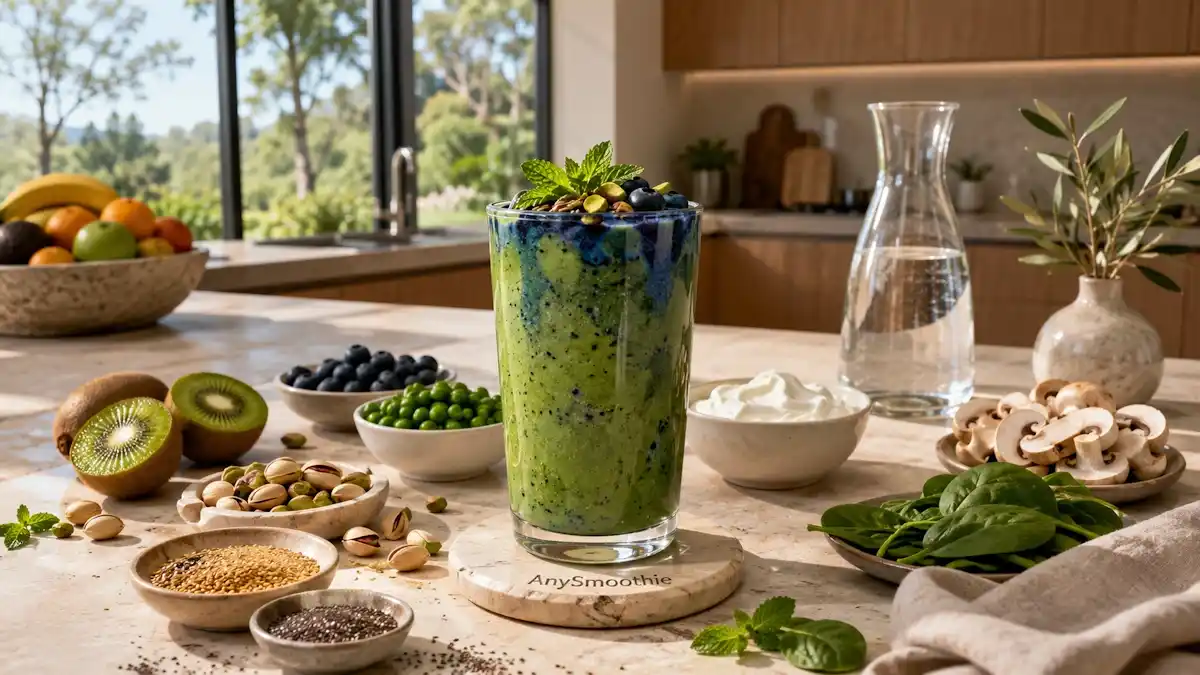
Interest in food-based ways to support healthy aging keeps growing, but no smoothie can reverse aging or guarantee cellular renewal. Spermidine is a naturally occurring compound found in foods such as wheat germ, soy, peas, and mushrooms. It participates in normal cell processes, including pathways linked with cellular cleanup.
These three spermidine smoothie recipes combine practical food sources with protein, fiber, vitamins, and healthy flavor. They can fit into a balanced eating pattern, but they aren’t treatments or substitutes for sleep, exercise, stress management, or medical care. First, it helps to understand what spermidine can and cannot do.
How to Use These Smoothies Safely
Spermidine is a polyamine, a small compound that occurs naturally in human cells and many foods. Polyamines help support normal processes such as cell growth, gene regulation, and protein activity. Because these processes change with age, researchers study spermidine as one factor involved in healthy aging.
One area of interest is autophagy, the body’s natural recycling system. During autophagy, cells break down and reuse worn or damaged components. This process is important for cellular maintenance, but drinking a smoothie doesn’t directly activate autophagy on demand. Human biology is more complex than a single ingredient or recipe.
Research on spermidine and longevity includes cell studies, animal experiments, observational research, and studies of concentrated supplements. A PubMed review on spermidine describes promising mechanisms while also showing why researchers continue to study dosage, absorption, and long-term effects.
Food sources include wheat germ, soy foods, mushrooms, legumes, peas, and some whole grains. These foods provide spermidine alongside protein, fiber, minerals, and other plant compounds. That combination differs from a standardized spermidine supplement, which may contain a measured amount in a concentrated form. A food-based smoothie is best viewed as one part of a varied diet, not as a guaranteed cellular renewal strategy.
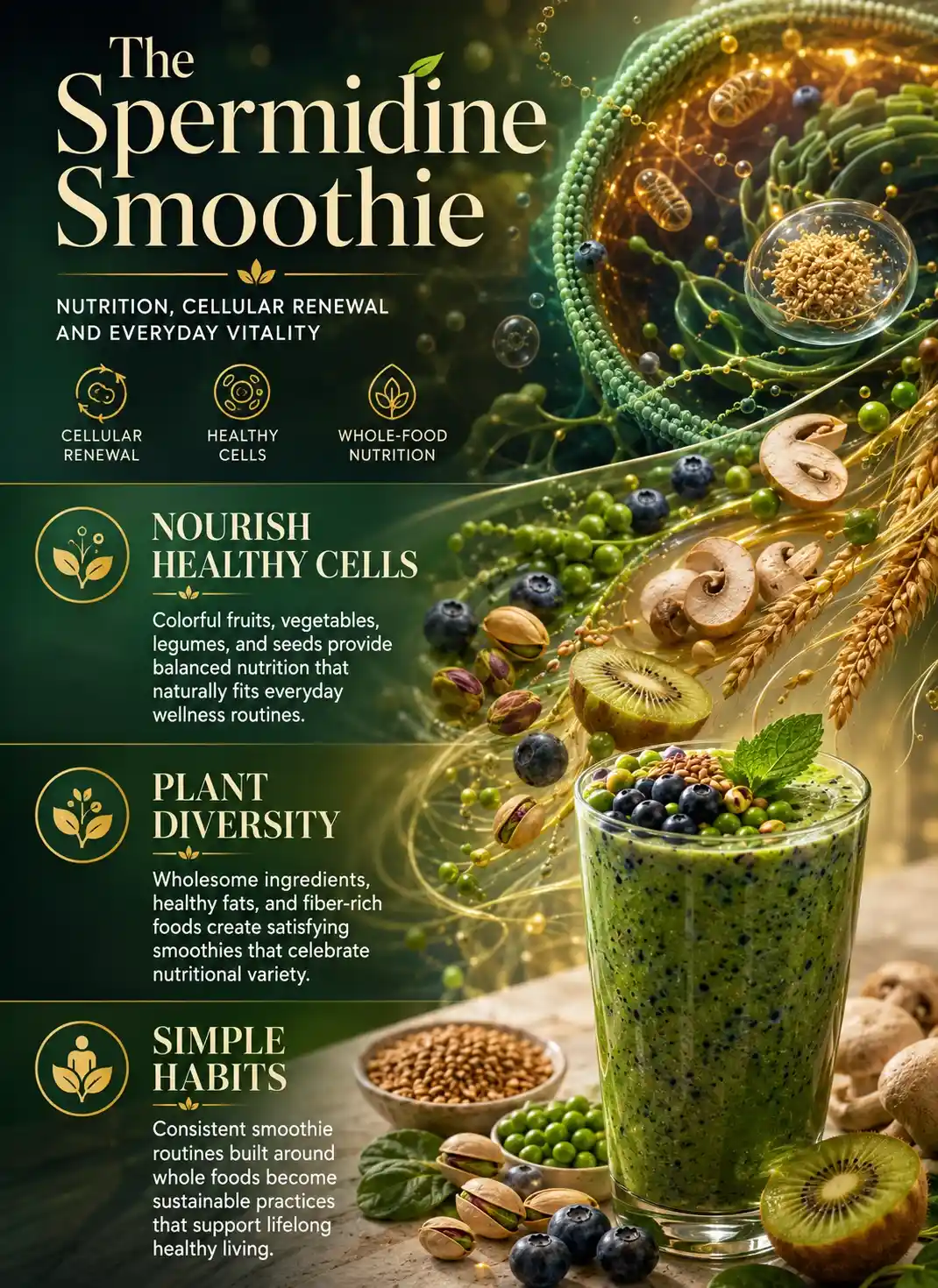
3 Spermidine Smoothies for Cellular Renewal
Each recipe makes one serving. Use fruit for sweetness and choose unsweetened liquids when possible. Blending doesn’t create spermidine, and the total nutritional value depends on every ingredient in the glass.
Wheat Germ Berry Smoothie
Ingredients
- 1 cup plain yogurt or unsweetened plant yogurt
- 1/2 cup berries, fresh or frozen
- 1/2 banana
- 1/2 cup milk or fortified plant milk
- 1 to 2 tablespoons toasted wheat germ
Add everything to a blender and process until smooth. Add another splash of milk if the mixture is too thick. The berries bring fiber and polyphenols, while yogurt or fortified plant milk can add protein. Wheat germ is a concentrated food source of spermidine and also supplies nutrients such as vitamin E.
Wheat germ contains gluten, so choose another recipe if you have celiac disease or a wheat allergy. Store opened wheat germ in the refrigerator or freezer. Its natural oils can become rancid when it sits warm for too long.
Estimated Nutrition per Serving
Estimated with plain nonfat Greek yogurt, mixed berries, half a medium banana, 2% milk, and 2 tablespoons toasted wheat germ.
- Calories: ~390 kcal
- Protein: ~27 g
- Carbohydrates: ~57 g
- Fat: ~7 g
- Fiber: ~8 g
- Sugars: ~32 g
Wheat germ gives the smoothie a mild toasted, cereal-like flavor that can become more noticeable at the full two-tablespoon amount. Start with one tablespoon if you’re new to it, then increase after tasting rather than changing the fruit or adding sweetener.
Green Pea and Spinach Smoothie
Ingredients
- 1/2 cup cooked, cooled green peas
- 1 cup baby spinach
- 1 peeled kiwi or 3/4 cup pineapple
- 1 tablespoon lemon juice
- 3/4 cup water or unsweetened milk
Blend the peas, spinach, fruit, lemon juice, and liquid until creamy. Add more liquid for a thinner drink. Peas provide plant protein, fiber, and spermidine, while spinach and fruit add color, vitamin C, and fresh flavor.
Cooked peas blend more smoothly than frozen peas straight from the bag. If you’ve been told to manage dietary oxalates, ask your clinician or dietitian about spinach portions before making this a daily drink.
Estimated Nutrition per Serving
Estimated with cooked green peas, baby spinach, one medium kiwi, lemon juice, and unsweetened soy milk.
- Calories: ~240 kcal
- Protein: ~13 g
- Carbohydrates: ~36 g
- Fat: ~6 g
- Fiber: ~9 g
- Sugars: ~16 g
Cocoa Soy and Tofu Smoothie
Ingredients
- 1/2 cup silken tofu or 3/4 cup unsweetened soy milk
- 1 tablespoon unsweetened cocoa powder
- 1 small banana
- 2 tablespoons rolled oats
- 1/4 teaspoon cinnamon
- 1/2 cup water or additional soy milk
Blend until the oats and tofu disappear into a smooth, creamy drink. Tofu and soy milk provide protein and may contribute dietary spermidine. Unsweetened cocoa adds a rich chocolate flavor without much added sugar, while banana supplies sweetness and a thicker texture.
Choose calcium-fortified soy milk when using it as a dairy substitute. Soy is a common allergen, so use the wheat germ or pea recipe if soy doesn’t suit you.
Estimated Nutrition per Serving
Estimated with 1/2 cup silken tofu, unsweetened cocoa, one small banana, rolled oats, cinnamon, and 1/2 cup unsweetened soy milk.
- Calories: ~320 kcal
- Protein: ~16 g
- Carbohydrates: ~47 g
- Fat: ~10 g
- Fiber: ~8 g
- Sugars: ~17 g
Silken tofu and oats can produce a surprisingly thick blend even without ice. Blend the tofu with the soy milk first until completely smooth, then add the oats, banana, and cocoa; this reduces any tofu graininess and distributes the cocoa more evenly.
Choosing Ingredients, Comparing Options, and Using These Smoothies Safely
There isn’t an established daily target for spermidine from food, and current research doesn’t prove that one smoothie is superior to the others. Rotate ingredients, keep portions reasonable, and check labels for added sugar.
| Smoothie | Main spermidine source | Protein and fiber strengths | Best time to use it | Key caution |
|---|---|---|---|---|
| Wheat germ berry | Wheat germ | Yogurt, berries, wheat germ | Breakfast or snack | Contains wheat and gluten |
| Green pea spinach | Green peas | Peas, spinach, kiwi or pineapple | Light lunch or afternoon snack | Consider oxalates and digestive tolerance |
| Cocoa soy tofu | Tofu or soy milk | Soy, tofu, oats, banana | Breakfast or post-exercise meal | Soy allergy; check calcium fortification |
A smoothie can become sugar-heavy when it includes large portions of fruit, juice, sweetened yogurt, or flavored milk. Keep fruit portions moderate and pair the drink with a meal when you need more staying power. People managing blood sugar may need individualized portions, especially when using banana and pineapple.
Those with dairy intolerance can use unsweetened fortified plant yogurt or milk. People with kidney disease should ask a renal dietitian about potassium, phosphorus, protein, and fluid needs before adding these drinks regularly. Pregnancy, chronic conditions, or several medications also call for professional guidance before major diet or supplement changes.
Spermidine supplements deserve separate caution because concentrated products have different doses and safety questions than whole foods. The NIH guidance on dietary supplements recommends discussing supplements with a qualified health professional, especially when medications or health conditions are involved.
Conclusion
Spermidine smoothies can make it easier to include legumes, soy foods, whole grains, fruit, and vegetables in your routine. They support a nutrient-dense eating pattern, but they aren’t a shortcut to cellular renewal or a replacement for sleep, movement, stress management, and balanced meals.
Start with one recipe, adjust it for allergies and dietary needs, and focus on consistency rather than a single compound. Research on spermidine remains promising but developing, especially when comparing whole foods with concentrated supplements.
🛡️ Safety Notes & Dietary Interactions
- Whole Foods First: Spermidine-containing foods such as wheat germ, soy foods, legumes, and mushrooms fit well within a balanced eating pattern. Current research is promising but does not show that spermidine smoothies can reverse aging, activate autophagy on demand, or guarantee cellular renewal.
- Consider Allergies and Dietary Needs: Wheat germ contains gluten, while soy milk and tofu are common allergens. People with celiac disease, wheat allergy, soy allergy, kidney disease, or other medical conditions should choose ingredients that match their individual dietary recommendations.
- Use Supplements Carefully: Food-based smoothies differ from concentrated spermidine supplements. If you are considering spermidine supplements, especially while taking prescription medications or managing chronic health conditions, discuss them with a qualified healthcare professional before adding them to your routine.
- Build a Balanced Routine: Cellular health depends on more than one nutrient. Regular physical activity, adequate sleep, stress management, hydration, and a varied diet all contribute to normal physiological processes that support healthy aging over time.
FAQ
Which foods naturally contain spermidine?
Spermidine occurs naturally in foods such as wheat germ, soy products, green peas, mushrooms, legumes, and some whole grains. These foods also provide fiber, protein, vitamins, minerals, and other beneficial plant compounds, making them useful additions to a balanced eating pattern rather than isolated sources of a single nutrient.
Can spermidine smoothies activate autophagy?
Current human research does not show that drinking a spermidine smoothie directly activates autophagy. Autophagy is a complex cellular process influenced by many factors, including overall nutrition, physical activity, sleep, and metabolic status. Smoothies can simply contribute nutrient-rich foods that fit into an overall healthy lifestyle.
Is wheat germ the best food source of spermidine?
Wheat germ is considered one of the richest natural dietary sources of spermidine, but it is not the only option. Soy foods, peas, mushrooms, legumes, and whole grains also contribute dietary spermidine. Rotating different foods provides a broader range of nutrients and supports a more varied eating pattern.
Should I use a spermidine supplement instead of whole foods?
Whole foods and supplements are not interchangeable. Foods provide spermidine alongside protein, fiber, vitamins, minerals, and other naturally occurring compounds, while supplements deliver concentrated doses. If you are considering supplementation, especially with medications or chronic health conditions, discuss it with a qualified healthcare professional first.
How often can I drink a spermidine smoothie?
For most healthy adults, a spermidine smoothie can be enjoyed regularly as part of a varied, balanced diet. Rotating recipes helps diversify nutrient intake while preventing excessive reliance on any single ingredient. Consistency in overall eating habits, combined with exercise and adequate sleep, remains more important than one specific smoothie recipe.

Medical Disclaimer: AnySmoothie content is for educational purposes only and is not a substitute for professional medical advice. Consult a healthcare provider for personalized guidance. See our full Disclaimer & Terms of Use. AI Transparency: AnySmoothie may use AI to support content development. All content undergoes human editorial review for accuracy, clarity, and editorial quality. See our full AI Transparency.