

Visible veins, aching legs, or a heavy feeling after standing can lead you to search for smoothies for varicose vein support. A well-planned smoothie can provide fluids, fiber, vitamin C, potassium, magnesium, and plant compounds that support normal circulation and vascular function.
However, smoothies can’t remove varicose veins, repair faulty valves, or replace medical care. Food supports your body’s natural systems, while movement, compression, and clinical guidance may be needed for vein problems. These three recipes offer practical ways to add supportive nutrients to your daily routine.
How Nutrition May Support Healthy Veins
Your veins depend on healthy vessel walls, normal fluid balance, and efficient blood movement. Nutrition supports these processes without correcting the structural changes that cause varicose veins.
Water helps maintain blood volume and normal circulation. Fiber supports regular digestion, which may help reduce straining during bowel movements. Fruits and vegetables also provide vitamin C, which the body uses to make collagen, a structural protein found in blood vessels and connective tissue.
Potassium helps regulate fluid balance and supports muscle and nerve function. Magnesium also contributes to normal muscle function and energy metabolism. Colorful plant foods contain polyphenols and other compounds that help the body manage oxidative stress as part of normal physiology.
Flavonoids have also been extensively studied in the context of chronic venous disease, although the standardized preparations used in clinical research are not equivalent to the flavonoids obtained from whole foods. You can read more in treatment of chronic venous disease with flavonoids.
A balanced diet also limits excess added sugar and heavily processed ingredients. That approach supports metabolic health, which matters for the cardiovascular system as a whole. Still, nutrition won’t improve every case of varicose veins.
Speak with a qualified health professional about persistent pain, swelling, skin changes, ulcers, or concerns about a blood clot.
Ingredients Worth Adding to a Vein-Supportive Smoothie
Berries provide fiber and colorful plant compounds, while oranges, kiwi, and lemon add vitamin C. Leafy greens supply folate, magnesium, and other minerals. Beets contain naturally occurring nitrates, which the body can process through normal nitric oxide pathways.
Chia seeds and ground flaxseed add fiber and plant-based omega-3 fat. Plain Greek yogurt or unsweetened kefir contributes protein, which makes a smoothie more filling and helps prevent a drink from becoming mostly carbohydrate.
Whole foods are usually preferable to concentrated powders because they provide fiber and a broader nutrient profile. However, leafy greens and beets don’t suit everyone. People with certain kidney conditions, a history of kidney stones, or potassium restrictions should personalize these choices with a clinician or registered dietitian.
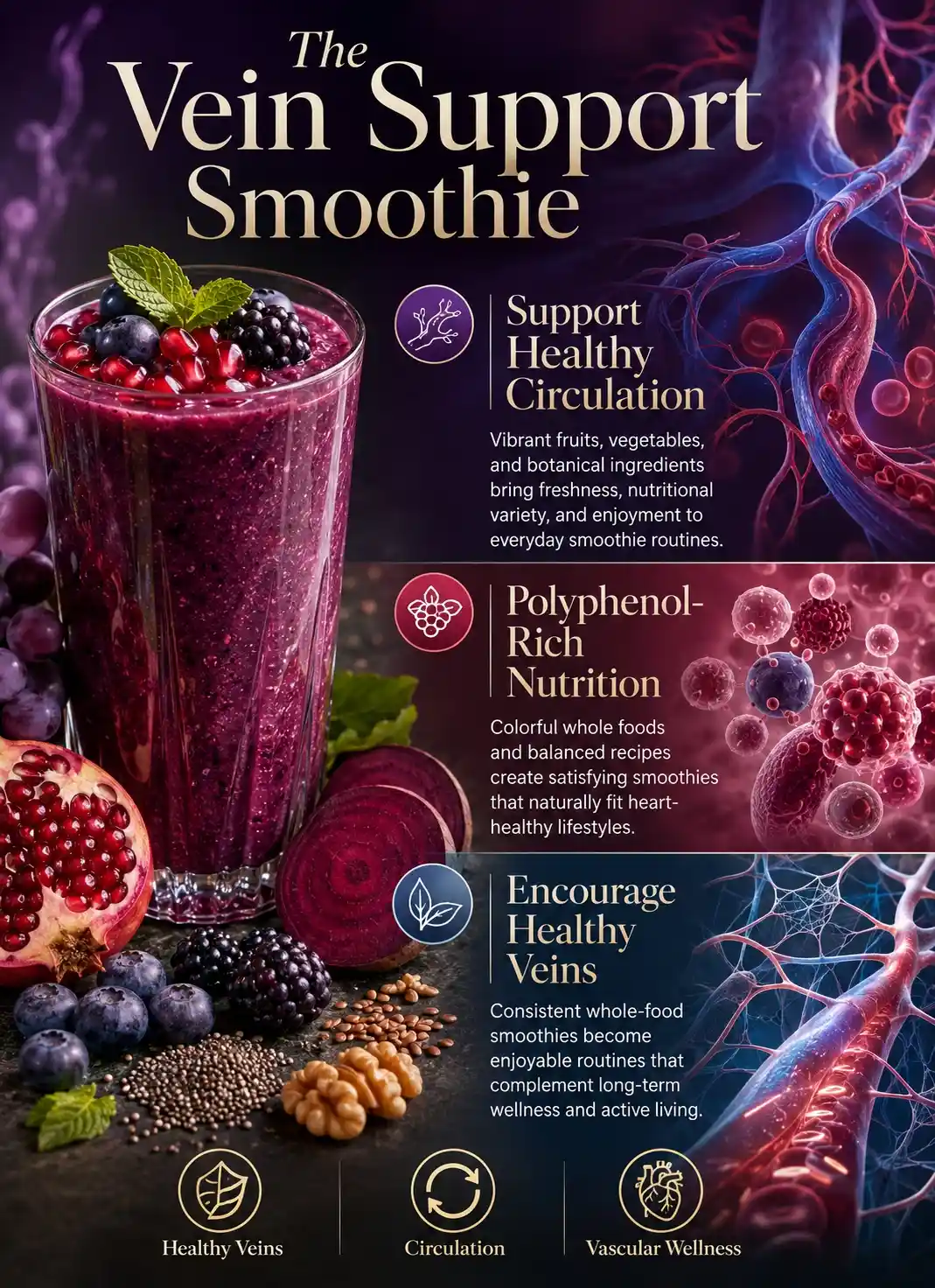
What Smoothies Cannot Do for Varicose Veins
Smoothies don’t close damaged veins or correct valves that allow blood to move backward. They also don’t substitute for compression therapy, regular movement, or treatment recommended by a qualified clinician.
The practical goal is nutritional support. A smoothie can help you consume fluids, produce, fiber, and protein, but it shouldn’t promise symptom relief or a medical outcome. If your legs are worsening, food alone isn’t an adequate plan.
3 Smoothies for Varicose Vein Support
Each recipe makes one serving. Use frozen or fresh produce, and choose plain dairy or unsweetened non-dairy ingredients whenever possible. The table is a quick guide, not a medical ranking.
| Smoothie | Main ingredients | Nutritional focus | Best time to enjoy | Important considerations |
|---|---|---|---|---|
| Berry Citrus Chia | Berries, orange, yogurt, chia | Fiber, vitamin C, protein | Breakfast or snack | Add liquid for a smoother texture |
| Green Kiwi | Greens, kiwi, cucumber, avocado | Fluids, potassium, magnesium | Morning or after walking | Check potassium needs |
| Beet Berry | Beet, berries, yogurt, ginger | Nitrates, fiber, plant compounds | With a meal or snack | Ask about beet intake with kidney stone concerns |
Berry Citrus Chia Smoothie for Fiber and Antioxidant Variety
Ingredients
- 1 cup frozen mixed berries
- 1 small orange, peeled, or 2 tablespoons lemon juice
- 3/4 cup plain Greek yogurt
- 1 tablespoon chia seeds
- 1/2 cup water or unsweetened milk
Blend until smooth.
This combination supplies fiber, vitamin C, protein, and colorful plant compounds without juice or syrup. The orange adds sweetness and acidity, while yogurt creates a thicker texture.
Let the chia seeds sit in the liquid for five minutes before blending if you prefer a softer consistency. Add another 1/4 cup of liquid when needed. If you use lemon instead of orange, keep the berries as the main source of natural sweetness.
Estimated Nutrition per Serving
Estimated with mixed frozen berries, one small orange, plain nonfat Greek yogurt, chia seeds, and unsweetened soy milk.
- Calories: ~360 kcal
- Protein: ~25 g
- Carbohydrates: ~51 g
- Fat: ~8 g
- Fiber: ~15 g
- Sugars: ~28 g
Soaking the chia briefly changes more than thickness: the seeds become softer and less noticeable against the berry skins. For a smoother drink, the five-minute soak is particularly useful here before everything goes into the blender.
Green Kiwi Smoothie for Hydration and Mineral Support
Ingredients
- 1 packed cup baby spinach or other mild leafy greens
- 1 ripe kiwi, peeled
- 1/2 cup chopped cucumber
- 1/4 avocado
- 1/2 cup plain yogurt or an unsweetened protein-rich non-dairy alternative
- 3/4 cup cold water
- 1 teaspoon lime juice, optional
Blend until smooth.
Water-rich cucumber and leafy greens add volume without much sugar. Kiwi contributes vitamin C and fiber, while avocado provides fiber, magnesium, and potassium. Yogurt or a protein-rich alternative helps make the drink more satisfying.
Use a small amount of fruit rather than sweetener to balance the flavor. If you need to limit potassium because of kidney or heart concerns, ask a clinician whether kiwi, avocado, and leafy greens fit your eating plan.
Estimated Nutrition per Serving
Estimated with baby spinach, one medium kiwi, cucumber, 1/4 medium avocado, plain nonfat Greek yogurt, cold water, and without optional lime juice.
- Calories: ~215 kcal
- Protein: ~14 g
- Carbohydrates: ~25 g
- Fat: ~8 g
- Fiber: ~8 g
- Sugars: ~12 g
Beet Berry Smoothie for a Colorful Plant-Based Option
Ingredients
- 1/4 cup cooked beet, cooled, or a small peeled raw beet
- 3/4 cup frozen berries
- 3/4 cup plain unsweetened yogurt
- 1/2 teaspoon grated fresh ginger
- 1/2 cup water
Blend until smooth.
Beets contain nitrates that the body can process through nitric oxide pathways. Nitric oxide helps regulate normal blood vessel tone, but this recipe doesn’t treat vein disease or repair varicose veins.
Ginger adds a sharp flavor that pairs well with earthy beets and tart berries. Beet pigments can temporarily turn urine or stool pink or red. That change is usually harmless, but people with kidney stone concerns should ask a clinician whether beets fit their diet.
Estimated Nutrition per Serving
Estimated with 1/4 cup cooked beet, mixed frozen berries, plain nonfat Greek yogurt, fresh ginger, and water.
- Calories: ~220 kcal
- Protein: ~17 g
- Carbohydrates: ~37 g
- Fat: ~2 g
- Fiber: ~8 g
- Sugars: ~23 g
A quarter cup of beet keeps the earthy flavor relatively restrained, so the berries remain dominant. If using raw beet instead, chop it very finely and blend it with the water first; this helps prevent tiny firm pieces from remaining in the finished smoothie.
How to Use These Smoothies Safely in a Daily Routine
Keep portions close to 12 to 16 ounces, and treat a smoothie as part of a varied eating pattern. One smoothie several times a week is enough to add more produce and fiber. A drink shouldn’t replace every meal by default, especially when it lacks protein or healthy fat.
Choose whole fruit instead of fruit juice. Juice increases sweetness while removing much of the fruit’s fiber. Add plain yogurt, kefir, chia, flax, or avocado to create a better balance of protein, fiber, and fat.
Nutrition works best alongside simple movement. Walk regularly, perform gentle calf raises, and change position during long periods of sitting or standing. Elevate your legs when appropriate, and follow a clinician’s advice about compression garments.
Check with a health professional before making major dietary changes if you take blood thinners or manage kidney disease, heart disease, or blood sugar concerns. Supplements and concentrated powders may also interact with medications.
Seek medical evaluation for worsening pain, one-sided swelling, warmth, redness, ulcers, or sudden shortness of breath. Those symptoms require more than a dietary adjustment.
Conclusion
Berry, green, and beet smoothies can make it easier to add fluids, fiber, minerals, protein, and plant compounds to a balanced diet. They support general vascular and metabolic health, but they don’t cure or remove varicose veins. Choose one recipe, adjust the ingredients to your health needs, and pair it with regular movement and professional guidance when symptoms are present. Healthy veins require more than one drink, but steady daily habits can support the systems your body already uses.
🛡️ Safety Notes & Dietary Interactions
- Nutrition Supports, It Doesn’t Repair Veins: Smoothies can contribute fiber, vitamin C, minerals, hydration, and other nutrients that support overall vascular health, but they cannot reverse varicose veins, repair damaged vein valves, or replace appropriate medical evaluation and treatment.
- Consider Medical Conditions: People with kidney disease, heart disease, diabetes, kidney stone risk, or those taking blood thinners should tailor ingredients such as leafy greens, beets, potassium-rich fruits, and supplements with guidance from a qualified healthcare professional.
- Increase Fiber Gradually: Chia seeds, flaxseed, berries, and leafy greens are excellent fiber sources, but adding large amounts too quickly may cause bloating or digestive discomfort. Increase fiber gradually and drink enough water throughout the day to support normal digestion.
- Pair Smoothies With Healthy Habits: Nutrition works best alongside regular walking, calf muscle activity, healthy body weight, avoiding prolonged sitting or standing, leg elevation when appropriate, and following your clinician’s recommendations regarding compression therapy or other vein treatments.
FAQ
Can smoothies improve varicose veins?
Smoothies cannot remove varicose veins or repair the damaged vein valves that cause them. They can, however, contribute nutrients that support overall cardiovascular health, hydration, collagen production, and normal circulation as part of a balanced lifestyle. Nutrition should be viewed as supportive rather than corrective for established vein disease.
Which nutrients are most important for vein health?
Vitamin C, fiber, potassium, magnesium, adequate protein, and a variety of colorful plant compounds all contribute to overall vascular health. Whole fruits, vegetables, leafy greens, yogurt, seeds, and legumes provide these nutrients naturally while supporting broader dietary patterns that benefit cardiovascular wellness and metabolic health.
Are beets good for circulation?
Beets naturally contain dietary nitrates that the body can convert into nitric oxide, a signaling molecule involved in normal blood vessel function. While this supports healthy vascular physiology, eating beets or drinking beet smoothies has not been shown to treat or reverse varicose veins or chronic venous insufficiency.
How often can I drink these smoothies?
Most people can comfortably enjoy one smoothie several times per week as part of a varied diet. Rotating ingredients such as berries, citrus, leafy greens, yogurt, seeds, and beets helps broaden nutrient intake while preventing overreliance on any single food or recipe.
When should I see a healthcare professional for varicose veins?
Seek medical evaluation if you develop persistent leg pain, increasing swelling, skin discoloration, ulcers, bleeding veins, sudden warmth or redness, one-sided leg swelling, or shortness of breath. These symptoms require professional assessment because they may indicate conditions that extend beyond routine dietary support.

Medical Disclaimer: AnySmoothie content is for educational purposes only and is not a substitute for professional medical advice. Consult a healthcare provider for personalized guidance. See our full Disclaimer & Terms of Use. AI Transparency: AnySmoothie may use AI to support content development. All content undergoes human editorial review for accuracy, clarity, and editorial quality. See our full AI Transparency.