
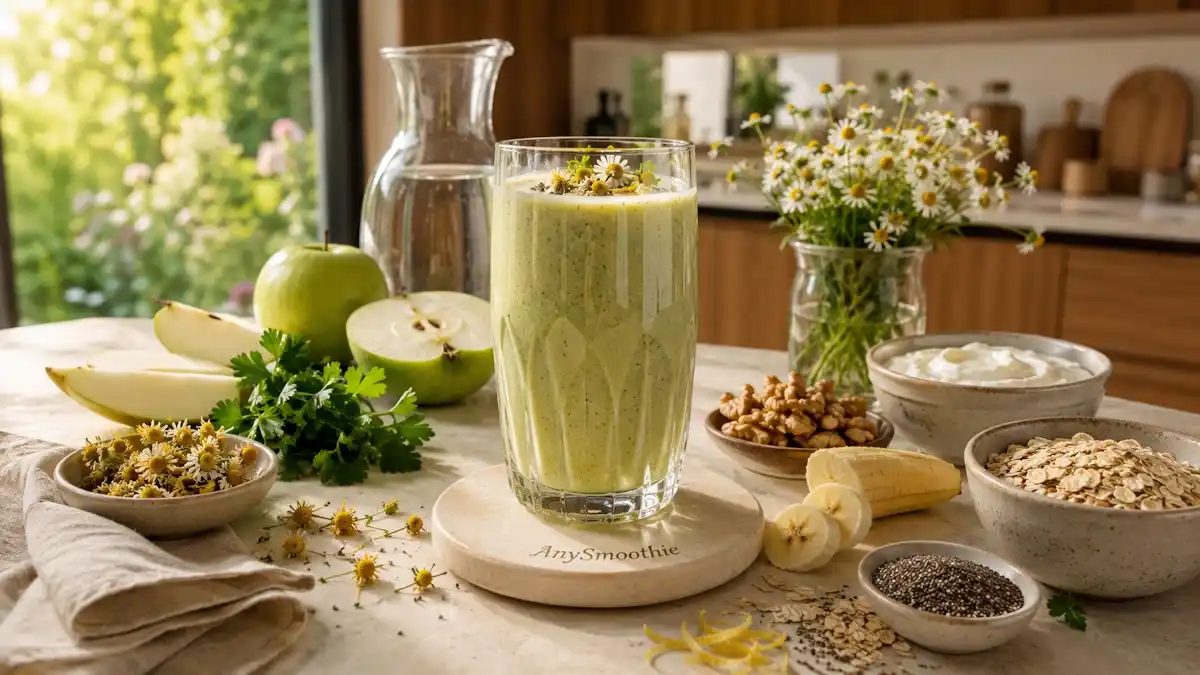
Could a simple smoothie help you add more plant compounds to your daily routine? Apigenin is a flavonoid found in foods such as parsley, chamomile, celery, and citrus. Smoothies make it easy to combine small amounts of apigenin-containing ingredients with fiber, protein, and other plant nutrients.
Research on apigenin and sirtuins is still developing. Much of the evidence comes from cell and animal studies, so food-based smoothies shouldn’t promise a medical effect. The recipes below focus on practical ingredients, balanced nutrition, preparation tips, and basic safety guidance.
How Apigenin May Support Sirtuin
Sirtuins are proteins involved in normal cellular signaling, energy use, stress responses, and other processes that help cells respond to changing conditions. Their activity depends on several factors, including energy balance, cellular nutrients, and the availability of compounds such as NAD+.
Apigenin is a plant flavonoid that may interact with pathways related to cellular stress and metabolism. Laboratory research has examined its relationship with signaling proteins and enzymes, including pathways associated with sirtuin biology. However, findings from isolated cells or animals don’t establish that eating parsley or drinking a smoothie activates sirtuins in humans.
However, findings from isolated cells or animals don’t establish that eating parsley or drinking a smoothie activates sirtuins in humans. Current research continues to explore apigenin’s role in cellular signaling and healthy aging, although most evidence remains preclinical.
That distinction matters. A food portion delivers a mixture of nutrients in amounts that vary by ingredient, preparation, and serving size. It isn’t the same as a standardized supplement dose used in a research setting. A smoothie can provide fiber, vitamin C, minerals, protein, and other polyphenols that support normal physiology, but no specific recipe has a proven effect on human sirtuin activity.
Your larger routine matters, too. Consistent sleep, regular movement, a varied diet, and an appropriate energy intake all influence the systems involved in cellular maintenance. An apigenin smoothie fits best as one convenient part of that pattern.
Which Smoothie Ingredients Pair Well With Apigenin?
Parsley is a concentrated food source of apigenin, although its strong flavor means a small amount is often enough. Celery, citrus, berries, leafy greens, and unsweetened cocoa add complementary nutrients such as polyphenols, vitamin C, fiber, and minerals.
The exact apigenin content varies with plant variety, growing conditions, freshness, and serving size. For that reason, use whole foods rather than treating one ingredient as a guaranteed dose. Citrus and berries can soften parsley’s sharp taste, while yogurt, seeds, or hemp hearts add protein or healthy fats.
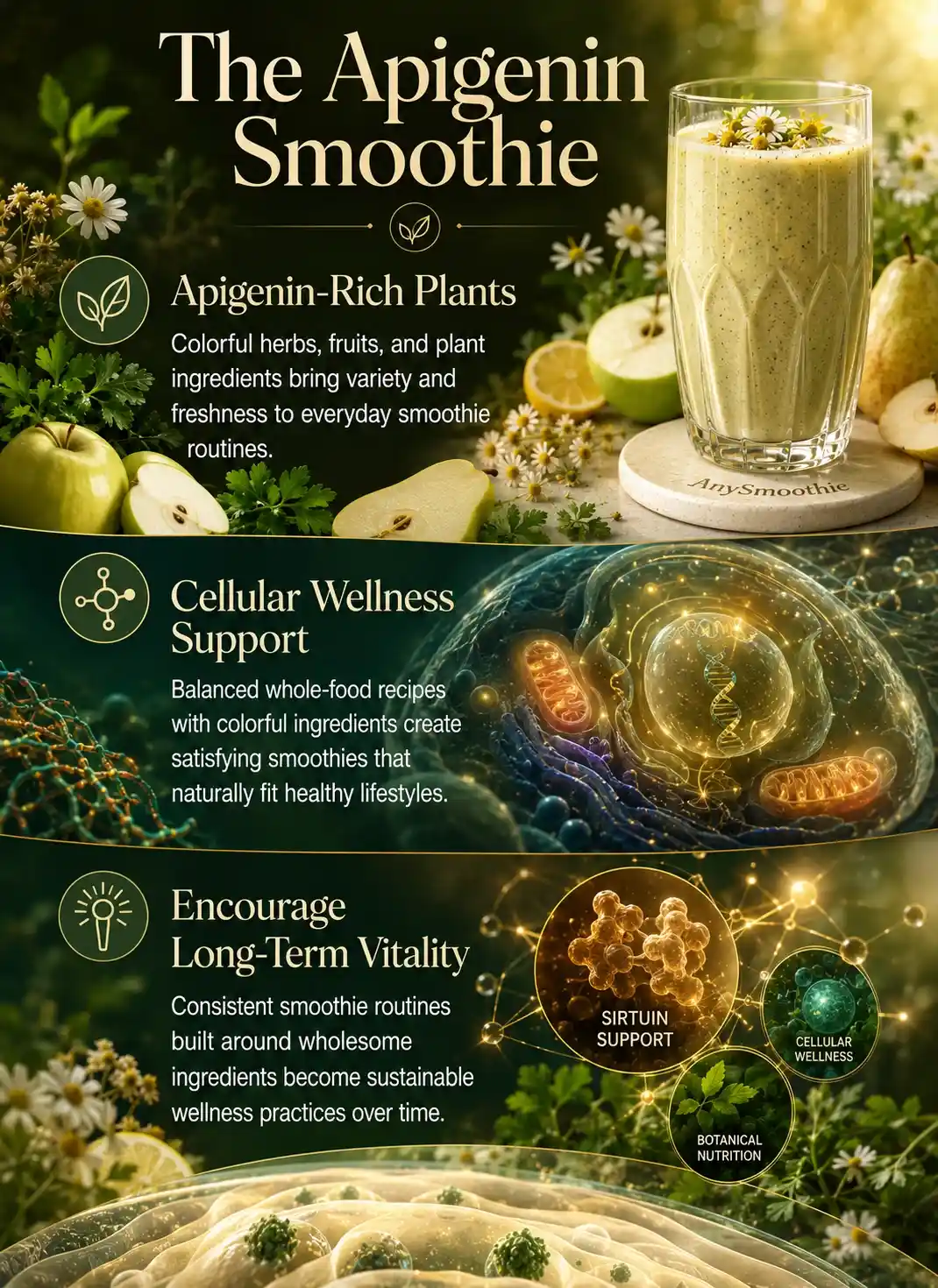
3 Apigenin Smoothies for Sirtuin Support
These recipes use ordinary grocery-store ingredients and modest amounts of parsley. Adjust the liquid, sweetness, and ice to match your preferred texture.
How to Use Apigenin Smoothies Safely and Consistently
One smoothie can fit into breakfast or a snack, but it shouldn’t replace a varied diet. Blend whole fruits and vegetables instead of relying on juice, which usually contains less fiber. To improve satiety, include protein from yogurt or soy yogurt, or add healthy fats from chia seeds or hemp hearts.
Watch sweeteners as well. Fruit can provide enough sweetness without honey, syrups, or sweetened milk. If you need more calories, adjust the recipe with oats, nut butter, or additional yogurt rather than adding large amounts of sugar.
People with food allergies, digestive sensitivities, or conditions affected by herbs should ask a qualified health professional before making major diet changes. Pregnancy, breastfeeding, and prescription medication use also call for extra care. Concentrated herbal products may interact with medicines, even though normal portions of food are different from concentrated extracts.
Apigenin smoothies aren’t a treatment. Human research hasn’t established a specific smoothie recipe, serving size, or preparation method for changing sirtuin activity. Use these drinks to support consistent nutrition, not to replace medical care or prescribed treatment.
Compare the 3 Recipes at a Glance
Each smoothie offers a different flavor and nutrition profile, so your best choice may depend on when and how you plan to drink it.
| Smoothie | Main apigenin-containing foods | Flavor | Best use | Key nutrition focus |
|---|---|---|---|---|
| Green Citrus and Parsley | Parsley, orange, spinach | Bright and creamy | Breakfast | Protein, vitamin C, leafy greens |
| Berry Cocoa Apigenin | Parsley, berries, cocoa | Sweet and chocolatey | Snack | Fiber, chia, plant compounds |
| Celery, Apple, and Lemon | Parsley, celery, lemon | Tart and refreshing | Light snack | Fiber, hydration, hemp fats |
The recipes don’t rank differently for sirtuin activity. Choose based on taste, texture, and the nutrients you want in that meal.
Conclusion
Apigenin smoothies offer a simple way to add parsley, fruit, vegetables, fiber, and protein to your routine. They aren’t proven therapies or guaranteed methods for changing sirtuin activity, and the human evidence remains limited.
Choose the recipe you enjoy, rotate ingredients, and limit added sugar. Sleep, regular movement, and a balanced eating pattern provide the broader support these normal physiological systems need. Start with one smoothie, use a small amount of parsley, and adjust the recipe gradually.

Medical Disclaimer: AnySmoothie content is for educational purposes only and is not a substitute for professional medical advice. Consult a healthcare provider for personalized guidance. See our full Disclaimer & Terms of Use. AI Transparency: AnySmoothie may use AI to support content development. All content undergoes human editorial review for accuracy, clarity, and editorial quality. See our full AI Transparency.