
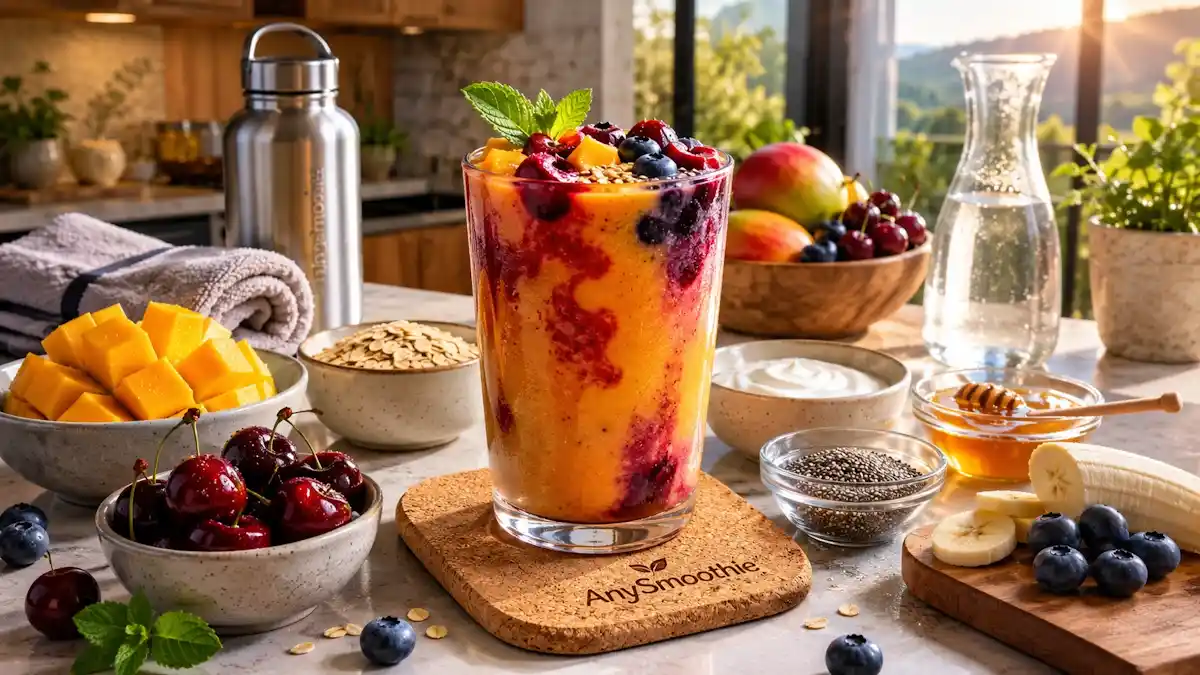
Glycogen is the stored carbohydrate your muscles use for training fuel. After a hard workout, those stores are lower, and your body is ready to refill them.
That is where post-workout smoothies for glycogen synthesis fit well. The best ones lead with carbs, use enough liquid to digest easily, and add a little protein without turning the shake into a heavy meal.
If you want recovery that starts fast, the details matter more than the label on the blender. The next sections keep it simple and practical.
What glycogen replenishment actually needs after exercise
Hard training burns through muscle glycogen, especially during long sessions, intervals, or repeated sets with short rest. Once that fuel drops, your body leans on incoming carbohydrate to rebuild the stores you just used.
A review on muscle glycogen repletion notes that taking carbohydrate immediately after exercise helps maximize the rate of glycogen synthesis, especially when you need a quick turnaround, like another session later the same day. See the muscle glycogen repletion review for the underlying physiology.
Right after training, muscles care most about carbohydrate delivery and digestion speed.
Why carbs matter more than fat after training
Carbs raise blood glucose and give your muscles the raw material they need to refill glycogen. Fruit, juice, and other fast carbs move into play quickly, which is why they work so well in a smoothie.
Fat slows stomach emptying, so it is less useful right after training when fast refill matters. A spoon of almond butter is fine later, but a post-workout drink built around fat can feel sluggish and delay the carb hit.
The role of protein in recovery support
Protein does not replace carbs for glycogen synthesis, but it still matters. It supports muscle repair and helps make the smoothie more complete, especially after lifting or mixed training.
Glycogen replenishment is only one part of recovery. If you’re also looking for smoothie ideas centered on post-exercise muscle soreness, see our guide to smoothies for post-workout DOMS, which highlights anthocyanin-rich fruits such as tart cherries and berries.
Some research on carbohydrate and protein coingestion shows that pairing the two can support glycogen resynthesis during recovery, mainly when your carb intake is not huge. That is one reason a balanced shake can work so well after training. The study is summarized in carb and protein coingestion research.
If you want a more protein-forward version for recovery days, protein smoothies for muscle recovery offer a useful starting point.
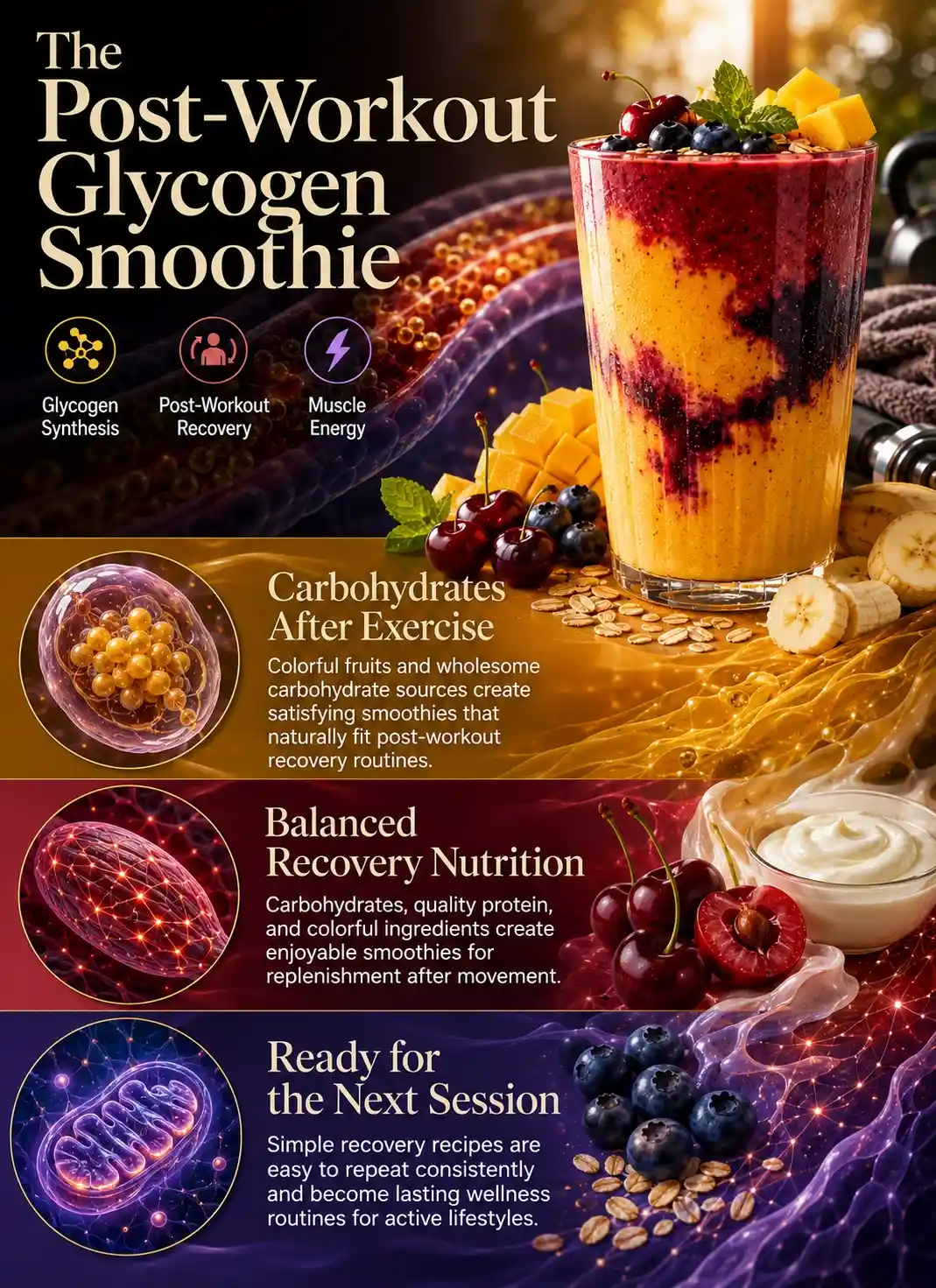
How to build post-workout smoothies for glycogen synthesis
The formula is simple. Start with fast carbs, add enough liquid to keep the texture easy to drink, then include a moderate protein source if the workout was demanding.
A smoothie often works better than a full meal right after training because it is easier to tolerate. Your stomach does not have to handle chewing, heavy fat, or a pile of fiber when you are still cooling down.
For harder training blocks, recovery shakes for muscle rebuilding use the same basic idea, carb first, protein second, and only as much thickness as your gut can handle.
Best carb sources for quick refill
Bananas are the easiest starting point. Add berries, mango, pineapple, dates, honey, oats, or fruit juice, and you have a solid carb base without much effort.
Fruit and juice are especially useful because they blend fast and digest quickly. That makes them a better fit than dense, slow meals when you want glycogen synthesis to move sooner.
Simple ratio to aim for
Think in terms of a carb-forward drink with a moderate protein add-in. If the workout was light, you may only need fruit, liquid, and a small protein source.
After a harder session, make the carb portion the star of the glass. Protein can support recovery, but glycogen refill still depends on enough carbohydrate.
Ingredients that can slow the process
High-fat nut butters, lots of seeds, and very high-fiber add-ins can make a smoothie harder to digest right after training. They are useful ingredients, just not the best choice when fast carb replacement is the goal.
Keep those items for later in the day if you want a heavier shake. Right after exercise, a lighter blend usually wins.
3 Post-Workout smoothies for glycogen synthesis
These three options keep carbs in the lead, but each one fits a different training day.
| Smoothie name | Best for | Main carbs | Protein source | Why it works |
|---|---|---|---|---|
| Fast Carb Berry | Endurance or interval days | Banana, mixed berries, orange juice | Whey isolate or pea protein | Quick carbs and liquid digest fast, so glycogen refill starts without a heavy feeling. |
| Banana Oat Recovery | Strength training | Banana, oats, milk | Greek yogurt or whey protein | It gives a steadier carb load and still feels like a normal smoothie after lifting. |
| Tropical Juice Refill | Very hard sessions or two-a-days | Mango, pineapple, juice, honey | Whey isolate or soy protein | Fast fruit sugars and low fiber support rapid refill and easy digestion. |
The common thread is simple: keep the carb load high enough to matter, then adjust protein and texture around your workout.
How to maximize glycogen recovery after training
Sooner is usually better after hard or long sessions, especially if you have another workout coming up. That does not mean you need to drink the smoothie the second you rack the bar, but waiting too long can make recovery slower than it needs to be.
For a light session, a smaller smoothie is fine. After endurance work, long lifting blocks, or back-to-back training, make the serving larger and push the carbs higher.
When to drink it after training
The first hour or two is the sweet spot for most people who care about fast refill. That is when your body is most ready to use the carbs you give it.
If you trained hard and still need to function, a smoothie is often the easiest bridge between the gym and the next meal.
How to adjust for workout length and intensity
A short lift or easy cardio day needs less carbohydrate than a long run or a two-a-day schedule. Match the drink to the session, and do not force a huge shake after a small workout.
If you want a simple rule, use more carbs as the session gets longer and harder. Protein stays useful, but the carb dose is what moves glycogen synthesis.
Conclusion
Post-workout smoothies work best when they keep carbs first, use enough liquid for easy digestion, and add protein as support rather than the main event. That structure gives your body what it needs when glycogen is low.
Use fruit, juice, oats, and a moderate protein source, then adjust the size based on the workout in front of you. Once you find a blend that sits well, it becomes a repeatable recovery habit instead of another fitness task.
🛡️ Safety Notes & Dietary Interactions
- Recovery Nutrition: Match your smoothie to the intensity and duration of your workout. Longer or more demanding sessions generally require more carbohydrates than shorter or lower-intensity exercise to support normal recovery.
- Digestive Comfort: If large post-workout smoothies feel too heavy, reduce the serving size and choose easier-to-digest ingredients. You can always eat a balanced meal later once your appetite returns and digestion feels more comfortable.
- Medical Considerations: People with diabetes, kidney disease, digestive disorders, or those following medically prescribed nutrition plans should discuss post-exercise nutrition strategies with a qualified healthcare professional before making significant dietary changes.
- Hydration First: Recovery depends on more than carbohydrates alone. Replace fluids lost through sweat, especially after long workouts or hot-weather training, and adjust your hydration based on exercise duration, intensity, and individual sweat losses.
FAQ
Why are carbohydrates so important after a workout?
Carbohydrates are the primary nutrient used to replenish muscle glycogen, the stored form of carbohydrate that fuels exercise. After longer or higher-intensity training sessions, glycogen stores become depleted. Eating carbohydrate-rich foods or drinking a balanced smoothie after exercise helps your body begin restoring those energy reserves for future activity and everyday recovery.
Should I include protein in a post-workout smoothie?
Yes. Although carbohydrates play the leading role in glycogen replenishment, protein supports normal muscle repair and recovery after exercise. Combining moderate protein with adequate carbohydrates creates a more balanced recovery smoothie, especially after strength training, interval workouts, or longer endurance sessions that place greater demands on both muscles and energy stores.
How soon should I drink a post-workout smoothie?
Many people find it practical to have a recovery smoothie within the first one to two hours after exercise, particularly after demanding workouts or when another training session is scheduled later the same day. If a full meal is not immediately available, a smoothie provides an easy way to begin replacing fluids, carbohydrates, and protein.
Are high-fat ingredients a good choice immediately after exercise?
Healthy fats certainly belong in an overall balanced diet, but immediately after training it is often helpful to keep post-workout smoothies relatively light. Large amounts of nut butters, seeds, or heavy fats may slow digestion compared with a carbohydrate-focused smoothie, particularly when your main priority is comfortable recovery and replenishing glycogen stores.
Can I use the same recovery smoothie after every workout?
Not always. Recovery needs vary depending on workout duration, intensity, and your overall nutrition plan. A short walk or light gym session usually requires less carbohydrate than a long endurance workout or demanding interval training. Adjusting smoothie size and ingredients to match the effort helps create a more practical and sustainable recovery routine.

Medical Disclaimer: AnySmoothie content is for educational purposes only and is not a substitute for professional medical advice. Consult a healthcare provider for personalized guidance. See our full Disclaimer & Terms of Use. AI Transparency: AnySmoothie may use AI to support content development. All content undergoes human editorial review for accuracy, clarity, and editorial quality. See our full AI Transparency.