
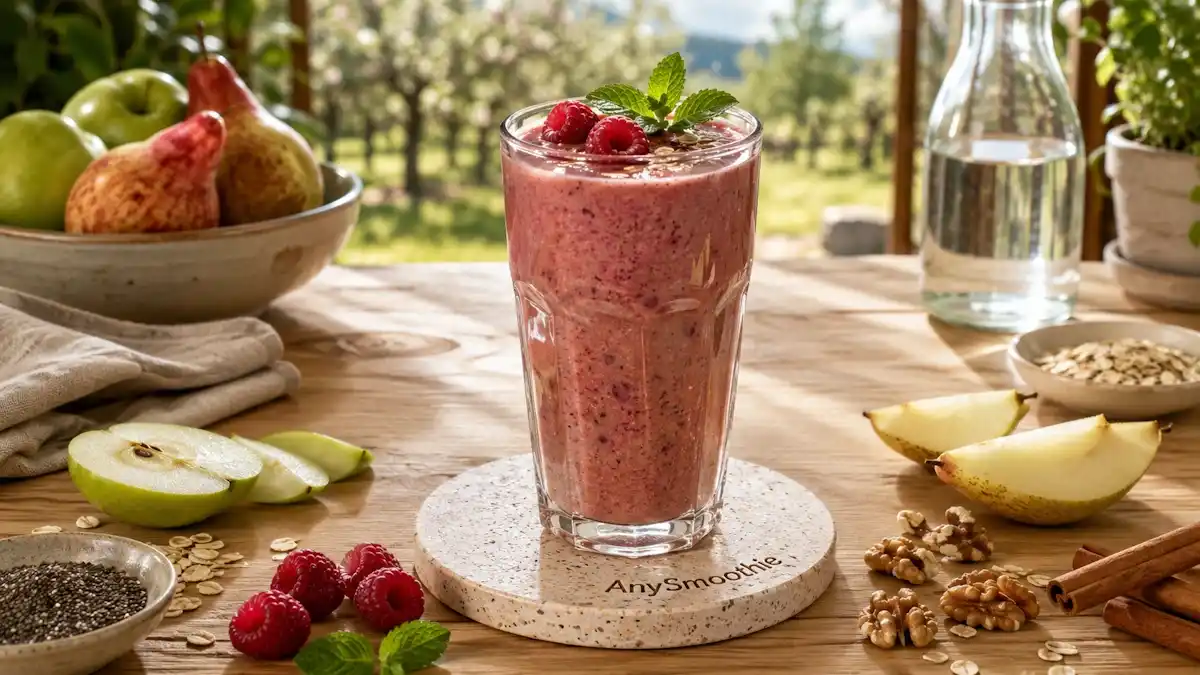
Pectin is a soluble fiber found in fruit, and it matters because your gut microbes can use it as food. When they ferment fiber, they make short-chain fatty acids, including acetate, propionate, and butyrate. Those compounds are part of your body’s normal gut chemistry, and the goal here is simple support, not a medical promise.
That makes pectin smoothies for short-chain fatty acids a practical idea. You get a drink that fits real life, uses familiar fruit, and can help you keep fiber intake steady without a big prep session. A smoothie won’t do the work for you, but it can make the habit easier to keep. Start with fruit that brings pectin to the blender, then build from there.
How pectin and gut bacteria work together in smoothies
Pectin is a soluble fiber, so it absorbs water and forms a soft gel. In a smoothie, that matters because it changes texture and slows how fast the drink leaves your stomach. More important, pectin moves through the small intestine mostly intact and reaches the colon, where microbes break it down.
That fermentation process is where short-chain fatty acids come from. A review on dietary fiber and SCFAs describes how these compounds are the end products of microbial fiber breakdown. In plain language, your gut bacteria do the cooking after you do the blending.
Pectin feeds microbes best when it reaches the colon intact.
Smoothies are useful because they combine pectin-rich fruit with liquid and simple add-ins in one step. They also let you choose texture. That makes it easier to keep the drink pleasant enough to repeat, which matters more than making one perfect glass.
What makes pectin different from other fibers
Not all fiber behaves the same way. Insoluble fiber adds bulk, while pectin dissolves and thickens. That gel-like quality is why apples, pears, citrus, and some berries feel different in the blender.
Pectin also gives microbes a slower, steadier food source. Instead of rushing through the system, it helps create a better setting for fermentation farther down the gut. That is one reason pectin-rich fruits fit so well in smoothies meant to support SCFA production.
Why fermentation matters for short-chain fatty acids
When gut microbes ferment pectin, they produce acetate, propionate, and butyrate in different amounts. These compounds are tied to colon energy use and normal metabolic signaling. Research on short-chain fatty acids and metabolism shows that they are more than waste products, they are active parts of gut chemistry.
That does not mean every smoothie creates the same output. It does mean regular fiber intake gives your microbes a steady job. Over time, that is the kind of pattern the body works well with.
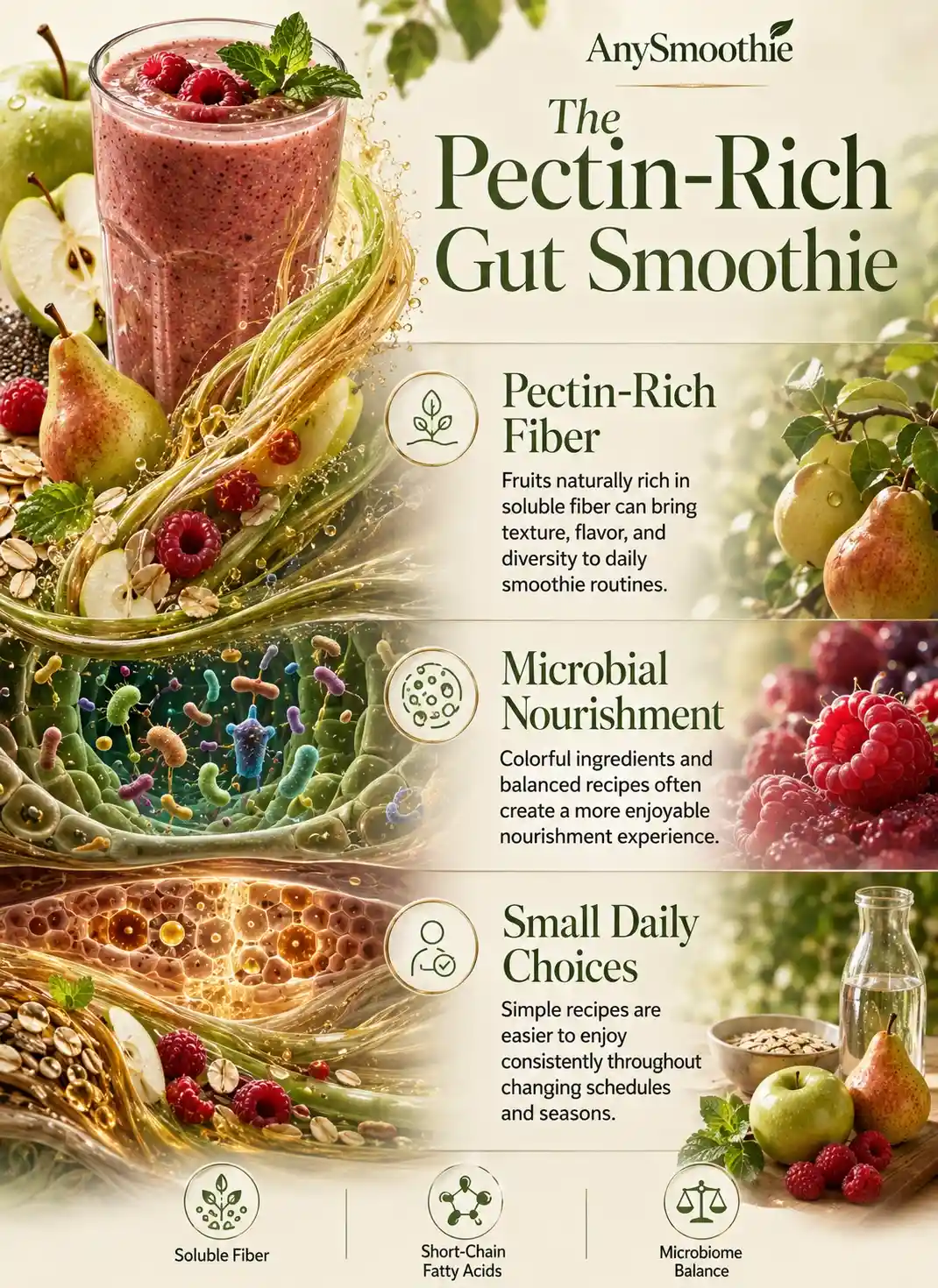
Best pectin-rich ingredients for short-chain fatty acid smoothies
The best smoothie ingredients are the ones you can use often. Apples and pears are the easiest place to start because they bring pectin and mild flavor. Citrus fruit adds brightness, and berries can help balance tartness without making the drink too sweet.
Fruit ripeness changes the result. Sweeter fruit makes the smoothie taste better, but very ripe fruit can push the sugar higher and soften the texture too much. A mix of firmer fruit and softer fruit usually works best. For example, one apple and one pear can make a thicker base than two very soft fruits.
Choose fruits with the most pectin
Apples, pears, oranges, grapefruit, and some berries are strong picks. The skin and white pith of citrus fruit hold useful fiber, but the blender needs the fruit in a form that tastes good and drinks well. Apples and pears also blend into a smooth base without a strong flavor.
Mixing fruits helps in another way, it keeps the taste from going flat. A pear can soften the sharp edge of an apple. Citrus can brighten a mild base. That balance makes it easier to stick with the habit.
Add support ingredients without diluting the fiber goal
Simple add-ins can improve texture without turning the smoothie into a dessert. Chia and flax add more fiber. Plain yogurt or kefir can make the drink creamier, and a Greek yogurt smoothie base is a good reference if you want a thicker, tangier result. Oats add body, while cinnamon adds flavor without extra sugar.
Keep sweeteners modest. Honey, maple syrup, and fruit juice can take over fast. A good pectin smoothie should taste like fruit first, not like candy.
Use the right liquid and texture for better drinking
Water keeps the flavor clean. Unsweetened milk makes the smoothie softer and more filling. Plain kefir adds a tart edge and works well when you want a drinkable texture with a little richness.
Too much liquid can make the fiber feel thin. Too little liquid makes the smoothie hard to drink. Start with less, blend, then add more only if the blades need help.
3 Pectin smoothies for short-chain fatty acids
Here are three simple blends built around pectin-rich fruit and an easy texture.
| Smoothie name | Main pectin source | Key add-ins | Texture and taste | Best use case |
|---|---|---|---|---|
| Apple pear cinnamon | Apple, pear | Greek yogurt, cinnamon | Creamy, mild, lightly sweet | First-time pectin smoothie |
| Citrus berry pectin | Orange or grapefruit, berries | Kefir, chia | Bright, tart, smooth | Morning routine |
| Green apple oat | Green apple | Oats, unsweetened milk | Thick, filling, crisp | More substantial snack |
Conclusion
Pectin-rich smoothies are a simple way to support short-chain fatty acid production through regular fiber intake. They work because they feed the microbes that ferment fiber, then leave behind acetate, propionate, and butyrate as part of normal gut activity.
Start with one recipe and adjust the sweetness slowly. As you swap apples, pears, citrus, and berries, you’ll notice the texture change as much as the taste.
Keep the method easy to repeat, and the habit gets easier to keep.
🛡️ Safety Notes & Dietary Interactions
- Fiber Progression: Start Gradually: Pectin-rich fruits, oats, chia seeds, and flax can significantly increase daily fiber intake. If your current fiber intake is low, increase portions slowly and maintain adequate hydration.
- Digestive Sensitivity: Personal Response: Apples, pears, citrus fruits, kefir, and yogurt may affect digestion differently between individuals. Pay attention to your own comfort level and adjust ingredients accordingly.
- Sugar Awareness: Whole Fruit First: Even gut-focused smoothies can become overly sweet when large amounts of fruit juice, honey, maple syrup, or sweetened dairy products are added. Whole fruit generally provides a better fiber balance.
- Balanced Gut Support: Long-Term Habits: Short-chain fatty acid production depends on consistent dietary patterns rather than a single smoothie. Regular intake of fiber-rich foods, hydration, sleep, and overall dietary variety all contribute to a healthy gut environment.
FAQs
What fruits contain the most pectin for smoothies?
Apples and pears are among the most practical pectin-rich fruits for smoothies. Citrus fruits such as oranges and grapefruit also contain useful amounts, especially in the white pith beneath the peel. Some berries contribute pectin as well. Combining different fruits can improve flavor, texture, and overall fiber diversity.
Can pectin smoothies help support short-chain fatty acid production?
Pectin is a fermentable soluble fiber that reaches the colon where gut microbes can break it down. During this process, microbes produce short-chain fatty acids such as acetate, propionate, and butyrate. Regular intake of pectin-rich foods may help support this natural microbial activity as part of a balanced diet.
Is it better to leave the apple peel on when making pectin smoothies?
In many cases, yes. Apple peels contain additional fiber and plant compounds that complement the pectin found throughout the fruit. As long as the apple is washed thoroughly and tolerated well, keeping the peel can increase both texture and nutritional value while supporting a more fiber-rich smoothie.
Can I use pectin smoothies every day?
For most people, pectin-rich smoothies can fit comfortably into a daily routine when ingredients remain balanced. Rotating fruits, adding protein or healthy fats, and avoiding excessive sweeteners helps maintain variety. Consistency often matters more than complexity when building habits that support long-term digestive wellness.
What ingredients pair best with pectin-rich fruits?
Chia seeds, ground flaxseed, oats, plain yogurt, kefir, and unsweetened milk alternatives all work well alongside pectin-rich fruits. These ingredients improve texture, add complementary fibers, and help create a more balanced smoothie. Cinnamon, vanilla, and mild spices can also enhance flavor without relying on added sugars.

Medical Disclaimer: AnySmoothie content is for educational purposes only and is not a substitute for professional medical advice. Consult a healthcare provider for personalized guidance. See our full Disclaimer & Terms of Use. AI Transparency: AnySmoothie may use AI to support content development. All content undergoes human editorial review for accuracy, clarity, and editorial quality. See our full AI Transparency.