
Ninety percent of people who struggle with weight loss have an imbalanced gut microbiome. Recent 2025 studies confirm this link. For example, check out key advances in gut microbiome research from 2025. Bad bacteria store fat. Good ones burn it.
Delicious smoothies fix this fast. They feed skinny bacteria like Akkermansia. This boosts fat oxidation and cuts cravings. You get steady energy too. No bland shakes here. These taste great and prime your mitochondria for metabolic efficiency.
We’ll cover the science simply. Learn how prebiotics like PHGG and inulin shift nutrient partitioning. Calories go to muscle, not fat. Then try three recipes. Pair them with probiotics for full results.
The Bacterial Scale: How Your Microbiome Dictates Your Fat Storage
Your gut hosts trillions of bacteria. They control fat storage. A poor balance favors Firmicutes. These pack on pounds. Bacteroidetes do the opposite. They help oxidize fat.
Think of your gut as a garden. Weeds (bad bacteria) choke plants (good ones). Starve the weeds. Feed the plants. Your body burns fat better.
Mitochondrial priming plays a key role. Good bacteria signal cells to use energy right. This raises metabolic efficiency. A 2025 trial showed Bifidobacterium shifts the gut to cut obesity via short-chain fatty acids. Results match human data.
Feed skinny bacteria now. They turn your gut into a fat-burning machine.
Akkermansia Muciniphila: The ‘Skinny Bacteria’ and How to Feed It
Akkermansia muciniphila earns its “skinny bacteria” name. It strengthens your gut lining. Low levels link to inflammation and weight gain. High levels speed fat loss.
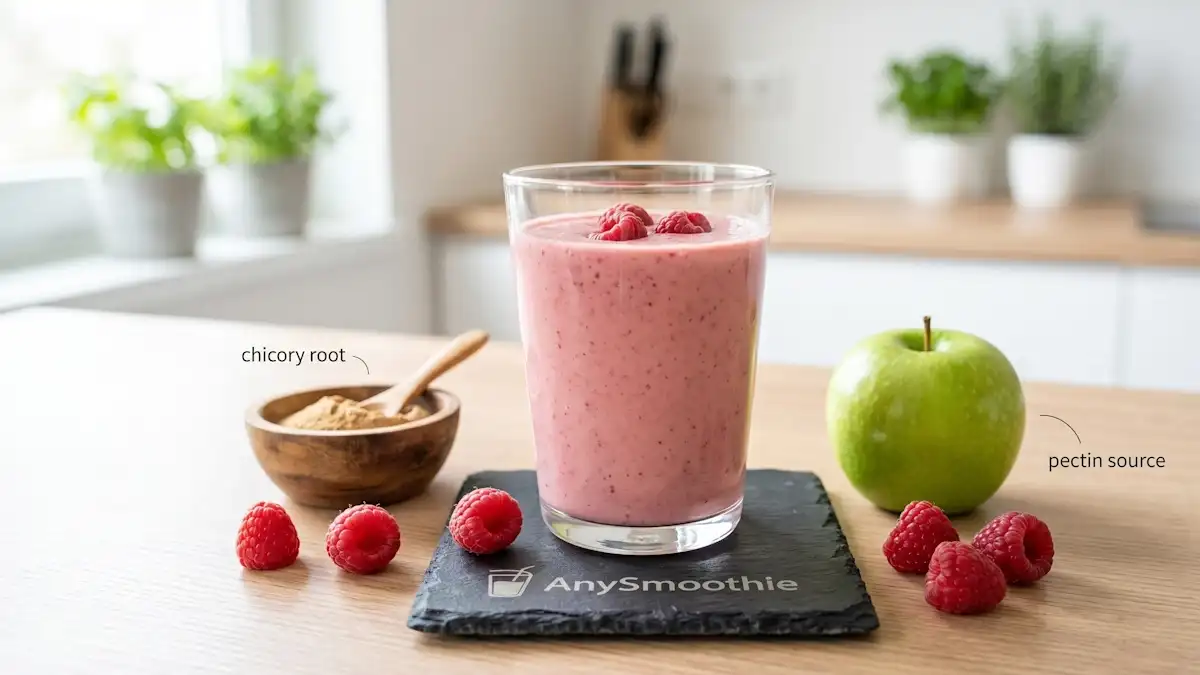
Boost it with prebiotics. PHGG tops the list. Inulin from chicory works too. Apple pectin seals the deal.
Here’s a quick comparison of three modulators:
| Modulator | Impact on Weight Loss | Fermentation Rate | Texture Impact in Smoothies | Best Smoothie Pairing |
|---|---|---|---|---|
| Inulin (Chicory Root) | High satiety, good fat oxidation, strong Akkermansia support | Slow | Slightly gritty | Berry blends |
| PHGG | Excellent satiety, top fat oxidation, peak Akkermansia support | Very slow | None (invisible) | Any tropical or green |
| Apple Pectin | Solid satiety, moderate fat oxidation, good Akkermansia support | Medium | Smooth, gel-like | Citrus or cucumber mixes |
PHGG acts as the invisible weight loss catalyst. It has zero taste or texture change. Start with 5 grams daily. Mix into smoothies. Watch Akkermansia thrive.
Strategic Prebiotics: Using Inulin and Pectin to Crush Cravings
Prebiotics feed good bacteria. Inulin from chicory root ferments slowly. Apple pectin gels in your gut. Both crush hunger.
They improve nutrient partitioning. Calories fuel muscle growth. Fat stays off. Liposomal transport aids absorption. You feel full longer.
Real benefits hit quick. Steady blood sugar means no crashes. Less snacking follows. Source inulin powder online. Use 5-10 grams per smoothie. Pectin from apples needs no supplement. Blend whole fruit.
Add these daily. Cravings fade. Weight drops.
GLP-1 Stimulation: Using Fermentable Fiber for Natural Appetite Control
GLP-1 is your body’s fullness hormone. Drugs mimic it. Fibers trigger it naturally.
Inulin and pectin ferment into short-chain fatty acids. These signal the brain: stop eating. A study on pectin showed it cuts intake via GLP-1 and vagal nerves. See pectin effects on GLP-1 secretion.
No side effects. Just results. Aim for 10 grams fiber per smoothie. Drink mid-morning. Hunger stays low all day.
3 Delicious Microbiome-Fix Smoothie Recipes
These recipes pack prebiotics. Each serves one. Prep in under 5 minutes. Calories hover at 200-300. They taste like treats. Boost metabolic efficiency. Fix your gut.
Beyond the Blender: Probiotic Synergy and Post-Workout Gut Health
Pair smoothies with probiotics. Yogurt or kefir in recipes starts it. This creates synergy. Good bacteria multiply.
Time them post-workout. They speed recovery. Nutrient partitioning peaks. Muscles repair. Fat burns.
Build a routine. One smoothie daily. Track waist size weekly. Energy rises. Scale drops.
Reducing Endotoxemia: Preventing Metabolic Inflammation from the Inside
Endotoxemia happens with leaky gut. Toxins leak. This sparks inflammation and fat gain.
Fibers bind toxins. Probiotics seal the barrier. Smoothies prevent it all.
You sleep better. Energy soars. 2026 research backs fiber’s role. Watch for bloating or fatigue as signs. Fix with daily doses.
Conclusion
Gut-fixing smoothies make weight loss simple. Feed Akkermansia and prebiotics. Fat burns. Cravings vanish.
Try one recipe today. Note changes in a week. Tweak for your taste. Your microbiome thanks you. Sustainable leanness follows.
🛡️ Safety Notes & Dietary Interactions
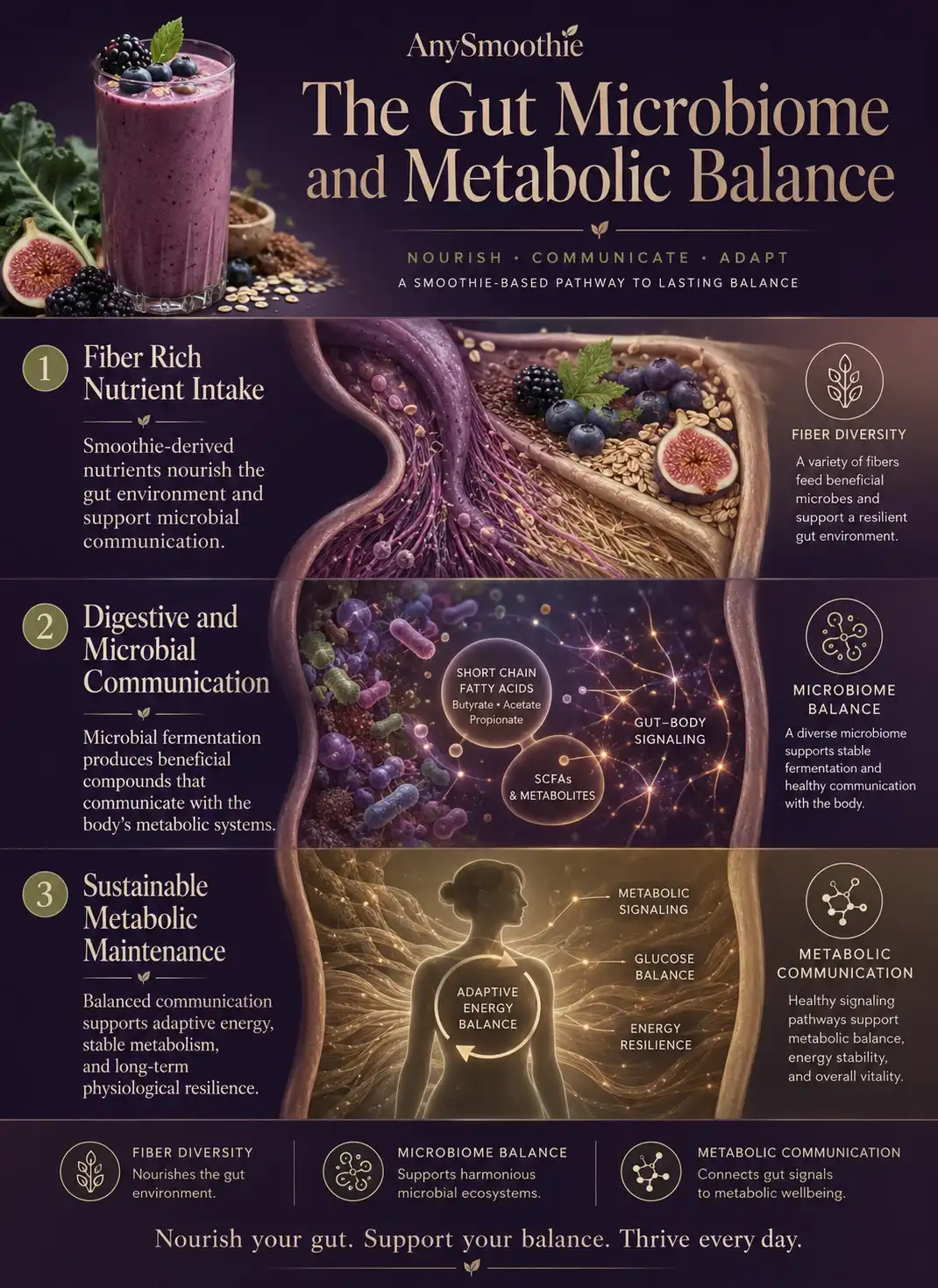
- Microbiome Diversity and Metabolic Signaling Balance: Gut bacteria participate in far more than digestion alone. They influence satiety communication, short-chain fatty acid production, inflammatory signaling, and nutrient partitioning pathways tied to metabolic efficiency. Smoothies rich in fermentable fiber and polyphenols may help support a more favorable microbial environment over time when used consistently.
- Prebiotic Fermentation and Digestive Adaptation Dynamics: Ingredients like PHGG, chicory inulin, apple pectin, chia, and oats ferment gradually inside the colon and help nourish beneficial bacteria such as Akkermansia and Bifidobacterium species. However, increasing fermentable fiber too quickly may temporarily increase bloating or digestive sensitivity, so gradual dosing often creates a smoother adaptation pattern.
- GLP-1 Signaling and Satiety Communication Support: Fermentable fibers produce short-chain fatty acids that interact with appetite-regulation pathways tied to GLP-1 and vagal signaling. Smoothies combining fiber, probiotics, and balanced macronutrients may therefore help create steadier fullness cues and reduce reactive snacking patterns without depending on ultra-restrictive dieting approaches.
- Probiotic Synergy and Gut Barrier Resilience: Kefir, yogurt, and cultured foods work especially well alongside prebiotic fibers because they help support broader microbiome diversity and gut-lining integrity. Combining probiotics with polyphenol-rich fruits, greens, and slower-digesting fibers may create a more stable internal environment than relying entirely on isolated supplements or low-fiber “diet” products.
FAQ
Why is the gut microbiome connected to body composition and cravings?
Gut bacteria influence how nutrients are processed, how hunger signals are regulated, and how efficiently the body extracts energy from food. Certain bacterial patterns are associated with stronger satiety signaling and improved metabolic flexibility, while others may correlate with increased inflammation, cravings, or energy instability. This is why microbiome-focused nutrition strategies often emphasize fiber diversity and fermented foods.
What makes Akkermansia muciniphila so important in wellness discussions?
Akkermansia is frequently discussed because researchers associate it with gut-lining integrity, metabolic signaling, and healthier inflammatory balance patterns. Prebiotic fibers like PHGG, inulin, and apple pectin are commonly used to help nourish this bacteria indirectly. In practical terms, supporting microbial diversity may help improve satiety and digestive resilience over time.
Why are PHGG and inulin used in smoothie formulas so often?
Both are fermentable fibers that feed beneficial gut bacteria while helping slow digestion and improve fullness. PHGG tends to blend invisibly with very little texture impact, while inulin adds a slightly creamier mouthfeel. Because they ferment gradually, these fibers are often included in metabolic-support smoothies designed to improve satiety and reduce mid-day cravings.
How do probiotics and prebiotics work together inside smoothies?
Prebiotics provide fuel for beneficial microbes, while probiotics introduce live cultures that may help support microbiome diversity. Combining kefir or yogurt with fibers like chia, oats, pectin, or PHGG creates a synergistic structure that supports both microbial nourishment and digestive stability. This pairing is one reason cultured smoothie recipes often feel more satisfying and metabolically balanced.
Why can microbiome-focused smoothies improve energy stability?
Balanced gut-supportive smoothies usually digest more gradually because they combine fiber, fats, probiotics, and whole-food carbohydrates instead of relying on refined sugars. Slower digestion often supports steadier glucose handling, fewer cravings, and more stable satiety signals throughout the day. Many people notice improved energy consistency once highly processed snack patterns are replaced with more fiber-dense nutrition routines.

Medical Disclaimer: AnySmoothie content is for educational purposes only and is not a substitute for professional medical advice. Consult a healthcare provider for personalized guidance. See our full Disclaimer & Terms of Use. AI Transparency: AnySmoothie may use AI to support content development. All content undergoes human editorial review for accuracy, clarity, and editorial quality. See our full AI Transparency.