
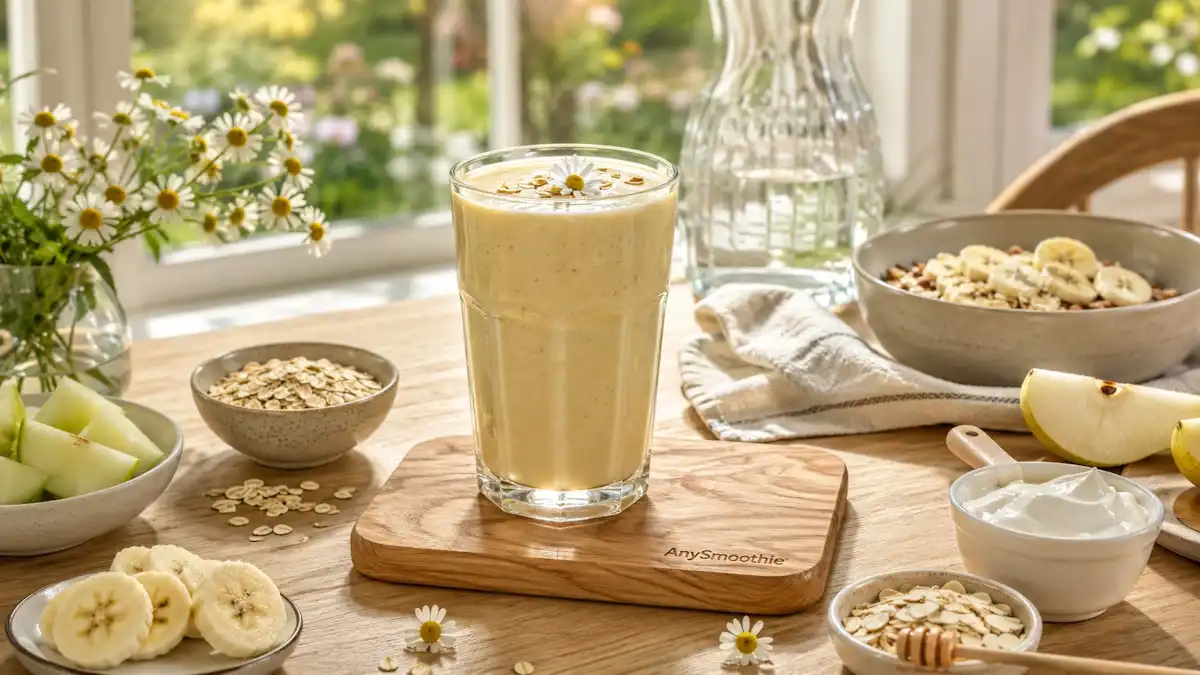
Waking up hungry and already bracing for discomfort is a rough way to start the day. A gentle smoothie can help you eat without loading your system with heat, acid, or heavy texture.
The goal is simple, a breakfast that feels filling, tastes mild, and supports easier digestion. That means choosing ingredients that are low-acid, balanced, and easy on the stomach.
Below, you’ll see what makes a smoothie reflux-friendly, which ingredients work best, what to skip, and three easy recipes you can repeat all week.
Why some breakfast smoothies are easier on acid reflux
A smoothie can feel light or surprisingly heavy. The difference often comes down to texture, acidity, fat, sugar, and portion size.
Thick, creamy blends usually go down more slowly and feel more satisfying. Very icy or thin drinks can feel sharp, and a huge serving can put extra pressure on the stomach and the valve above it. That pressure can make discomfort more likely.
What makes a smoothie gentler on the stomach
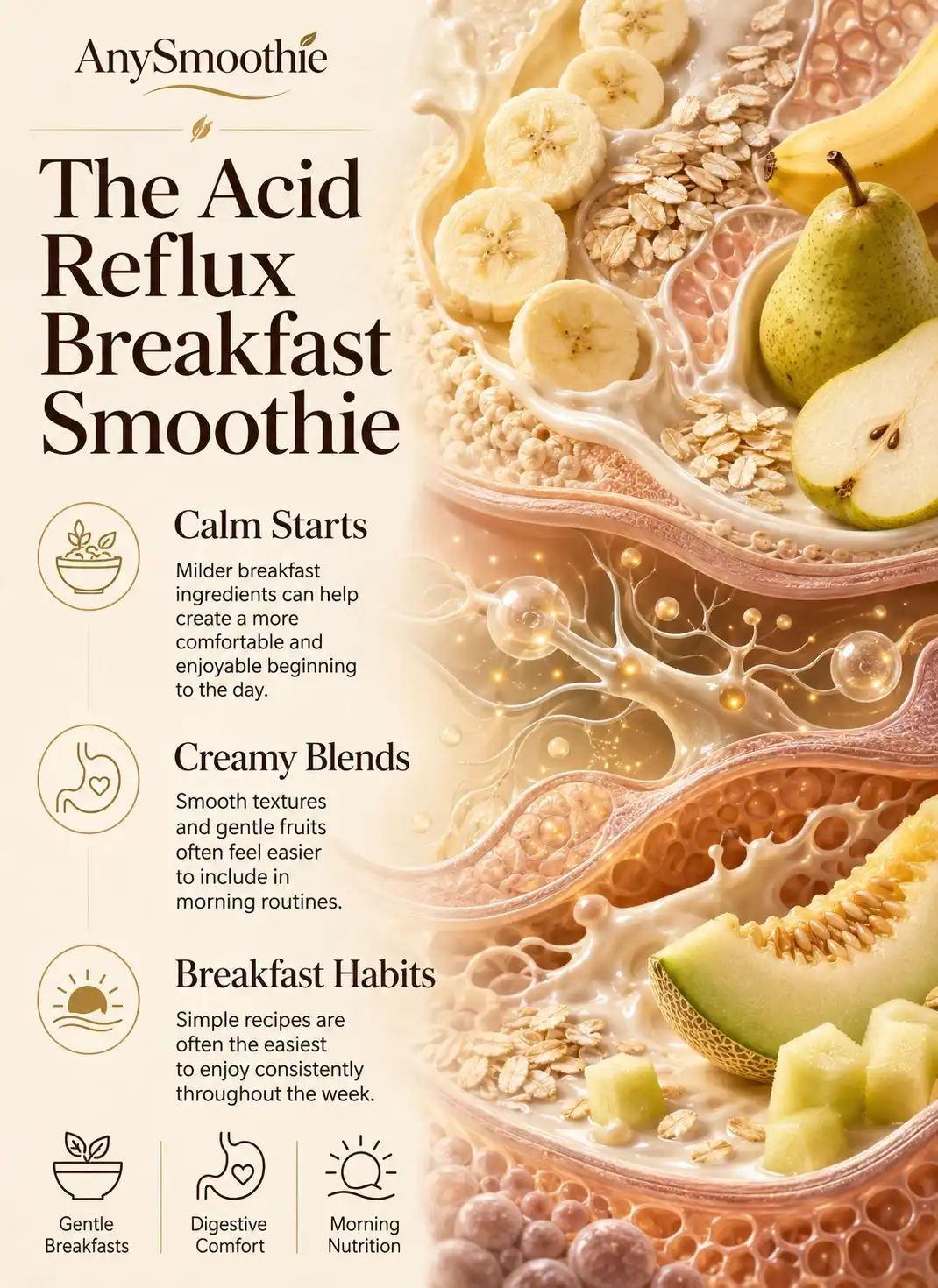
Low-acid fruit, mild liquid, soft fiber, and a little protein usually make the best base. Bananas, pears, melon, oats, and plain yogurt can create a smooth, calm texture.
Creamy blends often work better than bright, sugary drinks. They digest more steadily and feel like breakfast, not dessert. If you want a wider list of common trigger foods, Harvard Health’s GERD food guide is a useful reference.
Common morning ingredients that can trigger discomfort
Citrus, pineapple, tomato, coffee, chocolate, mint, spicy add-ins, and very high-fat blends are common trouble spots. Some people also react to carbonation or large amounts of sweetener.
Triggers vary from person to person, so your own response matters most.
The best ingredients for breakfast smoothies for acid reflux relief
The easiest way to build breakfast smoothies for acid reflux relief is to keep the flavor soft and the structure balanced. Start with a low-acid fruit, add a mild liquid, then layer in fiber or protein.
| Ingredient | Why it helps | Flavor profile | Best pairings | Reflux note |
|---|---|---|---|---|
| Banana | Adds body and natural sweetness | Mild, creamy | Oats, almond milk, yogurt | Usually a safe base |
| Pear | Softens blends without much tartness | Light, sweet | Banana, spinach, oat milk | Good fruit for gentle mornings |
| Melon | Keeps the smoothie fresh and light | Cool, soft | Cucumber, spinach, mild milk | Often lower-acid than citrus fruit |
| Oats | Add thickness and slow the drink down | Neutral | Banana, yogurt, almond milk | Helpful for fullness |
| Almond or oat milk | Keeps the texture smooth | Mild, clean | Fruit, chia, oats | Choose unsweetened versions |
| Spinach | Adds color without much bite | Very mild | Pear, banana, oat milk | Use a small handful first |
A calm smoothie usually starts with ingredients you already trust. Then you can add small extras without turning breakfast into a science project.
Fruits, liquids, and add-ins that tend to work well
Bananas, pears, and melon are easy places to start. They bring sweetness without much acid, and they blend into a soft base.
Oat milk and almond milk keep the mix mild. Plain yogurt can also work if you tolerate dairy. A small handful of spinach is usually gentle, too. If you want a thicker texture, a spoonful of chia seeds or oats helps without making the smoothie feel watery.
Protein and healthy fats that keep breakfast balanced
A little protein can make a smoothie feel more like a real meal. Plain yogurt, a scoop of protein powder, chia seeds, or a small amount of nut butter can help.
Keep the fat modest. Too much fat can slow stomach emptying and make the drink feel heavy. If you use nut butter, start with a teaspoon, not a heaping spoonful. For a simple yogurt base, the Greek yogurt smoothie recipe offers an easy template.
Ingredients to limit or avoid when reflux is a concern
Citrus juice, pineapple, coffee, chocolate, peppermint, spicy powders, and tomato-heavy add-ins are common troublemakers. Heavy cream, large amounts of coconut milk, and too much nut butter can also make the drink harder to settle.
Swapping one ingredient often fixes the whole recipe. Use pear instead of orange, oat milk instead of coffee, and a small scoop of oats instead of extra fat. That keeps the smoothie simple and easier to read from day to day.
The best reflux-friendly smoothie is usually low-acid, not too cold, and not overloaded with fat.
3 Breakfast smoothies for acid reflux relief
How to build a reflux-friendly smoothie without overdoing it
Keep the formula simple. Use one cup of low-acid fruit, one cup of mild liquid, one to two spoonfuls of oats or chia, and a small protein add-in if you want more staying power.
Start with liquid in the blender first. Then add fruit, then fiber or protein. Blend until smooth, and stop there. A large breakfast can feel harder to manage than a moderate one, so portion size matters as much as the ingredients.
A simple smoothie formula you can repeat all week
Use this pattern: gentle fruit, mild liquid, soft fiber, and an optional protein boost. You can swap ingredients based on what sits well for you.
If one mix feels too rich, trim it back. If it feels too thin, add oats or a few more pieces of fruit. Small changes are easier to track than major overhauls.
Easy swaps if a smoothie still feels too heavy
Thin the texture with more liquid. Cut back on nut butter or seeds. Use room-temperature ingredients if very cold drinks bother you. You can also make a half-size smoothie and eat the rest later.
Conclusion
The best breakfast smoothies for acid reflux relief are simple, low-acid, and balanced. When you keep the flavor mild and the portion moderate, breakfast feels easier from the first sip.
Start with one recipe, notice how your body responds, and make small adjustments over time. Consistency matters more than perfection, and a calm morning blend can set a better tone for the whole day.
🛡️ Safety Notes & Dietary Interactions
- Identify Your Personal Trigger Foods: Acid reflux triggers vary widely. While bananas, pears, oats, and melon are commonly well tolerated, ingredients that work for one person may still cause discomfort for another. Keep a simple food journal if symptoms are unpredictable.
- Watch Portion Size And Timing: Even reflux-friendly smoothies can feel uncomfortable if the serving is very large or consumed immediately before lying down. Smaller portions and slower sipping often improve tolerance.
- Be Careful With Hidden Acidity: Flavored yogurts, fruit juices, smoothie boosters, citrus concentrates, and sweetened plant milks can add acidity or excess sugar. Reading ingredient labels helps keep your smoothie gentle and balanced.
- Seek Medical Advice For Persistent Symptoms: Frequent reflux, difficulty swallowing, unexplained weight loss, chest discomfort, or ongoing digestive symptoms should be evaluated by a qualified healthcare professional. Dietary adjustments should complement, not replace, medical care when needed.
FAQ
What fruits are best for acid reflux smoothies?
Bananas, pears, melon, ripe peaches, and papaya are among the most commonly recommended fruits because they tend to be lower in acidity than citrus fruits or pineapple. Their softer flavor profile can make smoothies feel gentler on a sensitive stomach.
Can I use yogurt in a reflux-friendly smoothie?
Many people tolerate plain yogurt well because it adds protein and creaminess without requiring large amounts of fat. However, tolerance varies. If dairy seems to worsen symptoms, lactose-free or non-dairy yogurt alternatives may be worth trying.
Are oats good for acid reflux smoothies?
Yes. Oats are frequently used because they add soluble fiber, improve texture, and help create a more filling breakfast. They also tend to blend well with low-acid fruits such as banana and pear without making the smoothie overly heavy.
What ingredients should I avoid in an acid reflux smoothie?
Common ingredients that may trigger symptoms include citrus fruits, pineapple, chocolate, coffee, peppermint, spicy powders, large amounts of nut butter, and highly sweetened ingredients. Individual triggers differ, so personal experience remains important.
When is the best time to drink a smoothie if I have acid reflux?
Many people find breakfast or mid-morning works best. Drinking a moderate-sized smoothie slowly and allowing time before lying down can improve comfort. If reflux tends to occur later in the day, keeping evening smoothies smaller and lighter may help.

Medical Disclaimer: AnySmoothie content is for educational purposes only and is not a substitute for professional medical advice. Consult a healthcare provider for personalized guidance. See our full Disclaimer & Terms of Use. AI Transparency: AnySmoothie may use AI to support content development. All content undergoes human editorial review for accuracy, clarity, and editorial quality. See our full AI Transparency.