

Calcium pyruvate is a supplement form of pyruvate, a molecule your body already uses in energy metabolism. In a smoothie, it becomes easier to pair with fruit, protein, greens, and seeds without turning breakfast into a project.
That matters because the goal here is not a quick fix. It’s a simple routine that fits normal energy pathways and recovery habits. This post looks at how pyruvate fits into the Krebs cycle, what to blend with it, and three practical smoothie recipes you can use right away.
Why calcium pyruvate fits into an energy focused smoothie routine
Pyruvate sits near the center of how your body handles carbs. When you eat starches or fruit, your cells break them down into glucose, then into pyruvate. From there, pyruvate can move into pathways that support aerobic energy production.
Calcium pyruvate is just one supplemental form of that molecule. People use it because it’s easy to mix into a daily routine. A smoothie works well since it combines pyruvate with foods that bring carbs, protein, fiber, and plant compounds in one glass.
The Krebs cycle, also called the citric acid cycle, is a core part of cellular energy production. A plain-language refresher from NCBI’s overview of the Krebs cycle helps ground the basics.
How pyruvate connects to the Krebs cycle in plain English
Carbs break down into glucose, and glucose breaks down into pyruvate. That pyruvate then sits at a crossroads inside the cell.
If oxygen is available, the body can move it into the mitochondria and feed the Krebs cycle. That is where the cell keeps extracting usable energy from food. For a clear visual guide, Khan Academy’s citric acid cycle overview is easy to follow.
Why a smoothie can be a smart delivery format
Smoothies are fast, flexible, and easy to digest for many people. They also make it simple to combine pyruvate with foods that support a balanced blend, like fruit for carbs, yogurt for protein, and seeds for fiber.
That mix can help you build a habit you’ll repeat. Consistency matters more than making every smoothie perfect.
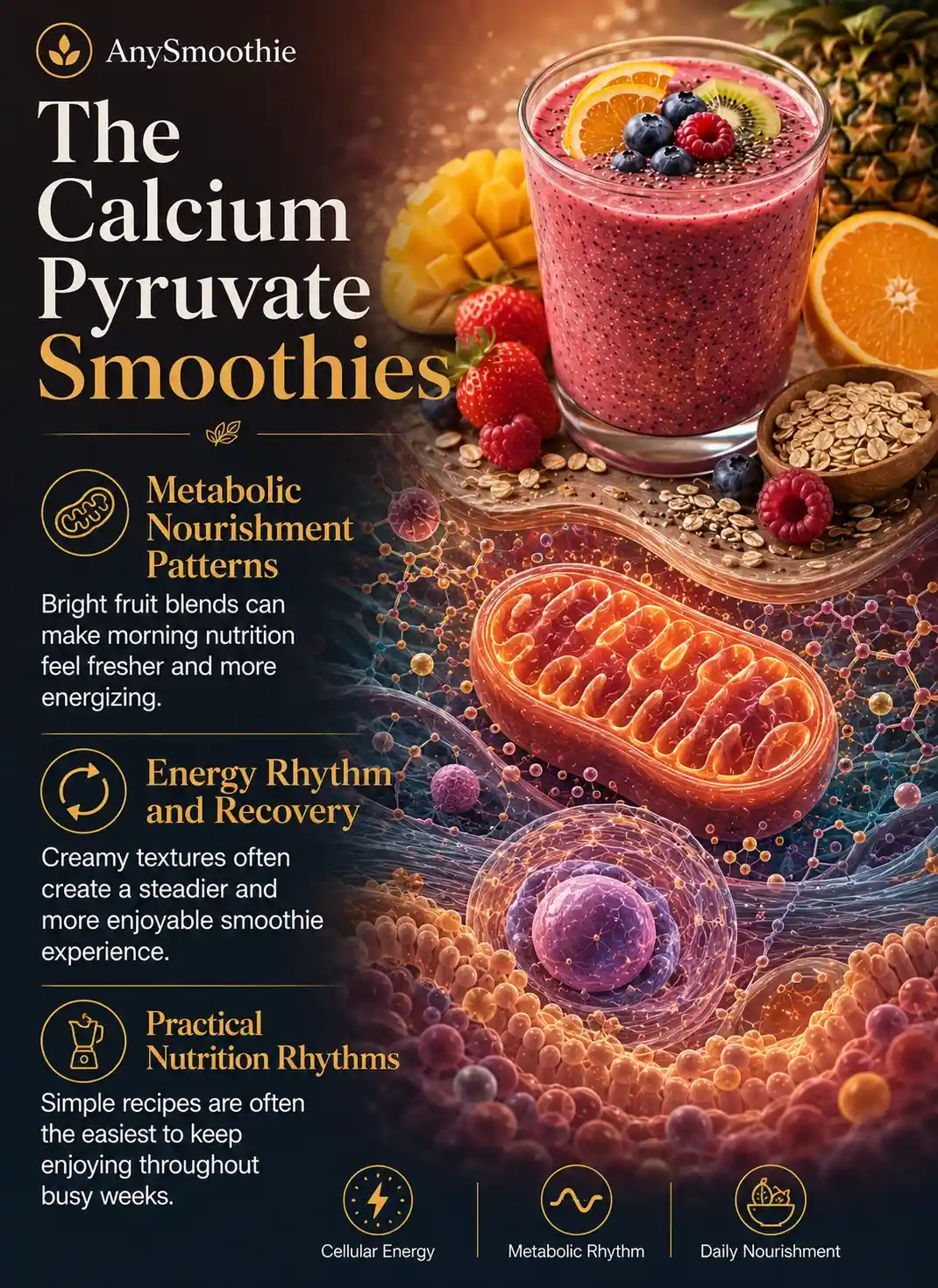
What to blend with calcium pyruvate for better daily support
A good smoothie supports texture, flavor, and nutrient balance at the same time. The best add-ins keep the drink pleasant enough to drink often.
| Whole Food Ingredient | Nutritional Focus | Daily Wellness Context | Flavor Profile | Typical Use |
|---|---|---|---|---|
| Banana | Carbs, potassium, creaminess | Morning fuel or post-activity support | Sweet, mild | Base fruit |
| Mixed berries | Fiber, vitamin C, polyphenols | Light daily antioxidant support | Tart, bright | Flavor boost |
| Greek yogurt or kefir | Protein, calcium, probiotics | Helps make the smoothie more filling | Tangy, creamy | Protein base |
| Spinach | Folate, magnesium, greens | Easy way to add micronutrients | Mild, earthy | Green add-in |
| Oats | Carbs, fiber | Good for a steadier breakfast | Neutral, thickening | Smoother texture |
| Chia or flax | Fiber, fat, omega-3s | Helps slow digestion and improve fullness | Nutty, subtle | Small add-in |
| Cacao | Polyphenols, flavor depth | Works well in a richer routine | Bitter, chocolate-like | Flavor finish |
Banana and oats add body. Berries keep the flavor bright. Yogurt or kefir adds protein, while spinach disappears into the background. Chia, flax, and cacao make the smoothie feel more complete without making it heavy.
Balance matters more than piling in every ingredient at once.
Ingredients that help balance flavor, texture, and nutrients
Pair calcium pyruvate with carbs if you want a smoother taste and better texture. Add protein if you want the smoothie to hold you longer. Then use fats and fiber in small amounts so the drink stays easy to digest.
Berries, greens, and cacao bring color and plant compounds. Meanwhile, yogurt, kefir, or nut butter can round out the mouthfeel. A small, well-built blend often works better than a crowded one.
When to keep it simple and when to build a fuller blend
A lighter smoothie fits well in the morning. Fruit, yogurt, and one green are often enough.
After activity, or as a snack that needs staying power, add oats, chia, or nut butter. Less can be more when you want a habit that feels easy, not complicated.
3 Calcium pyruvate support smoothies
How to use calcium pyruvate smoothies safely and consistently
Start with the serving size on the label, then see how your body responds. If you’re pregnant, nursing, managing a condition, or taking medication, talk with a qualified professional first.
A smoothie routine works best when it fits the rest of the day. Sleep, hydration, and regular meals all matter too. A simple blend you can repeat is easier to keep than a perfect recipe you never make twice.
Conclusion
Calcium pyruvate smoothies can be a practical way to support everyday energy metabolism without adding friction to your morning. They work best when you keep the blend balanced, with carbs, protein, and a few whole-food extras that fit your taste.
Fruit, yogurt, greens, oats, seeds, and cacao each play a useful role. Keep the recipe simple, then adjust it until it feels easy to drink often. Try one of these blends, then make it your own.
🛡️ Safety Notes & Dietary Interactions
- Pyruvate Availability and Mitochondrial Energy Flow: Calcium pyruvate provides a supplemental form of pyruvate, a molecule that naturally sits at a key junction in cellular energy metabolism. Within normal physiological conditions, pyruvate can move toward mitochondrial pathways associated with aerobic energy production, making it a common topic in discussions surrounding metabolic efficiency and energy-supportive nutrition routines.
- Balanced Macronutrients and Nutrient Partitioning Support: Smoothies built around calcium pyruvate work best when carbohydrates, protein, and fiber are present together. Ingredients such as berries, yogurt, kefir, oats, chia, and banana help create a steadier nutrient-delivery profile that may support more stable energy patterns than relying on carbohydrates alone.
- Fiber Density and Digestive Comfort Dynamics: Oats, chia seeds, flax, berries, and greens contribute soluble and insoluble fibers that help slow digestion and improve satiety. Gradually increasing fiber intake while maintaining hydration may support smoother digestive comfort and help the smoothie function more like a balanced meal than a quick snack.
- Routine Consistency and Recovery Rhythm Integration: The article repeatedly emphasizes that calcium pyruvate smoothies work best as part of a broader wellness routine that includes hydration, sleep, movement, and balanced meals. A simple recipe used consistently often supports better long-term adherence than a highly complex formula that becomes difficult to maintain.
FAQ
What is calcium pyruvate and why is it linked to the Krebs cycle?
Calcium pyruvate is a supplemental form of pyruvate, a compound naturally produced during glucose metabolism. After carbohydrates are broken down, pyruvate sits at an important metabolic crossroads and may enter mitochondrial pathways associated with the Krebs cycle when oxygen is available. This central role in energy metabolism explains why it is frequently discussed in energy-support nutrition routines.
Why are smoothies considered a good way to use calcium pyruvate?
Smoothies provide an easy way to combine calcium pyruvate with protein, fiber, healthy fats, and nutrient-dense carbohydrates in a single meal. They also help mask supplement taste while creating a more balanced nutritional structure. The article emphasizes that convenience and repeatability are major reasons smoothies fit well into daily wellness habits.
Why do banana, berries, and yogurt appear so often in calcium pyruvate recipes?
Each ingredient serves a practical role. Bananas provide natural sweetness and creaminess, berries contribute fiber and polyphenols, while yogurt or kefir adds protein and texture. Together, they help create a smoothie that feels balanced, satisfying, and easy to consume regularly without becoming overly heavy or excessively sweet.
How can someone make a calcium pyruvate smoothie more filling?
Adding oats, chia seeds, flax, nut butter, or extra protein is the simplest way to increase satiety. These ingredients slow digestion and create a thicker texture while supporting steadier energy release. The article suggests using these additions particularly after exercise or when the smoothie is intended to function as a more substantial meal replacement.
Why does the article focus more on consistency than on optimization?
The central theme is that sustainable habits matter more than chasing perfect ingredient combinations. A straightforward smoothie containing balanced carbohydrates, protein, fiber, and whole-food ingredients is easier to repeat regularly. Over time, consistency with simple nutrition habits tends to provide more practical value than constantly changing recipes or adding unnecessary complexity.

Medical Disclaimer: AnySmoothie content is for educational purposes only and is not a substitute for professional medical advice. Consult a healthcare provider for personalized guidance. See our full Disclaimer & Terms of Use. AI Transparency: AnySmoothie may use AI to support content development. All content undergoes human editorial review for accuracy, clarity, and editorial quality. See our full AI Transparency.