
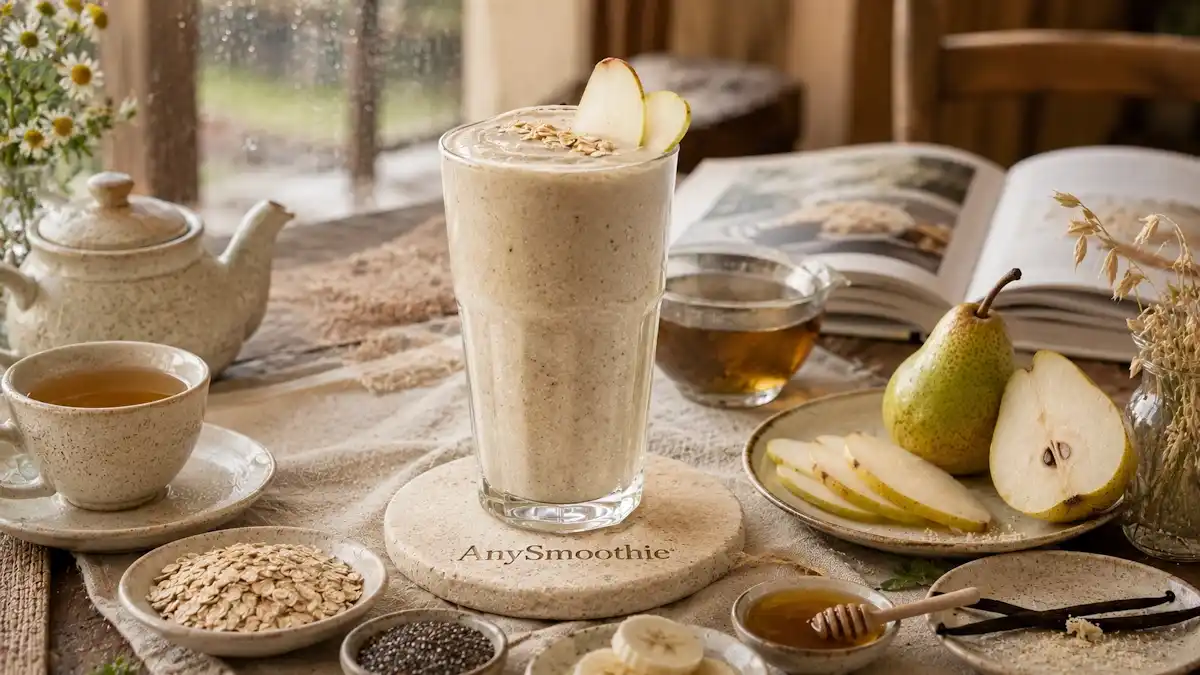
GI barrier maintenance is about keeping the gut lining calm, hydrated, and less irritated by rough meals. A slippery elm smoothie for GI barrier maintenance fits that idea because slippery elm brings mucilage, a gel-forming fiber that can coat and soften the drink.
That does not make it a cure, and it should not replace care for ongoing symptoms. It does give you a simple food-based way to make a smoothie feel gentler, so the recipes below stay mild, practical, and easy to adjust.
What slippery elm does in a smoothie and why the texture matters
Slippery elm powder changes fast once it meets liquid. It absorbs water, thickens, and turns the smoothie into something closer to a soft gel than a thin drink.
That texture matters because a smoother, less aggressive drink is often easier to sip slowly. A brief NCBI Bookshelf overview of slippery elm notes that its effects appear tied to mucous and saliva stimulation, which fits the classic coating feel many people look for in a gentle gut routine.
Low-irritation ingredients tend to work best here. Hard seeds, sharp citrus, and gritty powders can fight against the whole point of the drink.
The role of mucilage in supporting the gut lining
Mucilage is a slippery plant fiber that swells with water. In plain terms, it becomes a soft, smooth layer in the glass and on the way down.
That matters because the smoothie feels more cushioned and less harsh. The drink can move through the mouth and throat with less friction, and that same texture is why many people use slippery elm in calm, simple recipes.
Why a blended drink can be easier on sensitive digestion
Blended drinks give you control over thickness, temperature, and sweetness. A cool smoothie with a mild flavor often feels easier than a heavy meal or a sharp juice.
Smaller servings can help too. Some people do better with half a glass, then a slow sip over several minutes. A Health.com review of slippery elm also keeps the evidence in perspective, which is the right mindset here.
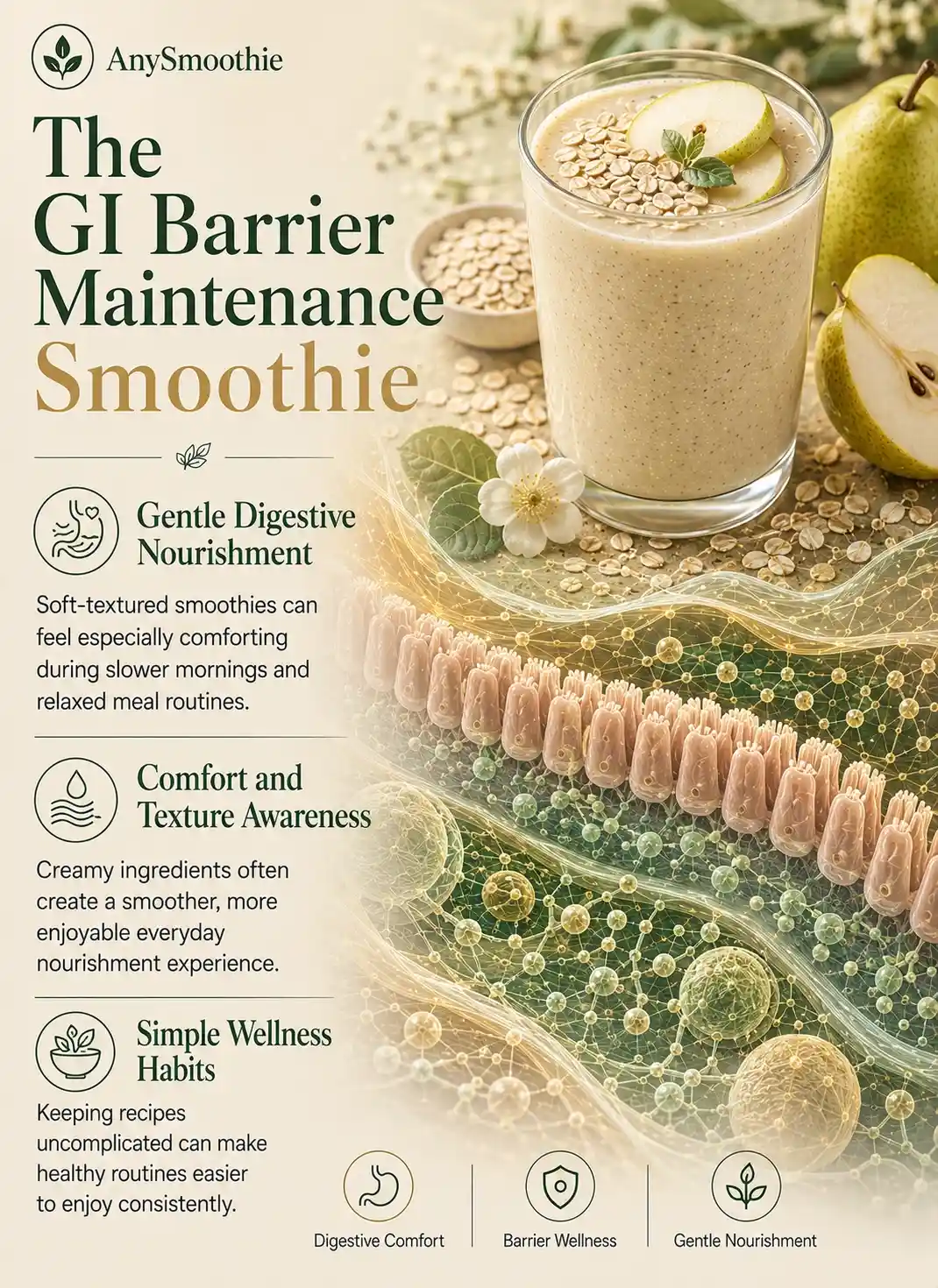
How to build a gut-friendly smoothie without overdoing it
A good base keeps the smoothie creamy, mild, and not too dense. Start with one liquid, one soft fruit, one small fat source, and slippery elm powder.
| Ingredient | Role | GI barrier support angle | Texture effect | Cautions |
|---|---|---|---|---|
| Slippery elm powder | Main gel-former | Adds a soft coating feel | Thickens fast | Too much can turn gummy |
| Banana | Mild fruit base | Soft, low-sharp sweetness | Creamy and smooth | Very ripe bananas raise sugar |
| Oats | Gentle starch | Adds steady body | Makes it fuller | Too much can feel heavy |
| Coconut milk | Fat source | Softens sharp flavors | Silky, rich texture | Can feel rich in large amounts |
| Yogurt or kefir | Protein and tang | Makes the drink more filling | Creamy and smooth | Skip if dairy bothers you |
The simplest smoothie is often the easiest one to tolerate.
A few common mistakes can turn a calm drink into a rough one. Too much fiber at once can make the texture heavy. Very acidic fruit can feel sharp. Sugar-heavy juice can make the blend taste bright but sit badly.
Best ingredients to pair with slippery elm
Banana is a strong first choice because it blends into a soft base and adds mild sweetness. Oats give the drink more body, while a spoonful of almond butter adds fat and makes it feel more steady.
If you tolerate dairy, plain yogurt or kefir can add creaminess and a little protein. Coconut milk gives a silky finish, and a small amount of chia can work when you want extra thickness without much flavor. Keep each add-in modest so the slippery elm still does its job.
Ingredients to limit if your stomach gets irritated easily
- Citrus overload can make the smoothie taste bright, but it often feels too sharp for sensitive digestion.
- Spicy add-ins, such as cayenne or hot ginger shots, can overpower the gentle texture.
- Large handfuls of raw greens can make the drink gritty and harder to tolerate.
- Big scoops of protein powder can push the smoothie into a chalky, heavy place.
- High-sugar juices can make the mix taste easy, yet they often work against a calmer routine.
3 Slippery elm smoothie recipes for GI barrier maintenance
Each recipe stays simple and uses a mild flavor profile. If the powder thickens the smoothie too much, add a splash of liquid and blend again.
When to drink it, how much to use, and who should be careful
Start small. Half a smoothie is enough for the first try, especially if you are new to slippery elm.
Sip slowly and watch how the texture feels. Consistency matters more than large servings, and a steady routine usually tells you more than one big glass.
Simple serving tips for first-time users
Use a low dose first, then adjust after a few tries. If the smoothie feels too thick, add more milk or water. If it feels too thin, let it rest for a minute before drinking.
Important cautions, including medication timing
Slippery elm can affect how some oral medications or supplements absorb if you take them too close together, so spacing matters. People who are pregnant, nursing, taking medication, or dealing with ongoing GI symptoms should check with a qualified professional before using it regularly. An eMPR overview of slippery elm also points to its GI use, which makes timing and tolerance worth paying attention to.
Conclusion
A slippery elm smoothie can be a calm, useful tool for GI barrier maintenance when you keep it simple. The best versions use a gentle texture, mild fruit, and just enough fat or protein to stay balanced.
That makes the drink easier to sip and easier to repeat. Try one recipe, notice how it feels, then adjust the thickness, sweetness, and serving size to match your tolerance.
🛡️ Safety Notes & Dietary Interactions
- Mucilage Formation and Gastrointestinal Comfort Dynamics: Slippery elm contains mucilage, a gel-forming fiber that rapidly absorbs water and creates a softer, thicker texture when blended. This texture is one reason slippery elm is commonly included in gentle digestive wellness routines, as it may help create a smoother drinking experience compared to rougher or highly acidic smoothie formulations.
- Texture Balance and Digestive Tolerance Support: The article emphasizes moderation when using slippery elm powder because excessive amounts can make a smoothie overly thick or gummy. Pairing slippery elm with mild ingredients such as banana, oats, pear, almond milk, coconut milk, or yogurt often creates a more balanced consistency that remains easy to sip and tolerate.
- Low-Irritation Ingredient Selection and GI Rhythm Maintenance: Gentler ingredients generally fit the theme of GI barrier maintenance better than highly acidic fruits, spicy additions, or large amounts of raw greens. Keeping the ingredient list simple may help support a calmer digestive experience while avoiding unnecessary texture or flavor overload.
- Medication Timing and Absorption Considerations: Because slippery elm forms a mucilaginous gel when hydrated, it may influence the absorption timing of certain oral medications or supplements. The article recommends paying attention to spacing and encourages individuals who are pregnant, nursing, taking medication, or managing ongoing digestive concerns to consult a qualified healthcare professional before regular use.
FAQ
What is slippery elm and why is it used in GI-friendly smoothies?
Slippery elm is a tree bark ingredient that contains mucilage, a fiber that forms a soft gel when mixed with liquid. In smoothie recipes, it is primarily valued for the way it changes texture, creating a thicker and smoother drink that many people find easier to sip slowly as part of a gentle digestive wellness routine.
Why does texture matter so much in a GI barrier maintenance smoothie?
The article repeatedly emphasizes that texture influences how the smoothie feels during consumption. Thick, smooth, and mild blends often feel gentler than highly acidic, gritty, or aggressively flavored drinks. Slippery elm, banana, oats, coconut milk, and yogurt all contribute to a softer texture that aligns with the goal of creating a calmer digestive experience.
Which ingredients pair best with slippery elm powder?
Banana, oats, almond butter, pear, coconut milk, yogurt, kefir, and mild plant-based milks are highlighted as practical companions because they complement the gel-forming properties of slippery elm without overwhelming the blend. These ingredients also help provide creaminess, mild flavor, and a more balanced nutritional profile.
What ingredients should be limited in a slippery elm smoothie?
The article suggests being cautious with excessive citrus, spicy ingredients, large amounts of raw greens, oversized servings of protein powder, and high-sugar juices. These additions can make the smoothie feel sharper, heavier, grittier, or more difficult to tolerate, which may work against the goal of creating a gentle and easy-to-drink recipe.
How should someone start using slippery elm smoothies for the first time?
A gradual approach is recommended. The article suggests beginning with a smaller serving and a modest amount of slippery elm powder rather than making a large, heavily fortified smoothie immediately. Paying attention to thickness, tolerance, and overall comfort can help guide future adjustments while keeping the routine simple and sustainable.

Medical Disclaimer: AnySmoothie content is for educational purposes only and is not a substitute for professional medical advice. Consult a healthcare provider for personalized guidance. See our full Disclaimer & Terms of Use. AI Transparency: AnySmoothie may use AI to support content development. All content undergoes human editorial review for accuracy, clarity, and editorial quality. See our full AI Transparency.