
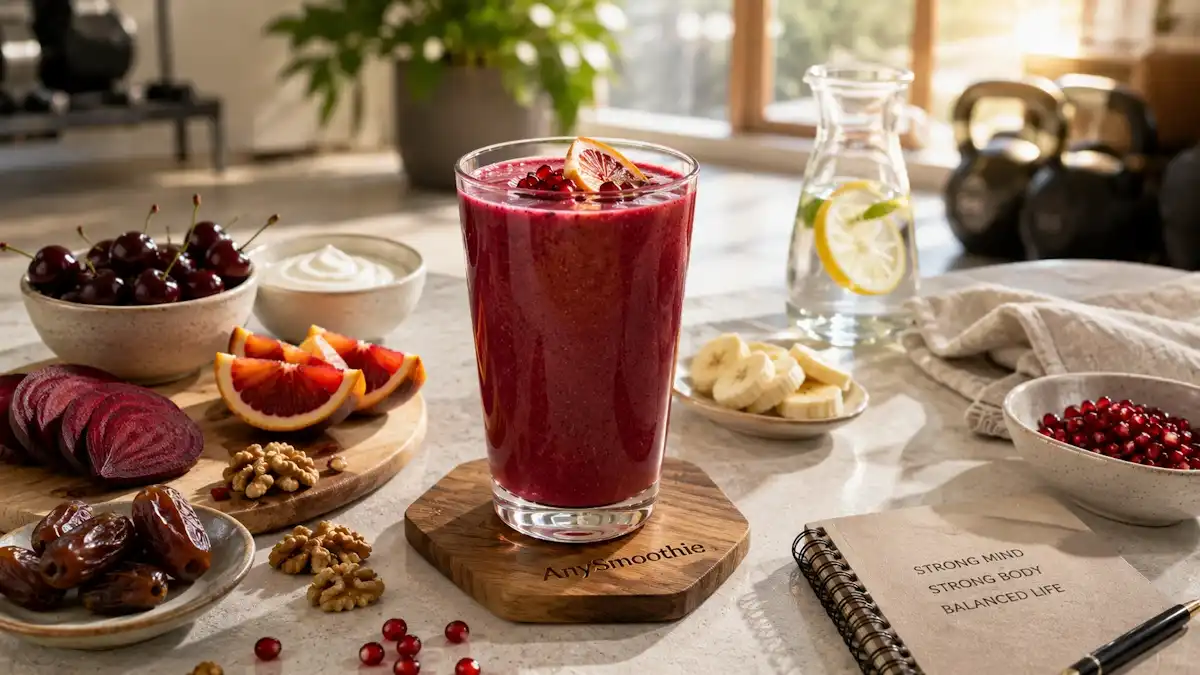
Creatine smoothies and ATP production fit together better than most people expect. A smoothie gives you an easy way to take creatine, and ATP gives your cells the quick energy they use for movement, exercise, and daily work.
That makes this a practical topic, not a flashy one. The goal here is simple: understand how creatine supports ATP recycling, then use that knowledge to build a smoothie habit you can actually keep.
What ATP does, and why creatine matters
ATP is the cell’s spendable energy. Your muscles use it when you stand up, lift a bag, climb stairs, or push through a hard set.
The body burns through ATP fast, then remakes it just as fast. That cycle never stops. During intense work, the demand rises, and the recycle step matters more. Cleveland Clinic’s creatine guide keeps this idea simple, since creatine helps maintain a steady energy supply during exercise.
ATP in plain English: your cell’s fast energy source
ATP is the molecule cells spend for quick jobs. It gets broken down, used, and rebuilt again and again.
That matters most during training, because bursts of effort need fast energy. A sprint, a heavy set, or a quick change of direction all drain ATP fast. The body keeps rebuilding it, so the system stays ready for the next effort.
How creatine helps refill ATP during high-demand moments
Creatine supports the phosphocreatine system. That system helps rebuild ATP when the body needs energy right away.
A review on skeletal muscle ATP production also discusses creatine’s role in fast muscle fibers, which are active during short, intense efforts. That doesn’t change the basics. It means creatine fits the part of the energy system that works under pressure.
ATP runs out fast during hard effort, so the recycling step matters more than most people expect.
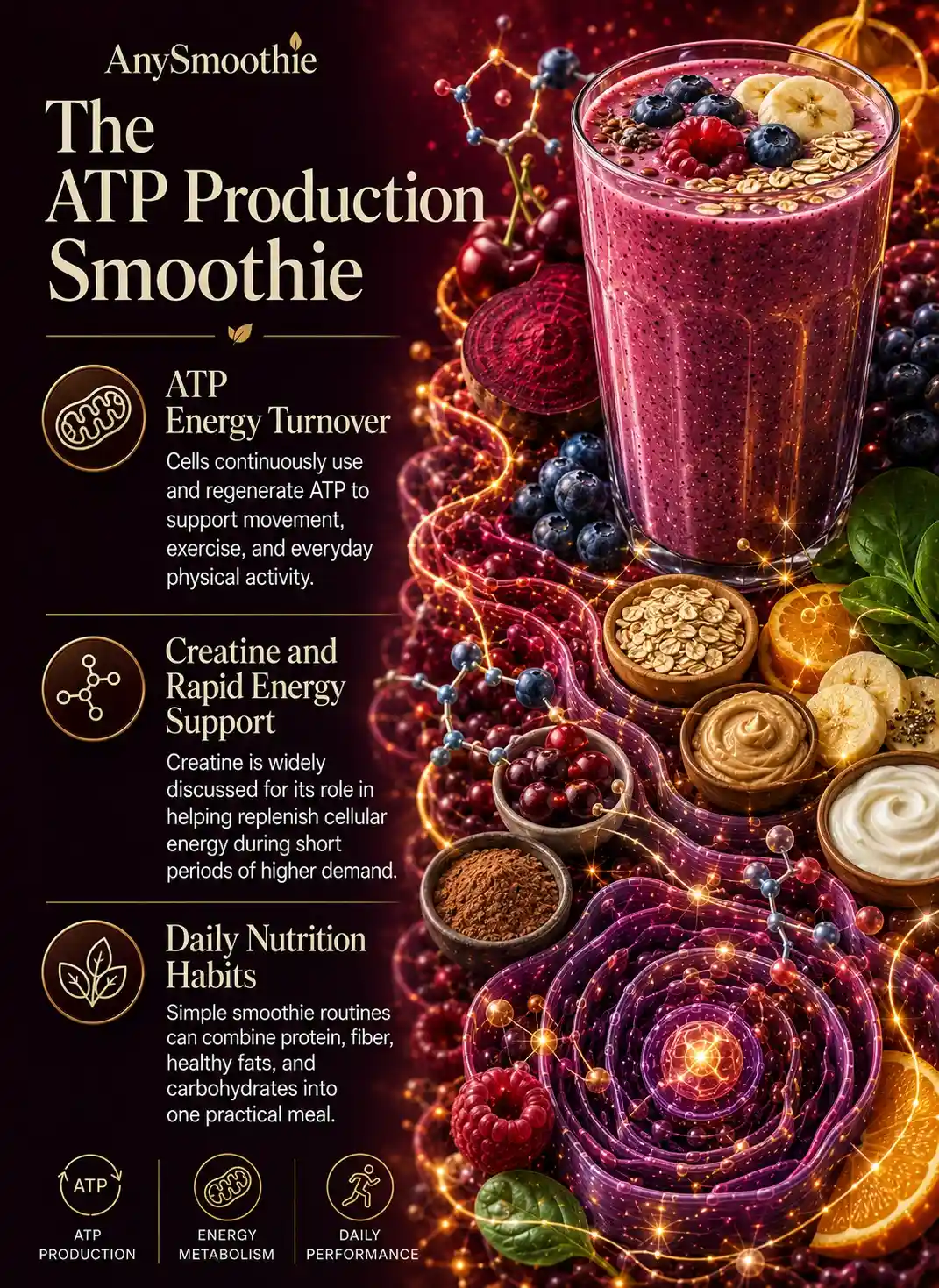
Why creatine smoothies are an easy way to support daily energy routines
Smoothies make creatine easier to use. They hide the texture, taste better than plain water for many people, and fit into routines that already exist.
That matters because consistency beats perfect timing for most people. If a smoothie is part of breakfast or a post-workout habit, creatine becomes one more easy step instead of another chore.
These base options change the feel of the drink more than the creatine itself.
| Option | Best time | Mixing support | Taste | Notes |
|---|---|---|---|---|
| Water | Any time | Very light | Neutral | Best for a thin, quick mix |
| Milk | Morning or post-workout | Creamy and smooth | Rich | Adds protein and carbs |
| Greek yogurt | Post-workout or snack time | Thick texture | Tangy | More filling and spoonable |
| Kefir | Any time | Thin but creamy | Tart | Easy to drink with fruit |
| Oat milk | Morning or between meals | Mild and smooth | Slightly sweet | Good dairy-free base |
The pattern is clear, lighter bases keep the drink simple, while dairy or yogurt make it more filling. A PMC paper on creatine and cell ATP also reports higher ATP levels in one cell type after creatine use, which helps explain why creatine stays popular in training routines.
What to mix with creatine for better smoothie texture and balance
Fruit improves taste and gives the smoothie a softer finish. Banana, berries, pineapple, and mango all work well.
Yogurt or milk adds protein and a thicker feel. Oats help if you want more body. Nut butter makes the drink richer, while greens like spinach disappear fast when fruit is strong enough. Kefir adds tang and blends smoothly with berries.
Creatine timing, serving size, and everyday use
Many people take creatine every day, not only around workouts. A smoothie helps because it ties the habit to something routine.
Serving sizes depend on the product, so label directions matter. A common daily amount is around 3 to 5 grams, but the main point is regular use and easy mixing. If you pair creatine with carbs, protein, or both, the smoothie also feels more like a meal.
3 Creatine smoothies for ATP production
How to make your smoothie work better for creatine support
Start with the liquid, then add fruit and creatine. Blend long enough to remove grit, because texture matters more than extra ingredients.
Water gives the lightest finish. Milk, alt milks, and yogurt make the smoothie fuller. Fruit helps flavor, and that makes the habit easier to repeat.
Best liquids, fruits, and add-ins for mixing creatine
Milk or yogurt gives a creamier drink. Oat milk or almond milk keeps it lighter. Banana smooths the texture, berries add flavor, and pineapple or mango can mask greens well.
Common mistakes that make creatine smoothies less pleasant
Too many dry powders can make the drink chalky. Too much frozen fruit can leave chunks behind. Skipping a regular routine also makes the habit harder to keep.
A good smoothie doesn’t need a long ingredient list. It needs to taste fine, blend well, and fit your day.
Conclusion
Creatine smoothies are a practical way to support ATP production and keep your routine simple. Creatine helps with the recycling side of the energy system, while a smoothie makes daily use easier to repeat.
Pick one recipe, keep the ingredient list short, and adjust the flavor until it fits your taste. The best routine is the one you can use again tomorrow.
🛡️ Safety Notes & Dietary Interactions
- Follow Product Directions: Creatine serving sizes vary by product and formulation. Always follow the manufacturer’s instructions and use the recommended serving amount rather than estimating or exceeding the suggested dose.
- Hydration Still Matters: Creatine works best as part of a routine that includes adequate fluid intake. Smoothies can contribute to hydration, but they should not replace regular water consumption throughout the day.
- Consider Medical Conditions: People with kidney disease, other significant medical conditions, or those taking prescription medications should consult a qualified healthcare professional before starting creatine supplementation.
- Watch Added Sugars: A creatine smoothie can become a dessert quickly if large amounts of juice, syrups, sweetened yogurt, or multiple fruits are added. Keeping the recipe balanced with protein and fiber often creates a steadier nutritional profile.
FAQ
What is ATP and why is it important?
ATP (adenosine triphosphate) is the primary energy molecule used by cells. It powers muscle contractions, movement, cellular repair processes, and countless everyday functions. Because ATP is constantly used and recycled, the body needs efficient systems to regenerate it continuously.
How does creatine help support ATP production?
Creatine helps replenish ATP through the phosphocreatine system. During short bursts of intense activity, phosphocreatine donates phosphate groups that help rapidly regenerate ATP. This makes creatine particularly relevant during strength training, sprinting, and other high-intensity efforts.
Is it better to take creatine in a smoothie or with water?
Both methods can work effectively. A smoothie may improve taste, provide additional nutrients, and make daily supplementation easier to remember. Water offers a lighter option, while smoothies can combine creatine with protein, carbohydrates, fiber, and healthy fats in a single serving.
When is the best time to drink a creatine smoothie?
Consistency generally matters more than exact timing. Many people use creatine smoothies at breakfast, after workouts, or as part of a regular daily routine. The most effective schedule is usually the one that fits naturally into your lifestyle and is easy to maintain.
Which ingredients work best in a creatine smoothie?
Bananas, berries, pineapple, Greek yogurt, kefir, milk, plant-based milks, oats, nut butters, and leafy greens are popular choices. These ingredients help improve flavor, texture, and nutritional balance while making the smoothie more enjoyable and easier to consume regularly.

Medical Disclaimer: AnySmoothie content is for educational purposes only and is not a substitute for professional medical advice. Consult a healthcare provider for personalized guidance. See our full Disclaimer & Terms of Use. AI Transparency: AnySmoothie may use AI to support content development. All content undergoes human editorial review for accuracy, clarity, and editorial quality. See our full AI Transparency.