
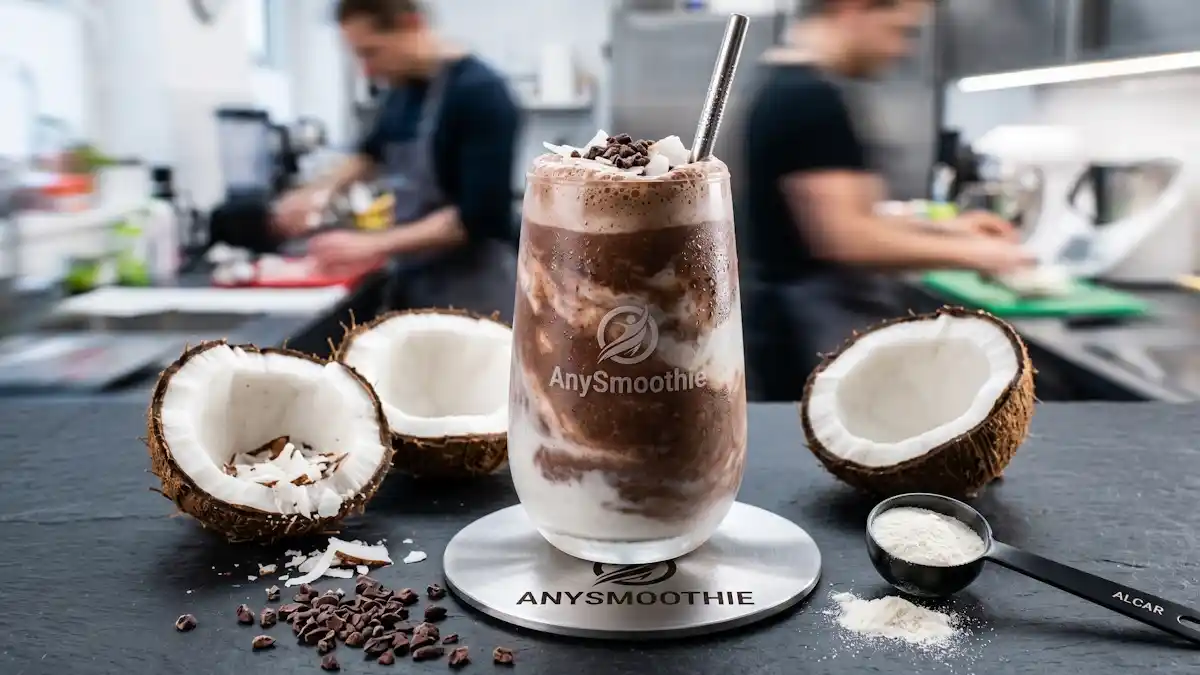
An acetyl-L-carnitine smoothie for fatty acid transport makes sense when you want a simple routine, not another dry capsule. ALCAR helps move long-chain fatty acids toward the mitochondria, and a smoothie gives you a clean way to pair it with fats, fiber, and flavor.
That matters if you care about metabolic efficiency, morning focus, or a low-sugar drink that still feels useful. It also gives you more control over texture and timing, which helps when you want a supplement to fit your day instead of running it.
The Mitochondrial Gateway: ALCAR and the Carnitine Shuttle
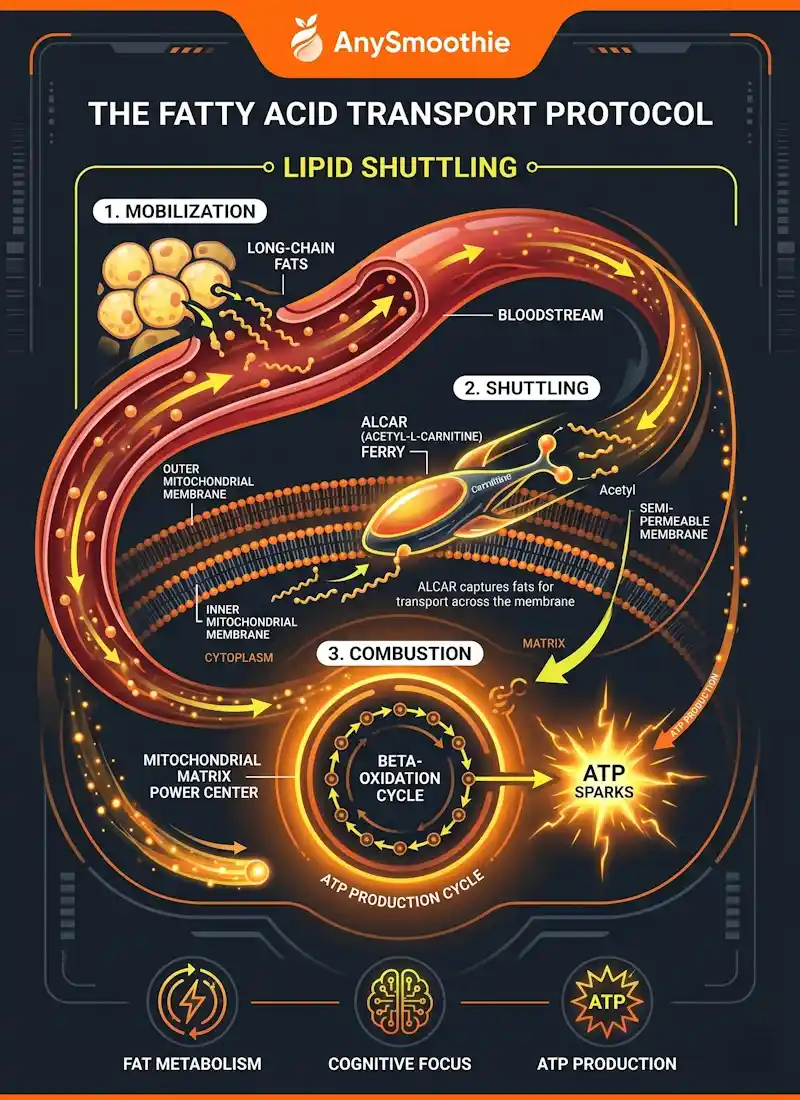
Fatty acids are valuable fuel, but long-chain ones cannot cross into the mitochondria on their own. Carnitine helps with that handoff, carrying fuel across the membrane so the cell can use it for energy. Without that step, the fuel stays outside the gate.
The NIH Office of Dietary Supplements has a clear carnitine fact sheet if you want the basic chemistry. ALCAR is popular because it supports that transport step and adds an acetyl group, which gives it a broader role than plain L-carnitine.
Beyond L-Carnitine: The Acetyl Group and Neural Energy Flux
Plain L-carnitine and ALCAR overlap, but ALCAR gets extra attention because of its acetyl group. That group can support acetylcholine-related pathways, which is one reason ALCAR shows up in brain-focused stacks. It gives the formula a second lane, not just a fuel lane.
A review on L-carnitine and acetyl-L-carnitine roles covers that split in more detail. For many people, that means ALCAR fits both energy support and mental work better than a basic carnitine form.
How Fatty Acids Get Moved Into the Mitochondria
Here is the simple shuttle:
- Fatty acids are activated inside the cell.
- Carnitine helps move long-chain fuel to the mitochondrial membrane.
- The fuel crosses over and can enter beta-oxidation.
That process matters during fasted training, lower-carb eating, or any plan that favors fat use as fuel. The shuttle is a handoff system, and ALCAR helps keep that handoff moving.
How ALCAR Compares With Other Carnitine Forms
The form matters. These three carnitines share a core structure, but their best uses differ.
| Form | Physiological Focus | Blood-Brain Barrier Permeability | Best Smoothie Pairing | Primary Metabolic Benefit |
|---|---|---|---|---|
| L-Carnitine Tartrate | Muscle recovery and exercise support | Low | Berry-protein or post-workout shakes | Supports fatty acid transport in active tissue |
| Acetyl-L-Carnitine (ALCAR) | Brain energy and mitochondrial support | Higher than the other two | Cocoa, MCT, or choline-friendly blends | Supports mitochondrial transport and acetylcholine synthesis |
| Propionyl-L-Carnitine | Peripheral circulation and tissue energy | Low to moderate | Citrus, berry, or lighter fruit blends | Supports energy use in peripheral tissues |
A 2021 review in PMC shows why the forms get used differently. ALCAR stands out when you want mitochondrial transport plus acetylcholine support in the same blend.
Which Form Works Best in a Smoothie and Why
ALCAR is the best fit for brain-plus-energy support. It mixes well with cocoa, cinnamon, or a choline-friendly add-in, and the taste is mild enough for a daily shake. It also dissolves cleanly in cold or room-temp liquid, which helps when you want a fast blend.
Tartrate fits muscle recovery better, while propionyl-L-carnitine lines up more with circulation support. If the goal is one smooth drink that can support both focus and fuel use, ALCAR is the cleanest choice.
3 “Translocation-Prime” ALCAR Support Smoothie Recipes
Lipid Translocation: Shuttling Long-Chain Fatty Acids for Fuel
When carbs are lower or training is hard, the body leans more on fat oxidation. Carnitine helps that shift by moving long-chain fatty acids into the mitochondria, where they can be used for fuel. A helpful overview of carnitine transport and fatty acid oxidation explains the transport step well.
That is why the smoothie matrix matters. ALCAR works better in a drink that supports the whole fuel pattern, not one packed with sugar. The better the blend matches your goal, the easier it is to keep the routine consistent.
Metabolic Switching: Facilitating the Transition to Fat Oxidation
A lighter smoothie helps here. Fat, fiber, and a modest liquid base keep the drink from turning into a sugar hit. That kind of blend supports nutrient partitioning because it gives ALCAR a better place in the mix and keeps digestion steady.
What to Blend With ALCAR for Better Metabolic Support
Build the smoothie around a fat base, some fiber, and a low-sugar liquid. Avocado, coconut milk, chia, flax, nut butter, and cocoa all fit that pattern. They slow digestion, improve texture, and make the drink more satisfying.
These ingredients make the blend feel complete, not watery:
- Avocado or nut butter for creaminess and steadier energy
- Chia or flax for fiber and thickness
- Cocoa, cinnamon, or vanilla for flavor without much sugar
- Spinach or cucumber for volume and a lighter finish
That mix improves nutrient partitioning because the drink digests slower and feels more stable. It also keeps the focus on metabolic efficiency, not on a sugar rush.
Use Timing and Dose Carefully for a Smoother Experience
Start small and watch how you feel. Many people use ALCAR in the morning, near training, or after a fast. Labels vary, so follow the product directions, and check with a qualified professional if you need a dose fit for your routine.
Conclusion
ALCAR works best when the smoothie matches the goal. It supports the carnitine shuttle, pairs well with fats and fiber, and fits a routine built around metabolic efficiency and brain energy support.
Pick the blend that matches your day, whether that means cacao and MCTs, berries and almond butter, or a lighter green mix. A simple formula often beats an overbuilt one.
🛡️ Safety Notes & Contraindications: Acetyl-L-carnitine smoothies
Thyroid suppression: carnitine can act as a peripheral antagonist of thyroid hormone action; individuals with hypothyroidism or those taking thyroid replacement therapy (e.g., Levothyroxine) should consult an endocrinologist before use.
Seizure threshold: some evidence suggests that carnitine may increase the frequency or severity of seizures in predisposed individuals; avoid if you have a history of epilepsy.
Warfarin interaction: carnitine may potentiate the effects of Acenocoumarol or Warfarin, increasing the risk of bleeding; monitor PT/INR levels closely if taking anticoagulants.
Digestive sensitivity: high doses of ALCAR can cause “fishy” body odor, nausea, or abdominal cramps; start with a minimal dose and ensure the smoothie contains fiber to slow absorption.
Insomnia risk: due to its ability to increase neural energy flux and acetylcholine synthesis, avoid consuming ALCAR smoothies in the late evening as it may interfere with sleep patterns.
FAQ
How does ALCAR facilitate the “Carnitine Shuttle” for fatty acid oxidation?
Long-chain fatty acids cannot passively cross the inner mitochondrial membrane to be used for fuel. Biochemically, Acetyl-L-Carnitine (ALCAR) supports the physiological systems of transport by facilitating the handoff of these fatty acids into the mitochondrial matrix. This “carnitine shuttle” is a rate-limiting step in beta-oxidation. Optimizing this natural pathway through ALCAR-rich smoothies ensures that the biochemical mechanics of fat-to-energy conversion remain efficient, supporting steady ATP production.
Why is the “Acetyl Group” in ALCAR significant for neural energy flux?
Unlike standard L-carnitine, ALCAR contains an acetyl group that allows it to cross the blood-brain barrier more effectively. Biochemically, this acetyl group can be donated for the synthesis of acetylcholine, a key neurotransmitter. Supporting this physiological system optimizes the natural pathways of cognitive energy and focus. This dual-action approach ensures that the biochemical mechanics of both mitochondrial fuel transport and neural signaling are supported within a single nutritional protocol.
How does ALCAR support “Metabolic Switching” during fasted states?
Metabolic switching refers to the body’s ability to transition from glucose utilization to fatty acid oxidation. Biochemically, ALCAR supports the physiological systems involved in this shift by ensuring the availability of carnitine for lipid translocation. Supporting this natural pathway through low-sugar, fat-paired smoothies facilitates a smoother transition into fat-burning states. This optimization ensures that the biochemical mechanics of energy production remain flexible and resilient during training or fasting windows.
What is the advantage of pairing ALCAR with healthy fats in a smoothie?
ALCAR supports the transport of long-chain fatty acids, so providing a lipid matrix—such as MCT oil or avocado—gives the shuttle immediate “cargo” to work with. Biochemically, this supports the physiological systems of nutrient partitioning by encouraging the body to utilize dietary and stored fats for energy rather than triggering a glucose spike. This synergy optimizes the natural pathways of metabolic efficiency, ensuring that the smoothie acts as a functional fuel source rather than just a meal replacement.
In what way does ALCAR influence Mitochondrial Priming and recovery?
By facilitating the removal of short-chain organic acids (metabolic byproducts) from the mitochondria, ALCAR helps maintain a clean internal environment for energy production. Biochemically, this reduces “mitochondrial drag” and supports the physiological systems of cellular repair. Optimizing this natural pathway through a consistent ALCAR routine facilitates long-term mitochondrial priming, ensuring that the biochemical mechanics of recovery are supported after physical or mental exertion.

Medical Disclaimer: AnySmoothie content is for educational purposes only and is not a substitute for professional medical advice. Consult a healthcare provider for personalized guidance. See our full Disclaimer & Terms of Use. AI Transparency: AnySmoothie may use AI to support content development. All content undergoes human editorial review for accuracy, clarity, and editorial quality. See our full AI Transparency.