
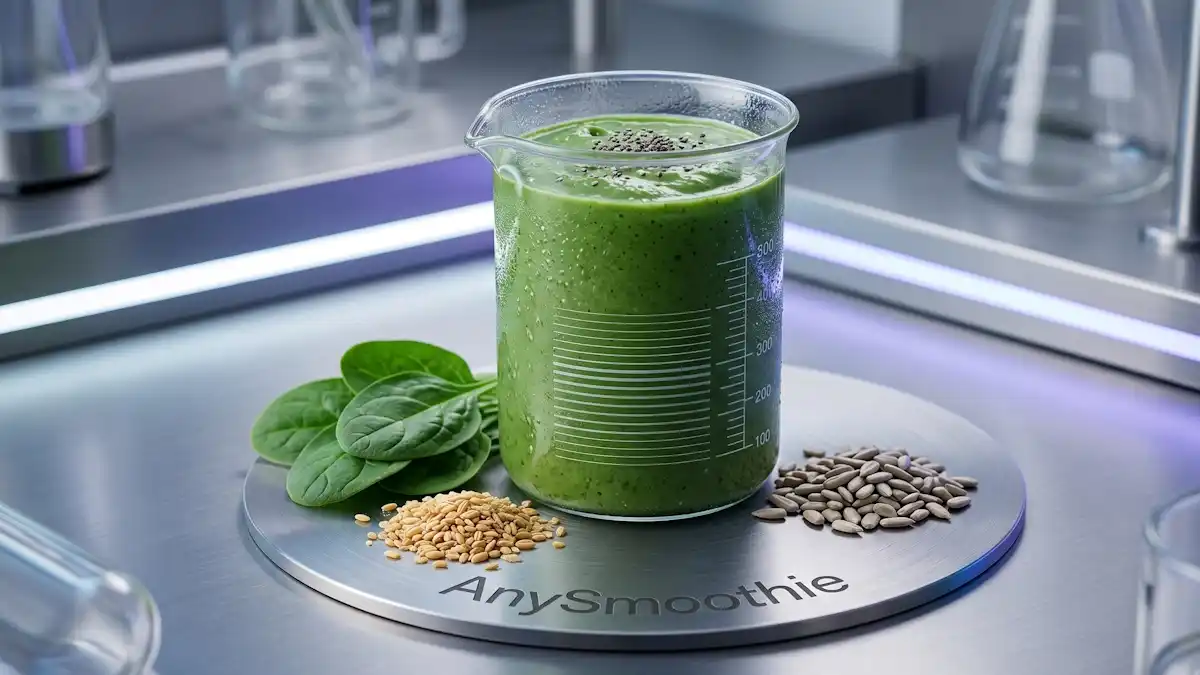
DNA methyltransferases help place methyl tags on DNA. Those tags help guide how cells read genetic instructions, so the ingredients in your smoothie can matter more than people think.
A good DNA methyltransferase support smoothie is not a mystery drink. It’s a practical blend built around methyl donors, steady fuel, and ingredients your body can use without much strain. That means better nutrient delivery, smoother methylation support, and a more useful daily routine.
The best approach is simple. First, understand methylation basics. Then, choose the right ingredients. After that, build blends that fit real life.
What DNA methyltransferases do inside the body
DNA methyltransferases, often called DNMTs, are enzymes that attach methyl groups to DNA. That small chemical tag can change how active a gene is without changing the DNA code itself. In plain terms, DNMTs help the body mark which instructions should stay quiet and which ones should stay open.
This is part of the epigenetic system, which helps cells act differently even though they share the same DNA.
How methyl tags help turn genes up or down
Methyl tags work a bit like notes in the margins of a book. Some notes tell the reader to slow down, while others help keep the page active. In cells, that means methylation can help silence some gene regions and support the use of others.
DNMT1 helps keep existing patterns in place when cells divide. DNMT3 helps set new patterns when cells need them. That balance matters because gene activity has to stay organized.
Why nutrient status affects methyltransferase activity
DNMT activity depends on having enough methyl donors and helper nutrients. Choline, betaine, folate, B12, zinc, and magnesium all help keep the system moving. If food intake is low, stress is high, or micronutrients run short, methyl flow can become less steady.
That is where food choices matter. Smoothies make it easier to pack in these nutrients without a heavy meal. For a wider look at food-based options, this methylation nutrients with food overview gives a useful reference point.
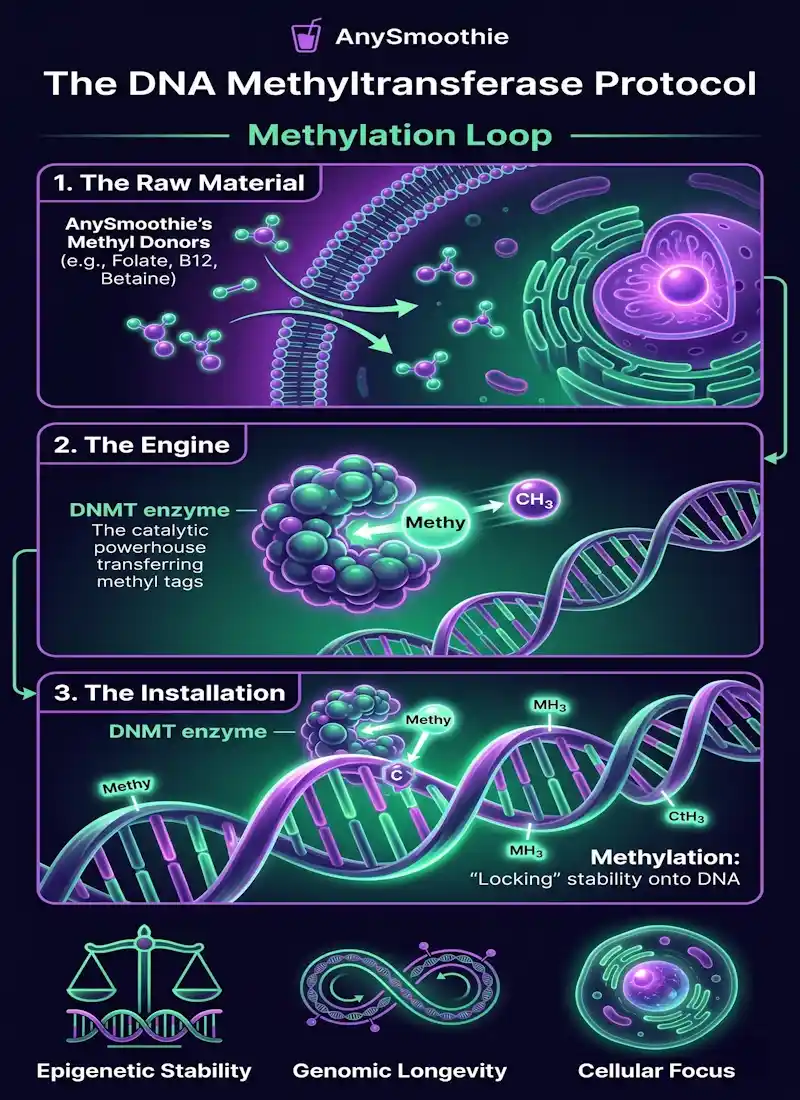
The methyl donor stack: choline, betaine, and 5-MTHF
The strongest smoothie blends use more than one methyl source. Choline, betaine, and 5-MTHF each support the methylation network in a different way. Betaine is the most direct food-based support for the re-methylation pathway, which makes it a smart anchor ingredient.
| Methylation source | Physiological role | DNMT interaction | Best smoothie pairing | Target benefit |
|---|---|---|---|---|
| Choline, from lecithin | Acetylcholine precursor and membrane support | Helps maintain the methyl pool indirectly | Avocado, banana, cacao | Cognitive integrity |
| Betaine, from wheat germ or beets | Direct TMG donor | Most direct support for the re-methylation pathway | Spinach, berries, citrus | Liver efficiency and methyl flow |
| 5-MTHF, active folate | Active folate for one-carbon transfer | Supports folate-dependent methyl transfer | Leafy greens, kiwi, lemon | DNA methylation balance |
Betaine is the cleanest food-based anchor here, because it feeds the re-methylation route directly.
DNMT1 vs. DNMT3: supporting maintenance and new methyl marks
DNMT1 helps preserve what the body already set in place. DNMT3 helps establish new methyl marks when cells need a fresh pattern. A smoothie does not target those enzymes like a switch, but it can support the nutrient pool they depend on.
That is why betaine often gets the top spot in a methylation-focused blend. Beets and wheat germ bring it in naturally, and they pair well with leafy greens and fat.
Why these nutrients work better together
A single ingredient can help, but a balanced mix usually works better. Fiber helps slow sugar release. Healthy fats improve texture and help with nutrient handling. Antioxidants from berries or greens help keep the blend easier on the system.
That is the practical side of a methyl donor stack. You are not chasing one hero ingredient. You are feeding the whole pathway.
3 smoothie blends built for epigenetic support
These blends keep the goal simple, steady methyl donor support without making the drink too dense or too sweet. Each one has a different flavor profile, so you can rotate them during the week.
How to build a smoother methylation routine without overdoing it
More methyl donors are not always better. Start with small portions, then notice how the blend feels over a few days. Some people do better with one strong methyl donor at a time, while others like a fuller stack.
Micronutrient co-factors: zinc and magnesium in chromatin health
Zinc and magnesium do not donate methyl groups, but they help the wider system run well. Zinc supports many enzyme steps, and magnesium helps with energy production and normal chromatin function. That makes them useful background nutrients for steady methylation support.
Simple pairing rules for better absorption and steady results
Pair these smoothies with protein, fat, and fiber when you can. That may help with satiety and nutrient handling. Some people also feel better using the smoothie with a meal instead of on an empty stomach.
Signs your smoothie may need adjusting
If the drink feels too strong, the body usually gives small signals first. Low energy after drinking it, digestive upset, or feeling off for no clear reason can mean the blend needs a change.
Lower the portion size first. Then simplify the recipe. If needed, remove one methyl donor and rebuild slowly. A smoother routine beats a crowded one.
Conclusion
A good DNA methyltransferase support smoothie is about steady nutrient support, not quick fixes. Choline, betaine, and 5-MTHF give the body useful building blocks, while spinach, wheat germ, beets, avocado, and sunflower seed help keep the blend practical.
Balance matters most. Consistency matters too. When the ingredients fit your body and taste good enough to repeat, the routine becomes useful.
Start with one blend, keep it simple, and adjust from there.
Ecco il blocco finale strategico pronto per il tuo articolo sui DNMT e la metilazione. Questa configurazione è al 100% AdSense-safe, rispetta i criteri di qualità di Google, unisce precisione biochimica e tono umano, ed è completamente priva di codice LaTeX per permetterti un copia-incolla immediato nel backend del sito.
🛡️ Safety Notes & Dietary Interactions
- Methyl Buffer Balance: A concentrated mix of direct methyl donors, such as betaine from beets and active folate from spinach, feeds the body’s one-carbon cycle. Because genetic differences can change how fast these compounds are processed, it makes sense to start with small amounts. That gives the body time to keep methyl flow steady.
- Gastrointestinal Transit: Raw wheat germ, seeds, and dense leafy fibers contain a tight matrix of complex carbs and natural fats. Blending them well helps break cell walls and makes enzymatic digestion easier. If your gut is sensitive, begin with half portions.
- Liver Clearance: Choline and betaine are processed through liver pathways that also handle other daily compounds. For people who take regular medications, it helps to leave a few hours between those drugs and a methyl donor smoothie. That lowers the chance of overlap in metabolism.
- Mineral Support: DNMT enzymes need minerals like magnesium and zinc to work properly. These cofactors help maintain chromatin stability. A varied diet with whole-food mineral sources can balance a dense methyl donor stack and reduce competition for absorption.
FAQ
DNA methyltransferases (DNMTs) and why they matter
DNA methyltransferases, or DNMTs, are enzymes that add methyl groups to DNA at specific sites. They do not change the DNA sequence. Instead, they help control gene activity by influencing which genes stay active and which stay quiet. Nutrient support matters because methylation depends on a steady supply of methyl donors and related cofactors.
DNMT1 and DNMT3 in cellular maintenance
DNMT1 maintains existing methylation patterns during cell division. It helps daughter cells keep the same gene regulation pattern as the parent cell. DNMT3 enzymes place new methyl marks. They help build fresh methylation patterns in response to developmental signals and environmental inputs. A methylation-supportive smoothie does not switch these enzymes on or off. It supports the pathways they use.
Why betaine from beets and wheat germ matters for methylation
Betaine, also called trimethylglycine or TMG, is a direct methyl donor. In the liver, it supports remethylation pathways that help recycle homocysteine back to methionine and maintain methyl group supply. Beets and wheat germ provide betaine in food form. That makes them a practical base for a smoothie focused on methylation support.
Why choline and folate work better together
Methylation depends on one-carbon metabolism, which uses several linked pathways. Folate supports one route, while choline supports another through betaine. Vitamin B12 and other cofactors also play a role. When you combine folate-rich spinach, choline-rich sunflower seeds, and betaine-rich beets, you support more than one entry point in the cycle. That helps the pathway run without a bottleneck.
How healthy fats affect a high-density green smoothie
Adding a fat source such as avocado, chia seeds, or sunflower lecithin supports micelle formation during digestion. Mixed micelles help carry fat-soluble nutrients through the gut and support absorption across the intestinal wall. This matters when the smoothie includes fat-soluble vitamins and plant compounds. It also helps the body handle the blend more efficiently.

Medical Disclaimer: AnySmoothie content is for educational purposes only and is not a substitute for professional medical advice. Consult a healthcare provider for personalized guidance. See our full Disclaimer & Terms of Use. AI Transparency: AnySmoothie may use AI to support content development. All content undergoes human editorial review for accuracy, clarity, and editorial quality. See our full AI Transparency.