
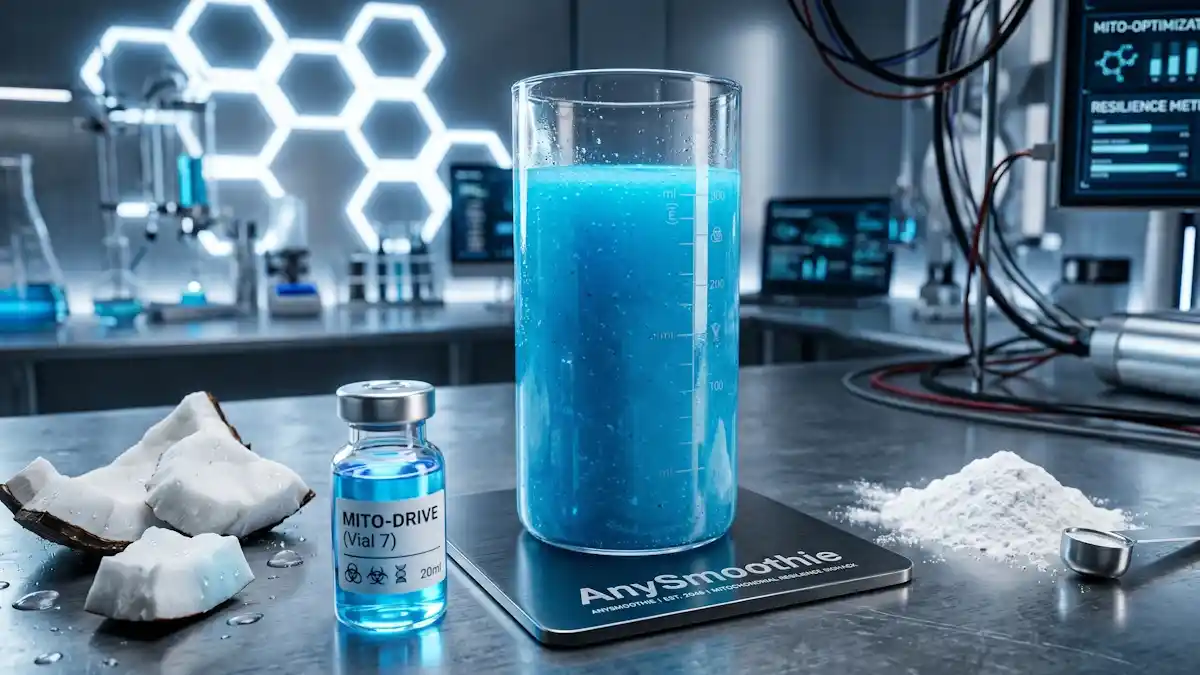
A methylene blue smoothie for mitochondrial redox support is a very specific tool, not a general wellness drink. The idea is simple: use a redox-active compound in a clean, low-sugar smoothie so cellular energy pathways stay supported without a big glucose spike.
People in biohacking circles like this approach because it fits a measured routine. The drink is built for mitochondrial priming, steady output, and careful timing. This article looks at how the concept works, how to mix it responsibly, and which ingredients fit best.
What Mitochondrial Redox Support Means in Plain Language
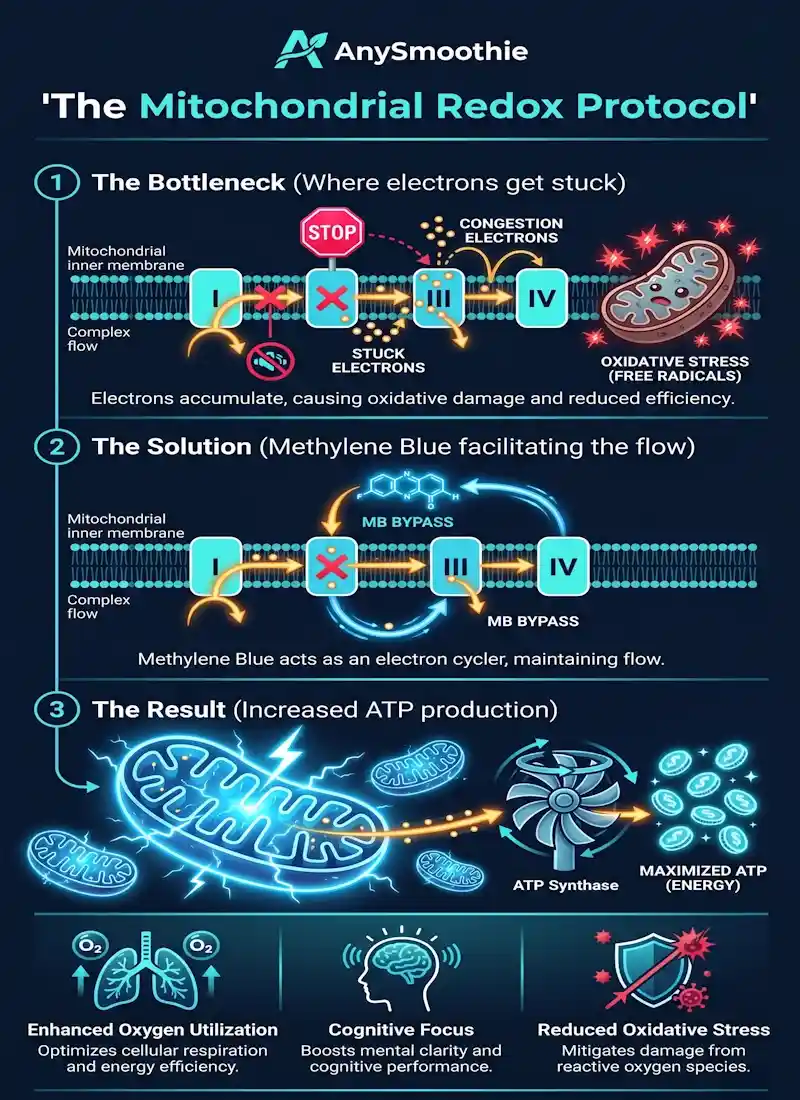
Redox balance is about electron movement. Inside cells, mitochondria move electrons through a chain of proteins to make ATP, the main energy currency. When that flow is smooth, cells can keep energy production more efficient. A useful overview of that process is laid out in a review of methylene blue and mitochondrial function.
This does not mean a smoothie will fix a health problem or act like a shortcut. It means the drink may fit a routine that supports natural energy pathways. Ingredient timing matters too. A smoothie that pairs the right fats, carbs, and cofactors can support nutrient partitioning better than one loaded with sugar.
How Electrons Move Through the Mitochondrial Chain
The electron transport chain uses Complex I through Complex IV, then oxygen helps finish the job. That flow builds the gradient that powers ATP production. When the chain runs well, energy feels smoother and less strained.
If electron flow gets sloppy, the cell may waste more energy and make more reactive byproducts. That can show up as sluggish output, especially during long work sessions or hard training.
Why Redox Balance Affects Energy, Focus, and Recovery
Healthy redox balance helps cells handle everyday stress while keeping output steady. People often notice the difference in concentration, workout recovery, and that heavy afternoon dip.
The point is not hype. The point is cellular efficiency. When energy production is steadier, the whole system feels less erratic.
Why Methylene Blue is Different From other Mitochondrial Support Compounds
Methylene blue is not a typical smoothie add-in. It is a redox-active compound that can act as an alternative electron carrier in mitochondria. In simple terms, it may help electrons move more cleanly when used in very small amounts and with care. A technical review in Cells explains its role as a catalytic redox cycler.
That makes it different from protein powder, greens, or adaptogens. Those ingredients supply nutrients. Methylene blue is used for electron handling. It belongs in the conversation with other mitochondrial supports, but it plays a different role.
| Physiological Mechanism | Cellular Target | Best Smoothie Pairing | Primary Bioenergetic Benefit |
|---|---|---|---|
| Methylene Blue | Electron transport chain | Low-sugar, clean base with light greens or coconut water | Alternative electron carrier, redox cycling, ATP support |
| CoQ10 | Mitochondrial membrane | Fat-containing smoothie with avocado or MCT oil | Carrier function and membrane energy support |
| PQQ | Mitochondrial signaling and DNA-related pathways | Berry or greens-based blend | Mitochondrial biogenesis support and antioxidant activity |
How Methylene Blue Compares With CoQ10 and PQQ
The table makes the roles easier to see. CoQ10 fits well in a fat-based smoothie because it pairs with lipids. PQQ fits a berry or greens blend because it matches a lighter, plant-rich formula. Methylene blue needs the most care, since the goal is a simple mix that supports redox flow without piling on extra variables.
How to Build a Methylene Blue Smoothie for Mitochondrial Redox Support
Keep the formula simple. A good smoothie here is low in sugar, easy to digest, and built for metabolic efficiency. That means fewer sweet fruits, cleaner liquids, and ingredients that do a job without crowding the mix.
Dose and compatibility matter. Methylene blue can interact with serotonergic drugs, and it also needs caution in pregnancy, kidney issues, and G6PD deficiency. For that reason, anyone with a health condition or medication use should check with a qualified professional before trying it. Standard safety references like StatPearls on methylene blue cover those risks clearly.
The Best Base Ingredients for Absorption and Stability
Start with coconut water, unsweetened almond milk, kefir if it fits your diet, or plain water. Lower sugar bases usually work better because they keep the drink light.
If you add fat-soluble cofactors like CoQ10, include a small amount of fat. Avocado or MCT oil is enough. The goal is a stable blend, not a thick dessert shake.
Ingredients That Pair Well with Redox Support
Some add-ins fit the goal better than others. Creatine supports energy buffering. Cacao adds flavor and magnesium. Spinach gives minerals without much sugar. Blueberries bring polyphenols. A little ginger or citrus can improve taste without pushing the sugar load too high.
General food patterns for mitochondrial support also point in the same direction, with leafy greens, healthy fats, and modest fruit. A practical food list from MitoQ lines up with that approach.
Ingredients to Avoid or Use Carefully
Very sweet fruit loads can work against the point of the drink. So can too much caffeine, since the goal is steady output, not a jittery spike. Strongly staining ingredients can also make cleanup annoying when methylene blue is involved.
Timing matters with other supplements too. If another product affects neurotransmitters or energy pathways, it may not belong in the same glass.
3 Simple Smoothie Formulas to Try
These are practical models, not fixed rules. Keep them small, simple, and consistent.
The “Azure-Energy” Coconut Water, Creatine, and Redox Blend
Ingredients
- 1 cup unsweetened coconut water
- 1/2 cup baby spinach
- 3–5 g creatine monohydrate
- Methylene blue only at a clinician-directed dose from a pharmaceutical-grade product
- 1/2 cup ice
This version is built for hydration, clean energy, and a light morning start.
Estimated Nutrition per Serving
- Calories: ~55 kcal
- Protein: ~2 g
- Carbohydrates: ~11 g
- Fat: ~0 g
- Fiber: ~1 g
- Sugars: ~9 g
Cacao, Avocado, and CoQ10 Smoothie For Fat-based Support
Ingredients
- 1 cup unsweetened almond milk
- 1/2 avocado
- 1 tablespoon unsweetened cacao powder
- CoQ10 according to the product’s labeled serving
- 1/2 cup ice
The fat helps the CoQ10 fit the mix, while cacao gives it a richer taste. This is a better choice when you want a slower, steadier feel.
Estimated Nutrition per Serving
- Calories: ~195 kcal
- Protein: ~5 g
- Carbohydrates: ~14 g
- Fat: ~16 g
- Fiber: ~9 g
- Sugars: ~2 g
I’d blend the avocado and almond milk first, then add the cacao and remaining ingredients. That gives this relatively simple combination a smoother, more uniform texture.
Berry, Spinach, and PQQ Blend for Cellular Renewal Support
Ingredients
- 1 cup blueberries
- 1 cup baby spinach
- 3/4 cup plain kefir
- PQQ according to the product’s labeled serving
- 1/4 cup cold water, as needed
- 1/2 cup ice, optional
The color is bright, the texture stays light, and the polyphenols fit a recovery-minded routine.
Estimated Nutrition per Serving
- Calories: ~210 kcal
- Protein: ~10 g
- Carbohydrates: ~34 g
- Fat: ~5 g
- Fiber: ~5 g
- Sugars: ~24 g
When a Redox Smoothie Makes Sense, and When it Does Not
This kind of smoothie fits best on days that call for focused work, training support, or a clean morning routine. It also works better when the rest of the diet is stable.
It does not fit everyone. If you take medication, are pregnant, or manage a health condition, the timing and compatibility need extra care. With methylene blue, less is usually the smarter starting point.
Conclusion
A methylene blue smoothie for mitochondrial redox support is about precision, not flash. The best version uses simple ingredients, low sugar, and careful timing so the formula supports natural energy pathways.
CoQ10 and PQQ can play useful roles too, but each one works differently. Clean bases, smart pairing, and cautious use matter more than a long ingredient list. When the recipe is built well, the result is a smoothie that fits real life and supports steady cellular energy.
🛡️ SAFETY NOTES: Methylene Blue & Redox Support
SEROTONIN SYNDROME RISK: Methylene Blue is a potent MAO-A inhibitor. It MUST NOT be used by anyone taking SSRIs, SNRIs, or MAOIs (common antidepressants or anti-anxiety medications). Combining these can lead to a fatal serotonin spike known as Serotonin Syndrome.
G6PD DEFICIENCY: Individuals with Glucose-6-Phosphate Dehydrogenase (G6PD) deficiency must strictly avoid Methylene Blue, as it can trigger acute hemolysis (destruction of red blood cells).
PHARMACOLOGICAL PURITY: Only use USP-grade (United States Pharmacopeia) or Pharmaceutical-grade Methylene Blue. Industrial or “aquarium-grade” products contain heavy metals (lead, arsenic, mercury) that are toxic and defeat the purpose of mitochondrial support.
PREGNANCY & BREASTFEEDING: Methylene Blue is contraindicated during pregnancy and lactation due to its potential for teratogenic effects and interference with neonatal oxygen transport.
RENAL & HEPATIC CLEARANCE: If you have compromised kidney or liver function, your body cannot effectively clear Methylene Blue. Consult a specialist, as even micro-doses can accumulate and cause oxidative stress rather than support.
FAQ
How does Methylene Blue act as an “alternative electron carrier” in the mitochondria?
Methylene blue functions as a redox-active molecule that can bypass specific bottlenecks in the mitochondrial electron transport chain (ETC), particularly at Complexes I and III. Biochemically, it accepts electrons from NADH and transfers them directly to cytochrome c. This supports the physiological systems of energy production by maintaining electron flow even under conditions of metabolic strain, optimizing the natural pathways of ATP synthesis and reducing the leakage of reactive oxygen species.
What is the significance of “Redox Cycling” for cellular energy steady-state?
Redox cycling refers to the ability of a molecule to be repeatedly oxidized and reduced, facilitating a continuous flow of electrons. In a mitochondrial context, supporting this catalytic cycle helps maintain the redox potential of the cell. This biochemical support optimizes the natural pathways of metabolic flux, ensuring that the structural integrity of the mitochondrial membrane is preserved and that the cell can maintain a steady energy output during periods of high cognitive or physical demand.
Why is CoQ10 partitioning dependent on a “lipid-rich” smoothie base?
Coenzyme Q10 (CoQ10) is a highly lipophilic molecule that resides within the inner mitochondrial membrane. Supporting its absorption and systemic partitioning requires the presence of dietary lipids, such as those found in avocado or MCT oil. Biochemically, these fats facilitate the formation of micelles, which are essential for the transport of CoQ10 across the intestinal barrier. This synergy optimizes the natural pathways of carrier function, ensuring that CoQ10 can effectively shuttle electrons between Complexes I/II and Complex III.
How does PQQ support “Mitochondrial Biogenesis” pathways?
Pyrroloquinoline quinone (PQQ) is a redox cofactor that interacts with signaling pathways involved in cellular growth and repair, specifically targeting the PGC-1alpha protein. Supporting these physiological systems encourages the formation of new mitochondria, a process known as biogenesis. By optimizing the natural pathways of mitochondrial signaling, PQQ helps increase the total mitochondrial density within cells, enhancing the overall “biochemical mechanics” of energy capacity and systemic resilience.
Why is the avoidance of “Glucose Spikes” critical for mitochondrial redox balance?
High glycemic loads can lead to an oversupply of electrons to the mitochondrial chain, causing a backup in the transport system and increasing the production of superoxide radicals. Building a low-sugar smoothie base supports the physiological systems of nutrient partitioning by preventing this “metabolic congestion.” This optimization ensures that electron flow remains fluid and that the natural pathways of redox defense are not overwhelmed by excessive substrate pressure, maintaining cellular homeostasis.

Medical Disclaimer: AnySmoothie content is for educational purposes only and is not a substitute for professional medical advice. Consult a healthcare provider for personalized guidance. See our full Disclaimer & Terms of Use. AI Transparency: AnySmoothie may use AI to support content development. All content undergoes human editorial review for accuracy, clarity, and editorial quality. See our full AI Transparency.