
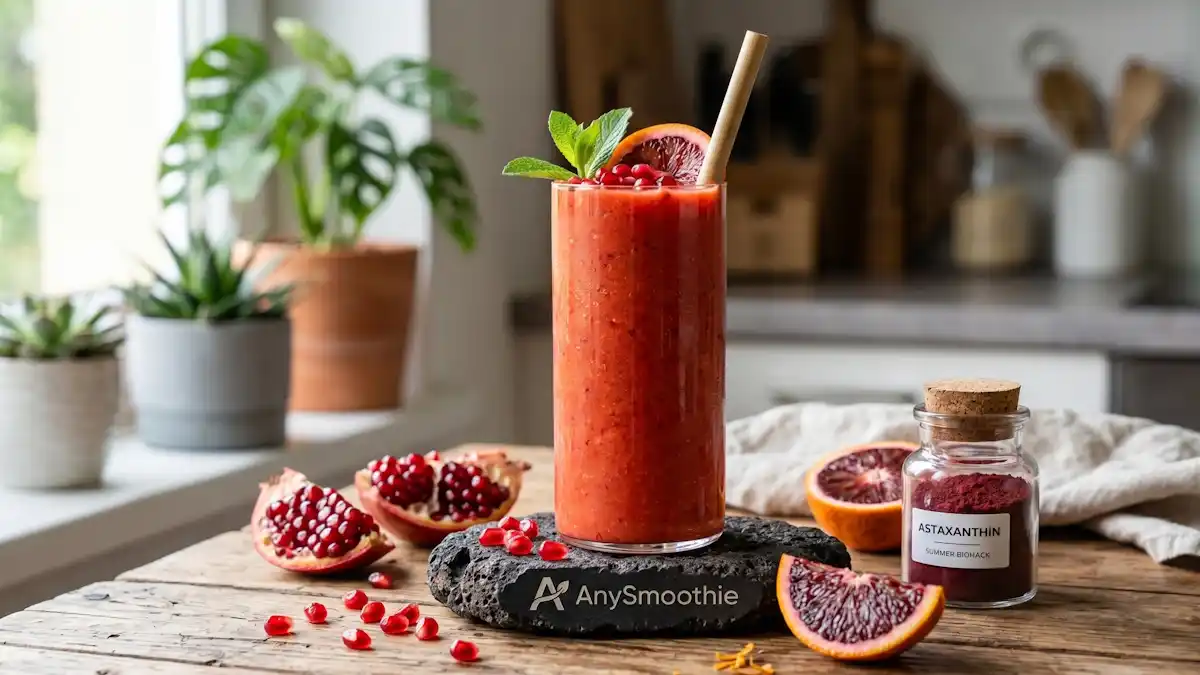
You can be careful in the sun and still want more support from the inside. That’s where astaxanthin smoothies get interesting.
Astaxanthin is a red carotenoid from microalgae, the same pigment family that colors salmon and shrimp. It may help with internal photo-protection, which means helping your skin handle UV-triggered oxidative stress better. It does not replace broad-spectrum sunscreen, shade, hats, or UPF clothing.
Reactive oxygen species, or ROS, are unstable molecules made during UV exposure. In small amounts, your body can handle them. In excess, they can stress fats, proteins, and DNA inside skin cells. A smoothie won’t block rays, but the right one may support your skin’s response over time. That balance of science, safety, and daily habit is where this topic makes sense.
The Antioxidant King: Why Astaxanthin is 6,000x More Powerful Than Vitamin C
The “6,000x more powerful than vitamin C” claim gets repeated often. It comes from lab-based antioxidant potency comparisons, not a one-to-one health outcome in people. So, it’s a useful headline, but it needs context.
What makes astaxanthin special is not only raw antioxidant strength. It’s also how it behaves under stress. UV light ramps up ROS, including singlet oxygen, a highly reactive form that can damage lipids and proteins fast. Astaxanthin is known for strong singlet oxygen quenching, which means it can neutralize that stress before it spreads.
That matters for skin because sunlight hits cell membranes hard. When those fatty outer layers oxidize, inflammation rises and moisture balance slips. In a randomized skin trial, oral astaxanthin intake was linked with a higher minimal erythema dose, less UV-triggered moisture loss, and better skin condition markers over time.
Transmembrane Protection: How Astaxanthin Shields Your DNA from UV Rays
“Transmembrane integrity” sounds technical, but the idea is simple. Your cells have membranes made of fats. Those membranes need to stay stable when UV light and ROS hit them.
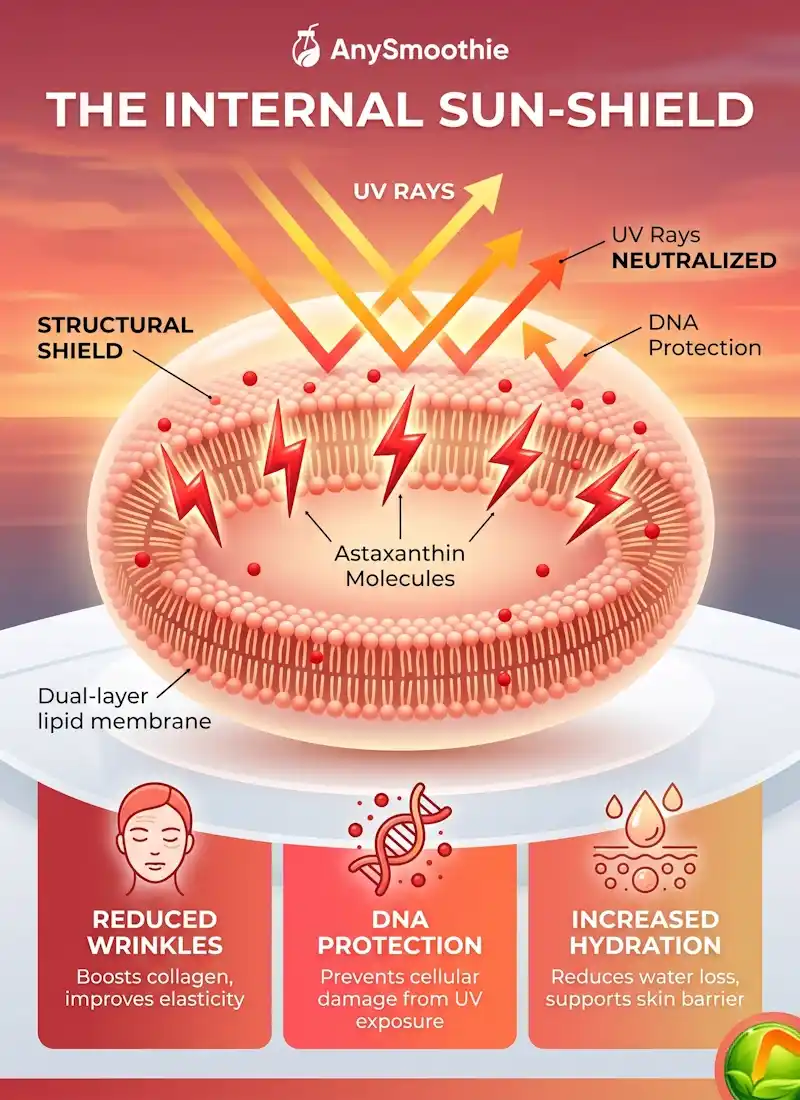
Astaxanthin is often described as spanning the full cell membrane. One end sits near the outer surface, and the other reaches toward the inner side. Because of that position, it’s often called a 360-degree membrane antioxidant. Many other carotenoids sit in only one part of the membrane.
That full-span position may help limit lipid peroxidation, calm inflammatory signaling, and reduce the chain reaction that puts pressure on collagen and DNA. The key point is support, not immunity. Astaxanthin doesn’t make UV harmless, and it doesn’t act like a topical filter. But it may lower some of the oxidative wear that drives photo-aging.
How astaxanthin compares with beta-carotene and lycopene in a smoothie routine
Beta-carotene and lycopene also belong in the skin-support conversation. All three are carotenoids, yet they don’t behave the same way. A broad carotenoids and skin review shows that different compounds tend to shine in different outcomes, such as UV redness, elasticity, tone, or barrier support.
Exact potency figures can vary by source, dose, and test method, so the table below is practical rather than absolute.
| Antioxidant | Antioxidant Potency (ORAC) | Primary Skin Benefit | Absorption Requirements | Best Smoothie Pairing |
|---|---|---|---|---|
| Astaxanthin | Extremely high, often ranked above common carotenoids; figures vary by form | UV-stress support, hydration, elasticity, broader membrane protection | Fat-soluble; absorbs better with avocado, chia, flax, coconut, or nut butter | Pomegranate, berries, avocado |
| Beta-carotene | High | Provitamin A support, skin tone support, general antioxidant backup | Fat-soluble; works best with yogurt, seeds, or nut butter | Mango, carrot, Greek yogurt |
| Lycopene | High, though usually not discussed with the same potency claims as astaxanthin | Photo-aging support and collagen defense | Fat-soluble; better with a fat source | Watermelon or tomato with coconut yogurt |
Astaxanthin is the only one commonly described as spanning the entire membrane, which is why it gets so much attention for broader protection under UV stress.
Internal Sunscreen: Enhancing Dermal Resilience and Reducing Photo-Aging
“Internal sunscreen” is catchy, but it can mislead people. Astaxanthin does not block UV rays the way SPF does. What it may do is help your skin manage UV-related oxidative stress and inflammation after exposure.
That difference matters. In human studies and reviews available through 2025, steady intake in the 4 to 12 mg daily range has been linked with reduced redness, better hydration, improved elasticity, and support against photo-aging over several weeks. One 10-week study using 4 mg daily found a rise in minimal erythema dose, which means more UV was needed to trigger visible redness. A published UV skin study also reported less moisture loss and improvements in texture-related measures.
Internal photo-protection helps skin cope with UV stress. It does not replace sunscreen.
So, where do astaxanthin smoothies fit? They work best as part of a layered routine. Use them alongside SPF 30 or higher, shade during peak sun, and common-sense exposure limits.
The Saturation Strategy: How Long It Takes to Build Your Internal SPF
The best way to think about astaxanthin is as a saturation strategy. One smoothie before a beach day won’t do much. Benefits show up with steady use over time because carotenoids need to build up in tissues.
Current research doesn’t lock in one exact timeline for everyone. Still, noticeable support is generally tied to daily intake over weeks, not hours. Most human trials that found skin changes ran for about 8 to 16 weeks.
That also means dose and consistency matter more than perfection. A modest daily routine usually beats sporadic high-dose use. If you’re adding astaxanthin to smoothies, keep the dose within the product label, use it regularly, and judge results slowly.
Beyond Skin: Protecting Your Eyes and Heart with Red-Algae Power
Skin gets most of the attention, but oxidative stress doesn’t stop there. Your eyes and cardiovascular system also take damage from daily ROS exposure.
Astaxanthin is often studied for broader antioxidant support in those tissues too. A useful human carotenoid study summary notes that different carotenoids may help different targets, while astaxanthin has shown strength in skin elasticity and water-loss measures. That doesn’t make it a cure-all. It does make it a reasonable daily compound for people who want whole-body antioxidant support from one habit.
Biohacking Bioavailability: Why Fats are Essential for Carotenoid Uptake
Astaxanthin is fat-soluble. If you toss it into water with ice and fruit, you’re leaving absorption on the table.
A little fat can make a big difference. Avocado, chia, flax, full-fat coconut milk, nut butter, or yogurt give carotenoids a better ride through digestion. That’s one reason smoothies make sense here. They let you pair astaxanthin with both healthy fats and polyphenol-rich produce in one glass.
Most people won’t get much astaxanthin from whole foods alone unless they eat a lot of salmon or shellfish, and even then the dose is small. In smoothies, the source is often a drink mix, an oral powder, or capsule contents if the product label allows mixing. Stick with products made for oral use, follow the stated serving size, and look for algae-derived astaxanthin from a reputable brand. Astaxanthin is highly lipophilic; consuming it with long-chain triglycerides (like those in avocado or almond butter) can increase its absorption by up to 3 to 4 times compared to taking it on an empty stomach.
The best ingredients to pair with astaxanthin for a skin-friendly blend
Good pairings do two jobs. They improve uptake, and they add their own antioxidant support.
Avocado, chia, flax, coconut milk, and almond butter help with fat-based absorption. Berries, pomegranate, and citrus bring polyphenols and vitamin C-rich support. Leafy greens add extra carotenoids and minerals without pushing sugar too high.
If you want texture, avocado and coconut milk make the smoothest base. If you want a lighter daily option, berries, spinach, lemon, and flax work well. For a fuller breakfast smoothie, mango plus Greek yogurt or nut butter is easy and filling.
3 Skin-Shielding Smoothie Recipes (High Astaxanthin)
Use an astaxanthin product meant for oral use, and follow the label for the serving size. These smoothies support a sun-smart routine, but they don’t replace sunscreen or shade.
Conclusion
Astaxanthin smoothies make sense when you treat them as internal support, not a magic shield. Their value is in helping your body handle UV-related oxidative stress, especially when you pair astaxanthin with healthy fats and use it consistently over time.
The strongest routine is still layered. Keep your broad-spectrum sunscreen, UPF clothing, shade habits, and smart timing in place. Then add one smoothie that fits your taste and schedule.
Pick a recipe, use it daily, and give it a few weeks. Skin comfort, hydration, and the ease of your routine are the signs worth watching.
⚠️ Safety Notes for Astaxanthin & Summer Skin Support
NOT a Sunscreen Substitute: Astaxanthin provides biological resistance to oxidative stress, but it does not block UV photons. You must continue to use topical broad-spectrum SPF (30+), hats, and shade to prevent DNA damage and skin cancer.
Orange Discoloration: High daily doses (above 12mg) can occasionally lead to a slight orange or reddish tint in the skin (carotenemia) or changes in stool color. This is harmless and reversible by lowering the dose.
Seafood Allergies: While most astaxanthin used in smoothies is derived from Haematococcus pluvialis (algae), some lower-quality sources may be derived from shellfish. Always verify the source if you have a severe seafood or crustacean allergy.
Medication Interactions: Astaxanthin may influence 5-alpha-reductase, which could potentially interact with medications for prostate health or hair loss (like Finasteride). Consult your physician if you are on a hormonal pharmacological protocol.
Blood Sugar Effects: Some studies suggest astaxanthin can lower blood glucose levels. If you have Type 2 Diabetes or take glucose-lowering medications, monitor your levels to avoid unexpected hypoglycemia.
FAQ
Can an Astaxanthin smoothie replace my topical sunscreen?
No. Astaxanthin acts as a powerful “internal buffer” that increases your skin’s MED (Minimal Erythemal Dose), meaning you can stay in the sun longer before burning. However, it should be used to complement, not replace, high-quality topical SPF during intense or prolonged exposure.
How does Astaxanthin specifically protect the skin from the sun?
Most antioxidants stay on one side of the cell membrane. Astaxanthin is unique because its molecular structure allows it to span the entire cell membrane. This provides “360-degree protection” against singlet oxygen and free radicals generated by UV light.
Why is it called the “King of Carotenoids”?
In terms of “singlet oxygen quenching” power, Astaxanthin has been found to be 6,000 times more powerful than Vitamin C, 800 times more powerful than CoQ10, and 550 times more powerful than Vitamin E. It is the ultimate weapon against oxidative stress.
Do I need to add fat to my Astaxanthin smoothie?
Absolutely. Astaxanthin is fat-soluble. To absorb it effectively, your smoothie must include a source of healthy lipids like avocado, flaxseeds, or full-fat coconut milk. Without fat, the absorption rate is significantly lower.
How long does it take to build up “internal sun protection”?
Astaxanthin needs to saturate your tissues. Clinical studies suggest that you need a daily dose of 4mg to 12mg for about 2 to 4 weeks before your skin gains significant resilience to UV radiation. Consistency is key.

Medical Disclaimer: AnySmoothie content is for educational purposes only and is not a substitute for professional medical advice. Consult a healthcare provider for personalized guidance. See our full Disclaimer & Terms of Use. AI Transparency: AnySmoothie may use AI to support content development. All content undergoes human editorial review for accuracy, clarity, and editorial quality. See our full AI Transparency.