
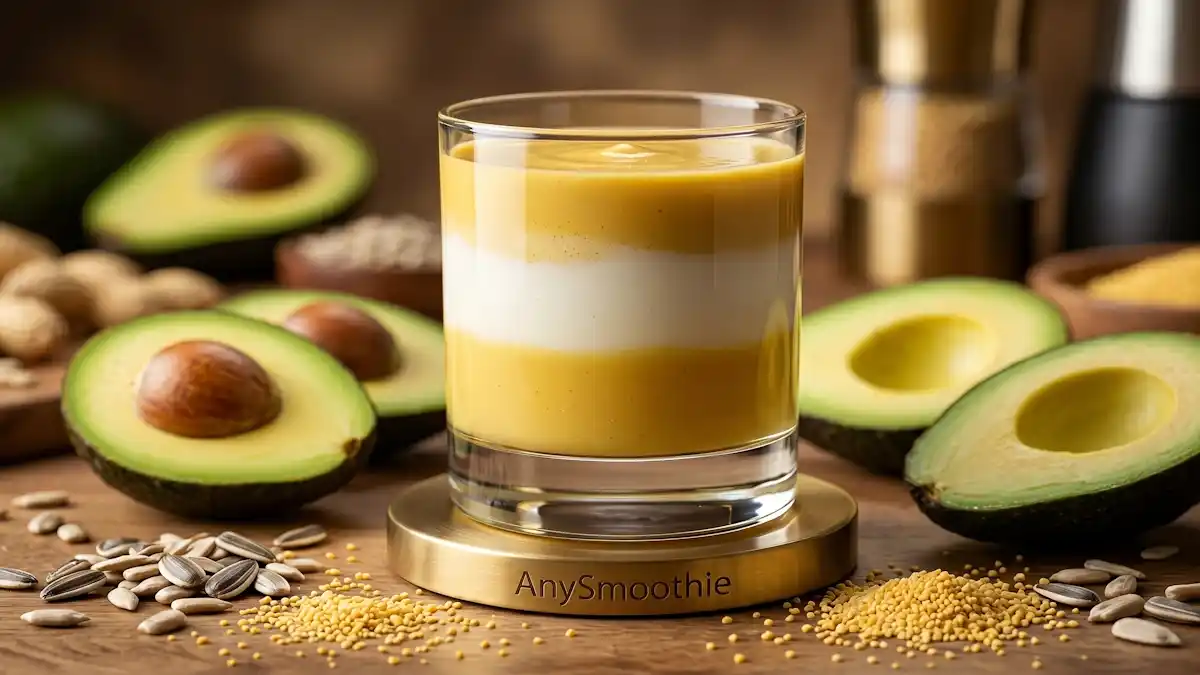
A smoothie can look balanced and still handle fat badly. The oil, nut butter, or avocado may sit in the glass unevenly, and that changes texture, digestion, and how well the body moves lipophilic nutrients.
That is why a vegan smoothie optimizing plant-based lipid emulsions is about more than healthy fats. The goal is to mix those fats into smaller, steadier droplets so they stay suspended and are easier to process.
The good news is that this is practical. With the right emulsifier, the right fat source, and the right fruit base, you can build a smoother drink with better structure.
The Biochemistry of Emulsification: Breaking Surface Tension
Fat and water do not want to stay mixed. When you blend them, surface tension pulls them apart again unless something sits at the boundary and keeps the droplets apart.
That boundary matters. If the droplets stay large, the smoothie separates faster and feels heavier on the tongue. If the droplets stay small, the texture gets silkier and the digestive system gets a better starting point.
Smaller droplets give enzymes more surface area to work with, so the body can handle the fat phase more easily.
What happens when fat and water do not mix well
In a weak emulsion, fat can rise, clump, or coat the mouth in a greasy way. That is common with oils, nut butters, and cocoa fats.
The same issue affects how the body handles the drink. Bigger droplets take more work to break down, so the fat phase enters digestion in a rougher form.
Why smaller fat droplets matter for digestion and nutrient transport
Tiny droplets help digestive lipase reach the fat surface more efficiently. They also make it easier for bile to mix fats into structures that move through the gut.
That matters for lipophilic compounds too. Carotenoids, tocopherols, and similar nutrients tend to move better when the fat phase is well dispersed
Phospholipids: The Molecular Bridge Between Water and Fat
Phospholipids have one side that likes water and one side that likes fat. That split makes them ideal for emulsions because they sit at the interface and calm the tension between both phases.
Sunflower lecithin is the best-known vegan example here. It adds phospholipids that help stabilize the smoothie, and it also provides a practical source of choline, which supports membrane maintenance and repair. If you want a simple reference on the compound itself, this overview from Britannica is useful.
Micellar Solubilization: Enhancing Lipophilic Nutrient Flux
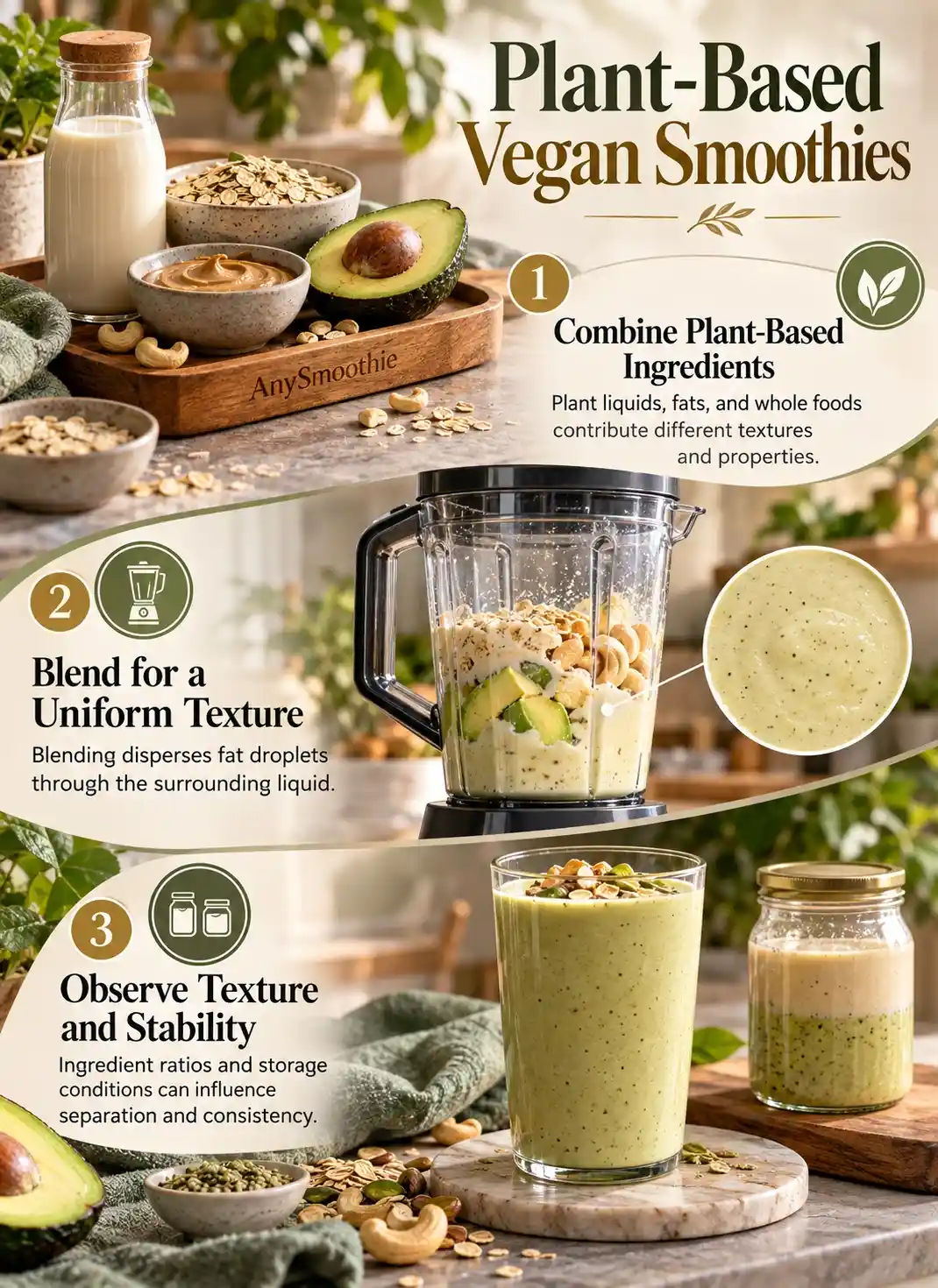
Once fats are dispersed well, the next step is micellar solubilization. In plain terms, the fat phase gets broken into forms the body can move, mix, and absorb more easily.
That is where the choice of emulsifier matters. Some plant ingredients mainly lower surface tension. Others also raise viscosity or help keep tiny droplets suspended after blending.
| Vegan emulsifier | Physiological mechanism | Lipid compatibility | Best smoothie pairing | Impact on bioavailability |
|---|---|---|---|---|
| Sunflower lecithin | Reduces interfacial tension with phospholipids | Works well with MCTs and long-chain fats | Avocado, nut butter, cocoa, berries | Strongest for choline supply and membrane support |
| Quillaia extract | Uses saponins to form and protect small droplets | Good with both, especially lighter fats | Fruit-forward smoothies, plant milk blends | Helps dispersion, but adds less membrane-support value |
| Gum arabic | Increases viscosity and suspension | Better with long-chain fats in thicker blends | Meal-style smoothies with nuts or seeds | Helps stability more than direct lipid uptake |
Sunflower lecithin is the cleanest fit when the goal is phospholipid-driven emulsification. Quillaia extract works well when a lighter, foamy texture makes sense. Gum arabic is useful when a thicker smoothie needs better suspension and less settling.
Saponins and lecithin: creating stable lipid nano-droplets
Quillaia extract brings saponins, which act like natural surfactants. They can help form fine droplets, especially in fruit-based blends.
Lecithin does something different. It builds a more membrane-like interface, which is why it pairs so well with creamy fats. For a smoothie that needs stable structure and better nutrient handling, lecithin usually does the most work. For a plain overview of saponins, see here.
How to pair emulsifiers with fats, fruit, and flavor
Avocado and macadamia are ideal with sunflower lecithin because they create a rich, stable base. MCT oil also blends well here because it stays light on the palate.
Berries and cocoa work better with quillaia or lecithin when acidity and polyphenols are part of the goal. Mild greens, like spinach, fit well with nut milks and lecithin because they do not fight the flavor.
Chia adds another layer. It thickens the blend, so the emulsifier needs to keep the fat phase suspended instead of letting it slide out.
3 “Lipid-Prime” Vegan Emulsion Smoothie Recipes
These three blends are built for different goals. Each one keeps the fat phase stable while changing the texture and feel of the drink.
Supporting Pancreatic Lipase Activity
A stable smoothie helps the normal digestive sequence start in a better place. Pancreatic lipase works on exposed fat droplets, so better dispersion gives it more surface to act on.
Bile also mixes more evenly when fat is not floating in big blobs. That supports the normal shift toward micelles and later chylomicron formation, which are part of how the body moves dietary fat.
Mitochondrial priming: fueling the energetic cost of chylomicron synthesis
Fat transport takes energy. After digestion, the body still has to package, move, and distribute those fats.
A well-built smoothie fits that process better because the fat arrives in a form that is easier to mix and handle. That is the metabolic efficiency angle here, cleaner input, easier handling.
Conclusion
A vegan smoothie for optimizing plant-based lipid emulsions is about structure, not just ingredients. When fat is dispersed well, the drink feels better, separates less, and gives digestive enzymes a cleaner surface to work with.
Sunflower lecithin is the most useful anchor here because it brings phospholipids and choline together in one ingredient. Quillaia extract and gum arabic have their place too, but they work best when matched to the right fruit base and fat profile.
If you want a smarter smoothie, start with one fat source, one emulsifier, and one clear goal. Then test how sunflower lecithin changes the texture, the stability, and the way the whole blend feels.
🛡️ Safety Notes & Contraindications: Lipid Emulsion Smoothies
Choline Intake Monitoring: Sunflower lecithin is a rich source of phosphatidylcholine. While beneficial for brain and liver health, those monitoring their total choline intake (e.g., due to specific metabolic pathways like TMAO) should adjust the dosage accordingly.
MCT Oil Digestive Sensitivity: When using MCT oil in these emulsions, be aware that its rapid absorption can cause GI distress (cramping or urgency) if consumed in large amounts. Start with 5ml (1 tsp) per smoothie to test tolerance.
Saponin Sensitivity: Quillaia extract is a natural surfactant; in rare cases, high doses may cause mild throat irritation or digestive sensitivity in predisposed individuals.
Oxidative Stability: Finely emulsified fats have a high surface area, which increases their exposure to oxygen. To avoid lipid peroxidation, consume these smoothies immediately after blending or store them in airtight, dark containers.
Caloric Density: Emulsified fats go down very easily, making it easy to overconsume calories. Treat “Lipid-Prime” smoothies as meal replacements rather than light snacks if weight management is a priority.
FAQ
How does “Interfacial Tension” influence the texture and digestion of a smoothie?
Water and fat do not naturally mix because of high interfacial tension at their boundary. Biochemically, if fats are not properly emulsified, they form large droplets that are harder for enzymes to access. Supporting this physiological system through plant-based emulsifiers (like sunflower lecithin) lowers this tension, creating a stable mixture. This optimizes the natural pathways of “lipid dispersion,” ensuring the biochemical mechanics of the drink result in a silkier texture and a better starting point for digestion.
Why is “Sunflower Lecithin” the ideal molecular bridge for vegan emulsions?
Sunflower lecithin is rich in phospholipids, which are amphiphilic molecules (one side attracts water, the other attracts fat). Biochemically, these molecules sit at the boundary of fat droplets and prevent them from clumping together. Supporting this physiological system facilitates the biochemical mechanics of “membrane-like stability,” providing a practical source of choline while ensuring the fat phase remains suspended and easy to process.
How does “Micellar Solubilization” enhance the transport of lipophilic nutrients?
Lipophilic nutrients—such as carotenoids from spinach or vitamin E from seeds—require a fat matrix for absorption. Biochemically, a well-emulsified smoothie breaks the fat phase into tiny droplets that are more easily incorporated into micelles in the small intestine. Supporting this physiological system through emulsion optimization facilitates the biochemical mechanics of “nutrient flux,” ensuring these critical plant compounds are efficiently transported across the gut lining.
What is the role of “Quillaia Saponins” in creating lipid nano-droplets?
Saponins from quillaia extract act as natural surfactants that can form exceptionally small and stable fat droplets. Biochemically, these saponins protect the droplets from merging, even in the presence of acidic fruit bases. Supporting this physiological system in fruit-forward smoothies optimizes the natural pathways of “nano-dispersion,” helping the biochemical mechanics of digestion by providing a massive surface area for lipase enzymes to act upon.
Why is “Pancreatic Lipase Activity” dependent on the surface area of fat droplets?
Pancreatic lipase is the primary enzyme responsible for breaking down dietary fats, but it can only work at the surface of a fat droplet. Biochemically, smaller droplets provide significantly more surface area than larger ones for the same volume of fat. Supporting this physiological system through emulsion engineering facilitates the biochemical mechanics of “lipolysis,” making it easier for the body to handle the fat load and preventing the “greasy” mouthfeel or digestive drag associated with poorly mixed lipids.

Medical Disclaimer: AnySmoothie content is for educational purposes only and is not a substitute for professional medical advice. Consult a healthcare provider for personalized guidance. See our full Disclaimer & Terms of Use. AI Transparency: AnySmoothie may use AI to support content development. All content undergoes human editorial review for accuracy, clarity, and editorial quality. See our full AI Transparency.