
Many women know the haze of brain fog all too well. Hormones shift, stress builds, and life stages like motherhood or menopause drain mental sharpness. You push through daily tasks, but focus fades, moods dip, and fatigue lingers.
Creatine smoothies for female brain health change that. This simple compound acts as a nootropic. It boosts brain ATP energy, which women need more because they store 70-80% less creatine than men. Blend it into tasty drinks, and you get steady cognitive fuel without pills or hassle.
Science backs this approach. Creatine buffers brain energy during stress or hormone swings. It sharpens memory, lifts mood, and builds resilience. These smoothies pair it with brain foods for better uptake. You will discover recipes, dosing tips, and why it fits your life stage. Fuel your mental edge today.
The Brain’s Energy Currency: Why Creatine is a Female Nootropic
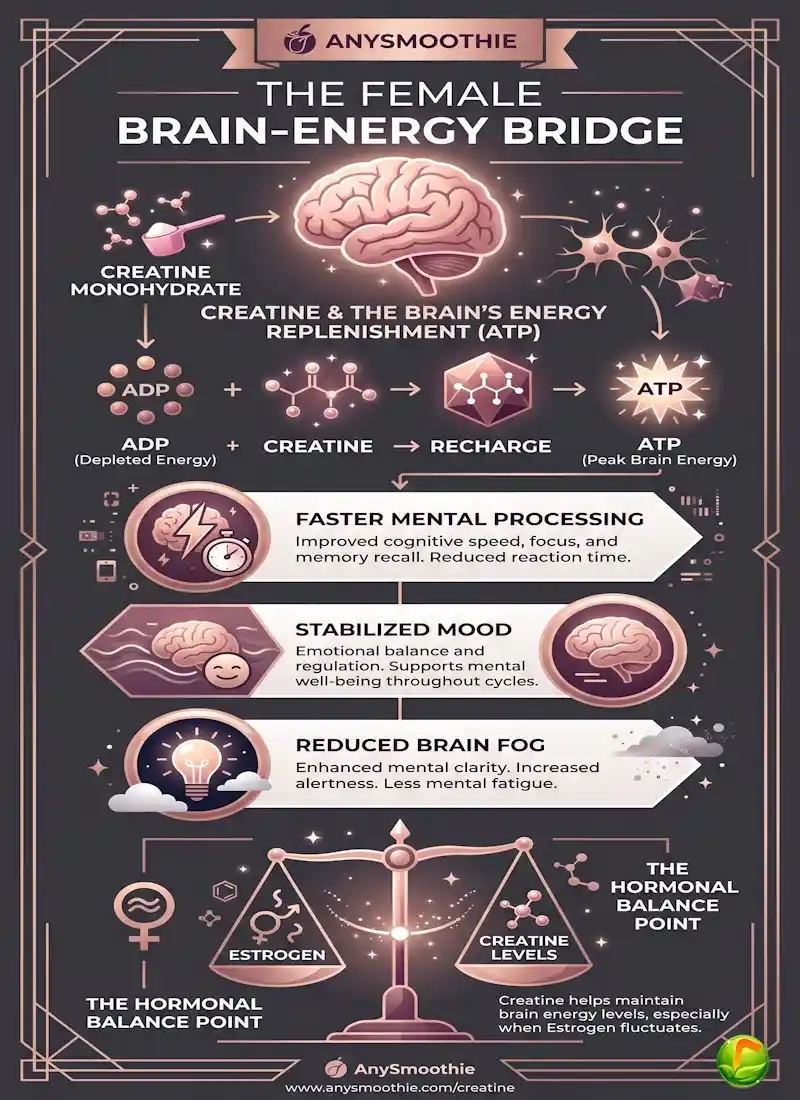
Your brain runs on ATP, the energy currency for thoughts and decisions. Creatine helps recharge it fast. It stores phosphate to buffer ATP drops during mental work. Women benefit most because estrogen limits natural creatine levels.
Females eat less red meat, a key creatine source. Hormones slow uptake too. Studies show creatine lifts memory and focus in women. One review notes gains in executive function. For example, creatine supplementation in women’s health across the lifespan highlights these edges.
Long-term use stays safe. No major side effects at 3-5 grams daily. It fits busy lives, especially when sleep or stress hits hard. Think of creatine as your brain’s battery charger. It keeps power steady so you stay sharp. Creatine acts as a ‘molecular sponge’, keeping cellular energy high even when your glucose levels dip.
Hormonal Fluctuations: How Estrogen Levels Impact Cerebral Creatine
Estrogen controls creatine transport to the brain. High levels block it. As estrogen drops in perimenopause, needs rise. Research from the 2020s shows women gain 20% better cognition with creatine then.
Perimenopause spikes demand most. Fatigue worsens, but creatine counters it. A study on creatine and brain health supports this for females.
Life stages shift needs. Here’s a quick comparison of creatine monohydrate benefits:
| Life Stage | Main Brain Benefit | Critical Need Level | Impact on Brain Fatigue | Best Smoothie Pairing |
|---|---|---|---|---|
| Premenopausal | Focus/Memory | Medium | Reduces daily dips | Berry-Walnut |
| Pregnancy/Postpartum | Mood Support | High | Counters sleep deprivation | Banana-Oat |
| Perimenopause/Menopause | Neuroprotection | Critical/Peak | Major fatigue reducer | Avocado-Spinach |
This table shows peak need in perimenopause from estrogen shifts. Pair smoothies to match. Creatine fills the gap estrogen leaves.
Cognitive Resilience: Protecting Mental Energy During Sleep Deprivation
Sleep loss hits women hard. New moms, shift workers, or perimenopause nights steal rest. Brain drain follows: slow thinking, poor recall. Creatine buffers ATP then. It sustains cognition when energy crashes.
Studies confirm this. A single dose cuts mental fatigue by 15-20% after no sleep. Women see strong effects on memory and speed. For details, check single-dose creatine in sleep deprivation.
Smoothies release it steady. Add brain protectors like antioxidants. This fights oxidative stress too. You build resilience for real life. No more foggy days from short nights.
Beyond the Gym: Creatine’s Role in Mood Regulation and Depression
Creatine goes further than energy. It aids serotonin and dopamine. This cuts inflammation linked to low mood. Women respond best; studies show 50% mood lifts.
Postpartum blues or menopausal anxiety ease. It stabilizes emotions by fueling brain cells. Creatine supports women’s wellness including mood notes gains across stages.
Smoothies make it simple. Blend in, sip, and feel steady. No gym needed. This boosts daily emotional strength.
3 Brain-Boosting Creatine Smoothie Recipes
These recipes deliver 3-5 grams creatine monohydrate. They use low-glycemic carbs and brain foods like omegas and antioxidants. Prep takes under 5 minutes. Tastes beat plain powder. No bloating, just fuel.
Tailored to life stages from the table. They enhance uptake and fit female needs. Start your day sharp.
The ‘Smart-Berry’ Creatine and Walnut Cognitive Fuel (Premenopausal Pick)
Perfect as a substantial berry-and-walnut smoothie.
Ingredients
- 1 cup mixed berries, such as blueberries and strawberries
- 1/4 cup walnuts
- 1 medium banana
- 1 cup spinach
- Creatine monohydrate according to the product’s labeled serving or clinician guidance
- 1 cup unsweetened almond milk
- Dash of cinnamon, optional
Steps
- Add all ingredients to the blender.
- Blend until smooth, about 30–60 seconds.
- Pour and drink fresh.
Berries provide anthocyanins and other polyphenols, while walnuts contribute ALA omega-3 fatty acids and unsaturated fats. Creatine plays a role in cellular energy metabolism and has also been studied in relation to cognitive function.
Estimated Nutrition per Serving
- Calories: ~410 kcal
- Protein: ~9 g
- Carbohydrates: ~55 g
- Fat: ~20 g
- Fiber: ~13 g
- Sugars: ~28 g
I’d blend the walnuts with the almond milk first for 15–20 seconds. It creates a creamier base and prevents small walnut pieces from remaining in an otherwise smooth berry blend.
‘Mommy Power’ Banana-Oat Creatine Smoothie (Pregnancy/Postpartum)
A substantial banana-oat smoothie with protein and carbohydrates.
Ingredients
- 1 medium banana
- 1/2 cup rolled oats
- 1/2 cup plain Greek yogurt
- 1/2 cup mixed berries
- Creatine monohydrate only if approved by the appropriate healthcare professional during pregnancy or breastfeeding
- 1 cup milk, dairy or unsweetened plant-based
Steps
- Soak the oats in the milk briefly.
- Add the remaining ingredients and blend on high until smooth.
- Serve cool.
Oats provide carbohydrates and beta-glucan fiber, while Greek yogurt contributes protein and calcium. Creatine supplementation during pregnancy or breastfeeding warrants individualized medical guidance rather than assuming a particular dose or benefit.
Estimated Nutrition per Serving
- Calories: ~430 kcal
- Protein: ~22 g
- Carbohydrates: ~73 g
- Fat: ~8 g
- Fiber: ~10 g
- Sugars: ~32 g
‘Peri-Protect’ Avocado-Spinach Creatine Blend (Perimenopause Powerhouse)
Ingredients
- 1/2 avocado
- 1 cup spinach
- 1/2 cup pineapple chunks
- Creatine monohydrate according to the product’s labeled serving or clinician guidance
- 1 cup unsweetened coconut water
- Squeeze of fresh lemon juice
Steps
- Add the avocado to the blender.
- Add the spinach, pineapple, coconut water, creatine, and lemon.
- Blend until creamy and serve.
Avocado contributes unsaturated fats and fiber, while spinach provides folate and carotenoids. Pineapple and coconut water add carbohydrates and fluid. These ingredients can contribute to a balanced dietary pattern but should not be described as directly balancing hormones or clearing hot-flash-related brain fog.
Estimated Nutrition per Serving
- Calories: ~260 kcal
- Protein: ~5 g
- Carbohydrates: ~35 g
- Fat: ~12 g
- Fiber: ~10 g
- Sugars: ~20 g
Biohacking the Dose: Monohydrate vs. HCL and Absorption Tactics
Stick to creatine monohydrate. It’s proven, cheap, effective for brain. HCL dissolves better, needs less water, but monohydrate wins on research.
Women dose 3-5g daily. No loading phase for cognition. Steady intake builds stores. Safe long-term. Smoothies hide taste.
Cycle? No need. Consistent use optimizes. Track focus to tweak.
The Insulin Link: Why Low-Glycemic Carbs Enhance Brain Uptake
Carbs spike insulin. This pulls creatine into cells, up to 60% more. Recipes use banana, oats: steady release, no crash.
Hormones make blood sugar wobbly. Low-glycemic stabilizes it. Studies back this for women. Smoothies nail the combo.
Creatine smoothies for female brains thrive here. You get max absorption.
Conclusion
Women face unique brain challenges from hormones and life demands. Creatine smoothies deliver energy, resilience, and mood support across stages. They buffer ATP, lift cognition, and fit seamlessly.
Pick one recipe today. Track your focus over weeks. Consult your doctor first, especially if pregnant. Share your tweaks in comments. New 2026 studies keep confirming gains. Stay sharp, stay you.
⚠️ Safety Notes for Creatine & Female Brain Health
Renal Function: While creatine is safe for healthy individuals, if you have a pre-existing chronic kidney disease (CKD), you must consult your nephrologist before starting any supplementation, as it can affect creatinine readings on blood tests.
Hydration Necessity: Creatine pulls water into the cells. To avoid muscle cramps or mild headaches, you must increase your daily water intake by at least 500ml when consuming these smoothies.
Weight Perception: You may notice a slight increase on the scale (1-2 lbs) during the first two weeks. This is water weight inside your cells (cellular hydration), not body fat. It is a sign that the creatine is working.
Purity Standards: Not all powders are equal. Always choose Creatine Monohydrate labeled with the “Creapure” seal or third-party tested (NSF/Informed-Sport) to ensure it is free from contaminants and heavy metals.
Pregnancy and Breastfeeding: Emerging research is very positive regarding creatine’s neuroprotective role for the fetus, but it is not yet standard medical advice. Always discuss supplementation with your OB-GYN before use.
FAQ
Will creatine make me look “bulky” or bloated?
No. This is a common myth. While creatine pulls water into the cells, it primarily does so in the muscles and the brain. For women, this results in better hydration, improved muscle tone, and significantly sharper brain function, not a “bulky” look.
How does creatine specifically help the female brain?
Women typically have lower levels of creatine in the brain than men, especially in the frontal lobe. Creatine acts as a buffer for ATP (energy), ensuring your brain doesn’t “run out of gas” during high-stress periods, sleep deprivation, or luteal phase fatigue.
Is it better to take creatine before or after my workout?
For brain health, timing is less critical than consistency. However, adding it to your morning smoothie ensures a steady supply for cognitive tasks throughout the day. The most important factor is taking it daily to keep brain stores saturated.
Can I get enough creatine from my diet?
Unless you eat a very high amount of red meat and fish daily, it’s difficult to reach the 3-5g therapeutic dose. For vegetarians and vegans, creatine smoothies are even more essential, as their baseline brain levels are often significantly lower.
Which type of creatine is best for smoothies?
Creatine Monohydrate remains the gold standard. It is the most researched, highly bioavailable, and completely tasteless, making it perfect for blending into any fruit or protein-based smoothie without changing the flavor.

Medical Disclaimer: AnySmoothie content is for educational purposes only and is not a substitute for professional medical advice. Consult a healthcare provider for personalized guidance. See our full Disclaimer & Terms of Use. AI Transparency: AnySmoothie may use AI to support content development. All content undergoes human editorial review for accuracy, clarity, and editorial quality. See our full AI Transparency.