
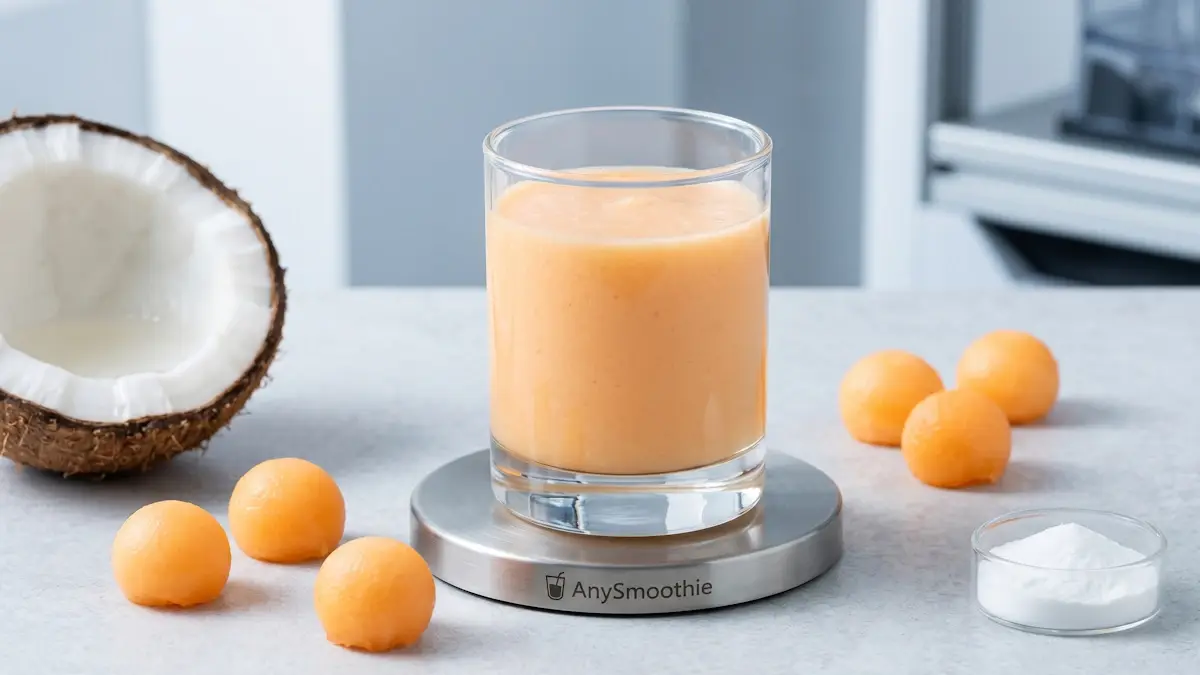
This Cantaloupe formulation is a structurally optimized liquid matrix engineered to maximize cellular hydration and support systemic electrolyte flux. Due to its specific mineral architecture—rich in organic potassium fractions and bound structured water—this melon substrate interfaces directly with intracellular fluid balance, serving as a highly efficient tool for post-exertion recovery and metabolic clearance without inducing digestive or glycemic turbulence.
This technical guide provides a precise protocol to manage the high water volatility of cantaloupe while stabilizing its rheological integrity. You will discover the exact mechanics of cryo-preserving melon fractions, strategic substrate pairing with dense protein anchors, and the layering sequences required to prevent phase separation and maximize enzymatic preservation during high-velocity homogenization.
Why put cantaloupe in a smoothie? Taste, texture, and simple nutrition
Why put cantaloupe in a smoothie? It brings a mild honey-like taste, a clean finish, and a soft texture that blends well with other ingredients. It’s gentler than pineapple and less intense than mixed berries, so it doesn’t take over the glass. That makes it a solid base for a lot of smoothie styles, whether you want something creamy and dessert-like or light with mint and citrus. Some people worry it can taste too mild, but that’s also why it works, it gives you room to add yogurt, herbs, citrus, or protein without muddying the flavor.
| Hydration Matrix | Physiological Mechanism | Primary Electrolyte/Osmolyte | Best Smoothie Pairing | Target Cellular Compartment |
|---|---|---|---|---|
| Cantaloupe Matrix (Structured Water + High Potassium) | Drives water intracellularly via osmotic gradients | Potassium, plus natural fruit water | Melon, berry, or yogurt smoothies | Intracellular |
| Coconut Water (Isotonic Mineral Flux) | Rapidly restores serum osmolarity | Potassium, with smaller amounts of sodium and magnesium | Tropical fruit smoothies | Both, with a strong extracellular pull |
| Pure Water with Sodium (Extracellular Volumizer) | Expands extracellular fluid volume | Sodium | Citrus, greens, or post-workout blends | Extracellular |
Cantaloupe water paired with L-Taurine is a strong combo when the goal is maximizing true “citosolic volume.”
Texture is where cantaloupe can either shine or disappoint. Fresh cantaloupe blends into a silky liquid with almost no effort. That’s great when you want a drinkable smoothie, but it can feel more like juice if you don’t add something thick. Frozen cantaloupe changes the whole experience. It makes the smoothie colder, thicker, and more like a milkshake (without needing a ton of ice).
On the nutrition side, cantaloupe is mostly water, which is why it feels so refreshing. It also brings a handful of everyday nutrients people care about, like vitamin C and vitamin A, plus potassium and a bit of fiber. For a plain-language overview of what’s in cantaloupe, this N.C. Cooperative Extension article is a solid reference: Nutritional Benefits of Cantaloupe. If you want a quick health-focused summary, Cleveland Clinic also breaks down benefits and nutrients clearly: Health Benefits and Nutrition of Cantaloupe.
One honest expectation: cantaloupe isn’t a protein source on its own. If you want a smoothie that holds you over until lunch, plan to add protein and healthy fats.
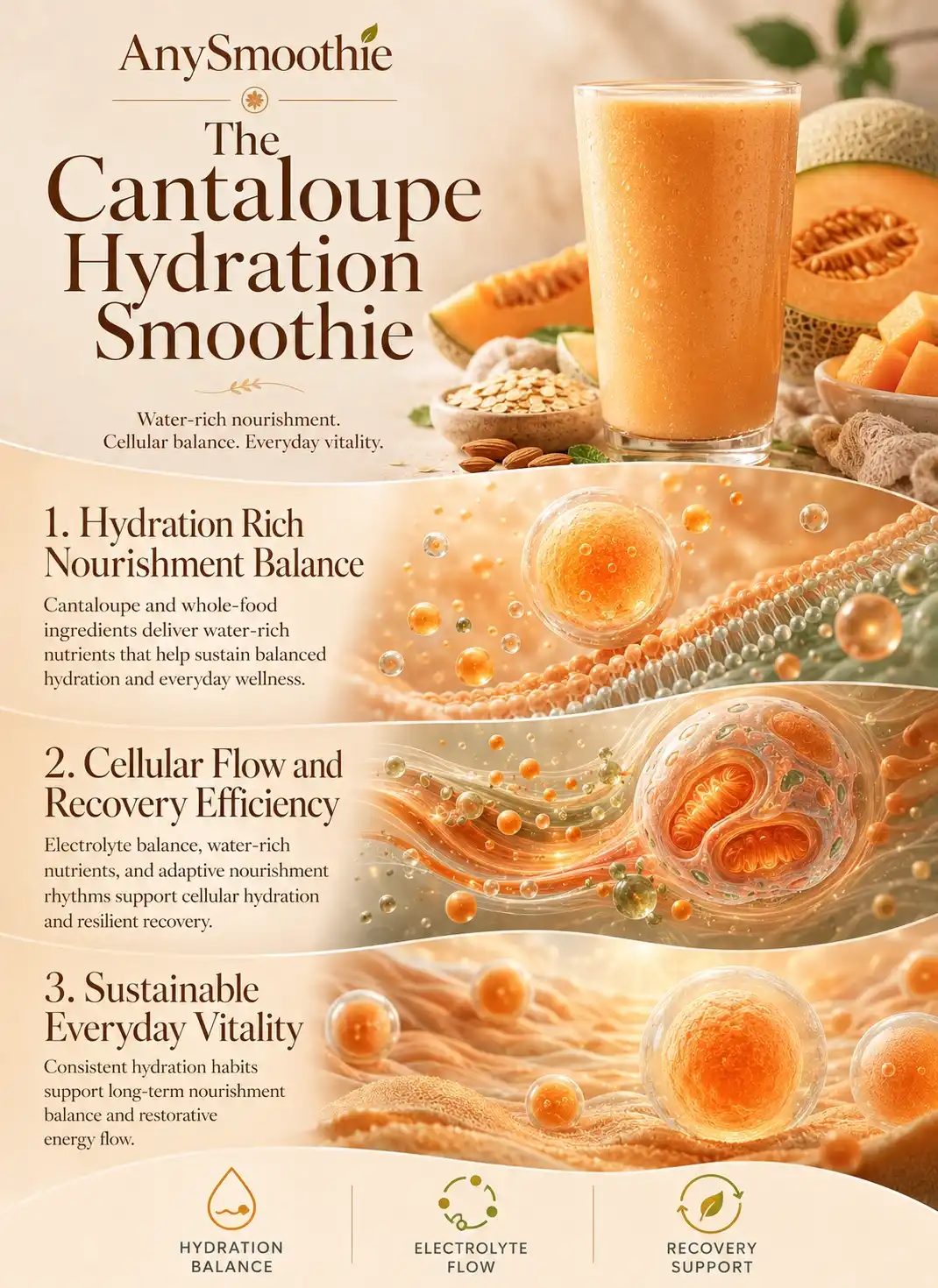
What cantaloupe adds that other fruits do not
Cantaloupe’s “special skill” is how it hydrates while still tasting sweet. Many fruits make smoothies thick or tart. Cantaloupe makes them light, cold, and easy to sip.
Here’s a simple comparison that helps when you’re mixing fruit:
| Fruit | Sweetness | Thickness in a smoothie | Wateriness |
|---|---|---|---|
| Cantaloupe | Medium | Light unless thickened | High |
| Banana | Medium-high | Very thick | Low |
| Berries | Low-medium | Medium (seeds add body) | Medium |
| Mango | High | Thick and creamy | Medium |
| Watermelon | Medium | Very light | Very high |
Cantaloupe can taste a little “airy,” especially if you blend it with only liquid and ice. That’s why most great cantaloupe smoothies include a thickener (Greek yogurt, frozen banana, avocado, oats, chia) and a pinch of acid (lime or lemon) to perk up the flavor.
Who will love a cantaloupe smoothie (and who may want to skip it)
Cantaloupe smoothies are a great fit for:
- Hot weather mornings, when heavy breakfasts sound awful
- Post-workout hydration, when you want fluids plus carbs and electrolytes
- Kids and picky eaters who prefer mild fruit flavors
- People who like smoothies that aren’t tart
You might want to skip cantaloupe (or plan your add-ins carefully) if:
- You don’t like melon flavor. No trick fully hides it.
- You’re watching total sugar intake. Cantaloupe has natural sugars, and it’s easy to overdo portions.
- You want thick, spoonable smoothies. You can still get there, but you’ll need frozen fruit and a real thickener.
If thickness is the main concern, start with Greek yogurt, oats, chia, or frozen banana. Those keep the cantaloupe flavor while making the smoothie feel like a meal.
How to choose, prep, and store cantaloupe for smooth, safe smoothies
A great cantaloupe smoothie starts at the store. A melon that’s bland or under-ripe won’t magically improve once it’s blended. The other key point is safety. Since you cut through the rind and drag the knife into the flesh, it’s smart to wash the outside first.
If you want a quick guide on selecting melons, this is a helpful read: How to Choose a Ripe Cantaloupe, Watermelon, or Honeydew.
Here’s a simple, step-by-step approach that works well at home:
- Check for ripeness (details below).
- Wash the rind under running water and scrub with a clean produce brush.
- Cut safely: slice off the stem end to create a flat base, then cut in half.
- Scoop seeds with a spoon.
- Remove the rind and cut into even cubes for easy measuring and even blending.
- Use now or freeze for later.
For storage, treat cut cantaloupe like any other cut fruit: keep it in a sealed container in the fridge and use it while it still smells sweet and clean. If it starts to smell funky or feels slimy, toss it. When in doubt, don’t blend it.
Picking a ripe cantaloupe that tastes sweet
Look for these signs when you want a sweet cantaloupe:
- Heavy for its size (more juice, better texture)
- Tan, netted skin (not shiny green)
- A sweet smell at the blossom end (the opposite side of the stem)
- Slight give when you press gently, but not mushy
- No big soft spots, cracks, or wet areas
A melon that’s hard, greenish, and has no smell is usually under-ripe, which often means watery flavor. If you’re stuck with one, freezing it and blending with citrus and yogurt can help, but it won’t taste like peak-season cantaloupe.
Prep tips for the best texture (fresh vs frozen)
Fresh cantaloupe makes a thinner smoothie. That’s not bad, it’s just a different style. Choose fresh when you want something more like a cold drink, especially if you’re using yogurt or another thick add-in.
Frozen cantaloupe is the fix for most “why is this watery?” problems. It chills and thickens the smoothie without watering it down like ice can.
A simple freezing method:
- Cut cantaloupe into 1-inch cubes.
- Spread cubes on a parchment-lined tray in a single layer.
- Freeze until firm, then transfer to a freezer bag and squeeze out extra air.
For food-safe freezing basics, the University of Georgia’s National Center for Home Food Preservation has a clear guide: Freezing Melons.
Even if you don’t do full “meal prep,” freezing one tray of cubes can save you all week. It also helps you use up a melon before it goes soft in the fridge.
Best cantaloupe in smoothie combinations (plus 4 easy recipes)
Cantaloupe pairs best with creamy, tangy, and lightly tropical flavors. Think yogurt, banana, coconut, lime, cucumber, mint, vanilla, and a pinch of salt.
If you want inspiration beyond this post, this orange-forward version is a good example of how citrus can lift melon flavor: Orange Cantaloupe Smoothie. For a greener option that still stays mellow, this combo shows how cantaloupe works with greens and coconut water: Green Banana Cantaloupe Smoothie.
A simple cantaloupe smoothie formula you can mix and match
Use this template and you won’t need to memorize recipes:
- Cantaloupe: 1 to 1.5 cups cubed (fresh or frozen)
- Liquid: 3/4 to 1 cup (milk, almond milk, kefir, coconut water, orange juice)
- Thickener: 1/2 to 1 cup (Greek yogurt, frozen banana, avocado, oats)
- Boosters (optional): protein powder, chia, hemp hearts, spinach, cinnamon, vanilla
- Ice: only if your fruit isn’t frozen, or you want it extra cold
Blending order for a smoother result:
Liquid first, then soft ingredients (yogurt, nut butter), then frozen fruit, then powders and seeds. Blend longer than you think you need, about 45 to 60 seconds, to break down melon fibers and chill the mix evenly.
4 cantaloupe smoothie recipes that actually taste good
Each recipe makes 1 large smoothie or 2 smaller servings.
1) Creamy Cantaloupe Banana
Ingredients
- 1 cup frozen cantaloupe
- 1 small frozen banana
- ½ cup plain Greek yogurt
- ¾ cup low-fat milk
- Pinch of salt
- ½ teaspoon vanilla extract, optional
Pour the milk and Greek yogurt into the blender first. Add the frozen cantaloupe, banana, salt, and vanilla if using. Blend until completely smooth and creamy.
Frozen cantaloupe and banana create a naturally thick texture, while Greek yogurt and milk add protein and creaminess. For an even thicker smoothie, add a few extra frozen cantaloupe cubes or 2 tablespoons rolled oats. For less sweetness, use about ⅔ of the banana.
Estimated Nutrition per Serving
- Calories: ~320 kcal
- Protein: ~18 g
- Carbohydrates: ~53 g
- Fat: ~6 g
- Fiber: ~4 g
- Sugars: ~39 g
2) Cantaloupe Mango Coconut
Ingredients
- 1 cup frozen cantaloupe
- ¾ cup frozen mango
- ¾ cup canned light coconut milk
- 1 tablespoon fresh lime juice
- 1 teaspoon freshly grated ginger, optional
Pour the coconut milk into the blender first. Add the frozen cantaloupe, mango, lime juice, and ginger if using. Blend until thick and creamy.
Cantaloupe and mango provide vitamin C, carotenoids, and natural sweetness, while light coconut milk gives the smoothie its creamy tropical texture. For a thicker result, reduce the coconut milk to about ⅔ cup. Extra lime can sharpen the flavor without adding sweetness.
Estimated Nutrition per Serving
- Calories: ~280 kcal
- Protein: ~4 g
- Carbohydrates: ~43 g
- Fat: ~12 g
- Fiber: ~5 g
- Sugars: ~36 g
3) Orange Cantaloupe Protein Smoothie
Ingredients
- 1 cup frozen cantaloupe
- 1 medium orange, peeled
- 1 scoop vanilla protein powder
- ½ cup plain Greek yogurt
- ½ cup cold water
Pour the water and Greek yogurt into the blender first. Add the protein powder, orange, and frozen cantaloupe. Blend until completely smooth, adding a small splash of water only if needed.
Cantaloupe and orange provide vitamin C and carotenoids, while Greek yogurt and protein powder make this a substantially higher-protein option. For extra thickness, add 1 tablespoon chia seeds and let the finished smoothie stand for about five minutes.
Estimated Nutrition per Serving
- Calories: ~350 kcal
- Protein: ~37 g
- Carbohydrates: ~42 g
- Fat: ~5 g
- Fiber: ~5 g
- Sugars: ~30 g
4) Cucumber Mint Cantaloupe Refresher
Ingredients
- 1¼ cups cantaloupe
- ½ cup cucumber, chopped
- 8 fresh mint leaves
- 1 tablespoon fresh lemon juice
- ¾ cup cold water
- Tiny pinch of salt
Pour the cold water into the blender first. Add the cantaloupe, cucumber, mint, lemon juice, and salt. Blend until very smooth.
Cantaloupe and cucumber contribute fluid along with vitamin C and other micronutrients, while mint and lemon keep the flavor fresh and bright. Using water rather than coconut water and skipping the optional honey keeps this version lighter and less sweet.
Estimated Nutrition per Serving
- Calories: ~90 kcal
- Protein: ~2 g
- Carbohydrates: ~22 g
- Fat: ~1 g
- Fiber: ~3 g
- Sugars: ~18 g
If I were making this on a hot day, I’d freeze about half the cantaloupe beforehand instead of adding lots of ice. It keeps the drink colder and slightly thicker without watering down the melon and mint flavor.
Common problems with cantaloupe smoothies (and quick fixes)
Cantaloupe is easy to blend, but it’s also easy to mess up. Most problems come from too much liquid, not enough acid, or not using frozen fruit.
Too watery, too bland, or separating in the glass
- Watery texture: use frozen cantaloupe, reduce liquid by 1/4 cup, skip ice unless the fruit is fresh.
- Bland flavor: add a squeeze of lime or lemon, a pinch of salt, or 1/2 teaspoon vanilla.
- Not cold enough: freeze the fruit, or chill the liquid first.
- Foamy top: blend on a slightly lower speed at the end, or let it sit 1 minute.
- Separation: melon smoothies can separate because they’re so watery. A quick stir is normal, or add chia/oats to help it hold together.
Small upgrades change the whole drink. A pinch of salt sounds odd, but it works like it does on watermelon, it makes sweetness taste clearer.
How to make it more filling without ruining the flavor
If you want a cantaloupe smoothie to feel like breakfast, add one of these and keep the amounts modest at first:
- Vanilla protein powder: start with half a scoop, then adjust.
- Greek yogurt or kefir: adds protein and tang, keeps the melon bright.
- Cottage cheese: surprisingly good if you like it, start with 1/4 cup.
- Silken tofu: mild, creamy, and dairy-free.
- Chia or hemp hearts: add thickness and staying power (start with 1 tablespoon).
- Oats: make it hearty, let it rest 5 minutes to thicken.
The goal is support, not camouflage. Cantaloupe tastes best when it’s still the main flavor.
Conclusion
Cantaloupe makes smoothies that taste bright, clean, and refreshing, especially when you treat it like the high-water fruit it is. Use frozen cubes to fix watery texture, then add one creamy ingredient and a little acid to make the flavor pop. If you want it to count as a meal, add protein in a way that doesn’t drown out the melon.
Try one recipe this week, then use the formula to make your own. Your easiest next step: prep a freezer bag of cantaloupe cubes so a great cantaloupe in smoothie is always five minutes away.
🛡️ Safety Notes & Contraindications
Renal Potassium Filtration Limits in Advanced CKD: CRITICAL: Cantaloupe is an intensive dietary source of organic Potassium. Delivering 1.5 cups of concentrated melon substrate within a rapid liquid protocol creates an immediate, sharp influx of electrolytes. In individuals presenting with advanced Chronic Kidney Disease (CKD, Stages 3-5) or those under medical prescription of potassium-sparing diuretics (e.g., Spironolactone), this high-flux protocol can precipitate severe hyperkalemia.
Post-Harvest Rind Pathogen Contamination: The deeply netted, porous outer rind of cantaloupe is a high-affinity matrix for the adhesion of foodborne pathogens, specifically Listeria monocytogenes and Salmonella enterica. When cutting through an unwashed rind, the knife blade transfers pathogens directly into the sterile inner flesh. Mandatory Protocol: Always scrub the external rind with a rigid brush under running water before slicing to avoid acute bacterial gastroenteritis.
Fructose and Polyol-Induced Osmotic Transit (FODMAP): Cantaloupe contains noticeable amounts of free fructose and oligosaccharides. In phenotypes diagnosed with Fructose Malabsorption or active Small Intestinal Bacterial Overgrowth (SIBO), the enterocitary GLUT5 transport capacity can be rapidly saturated. The unabsorbed sugars draw water into the bowel lumen, triggering rapid osmotic distension, flatulence, or sudden liquid transit.
Hypotension and Vasodilator Medication Synergy: The high potassium content combined with the hydrating volume of this matrix induces systemic peripheral vasodilation and down-regulates angiotensin II signaling. If you are prescribed anti-hypertensive therapeutics, monitor your post-prandial blood pressure metrics to prevent transient orthostatic dizziness or lightheadedness.
Oral Allergy Syndrome (OAS) and Pollen Cross-Reactivity: Individuals with severe seasonal allergies, particularly to ragweed pollen (ambrosia), can present with Oral Allergy Syndrome when ingesting raw cantaloupe. The immune system misidentifies melon proteins due to strict structural homology, triggering localized IgE-mediated itching, tingling, or micro-swelling of the lips, tongue, and throat.
FAQ
How does the specific mineral architecture of cantaloupe drive true “Cytosolic Volumization”?
Cantaloupe delivers a highly concentrated pool of organic potassium, the primary intracellular cation. Biochemically, when this high-potassium fluid interfaces with the intestinal brush border, it creates an osmotic gradient that drives water directly across cell membranes via aquaporin channels. Supporting this physiological system through cantaloupe-rich infusions optimizes the natural pathways of “intracellular hydration,” filling the cell’s internal fluid compartments to support routine metabolic clearance.
Why does combining cantaloupe with “L-Taurine” optimize the intracellular hydration matrix?
L-Taurine functions as a powerful endogenous osmolyte that regulates cellular volume and ion movement. Biochemically, pairing the high-potassium structured water of cantaloupe with L-Taurine creates a synergistic axis that accelerates the influx of water into the cytosol while protecting against electrolyte depletion. Supporting this physiological system facilitates the biochemical mechanics of “osmotic stabilization,” enhancing the cell’s structural integrity during post-exertion recovery.
What causes phase separation in melon blends, and how does “Viscosity Stratification” prevent it?
Cantaloupe possesses a high water volatility and low native pectin density, meaning its cellular fibers easily separate from the liquid phase after mechanical shear, causing an uneven, watery texture. Biochemically, introducing a dense protein-and-fiber anchor—such as Greek yogurt, chia seeds, or oats—creates a cross-linked colloidal suspension. Supporting this physiological system wraps the volatile water molecules in a structured matrix, preventing phase separation and ensuring a smooth, uniform rheological flow.
How does a “Cryopreserved Melon Matrix” protect temperature-sensitive vitamins during homogenization?
High-velocity blender blades generate friction that transfers kinetic energy into the liquid as heat. Biochemically, even slight temperature rises can accelerate the photolytic and oxidative breakdown of fragile compounds like Vitamin C and Vitamin A (beta-carotene). Supporting this physiological system by utilizing flash-frozen cantaloupe fractions acts as a native thermodynamic buffer, neutralizing friction-induced heat during mechanical shear to preserve the fruit’s volatile antioxidant shield entirely intact.
Why does adding a “Trace Sodium Anchor” stabilize the glycemic and electrolyte flux of this blend?
Active cellular hydration and the transport of nutrients across the intestinal wall depend heavily on the sodium-glucose cotransporter (SGLT1) pathway, which requires a precise balance of extracellular sodium ($Na^+$). Biochemically, adding a small pinch of mineral salt to a potassium-dense cantaloupe base optimizes the function of the sodium-potassium pump ($Na^+/K^+\text{-ATPase}$). Supporting this physiological system facilitates the biochemical mechanics of “glycemic pacing,” providing a metered, steady fuel flux that supports mitochondrial respiration with minimal metabolic friction.

Medical Disclaimer: AnySmoothie content is for educational purposes only and is not a substitute for professional medical advice. Consult a healthcare provider for personalized guidance. See our full Disclaimer & Terms of Use. AI Transparency: AnySmoothie may use AI to support content development. All content undergoes human editorial review for accuracy, clarity, and editorial quality. See our full AI Transparency.