
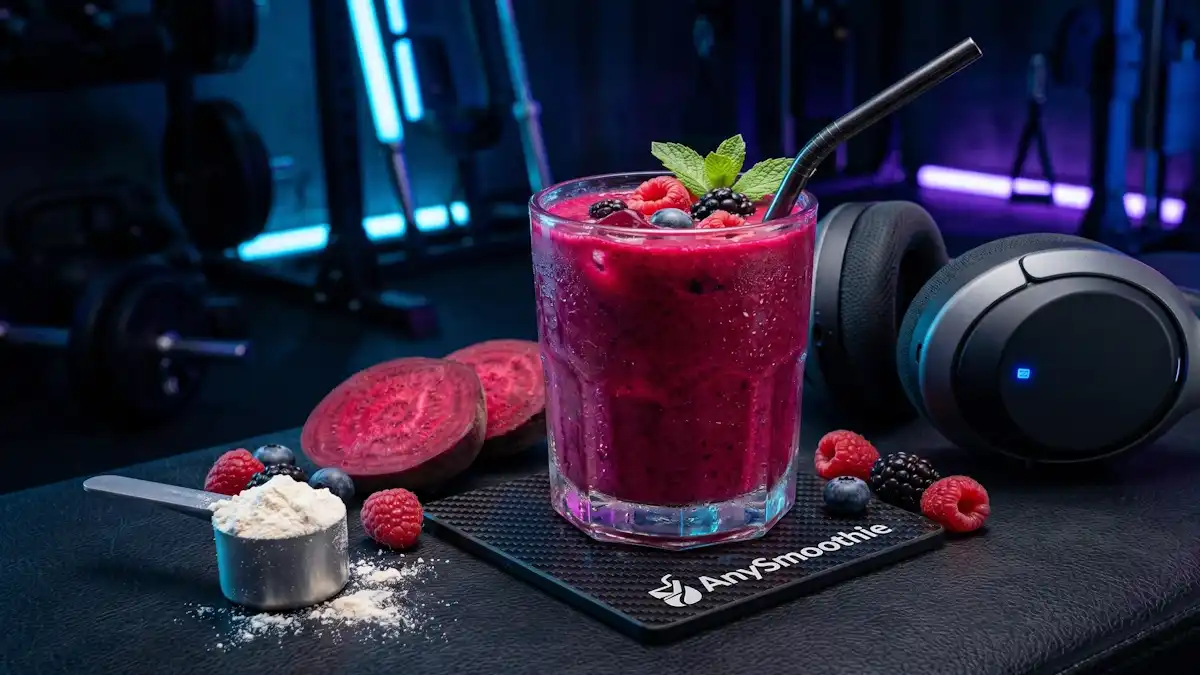
You hit the gym hard every day. Yet your energy crashes. Recovery drags. Workouts stall despite all that effort.
Biohacking changes this. It hacks your body for metabolic flexibility. You boost EPOC to burn fat long after exercise. mTOR activates for muscle growth. Vaso-flow improves pumps and oxygen delivery.
This guide shares the best exercise and metabolism smoothie. It primes you pre-workout. It aids recovery after. It fires up mitochondrial energy all day. These recipes turn average sessions into peak performance. Science backs every ingredient. You’ll get three simple blends. Ready to dominate?
The Biohacker’s Pre-Workout: Priming the Metabolic Pump
Biohackers prime metabolism before workouts. This boosts oxygen use. It builds endurance. Power surges follow. Nitric oxide drives vasodilation. Blood vessels widen. Muscles get more fuel.
Beets and citrulline shine here. They enhance vaso-flow. Metabolism gains flexibility. EPOC rises from better blood flow. Fat burns longer post-exercise. Your exercise and metabolism smoothie starts with this base. It sets you up to crush sets.
For deeper science on beetroot nitrates and endurance, check beet root nitrate supplements for VO2 max.
Nitric Oxide Boosters: Using Beets and Citrulline for Vasodilation
Beets pack nitrates. Your body turns them into nitric oxide. Blood vessels expand. Oxygen reaches muscles faster. Fatigue drops. You push harder.
Citrulline sustains this. It boosts NO production over time. Workouts improve. Post-exercise fat burn accelerates.
Beetroot juice leads as pre-workout king. It revs oxygen efficiency.
| Booster | Metabolic Timing | Primary Benefit | Impact on Metabolism | Best Smoothie Pairing |
|---|---|---|---|---|
| Beetroot Juice | Pre-Workout | Endurance/Oxygen Efficiency | High rev-up via NO | Ginger pre-workout blends |
| Whey Isolate | Anytime/Post | Recovery/Protein Synthesis | Moderate via mTOR activation | Post-carb recovery shakes |
| Creatine Monohydrate | Pre/Anytime | Power Output | Boosts ATP for energy | Anytime energy smoothies |
This table shows why beets rule pre-workout. They prime your metabolic pump perfectly.
Post-Exercise Recovery: Maximizing Glycogen and Muscle Repair
Workouts deplete glycogen. Muscles need quick refill. This keeps metabolic flexibility strong. Nutrient partitioning sends carbs to muscles, not fat.
Insulin timing matters. It activates mTOR for repair. Growth follows. Smoothies spike insulin right. Recovery speeds up.
You feel less sore. Metabolism stays high. Your body rebuilds stronger. These blends deliver exact nutrients.
The Insulin Spike Strategy: Timing Carbohydrates for Nutrient Partitioning
Insulin shuttles glucose and amino acids to muscles. Cells crave them post-workout. Hit within 30-60 minutes. Muscles absorb best then.
Fasted states miss this window. Recovery slows. Soreness lingers. Metabolism dips.
Bananas or oats provide fast carbs. They spike insulin smartly. Glycogen reloads. mTOR kicks in. You bounce back faster.
For more on insulin’s role in muscle growth, see insulin strategies for post-workout gains.
3 Performance-Optimized Metabolic Smoothie Recipes
These exercise and metabolism smoothies blend the science. Each serves one. Use fresh ingredients. Prep takes minutes. Blend, sip, dominate.
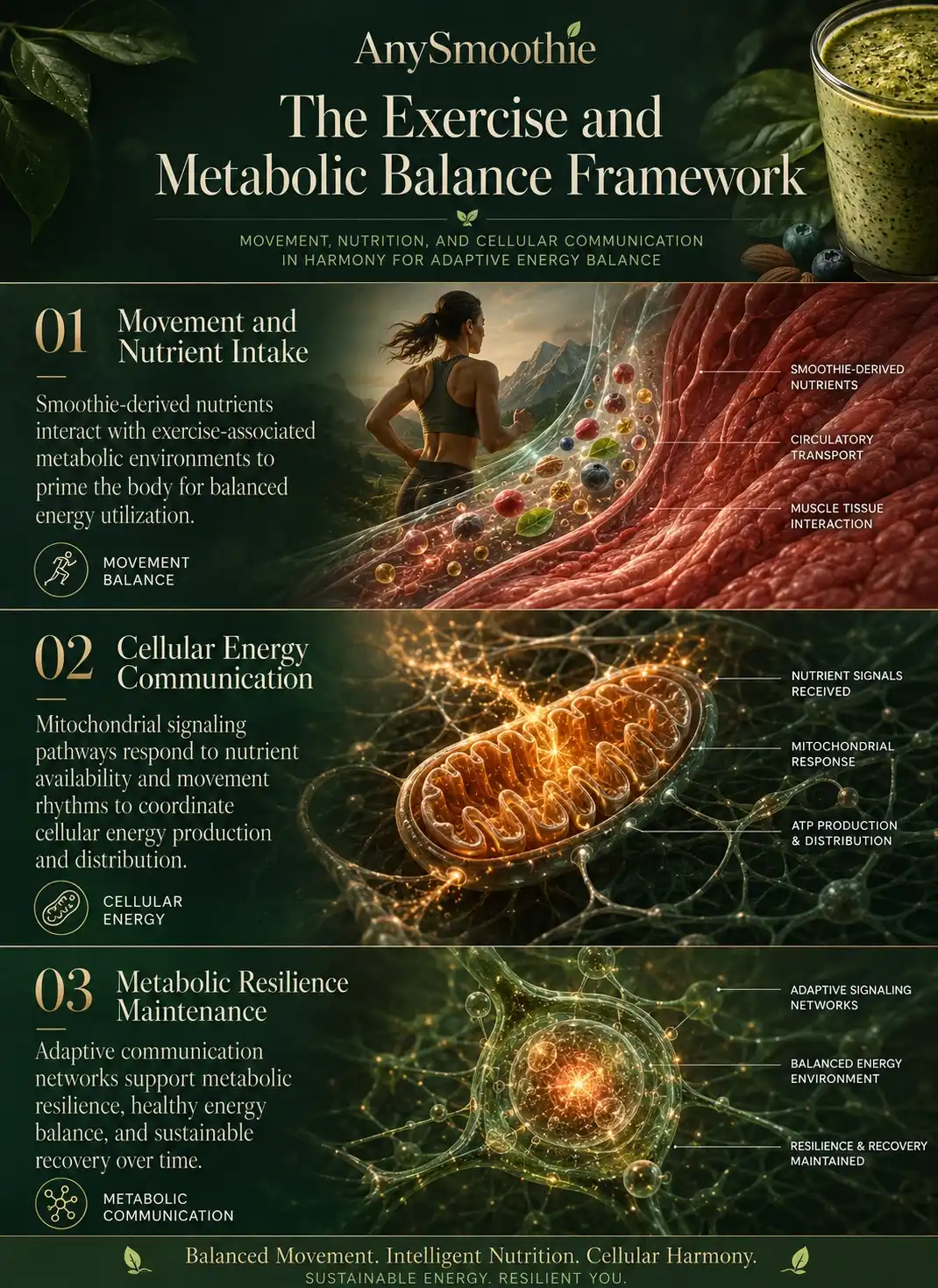
Mitochondrial Adaptation: Enhancing Energy Production Post-Training
Training stresses mitochondria. They adapt for better ATP. Fat oxidation improves. Metabolic flexibility grows.
CoQ10 and carnitine enhance this. They boost electron transport. Energy rises. Fatigue fades over time.
Smoothies deliver these post-training. Long-term gains build. You feel unstoppable.
CoQ10 and Carnitine: The Biohacker’s Duo for Faster Fat Oxidation
CoQ10 acts as an antioxidant. It fuels mitochondria like efficient engines. Carnitine shuttles fats inside for burn. Think mito fuel trucks.
Together, they extend EPOC. Fat oxidation speeds up. Dose 100-200mg CoQ10 daily. 500-2000mg carnitine works.
Food sources help too. Meat for carnitine. Organ meats for CoQ10. Post-training timing maximizes adaptation.
Conclusion: Turn Workouts into Wins with These Smoothies
Prime pre-workout with nitric oxide from beets and citrulline. Recover smart via insulin spikes and glycogen reloads. Sip these exercise and metabolism smoothies daily. Build mitochondrial power with CoQ10 and carnitine.
Fat burns longer. Muscles grow faster. Energy soars. You gain metabolic flexibility and peak performance.
Try one recipe this week. Track your energy and recovery. Notice the difference? Share results in comments below. Subscribe for more biohacks. Become unstoppable now. Your body thanks you.
🛡️ Safety Notes & Dietary Interactions
- Nitric Oxide Signaling and Pre-Workout Vaso-Flow Dynamics: Beetroot and citrulline are commonly discussed together because nitrate-derived nitric oxide participates in vascular relaxation and oxygen delivery pathways during exercise. Pre-workout smoothies built around these ingredients generally work best when portions stay moderate and digestion remains light enough to avoid gastrointestinal heaviness during training.
- mTOR Activation and Post-Exercise Nutrient Partitioning: Post-workout recovery blends often combine carbohydrates with rapidly digestible protein sources because insulin and amino acid availability help coordinate glycogen restoration and muscle protein synthesis signaling. The most effective recovery smoothies usually prioritize balanced nutrient timing rather than excessive sugar loading or oversized calorie intake.
- Mitochondrial Electron Transport and Fat Oxidation Support: CoQ10 and carnitine frequently appear in metabolic flexibility discussions because they participate in mitochondrial energy-transfer pathways tied to ATP generation and fatty acid transport. Their role is not stimulant-like energy production, but support for cleaner substrate handling and steadier mitochondrial workload during training adaptation cycles.
- Exercise Recovery and Glucose Curve Stability: Smoothies designed for performance support should still maintain reasonable fiber, fat, and micronutrient density. Even around training windows, relying entirely on refined sugars without supportive nutrients may create sharper glucose fluctuations and less stable energy pacing compared to formulas balanced with oats, nut butter, greens, or berries.
FAQ
Why are beets considered such a strong ingredient for pre-workout smoothies?
Beets naturally contain nitrates that the body can convert into nitric oxide, a signaling molecule involved in vascular relaxation and oxygen delivery. In exercise-focused nutrition, this matters because improved blood flow may help support endurance, muscular oxygenation, and exercise efficiency. Pairing beets with lighter hydration ingredients like coconut water or ginger also helps keep the smoothie easier to tolerate before training.
Why is the post-workout insulin window discussed so often in recovery nutrition?
After exercise, muscle tissue tends to become more receptive to glucose and amino acid uptake. This is why many recovery strategies combine moderate carbohydrates with protein shortly after training sessions. The goal is not creating an extreme insulin spike, but supporting glycogen restoration, nutrient partitioning, and smoother muscle recovery signaling while the body is already primed for repair.
How do CoQ10 and carnitine support mitochondrial energy metabolism?
CoQ10 participates in electron transport inside mitochondria, while carnitine helps shuttle fatty acids toward mitochondrial oxidation pathways. Together, they are often discussed in metabolic flexibility and exercise recovery frameworks because they support efficient substrate handling during periods of higher energy demand. In practical wellness nutrition, they fit best alongside consistent sleep, movement, hydration, and balanced protein intake.
Why do balanced workout smoothies usually include fats or fiber?
Ingredients like oats, nut butter, seeds, or berries help slow nutrient absorption and create steadier digestion compared to highly sugary drinks. This matters because stable glucose handling often supports more even energy pacing and satiety during long workdays or demanding training schedules. A smoother nutrient curve generally feels more sustainable than rapid spikes followed by energy crashes.
What makes a metabolism-support smoothie practical for long-term use?
The best formulas are usually the ones that fit real routines consistently without digestive heaviness or excessive complexity. Smoothies built around repeatable ingredients, balanced macronutrients, and clear timing windows tend to work better long term than aggressive “performance hacks.” Consistency in meal structure, sleep, hydration, and training rhythm still shapes metabolic flexibility more than any isolated ingredient.

Medical Disclaimer: AnySmoothie content is for educational purposes only and is not a substitute for professional medical advice. Consult a healthcare provider for personalized guidance. See our full Disclaimer & Terms of Use. AI Transparency: AnySmoothie may use AI to support content development. All content undergoes human editorial review for accuracy, clarity, and editorial quality. See our full AI Transparency.