
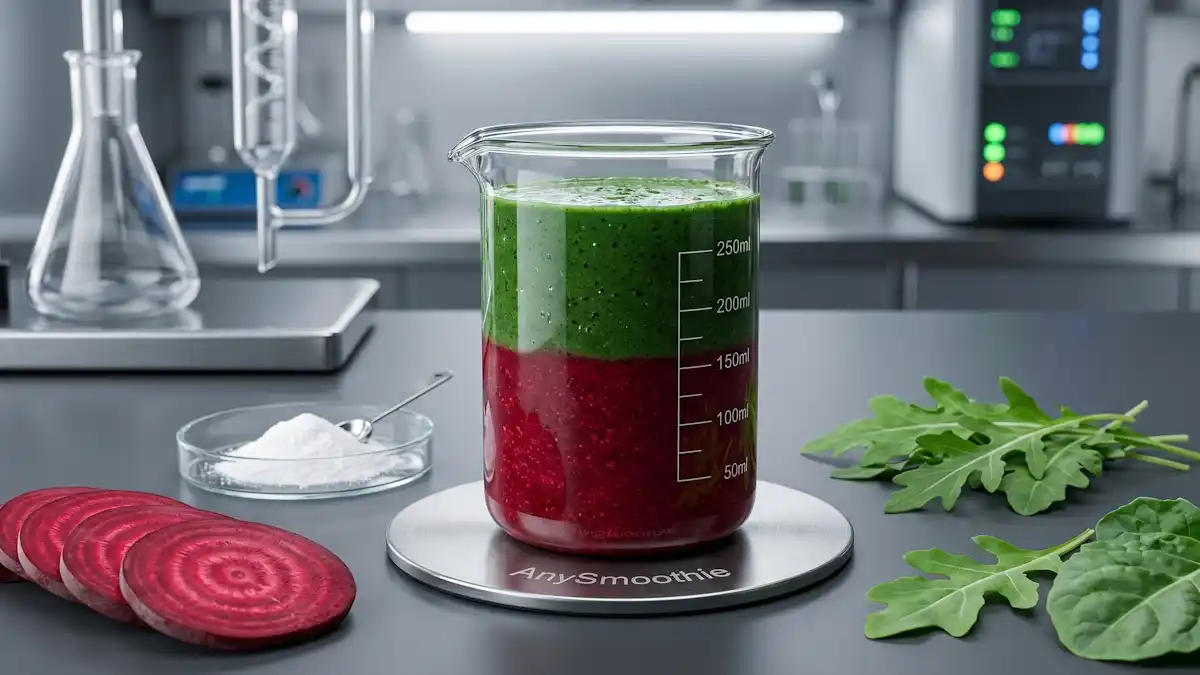
Better blood flow support starts earlier than most people think, and it doesn’t begin in the gym. A beet and greens smoothie for nitric oxide bioavailability works because dietary nitrate can move through a specific pathway that helps the body make nitric oxide later on.
That matters if you want support for workouts, steady energy, or vascular function without making things complicated. Beetroot, leafy greens, and even your sipping habits can change how much of that nitrate cycle your body actually uses.
This guide keeps the science clear and the build practical. You’ll see how the pathway works, which ingredients matter most, and how to mix a smoothie you’ll keep reaching for.
The Enterosalivary Nitrate Cascade: From Ingestion to Vasodilation
Dietary nitrate is absorbed in the gut, then a portion gets pulled back into saliva. From there, oral bacteria convert part of it into nitrite, which can later support nitric oxide production in the body.
That is the real value of nitrate-rich foods. It is not only about intake, but about bioavailability, which means how well your body can move that nitrate through the whole chain. A good review of this pathway and its link to cardiovascular health is here: systematic review on nitrate, oral microbiome, and cardiovascular health.
When nitric oxide availability rises, the body can support normal blood flow signaling and vascular compliance. That also matters for metabolic efficiency, because smoother blood vessel behavior helps deliver oxygen and nutrients where they are needed.
Why the oral microbiome matters for nitrite conversion
Your mouth is part of the nitrate system. Helpful bacteria on the tongue and gums do the first conversion step, so oral health matters more than many people expect.
Heavy antibacterial mouthwash, poor oral health, or a diet built around ultra-processed foods can interfere with that process. A review from Cambridge explains how oral bacteria help drive nitrate to nitrite conversion and influence vascular tone: Cambridge review on oral microbiome and vascular tone.
If you rinse with strong mouthwash right before the smoothie, you may blunt part of the nitrate cycle.
Sipping also matters. Letting the drink linger in the mouth gives nitrate more contact with that bacterial step before swallowing.
How beetroot and leafy greens work together in the same drink
Beetroot brings a strong nitrate load, plus betalain pigments that support redox balance. Leafy greens can add more nitrate density, along with their own plant compounds and texture.
That combination makes the smoothie more than a sweet drink. It becomes a simple way to support the enterosalivary nitrate pathway while keeping taste and texture manageable. For many people, that is the difference between a recipe they try once and a drink they use often.
Which Ingredients Give the Biggest Nitric Oxide Support
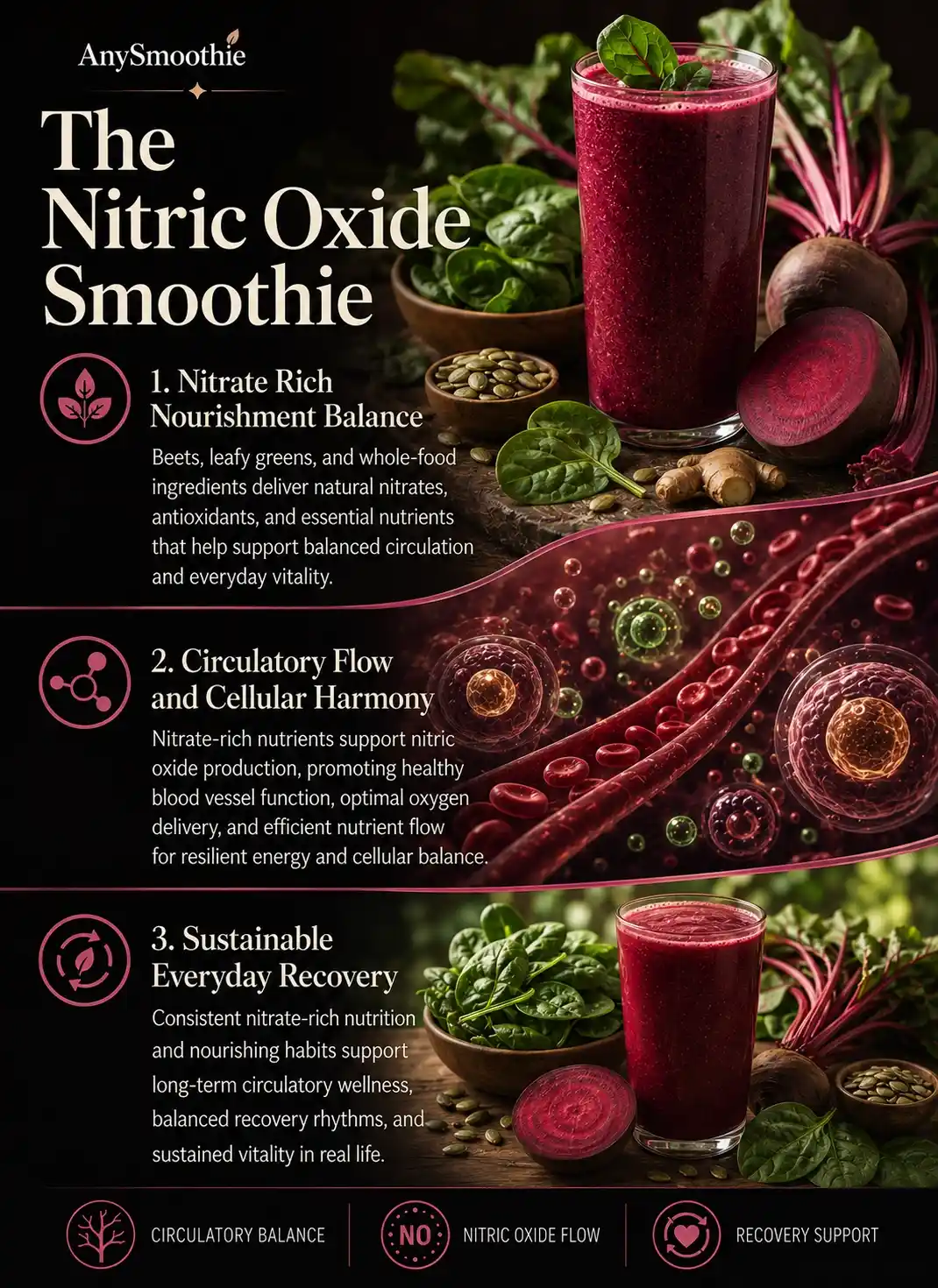
The fastest way to choose ingredients is to compare the main nitrate sources side by side.
| Nitrate-rich matrix | Physiological mechanism | Average nitrate content per 100g | Best smoothie pairing | Target physiological outcome |
|---|---|---|---|---|
| Red beetroot | Provides systemic nitrate plus betalain pigments for redox support | Often moderate to high, roughly 100 to 250 mg, depending on growing conditions | Citrus, berries, ginger | Balanced base for vascular support and workout prep |
| Arugula, Eruca sativa | High nitrate density with fast oral surface exposure and a peppery bite | Often high, roughly 250 to 400 mg, but variable | Apple, lemon, cucumber | Quick nitrate lift and lighter texture |
| Spinach | Delivers nitrate with thylakoids and a mild, easy flavor | Often moderate to high, roughly 100 to 200 mg | Berry, banana, yogurt alternative | Easy daily use and smoother mouthfeel |
The numbers swing with variety, soil, and storage. Still, the pattern is useful. Beetroot gives the most balanced base, arugula gives the sharpest nitrate hit, and spinach is the easiest to repeat.
A broader review of nitrate and nitrite biology also shows how recycled nitrate moves through the salivary glands and the gut, which is why source choice matters: NCBI review of nitrate and nitrite in health and disease.
Red beetroot for a dual nitrate and betalain effect
If one ingredient anchors the blend, beetroot is the safest pick. It gives you nitrate plus betalains, so it supports the pathway and adds antioxidant pigments in the same serving.
Its earthy taste works well with orange, lemon, berries, or ginger. For beginners, that usually makes beetroot the best all-around base.
Arugula and spinach as smart green boosters
Arugula is the fastest way to raise nitrate density without much volume. It also brings a peppery edge that pairs well with apple or citrus.
Spinach is milder and easier to drink every day. It adds body, plant compounds, and a smoother finish, which helps if you want a softer smoothie profile.
How to Build a Smoother, More Effective Blend
A good smoothie should taste clean, not overloaded. Start with beetroot, add one nitrate-rich green, then use fruit or acid to calm the earthy notes.
Lemon or lime brightens the flavor and cuts through beet. Berries, apple, or a little pineapple can soften the taste without turning the drink into dessert. If you want it to keep you full longer, add a small amount of chia or a yogurt alternative.
Keep fats light if you want a pre-workout blend. A little is fine, but too much can slow the drink down and make it feel heavy.
The best add-ins for taste, absorption, and steady energy
Use citrus for brightness, berries for color and balance, and cucumber for a cleaner finish. Ginger helps the flavor and makes the drink feel less dense.
A spoon of chia adds texture and a steadier feel. Yogurt alternatives can also make the smoothie more filling without burying the nitrate-rich ingredients.
Mistakes that can lower nitrate bioavailability
Too much ice can dull the flavor and make the drink harder to finish. Too many sweet fillers can drown out the beet and greens you actually want.
Ultra-processed add-ins are another weak point. They often crowd out the ingredients that matter and turn a functional smoothie into a sugar-heavy snack.
3 Nitric-Max Beet and Greens Smoothie Recipes
Keep each version simple. Beetroot stays in the lead, while the greens shift the taste and nitrate density.
The Hyper-Perfusion Red Beet, Organic Kale, and Ascorbic Acid Blend
Ingredients
- ½ cup cooked beetroot, chilled
- 1 cup organic kale, chopped
- 1 medium orange, peeled
- ½ small banana
- 1 tablespoon fresh lemon juice
- ¾ cup cold water
- ½ cup ice
Pour the water into the blender first. Add the kale, beetroot, orange, banana, lemon juice, and ice. Blend on high until completely smooth.
Beetroot naturally provides dietary nitrate, while kale contributes carotenoids, folate, vitamin K, and vitamin C. Orange and lemon provide additional vitamin C. Dietary nitrate participates in the nitrate–nitrite–nitric oxide pathway, but nitrate concentrations in whole beets vary considerably, so this smoothie should not be expected to provide a standardized dose or guarantee increased blood flow or exercise performance.
Estimated Nutrition per Serving
- Calories: ~190 kcal
- Protein: ~5 g
- Carbohydrates: ~44 g
- Fat: ~1 g
- Fiber: ~8 g
- Sugars: ~27 g
If I were making this before training, I’d chill the cooked beet completely before blending. Warm beet makes the earthy flavor much more noticeable, while a cold beet, citrus, and ice keep the drink sharper and fresher.
A Mild Arugula and Beet Smoothie for Daily Consistency
Ingredients
- ½ cup cooked beetroot, chilled
- 1 cup loosely packed arugula
- 1 small apple, cored and chopped
- ½ medium cucumber, chopped
- 1 tablespoon fresh lime juice
- ¾ cup cold water
- ½ cup ice
Pour the water into the blender first. Add the arugula, beetroot, apple, cucumber, lime juice, and ice. Blend until smooth.
Both arugula and beetroot can contribute dietary nitrate, although actual concentrations vary with growing, storage, and preparation conditions. Apple provides carbohydrates and fiber, while cucumber contributes fluid and helps soften the peppery character of the arugula.
Estimated Nutrition per Serving
- Calories: ~155 kcal
- Protein: ~4 g
- Carbohydrates: ~36 g
- Fat: ~1 g
- Fiber: ~7 g
- Sugars: ~23 g
A Spinach and Berry Blend for a Lighter Recovery Window
Ingredients
- ½ cup cooked beetroot, chilled
- 1 cup spinach
- ¾ cup frozen mixed berries
- ¾ cup plain unsweetened soy yogurt
- ½ cup cold water
Pour the water and soy yogurt into the blender first. Add the spinach, beetroot, and frozen berries. Blend until completely smooth and creamy.
Beetroot and spinach naturally contain dietary nitrate, while berries contribute anthocyanins and other polyphenols. Soy yogurt provides plant protein and helps soften the earthy beet flavor. This combination can contribute carbohydrates, protein, and micronutrients after exercise, although it should not be expected to accelerate recovery on its own.
Estimated Nutrition per Serving
- Calories: ~230 kcal
- Protein: ~10 g
- Carbohydrates: ~38 g
- Fat: ~6 g
- Fiber: ~9 g
- Sugars: ~20 g
Conclusion
A beet and greens smoothie can do more than fill a glass. It can support the enterosalivary nitrate pathway, which helps the body turn food nitrate into nitric oxide support.
That matters for vascular compliance, mitochondrial priming, and metabolic efficiency, as long as the blend stays simple enough to use often. The best version is the one with beetroot, the right greens, and a flavor you actually want tomorrow.
🛡️ Safety Notes & Contraindications
Hypotension and Nitrate-Vasodilator Medications: CRITICAL: Because concentrated beetroot and arugula induce intensive, immediate vasodilation of the vascular smooth muscle cells, this protocol causes systematic blood pressure reduction. If you are prescribed antihypertensive agents (e.g., ACE inhibitors, calcium channel blockers) or phosphodiesterase-5 inhibitors (e.g., Sildenafil, Tadalafil), combining them daily with this smoothie can precipitate acute orthostatic hypotension, dizziness, or syncope.
Oxalate Seeding and Kidney Stone Formation: Spinach and beetroot are heavily dense in oxalic acid. In individuals with localized metabolic vulnerability or a medical history of calcium-oxalate nephrolithiasis, consuming this high-flux nitrate protocol daily can promote hyperoxaluria. Pro-Tip: Include a pure calcium-fortified plant milk or clean seed base (chia) to complex oxalates directly in the bowel lumen, preventing systemic renal absorption.
Beeturia and Stool Discoloration Awareness: The structural betalain pigments (betanina) present in red beetroot are not completely metabolized by some individuals due to genetic or gastric acidity variations. This can result in a pink or reddish discoloration of urine (beeturia) and stool 12-24 hours post-consumption. This is a benign physiological phenomenon but must be recognized to prevent false-positive alarms for hematuria.
Gastric Mucosal Irritation from Raw Arugula Compounds: Arugula (Eruca sativa) contains high levels of glucosinolates and sulfur compounds that give it its characteristic peppery bite. Consuming large amounts of raw arugula on an empty stomach can trigger acute local mucosal irritation, pyrosis, or gastric acid rebound in sensitive digestive tracts. Dilute the matrix with ample cucumber or water.
Renal Potassium Filtering Limits: Raw beets and spinach deliver a substantial internal surge of dietary potassium. Individuals presenting with advanced Chronic Kidney Disease (CKD, Stages 3-5) or those under medical prescription of potassium-sparing diuretics must avoid unmonitored vegetable loading to prevent severe hyperkalemia metrics.
FAQ
How does the “Enterosalivary Nitrate Cascade” generate nitric oxide independently of the eNOS pathway?
When you ingest nitrate-rich foods like beets or arugula, the inorganic nitrate ($NO_3^-$) is absorbed in the upper small intestine, enters systemic circulation, and is concentrated up to 10-fold by the salivary glands. Biochemically, this concentrated nitrate is secreted back into the mouth, where facultative anaerobic bacteria on the tongue reduce it into nitrite ($NO_2^-$). Supporting this physiological system through slow-sipping protocols optimizes the natural pathways of “salivary recirculation,” allowing nitrite to be swallowed and subsequently converted into active nitric oxide in the gastric and vascular environments.
Why is the “Oral Microbiome” considered a required rate-limiting step for nitrate bioavailability?
Human cells lack the native nitrate reductase enzymes necessary to convert inorganic nitrate into usable nitrite. Biochemically, this conversion relies entirely on the symbiotic bacteria residing in the crypts of the posterior tongue. Supporting this physiological system means avoiding strong antiseptic mouthwashes or alcohol-based oral rinses before or immediately after consuming a nitrate-heavy smoothie, as destroying these microbial colonies effectively halts the conversion chain and blunts the downstream vascular benefits.
What is the advantage of combining “Betalains” from red beetroot with green leafy nitrates?
Red beetroot contains a unique class of nitrogenous pigments called betalains. Biochemically, betalains function as powerful scavenger molecules that protect newly formed nitric oxide from rapid destruction by superoxide free radicals in the bloodstream. Supporting this physiological system by pairing beetroot with high-density green nitrates (like arugula or kale) facilitates the biochemical mechanics of “NO preservation,” maximizing both the raw substrate availability and the systemic half-life of the active gas.
How does “Arugula” compare to spinach and beets regarding raw nitrate density?
While red beetroot serves as a reliable, bioavailable base, arugula (Eruca sativa) typically exhibits a significantly higher concentration of raw inorganic nitrate per 100 grams, often ranging between 250 to 400 mg depending on agricultural soil conditions. Biochemically, its peppery surface compounds interact smoothly with oral surfaces to initiate rapid nutrient contact. Supporting this physiological system by using arugula as a green booster provides an acute nitrate lift with less total fluid volume than spinach or beet juice alone.
Why does cellular “Mitochondrial Priming” depend on a steady flux of dietary nitrates?
During periods of high physical demand or metabolic work, tissues require an efficient exchange of oxygen and nutrients to maintain energy production. Biochemically, nitric oxide optimizes mitochondrial respiration by regulating oxygen consumption at the cytochrome c oxidase level, lowering the total oxygen cost of producing ATP. Supporting this physiological system through target-rich smoothies facilitates the biochemical mechanics of “metabolic efficiency,” helping vascular walls adapt smoothly to performance demands without cellular friction.

Medical Disclaimer: AnySmoothie content is for educational purposes only and is not a substitute for professional medical advice. Consult a healthcare provider for personalized guidance. See our full Disclaimer & Terms of Use. AI Transparency: AnySmoothie may use AI to support content development. All content undergoes human editorial review for accuracy, clarity, and editorial quality. See our full AI Transparency.