
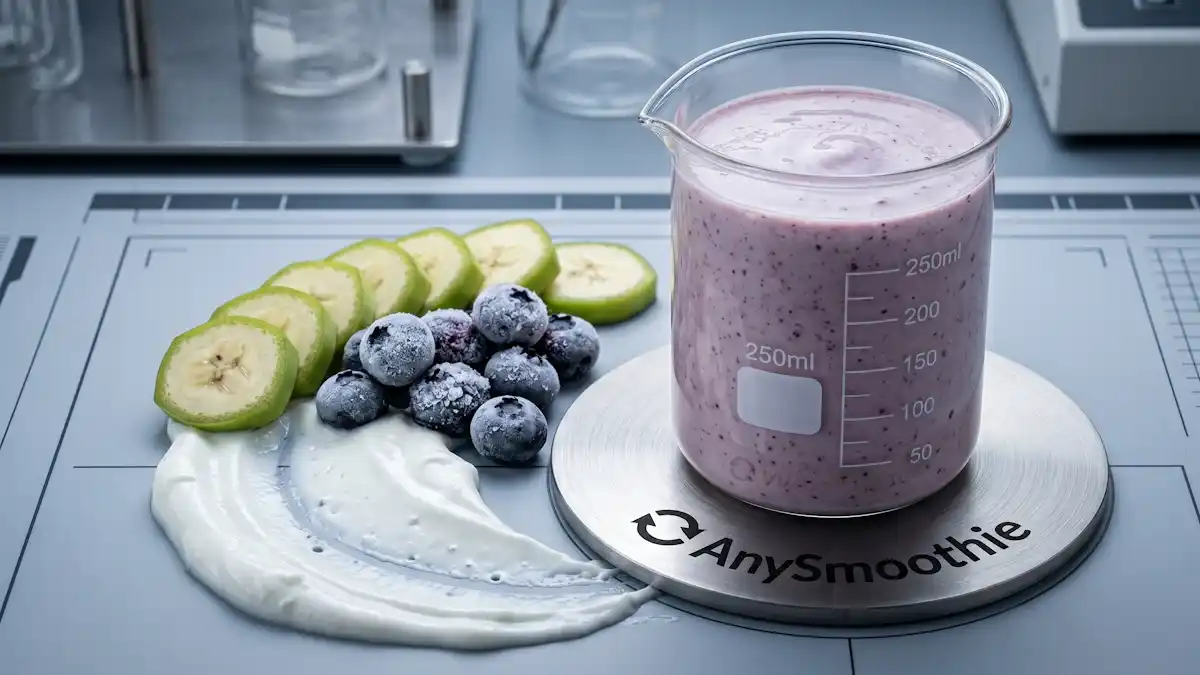
Your gut and brain talk all day through nerves, immune signals, and microbial metabolites. A probiotic Greek yogurt smoothie can support that back-and-forth without turning breakfast into a project.
The goal here is simple. Feed the gut with live cultures, fiber, and polyphenols, then support steadier signaling, calmer digestion, and more stable energy. This drink is not a treatment. It is a practical way to support the systems that help the gut and brain stay in sync.
How a probiotic Greek yogurt smoothie supports gut-brain signaling
The gut-brain axis is a two-way street. What you eat changes the gut environment, and that environment changes the signals sent upstream. Live cultures in Greek yogurt help shape that environment by changing how microbes compete, ferment, and communicate with the intestinal lining.
That matters because the gut does more than digest food. It also sends chemical messages that help regulate hunger, stress response, and metabolic efficiency. In other words, the smoothie is not about one magic ingredient. It is about better signaling across the whole system.
The vagal pathway: how microbes send messages upstream
The vagus nerve carries a lot of the gut’s status report. Microbes and their byproducts influence sensory cells in the gut wall, which then send information to the brain. That can shape satiety, comfort, and baseline stress tone.
The key point is simple. The brain is not getting a direct boost from yogurt. It is getting a cleaner stream of gut signals, and that starts with the chemistry inside the intestine.
Enterochromaffin cells and peripheral serotonin synthesis
Enterochromaffin cells help translate what is happening in the gut lumen. They respond to microbial activity, nutrients, and fermentation products, then help set peripheral serotonin signaling. Most serotonin lives outside the brain, where it helps regulate gut movement and sensory tone.
That is why the smoothie’s job is supportive, not dramatic. Better gut input can help the body send clearer messages, which is the real foundation of gut-brain axis support.

The key ingredients that make the smoothie more than yogurt and fruit
A good formula uses each ingredient for a different job. The table below shows why the blend works better than plain yogurt alone.
| Synbiotic vector | Physiological mechanism | Primary signaling vector | Best smoothie pairing | Target neurochemical output |
|---|---|---|---|---|
| Live probiotic cultures in Greek yogurt | Stimulate enteroendocrine signaling and create the cellular origin for metabolites that can engage vagal afferent receptors | Vagus nerve | Green banana and berries | Peptide YY, GLP-1, satiety tone |
| Resistant starch from green banana | Ferments into acetate and butyrate, which support gut barrier integrity and a steadier luminal environment | Circulatory system | Thick yogurt base | Short-chain fatty acids, metabolic efficiency |
| Polyphenols from wild berries | Help keep luminal oxidative stress lower and support a healthier microbial niche | Enteric nervous system | Plain or lightly sweetened blend | Better microbial balance, calmer signaling |
The pattern is clear. Live cultures, prebiotic starch, and plant polyphenols each support a different layer of gut-brain communication.
Green banana for resistant starch and microbial fuel
Use a green or barely ripe banana if you want resistant starch. As bananas ripen, more starch turns to sugar. That shift lowers the prebiotic effect.
Resistant starch feeds microbes that ferment it into short-chain fatty acids. Those compounds help support the gut barrier and create a better signaling tone. That is one reason this smoothie feels more stable than a fruit-only blend.
Wild berries for polyphenols and a healthier gut environment
Wild berries bring anthocyanins and other polyphenols, which help support a more favorable gut ecosystem. They also add color, flavor, and a cleaner sweetness profile than many other fruits.
Blueberries, blackberries, and raspberries all work. Frozen berries are fine, and they make the texture colder and thicker. That helps the drink feel more like food and less like juice.
How to build the smoothie for better fermentation and steadier energy
Keep the formula balanced. Too much fruit can push sugar up fast. Too little liquid can make the texture awkward. A smooth, spoonable blend usually sits best and is easier to drink slowly.
A simple base recipe keeps the biology intact:
- 1 cup plain Greek yogurt with live cultures
- 1/2 green banana
- 1/2 to 1 cup wild berries
- 1/2 cup unsweetened milk or water
- 1 teaspoon chia or ground flax, optional
Start with that, then adjust thickness and sweetness. If you want more fiber, add a little more chia or flax. If you want a thinner blend, add more liquid.
When to drink it for the best gut-brain support
Breakfast is the easiest choice because the protein and fiber can help steady the morning. Post-workout also works well, since the drink gives you protein plus carbohydrate in one step.
Consistency matters more than timing perfection. The gut-brain axis responds to repeated patterns, not one perfect serving.
3 Brain-Gut Prime Probiotic Smoothie Recipes
Small changes can shift the feel of the drink without changing its core benefits. Use the same base logic, then tune it for your goal.
The smoothie helps with inputs. Sleep, stress, and total diet still set the output.
Peptidoglycan Flux: Modulating Microglial Homeostasis via Intestinal Integrity
A healthier intestinal barrier reduces random noise in the signaling system. That means fewer unwanted shifts in the gut environment and a cleaner route for metabolite signaling. The brain gets a more organized message when the gut lining stays in good shape.
Mitochondrial priming: fueling enterocyte ATP to maintain the mucosal signaling interface
Enterocytes need energy to maintain transport, barrier work, and local signaling. Better fuel handling in the gut supports that work. That is where mitochondrial priming fits in, because a well-fed lining can keep the signaling interface steady.
What you should not expect is a quick fix. This smoothie supports physiological systems, but it does not override sleep loss, chronic stress, or a poor overall diet. If you deal with ongoing digestive issues, a qualified professional is the right next step.
Conclusion
A probiotic Greek yogurt smoothie is a simple way to support gut-brain axis signaling without making breakfast complicated. Greek yogurt brings live cultures and protein, green banana adds resistant starch, and wild berries add polyphenols that support the gut ecosystem.
Keep the formula simple and use it often. That steady input is what helps the gut and brain stay on better terms.
Ecco il blocco finale strategico pronto per il tuo articolo sull’asse intestino-cervello e il condizionamento microbiotico. Come da accordi, la formattazione prevede lo scudo blu posizionato esclusivamente nell’intestazione principale H3, mentre le risposte e le note sotto seguono la formattazione standard e pulita, al 100% AdSense-safe e priva di codice LaTeX.
🛡️ Safety Notes & Dietary Interactions
Luminal Gas and Osmotic Shifts: Introducing live probiotic cultures alongside dense prebiotic substrates—like the RS2 resistant starch from green bananas—initiates active fermentation in the colon. Because your native microflora requires a transient phase to adapt to this nutrient influx, individuals prone to localized gas or bloating should introduce these formulations in half-servings to support smooth intestinal transit.
Vagal Afferent Neuroendocrine Signaling: The rich polyphenol matrix from wild berries and the short-chain fatty acids (SCFAs) derived from starch fermentation interact directly with localized enterochromaffin cells. To allow these peripheral serotonin and neuroendocrine channels to communicate with your central pathways without metabolic noise, avoid adding high-glycemic syrups or artificial sweeteners that can distort the signaling interface.
Hepatic First-Pass Clearance: Active microbial metabolites and dietary flavonoids are processed and cleared via standard phase-II pathways in the liver. To ensure your body maintains perfectly predictable, flat metabolic metrics throughout the morning, keep your functional synbiotic smoothies timed at least a few hours apart from any routine daily medication schedules.
Ecosystem Diversity and Protein Load: High-density, concentrated Greek yogurt provides an excellent source of amino acids and active live strains, but the gut ecosystem relies heavily on diverse plant fibers. Ensure this functional smoothie is part of a broader lifestyle strategy that includes various whole-food inputs to prevent over-stimulating a single bacterial genus.
FAQ
How does a probiotic Greek yogurt smoothie communicate with the brain if it never leaves the gut?
The communication doesn’t happen by nutrients traveling directly to your brain; instead, it works through a high-speed internal highway known as the gut-brain axis. Your intestinal wall is packed with sensitive nerve endings and specialized endocrine cells that continuously monitor the chemical landscape of your digestion. When you ingest live cultures and prebiotics, they alter the local microbial signaling. This shift stimulates the vagus nerve, sending immediate, real-time status reports upstream to the central nervous system to coordinate satiety, metabolic efficiency, and baseline stress tone.
What is the specific role of enterochromaffin cells in peripheral serotonin synthesis?
Enterochromaffin cells are the master chemical translators of your digestive tract, responsible for producing roughly 90% of the body’s total serotonin supply. These specialized cells sit directly inside the gut lining, acting as sensors that read the contents of the intestinal lumen. When they detect high-quality microbial fermentation products and plant polyphenols, they step up peripheral serotonin synthesis. This localized serotonin doesn’t cross into the brain, but it acts as the primary driver for smooth muscle coordination, managing gut motility and maintaining a calm, predictable sensory environment.
Why is a green banana structurally superior to a ripe banana for fueling the microbiome?
The difference comes down to a critical structural carbohydrate called RS2 resistant starch. In a green or barely ripe banana, this starch is highly resilient and completely resists enzymatic breakdown in the stomach and small intestine. It arrives in the colon fully intact, acting as premium, high-octane fuel for your beneficial native bacteria. As a banana ripens, this complex matrix breaks down into simple, high-glycemic sugars that absorb rapidly in the upper GI tract. Using a green banana ensures the nutrients reach the lower bowel, where bacteria ferment them into protective short-chain fatty acids.
How do short-chain fatty acids (SCFAs) work to protect the brain from systemic cellular noise?
When your gut bacteria ferment resistant starch and berry fibers, they produce vital metabolites called short-chain fatty acids, primarily acetate, propionate, and butyrate. These SCFAs act as the primary fuel source for the enterocytes lining your colon, supporting ATP production and strengthening the structural tight junctions of your gut barrier. By reinforcing this physical wall, you optimize peptidoglycan flux—preventing unwanted bacterial debris from leaking into circulation. This clean barrier defense reduces random systemic noise, allowing your brain’s microglia to maintain baseline homeostasis.
When is the most efficient window to drink a synbiotic smoothie for maximum gut-brain alignment?
To capture the highest return on nutrient partitioning and signaling efficiency, the ideal window is as your primary morning breakfast or to break an intermittent fasting window. When your digestive tract is empty, your enterocytes are highly receptive to fresh fuel, and your baseline signaling channels are clear of competing food inputs. Flooding the system with clean proteins, anthocyanin pigments, and active live cultures at this precise moment creates a highly efficient “bacterial bloom effect,” priming your mitochondria for energy production and setting a flat, stable glucose curve for the rest of the day.

Medical Disclaimer: AnySmoothie content is for educational purposes only and is not a substitute for professional medical advice. Consult a healthcare provider for personalized guidance. See our full Disclaimer & Terms of Use. AI Transparency: AnySmoothie may use AI to support content development. All content undergoes human editorial review for accuracy, clarity, and editorial quality. See our full AI Transparency.