
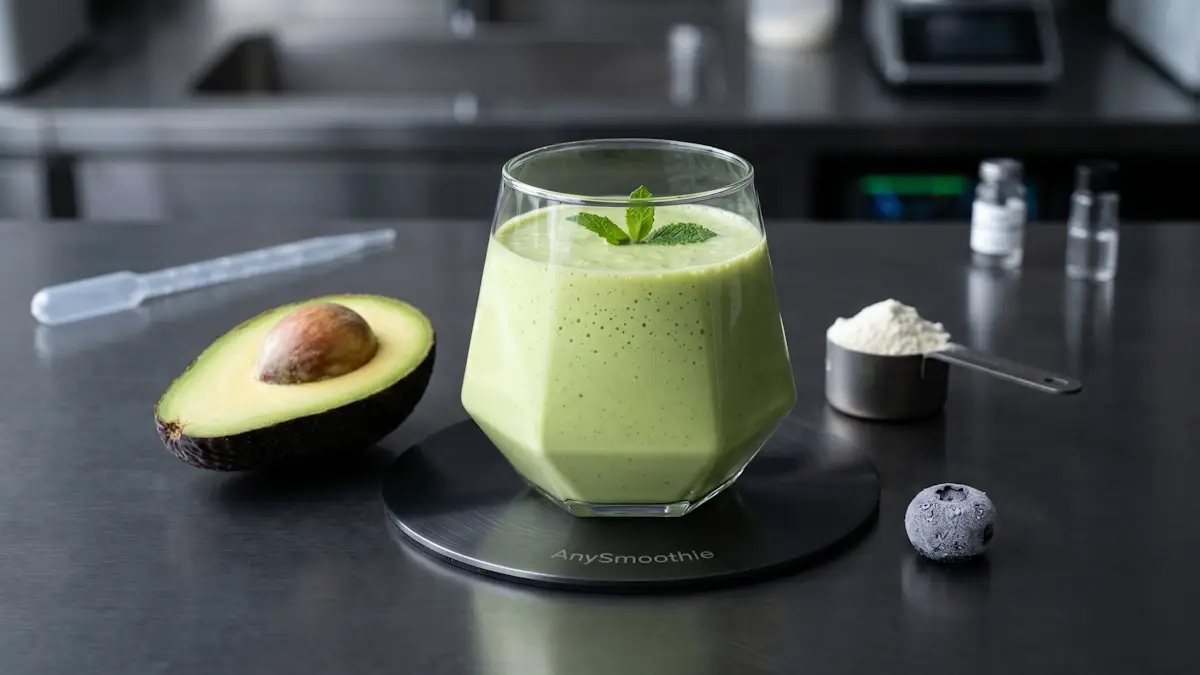
A bigger smoothie is not always a better one. When you want a high efficiency smoothie, the goal is cleaner nutrient delivery, easier digestion, and steadier energy.
That means less chaos in the blender and less work for your gut. A tight formula can support bioavailability, nutrient partitioning, and metabolic efficiency without turning breakfast into a science project.
The sweet spot is simple: fat, protein, and phytochemicals. Build around those three, and the rest gets easier.
The Efficiency Principle: Reducing Complexity for Maximum Nutrient Uptake
A smoothie with too many ingredients can crowd the system. Extra fruit, powders, seeds, and add-ins all compete for space and digestion time. That can blur the payoff.
A simpler blend gives your body a cleaner job. Fewer moving parts can reduce digestive load, lower the chance of ingredient conflicts, and make nutrient uptake more predictable. Blending also breaks food down into a form that moves faster through the system, but that only helps when the formula stays focused.
If you want a good primer on how food prep affects absorption, see this guide to maximizing nutrient absorption. The main lesson is simple: texture, prep, and food pairing matter.
Bioavailability Over Volume: The Biochemistry of Minimalist Blending
More volume does not mean more benefit. A giant smoothie can slow digestion, spike sugar faster than you want, or bury the best ingredients under filler.
A minimalist blend keeps fiber at a useful level, not an exhausting one. It also avoids stacking sweeteners and unnecessary extras that can reduce clarity in the blend. The target is not a meal in a cup with everything in it. The target is a precise mix that the body can process with less friction.
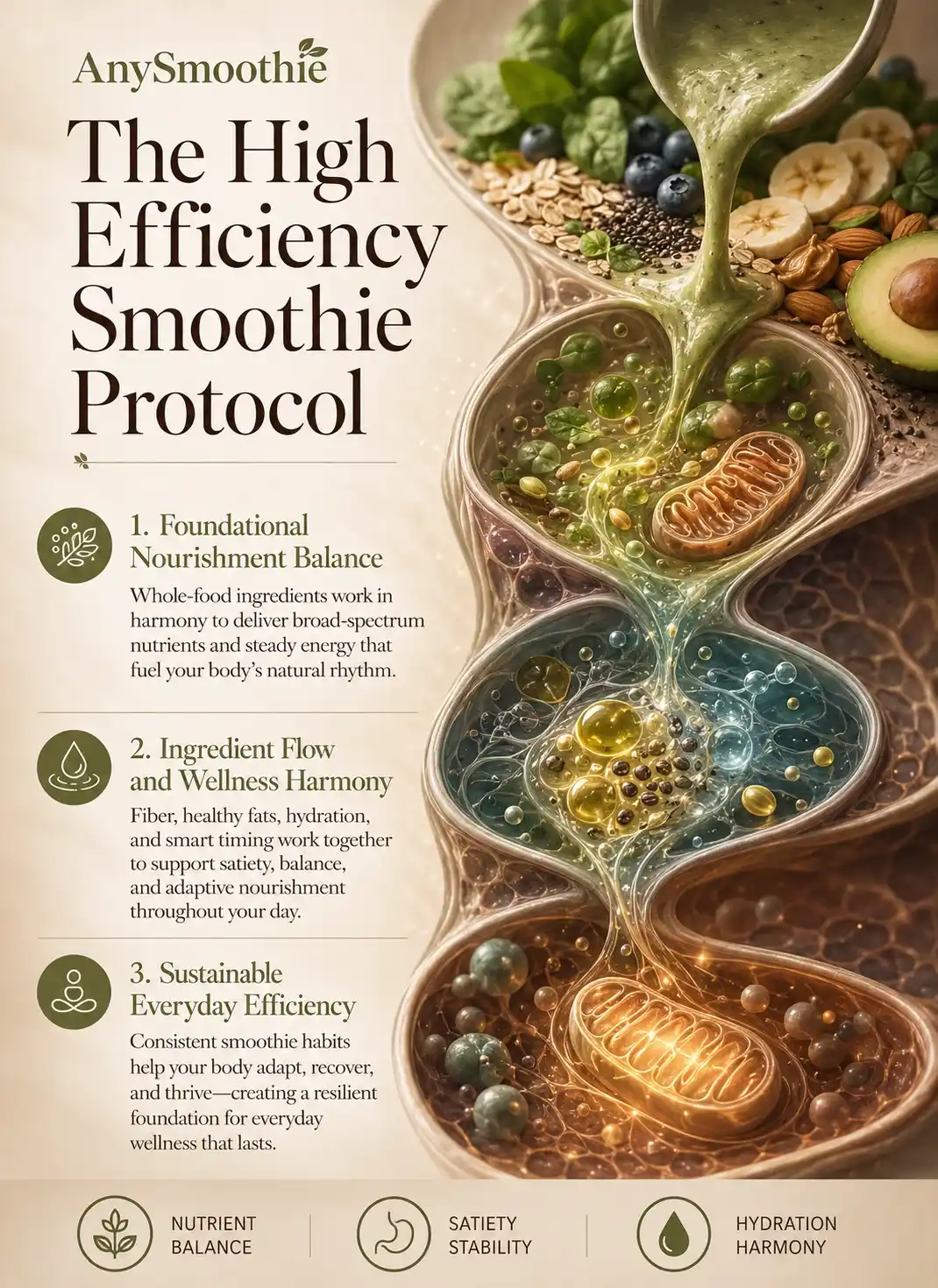
Core Stratification: The 3 pillars of Lipid, Protein, and Phytochemical Power
This protocol works because each ingredient has one job.
Fat supports satiety and helps carry fat-soluble compounds.
Protein supplies amino acids and helps steady the blend.
Phytochemical-rich plant food adds color, flavor, and micronutrient density.
That structure is flexible. You can swap the fat source, change the protein, or rotate the plant ingredient. The rule is to keep the roles clear. A formula built this way supports nutrient partitioning better than a random mix of healthy-sounding items.
Gastric Emptying: Why 3 Ingredients Optimize Nutrient Partitioning
Gastric emptying is the rate at which food leaves the stomach. When a smoothie has balanced fat and protein, it usually moves more steadily than a sugar-heavy blend. That matters because a steadier release gives your body more time to handle nutrients in an orderly way.
A smoother release can also help with post-meal steadiness. In practical terms, you may feel less of the sharp rise and drop that comes from a fast, sugary drink. For a simple comparison, these three smoothie styles tell the story well.
| Smoothie Philosophy | Digestibility Score | Speed of Nutrient Delivery | Bioavailability Potential | Metabolic Efficiency Score |
|---|---|---|---|---|
| Kitchen Sink Blend, 10+ ingredients | 3/10 | 4/10 | 5/10 | 4/10 |
| Standard 5-Ingredient Meal Replacement | 6/10 | 6/10 | 7/10 | 6/10 |
| 3-Ingredient High-Efficiency Protocol | 9/10 | 8/10 | 9/10 | 9/10 |
The pattern is clear. When the blend gets simpler, the digestive job gets easier and the useful output goes up. That is why a well-built three-part smoothie can beat a crowded one.
3 Triple-Threat High Efficiency Smoothie Recipes
A good high efficiency smoothie should be easy to repeat. Keep water and ice as texture helpers if needed, but do not count them as core ingredients.
One useful way to think about it is this: build around one fat source, one protein source, and one plant source. That keeps the blend balanced without turning it into a long ingredient list. For more ideas on pairing protein with fruit and fat, this berry smoothie example shows how simple combinations can support fullness and steady energy.
Supporting Mitochondrial Priming with Less Effort
Mitochondrial priming sounds technical, but the idea is simple. You want a meal that feeds energy production without making digestion feel clunky.
A balanced smoothie helps by avoiding a huge sugar load and by giving protein and fat room to do their work. That can support a more even post-meal response, which matters if you want to stay focused after breakfast. It also keeps the blend useful for people who train, work early, or need a meal that does not drag them down.
For another take on simple plant-forward blends, this green smoothie approach shows how protein and vegetables can work together without a long ingredient list.
Common Mistakes That Turn a High Efficiency Smoothie Into a Sugar Bomb
The biggest mistake is fruit overload. A few berries are one thing. Multiple bananas, juice, dates, and syrup are another.
Too many powders can also backfire. They make the texture chalky and can add digestive noise without adding clarity. Sweeteners create the same problem. They train the blend toward dessert, not efficiency.
Keep this rule in mind: one fat, one protein, one plant ingredient, then stop.
Conclusion
A well-built smoothie does not need a long ingredient list to work well. In fact, a three-part formula often supports better nutrient uptake, easier digestion, and more stable energy than a crowded blend. Use fat for transport, protein for balance, and phytochemicals for density. Then keep the rest simple. Try one version for a week, notice how you feel, and let your own response guide the next batch.
⚠️ Safety Notes for 3-Ingredient High Efficiency Smoothies
Protein Isolate Purity: When using whey isolate as your primary protein pillar, ensure it is cross-flow microfiltered and free from artificial sweeteners (like sucralose or acesulfame K). Fillers and artificial additives can disrupt the gut microbiome, negating the “high efficiency” goal.
Oxalate Management (Green Version): If choosing the spinach-based variation, remember that raw spinach is high in oxalates. To prevent issues for those prone to kidney stones, rotate with low-oxalate greens like romaine or briefly steam the spinach before freezing it for your blend.
Avocado Ripeness and Mycotoxins: Only use avocados that are perfectly ripe. Overripe avocados with brown spots can harbor fungal metabolites that increase the toxic load on the liver, counteracting the metabolic efficiency of the smoothie.
Rapid Absorption Warning: Because this blend is highly bioavailable, the nutrients enter the bloodstream quickly. If you have Type 1 Diabetes, be aware that even a low-sugar blend may require precise insulin timing due to the speed of uptake.
Allergy Awareness (Cacao): Raw cacao contains theobromine, a mild stimulant. If you are extremely sensitive to caffeine or have certain heart conditions (tachycardia), the cacao version may cause jitteriness. Start with a small amount (1 teaspoon).
FAQ
How can only three ingredients create a “high efficiency” smoothie
High efficiency in this protocol means maximizing the net nutrient gain while minimizing the digestive effort. By stripping away non-essential components, you reduce the potential for biochemical interference (such as fiber binding to minerals or fructose overloading the liver). This streamlines the process of nutrient partitioning, ensuring that the critical substrates are transported to your cells rapidly, supporting physiological systems involved in immediate energy production and repair.
Why are avocado, blueberries, and whey considered the core “Triple Threat”
These three represent a precise stratification of essential fuel and protective factors. Avocado provides monounsaturated lipids that support liposomal transport of other nutrients. Blueberries offer high-density polyphenols to manage post-prandial oxidative stress. Whey isolate provides rapidly absorbed amino acids to prime muscle protein synthesis (MPS). This combo optimizes mitochondrial priming by delivering both stable fuel and the structural co-factors needed for efficient operation.
Is the lack of fiber in a minimalist smoothie a problem
For a standard meal, fiber is crucial. However, the high-efficiency protocol is a targeted tool, often used pre/post-workout or when digestive energy is low. By intentionally keeping fiber complexity low, we support the natural pathways of rapid gastric emptying. This allows the smooth, bioavailable matrix of nutrients to enter the small intestine faster, supporting the body’s physiological need for immediate fuel partitioning without the lag time of complex fiber breakdown.
What is “post-prandial stability” in the 3-ingredient protocol
Every meal triggers a metabolic response, including shifts in blood glucose and oxidative stress. A 10-ingredient smoothie can create unpredictable post-prandial volatility. A 3-ingredient protocol is metabolically predictable. Because the glycemic load is controlled (e.g., using low-sugar berries) and paired with stabilizing fats/proteins, it supports the physiological systems involved in maintaining stable blood sugar and reducing the inflammatory “noise” that can follow complex digestion.
Should I add a “superfood powder” to my 3-ingredient smoothie
The core rule of the protocol is: If it’s not essential to the goal, remove it. Many superfood powders contain anti-nutrients, binders, or high mineral loads that compete for absorption or complicate digestion. Unless that powder provides a critical cofactor you are specifically targeting, its addition will likely decrease the total metabolic efficiency of the blend. Stick to the protocol to maintain maximum physiological streamlined delivery.

Medical Disclaimer: AnySmoothie content is for educational purposes only and is not a substitute for professional medical advice. Consult a healthcare provider for personalized guidance. See our full Disclaimer & Terms of Use. AI Transparency: AnySmoothie may use AI to support content development. All content undergoes human editorial review for accuracy, clarity, and editorial quality. See our full AI Transparency.