
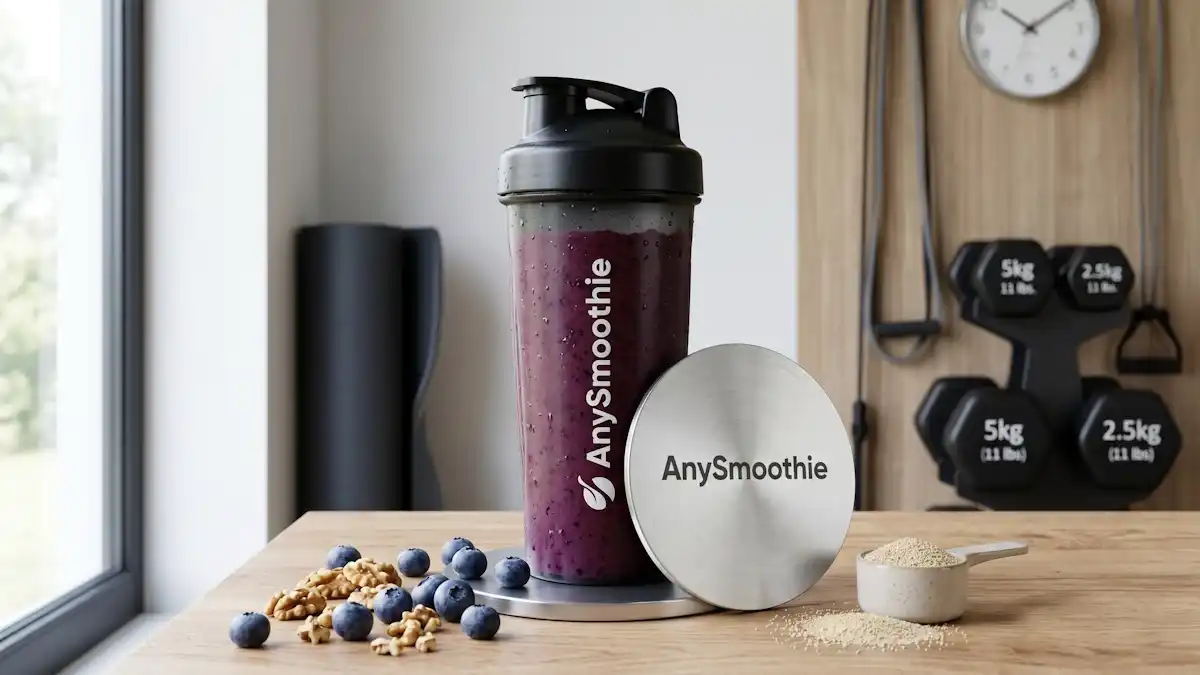
Starting a workout when your body feels stiff and your mind feels scattered is a bad setup. Beginners often blame weak fitness, but the problem is often poor readiness. A simple neuro priming smoothie and a short, low-impact routine can help you feel more focused, coordinated, and steady before the first rep.
That matters because movement is not only about muscles. Your nervous system has to fire clean signals first. When that happens, exercise feels smoother, safer, and less frustrating.
The Neural Blueprint: Why Beginners Must Train the Brain First
A beginner routine works best when the brain is awake before the body starts loading work. That means balance, timing, and control come first. Strength matters, but clean movement matters more on day one.
When the nervous system is ready, you notice better posture, fewer sloppy reps, and less bracing through the wrong muscles. This is where proprioception helps. It gives your brain feedback about where your body is in space, so each movement feels easier to repeat.
Recent research on acute exercise priming shows that short bouts of movement can improve both cognitive and motor performance. For beginners, that means the warm-up is not filler. It is part of the workout.
Better movement quality at the start usually beats harder effort with poor form.
Synaptic Plasticity: Creating New Motor Pathways for Movement
Synaptic plasticity is the brain’s ability to build and strengthen movement patterns. In plain terms, the more you repeat a safe motion, the easier it becomes to do it well.
That is why simple drills work so well. Squats, marching, arm circles, and step-backs teach the nervous system what to expect. Each clean rep gives the brain a better map.
Repetition also lowers the friction that beginners feel. Instead of guessing what to do next, the body starts to recognize the pattern. That makes exercise feel less awkward and more automatic.
Why Coordination Matters More Than Intensity at the Start
A hard workout is not the same as a helpful workout. For beginners, accuracy should lead, then effort can grow later.
If your knees cave in during squats or your shoulders tense during push-ups, more intensity only makes the pattern messier. A slower rep with good control often gives better results. It also builds confidence faster.
That is the real win. Good coordination lets you train more often, recover better, and avoid the stop-start cycle that kills consistency.
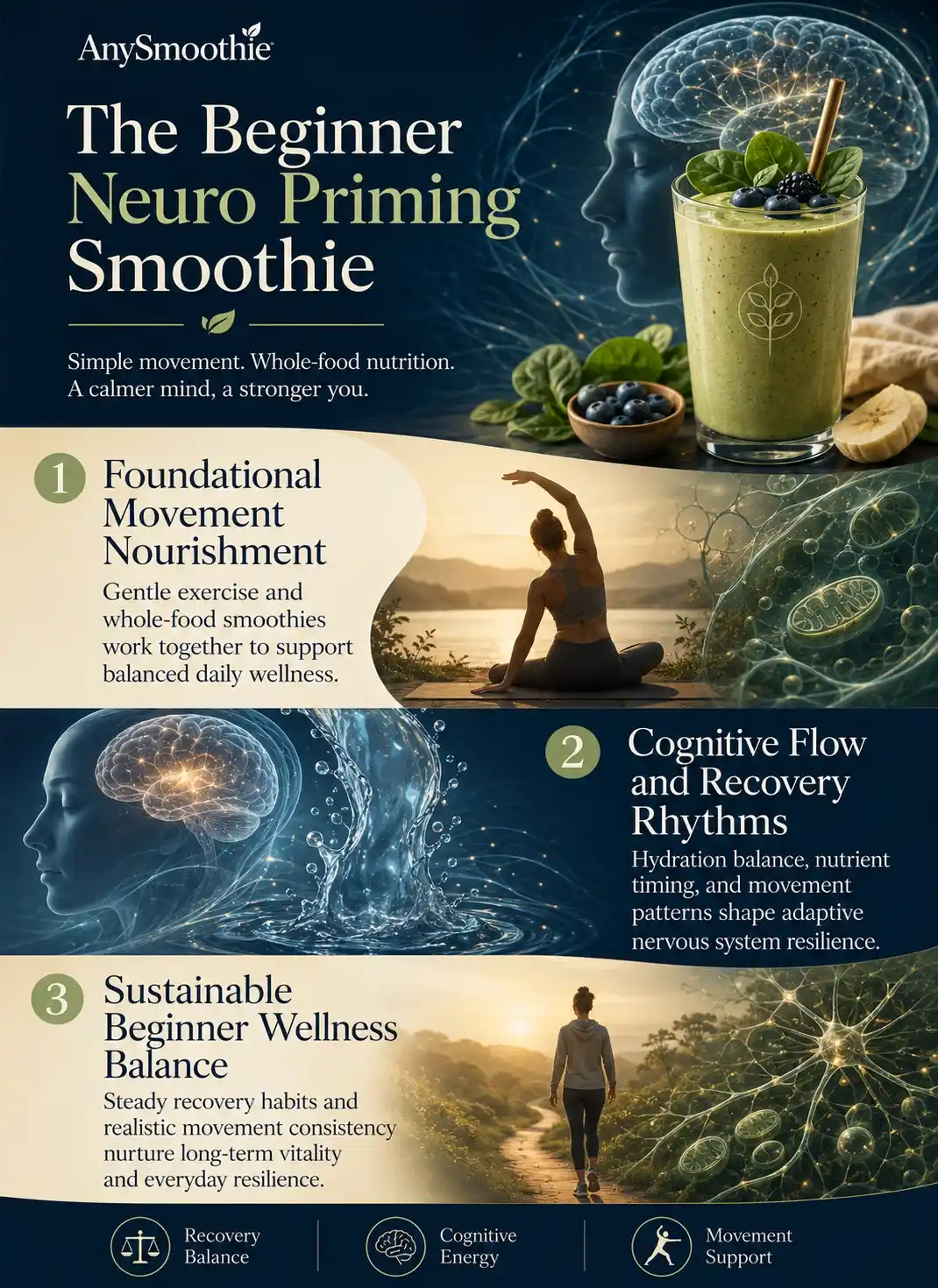
The Neuro-Priming Stack: Choline, Anthocyanins, and ATP Catalysts
A neuro priming smoothie is not magic. It is a pre-workout support drink built to help steady energy, brain signaling, and recovery from oxidative stress. Used well, it can make the first part of a workout feel more organized.
The three key pieces here are choline, anthocyanins, and MCT oil. Choline is the Essential Catalyst for the mind-muscle connection because it supports acetylcholine production, which helps the brain send clear movement signals.
Here is a simple comparison of the main ingredients.
| Criterion | Choline (Alpha-GPC or Lecithin) | Anthocyanins (Wild Blueberries) | MCT Oil (C8) |
|---|---|---|---|
| Physiological Role | Neurotransmitter precursor | Antioxidant support and blood-brain barrier support | Rapid mitochondrial fuel |
| Impact on Exercise | Accuracy of movement and reaction time | Helps support focus and recovery from oxidative stress | Supports steady energy and metabolic efficiency |
| Best Smoothie Pairing | Banana, Greek yogurt, or oat milk | Spinach, berries, and chia | Cocoa, vanilla, or almond milk |
| Synergistic Co-factor | B vitamins, especially B5 | Vitamin C and polyphenols | Enough liquid and a small protein source |
The pattern is simple. Choline supports signaling, berries support protection, and C8 gives fast fuel without a heavy feel.
Acetylcholine Synthesis: The Chemical Driver of Muscle Coordination
Acetylcholine is one of the main chemical messengers involved in muscle activation. Your body uses choline to make it. That matters when you are learning movement, because clean signaling helps the brain and muscles stay in sync.
Wild blueberries add anthocyanins, which are plant compounds linked to antioxidant support. That can help keep the smoothie useful without making it too rich. MCT oil, especially C8, gives a quick fuel source that many people tolerate well in small amounts.
For a beginner, the goal is balance. You want enough support to feel alert, not so much that your stomach feels off.
How to build a smoothie that digests easily before exercise
Keep the smoothie small if you plan to train soon. Many beginners do better with a smaller serving 30 to 60 minutes before exercise. That timing gives you room to digest without feeling weighed down.
Use a light liquid base, such as water, almond milk, or oat milk. Add a modest protein source if you want more staying power. Then include one fruit, one berry source, and a small fat source.
3 Functional Smoothie Recipes
Blueberry, Banana, Lecithin, and Almond Milk Smoothie
Ingredients
- ½ medium banana
- ½ cup blueberries
- 1 teaspoon sunflower lecithin
- ¾ cup unsweetened almond milk
- ½ cup ice, optional
Pour the almond milk into the blender first. Add the banana, blueberries, sunflower lecithin, and ice if using. Blend until smooth.
Banana and blueberries provide easily accessible carbohydrates along with fiber and plant compounds. Sunflower lecithin contributes phospholipids, but it should not be expected to directly improve exercise performance or nutrient delivery. Keeping the portion relatively small can make this a practical pre-exercise option when training soon after eating.
Estimated Nutrition per Serving
- Calories: ~135 kcal
- Protein: ~3 g
- Carbohydrates: ~24 g
- Fat: ~4 g
- Fiber: ~4 g
- Sugars: ~14 g
Wild Blueberry, Spinach, Greek Yogurt, and C8 Smoothie
Ingredients
- ½ cup frozen wild blueberries
- ½ cup spinach
- ½ cup plain Greek yogurt
- ½ teaspoon C8 MCT oil
- ½ cup cold water
Pour the water and Greek yogurt into the blender first. Add the spinach, wild blueberries, and C8 MCT oil, then blend until completely smooth.
Greek yogurt provides protein, while wild blueberries contribute carbohydrates and anthocyanins. C8 is a rapidly absorbed medium-chain triglyceride that can contribute to ketone production. Because MCT oil can cause gastrointestinal discomfort in some people, keeping the amount small before exercise is especially sensible when individual tolerance is unknown.
Estimated Nutrition per Serving
- Calories: ~155 kcal
- Protein: ~13 g
- Carbohydrates: ~18 g
- Fat: ~5 g
- Fiber: ~3 g
- Sugars: ~12 g
If I were drinking this only 30–60 minutes before training, I’d keep the C8 at this small amount rather than automatically adding a full teaspoon or tablespoon. Pre-workout digestion matters more than making the smoothie unnecessarily rich.
Banana, Cocoa, Alpha-GPC, and Oat Milk Smoothie
Ingredients
- ½ medium banana
- 1 teaspoon unsweetened cocoa powder
- Alpha-GPC according to the product’s labeled serving or clinician guidance
- ¾ cup unsweetened oat milk
- ½ cup ice, optional
Pour the oat milk into the blender first. Add the banana, cocoa, Alpha-GPC if appropriate, and ice. Blend until smooth.
Banana and oat milk provide carbohydrates, while cocoa contributes flavanols and flavor. Alpha-GPC is a choline-containing supplement studied in neurological and exercise contexts, but evidence does not justify presenting it as a guaranteed pre-workout performance, focus, or power enhancer. Supplement amounts should follow the specific product label or clinician guidance.
Estimated Nutrition per Serving
- Calories: ~130 kcal
- Protein: ~3 g
- Carbohydrates: ~25 g
- Fat: ~3 g
- Fiber: ~3 g
- Sugars: ~11 g
The 20-Minute Adaptive Routine: Low-Impact, High-Neurological Output
This routine is built for beginners who want better movement, not exhaustion. Pair it with your smoothie, wait a little, then start moving. The goal is a clear signal from brain to body.
Warm up the joints and wake up balance first
Spend five minutes on light prep. March in place for one minute. Roll your shoulders. Circle your ankles. Open and close the hips with slow, controlled steps.
These moves tell the nervous system that work is coming. They also make the first set feel less clumsy. A better warm-up often means better form right away.
Use easy full-body moves that build skill and confidence
Now move into a simple circuit. Do each exercise for 8 to 10 reps, then rest briefly.
- Chair squats
- Wall push-ups
- Glute bridges
- Dead bugs
- Step-backs
Each move trains a pattern you can use later in harder workouts. Chair squats teach leg drive. Wall push-ups build pressing control. Dead bugs help the trunk stay stable while the limbs move.
Exercise protocols for cognitive support and similar movement guides often point to the same idea, short sessions can still be useful. You do not need a long session to get a good learning effect.
Finish with cooldown work that helps the body settle
End with three to five minutes of slow breathing and easy walking. Add gentle chest, hip, and calf stretches if they feel good. Keep the pace calm.
This final step helps your system downshift. It also makes the routine easier to repeat tomorrow. Consistency grows when the finish feels manageable.
Conclusion
Beginners usually do best when exercise starts with the brain, not just the muscles. A short routine, built around balance and control, creates better movement from the first rep. Add a neuro priming smoothie with choline, berries, and a light fuel source, and the whole session feels more organized.
Start small, keep the reps clean, and repeat the pattern often. Over time, your body learns the route before the speed picks up.
⚠️ Safety Notes for Neuro-Priming & Beginner Exercise
MCT Oil Gastric Sensitivity: If it is your first time using MCT oil, start with 1/2 teaspoon. Consuming too much before movement can cause sudden abdominal cramping or a laxative effect.
Choline and Blood Pressure: High doses of choline can occasionally lead to a slight drop in blood pressure. If you suffer from hypotension or feel dizzy when standing up quickly, consult your physician before using concentrated choline supplements.
Form over Fatigue: In the beginner phase, quality always beats quantity. If you feel your form “breaking” (e.g., your back arching during wall push-ups), stop immediately. Training through fatigue with poor form “writes” incorrect patterns into your nervous system.
Anticoagulants and Berries: If you are on anticoagulant medications (e.g., Warfarin), the high Vitamin K content in certain berries or spinach could interfere with your dosage. Maintain consistent intake and consult your doctor.
Sugar Spike Disruption: Avoid adding excess honey or sugar to a pre-workout smoothie. The resulting insulin spike can cause reactive hypoglycemia just as you start your routine, leading to sudden fatigue.
FAQ
What is Neuro-Priming and why do beginners need it
Neuro-priming is the process of optimizing the nervous system’s readiness for physical activity. For beginners, the challenge isn’t just muscle strength, but the ability of the brain to communicate with those muscles. By providing specific nutrients that support acetylcholine production and neural signal speed, you are “priming” the physiological systems responsible for motor control, making it easier to learn new exercises with correct form.
How does choline in a smoothie support the mind-muscle connection
Choline is the direct precursor to acetylcholine, the primary neurotransmitter responsible for muscle contraction and focus. During a new exercise routine, your brain uses vast amounts of acetylcholine to coordinate unfamiliar movements. A neuro-priming smoothie ensures a steady supply of this building block, supporting the natural pathways of neuromuscular transmission and reducing the “clumsiness” often felt when starting a new program.
Why are blueberries included in a pre-workout neuro-blend
Blueberries are dense in anthocyanins, which have a high affinity for the parts of the brain associated with coordination and memory. These compounds support the integrity of the blood-brain barrier and optimize cerebral blood flow. This ensures that the brain has the oxygen and nutrients it needs to maintain focus during an exercise routine, supporting the neural pathways involved in skill acquisition.
Can MCT oil help with the “mental fog” beginners often feel
Yes. C8 MCT oil provides a rapid source of ketones, which can cross the blood-brain barrier to provide an alternative fuel source for neurons. When you start a new exercise routine, the brain’s glucose demand increases. By providing a secondary, lipid-based fuel, you support mitochondrial priming in the brain, helping to maintain mental clarity and prevent the neurological fatigue that can lead to poor exercise form.
What is the best exercise routine to pair with a neuro-priming smoothie
For beginners, a routine focused on proprioception and multi-joint movements (like bodyweight squats, lunges, and planks) is ideal. Pairing these exercises with a neuro-priming smoothie maximizes the “adaptive window.” The nutrients support the brain’s ability to map these movements, ensuring that your physiological systems encode the correct patterns, leading to faster progress and better long-term structural integrity.

Medical Disclaimer: AnySmoothie content is for educational purposes only and is not a substitute for professional medical advice. Consult a healthcare provider for personalized guidance. See our full Disclaimer & Terms of Use. AI Transparency: AnySmoothie may use AI to support content development. All content undergoes human editorial review for accuracy, clarity, and editorial quality. See our full AI Transparency.