
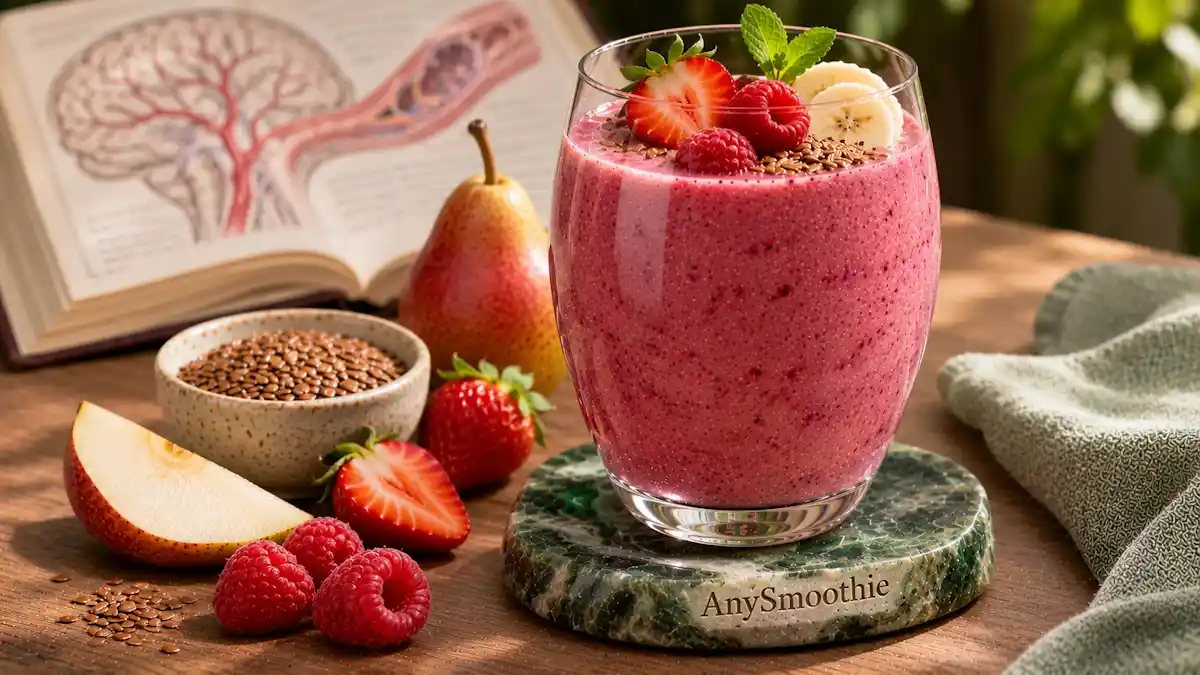
Neurovascular coupling is your body’s process of matching local blood flow to brain activity. A related but distinct cardiovascular measure is discussed in smoothies for heart rate variability support. Smoothies for neurovascular coupling support can supply nutrients used in normal vascular and cellular functions, but they aren’t a treatment or a proven way to change brain blood flow.
The useful focus is everyday nutrition, not a promised brain effect. Your choice can depend on taste, protein needs, and whether you eat dairy. Start with how this process works, then compare three recipes by flavor and nutritional profile.
How neurovascular coupling works, and where food fits
When a brain region becomes more active, neurons and neighboring cells send signals to nearby blood vessels. The vessels adjust local flow, which delivers oxygen and glucose. This coordination involves several cell types, as a review of neurovascular coupling explains.
Nitric oxide helps regulate vessel relaxation, but it’s one signal within a complex system. A smoothie can’t measure neurovascular coupling or guarantee a change in it. Research on individual food compounds also doesn’t establish that these recipes affect brain circulation. For another food-focused discussion of normal circulation, see gotu kola smoothies for healthy circulation.
Nutrients that support normal vascular pathways
Beets and leafy greens contain dietary nitrates, which the body can convert through pathways that produce nitric oxide. Berries and cherries provide polyphenols, plant compounds studied for their roles in normal physiological processes. Grape seeds are another source of plant compounds discussed in grape seed smoothies for vascular wellness.
For a related discussion of vascular responses to cold and other triggers, see smoothies for raynaud’s support.
Citrus and greens supply vitamin C, while chia and flax add fiber and plant-based fats. These foods belong in a varied diet. Their nutrient content doesn’t make them targeted treatments or show that blending them changes brain blood flow.
A practical note on portions and balance
Whole fruit retains fiber, and unsweetened liquids let the ingredients provide most of the sweetness. Yogurt, kefir, or soy milk adds protein; seeds can add fiber and fat. Choose a portion that fits your meal rather than assuming every smoothie replaces breakfast.
Individual needs vary. If you have food allergies, dietary restrictions, or a health condition that affects food choices, a registered dietitian or clinician can offer tailored advice.
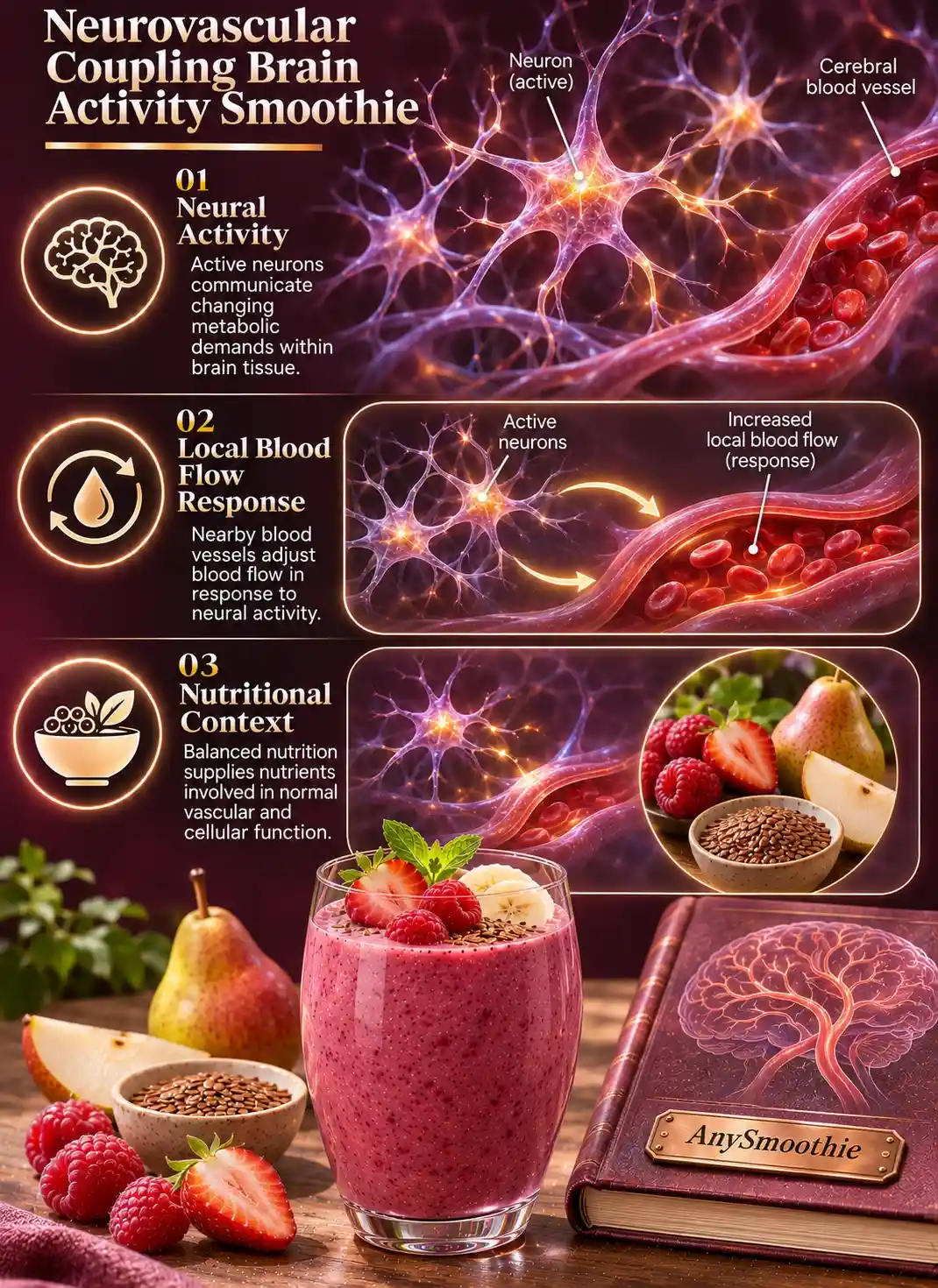
3 Smoothies for Neurovascular Coupling Support
Each recipe makes one serving. Nutrition estimates are approximate and vary with brands, produce size, and dairy fat content.
Blueberry Beet Kefir Smoothie
Ingredients
- 1/2 cup cooked beet, cooled
- 1 cup blueberries, fresh or frozen
- 3/4 cup plain kefir
- 1 tablespoon chia seeds
- 1/2 cup water
Instructions
Blend all ingredients until smooth. Add a little more water if needed, then serve promptly.
Estimated Nutrition (per serving)
- Calories: ~230 kcal
- Protein: ~10 g
- Carbohydrates: ~37 g
- Fat: ~7 g
- Fiber: ~10 g
- Sugars: ~25 g
Beet provides dietary nitrates, while blueberries contribute polyphenols. These describe the ingredients’ composition, not a demonstrated effect of this smoothie on brain blood flow.
Citrus Spinach Yogurt Smoothie
Ingredients
- 1 cup baby spinach
- 1 medium orange, peeled
- 1/2 medium banana
- 3/4 cup plain Greek yogurt
- 1 tablespoon ground flaxseed
- 1/2 cup water
Instructions
Blend until creamy, pausing to scrape down the sides if needed. Add water to reach the texture you like.
Estimated Nutrition (per serving)
- Calories: ~260 kcal
- Protein: ~20 g
- Carbohydrates: ~39 g
- Fat: ~6 g
- Fiber: ~8 g
- Sugars: ~25 g
Spinach and citrus provide nutrients used in normal body processes, including vitamin C. Their presence doesn’t establish a direct effect on neurovascular coupling.
Cherry Cocoa Soy Smoothie
Ingredients
- 1 cup frozen cherries
- 1 cup unsweetened soy milk
- 1 tablespoon unsweetened cocoa powder
- 1 tablespoon rolled oats
- 1 teaspoon almond butter
Instructions
Blend all ingredients until smooth. Let it stand briefly if you prefer a thicker texture, then stir and serve.
Estimated Nutrition (per serving)
- Calories: ~250 kcal
- Protein: ~12 g
- Carbohydrates: ~40 g
- Fat: ~8 g
- Fiber: ~7 g
- Sugars: ~25 g
Cherries and cocoa contain plant compounds, including polyphenols. That ingredient context doesn’t show that this particular combination changes neurovascular coupling or improves brain function.
Compare the smoothies and choose one that fits your day
These differences can help you choose according to your preferences.
| Smoothie | Nutritional profile | Texture | Flavor profile | Best fit |
|---|---|---|---|---|
| Blueberry Beet Kefir | Fiber-rich, with protein | Thick, creamy | Tart berry, earthy beet | A tangy fermented-dairy option |
| Citrus Spinach Yogurt | Higher in protein | Creamy, lightly thick | Bright citrus, mild greens | A filling breakfast choice |
| Cherry Cocoa Soy | Plant-based protein | Smooth, slightly rich | Fruity with gentle cocoa | A dairy-free option |
Choose the flavor you’ll enjoy, then consider how the smoothie fits your meal. The yogurt version has the highest estimated protein, while the soy option avoids dairy. However, the soy recipe contains almond butter, so it isn’t suitable for someone with an almond allergy as written.
Nutrition estimates aren’t exact. USDA FoodData Central lists nutrition data for many foods, but product formulations and portions vary. A smoothie is one food choice within your overall eating pattern. Pairing it with other foods, or adjusting the portion, may suit your appetite better than drinking a whole batch.
Conclusion: Choose for flavor and everyday nutrition
Blueberry beet is tangy and earthy, citrus spinach is bright and creamy, and cherry cocoa offers a mild chocolate taste. Each can contribute produce and other nutrients to a varied diet.
Choose the recipe you enjoy and adapt it to your needs. These smoothies aren’t treatments or a guaranteed way to alter brain blood flow.
🛡️ Safety Notes & Dietary Interactions
- Nitrate Awareness: Beets and spinach provide dietary nitrates, but their presence does not guarantee increased nitric oxide or improved neurovascular coupling. Treat these ingredients as ordinary foods, not targeted vascular therapy.
- Allergen Awareness: Kefir, Greek yogurt, soy milk, and almond butter introduce dairy, soy, or tree-nut considerations. Check labels and use substitutions that match your established allergies or dietary restrictions.
- Fiber Tolerance: The blueberry-beet smoothie provides about 10 grams of estimated fiber, while citrus spinach provides about 8 grams. Chia and flax can thicken drinks and may require gradual increases.
- Medication Considerations: Leafy greens provide vitamin K, while beet and other ingredients contribute different nutrients that may matter with individualized diets or medications. Discuss significant dietary changes with your healthcare professional.
FAQs
Can these smoothies actually improve neurovascular coupling?
No smoothie in this article has been established to improve or control neurovascular coupling. The recipes provide nutrients involved in normal vascular and cellular functions, but local brain blood flow depends on complex interactions between neurons, glial cells, blood vessels, and signaling molecules.
Which smoothie has the most protein?
The Citrus Spinach Yogurt Smoothie has the highest estimated protein content, at about 20 grams per serving. Greek yogurt supplies most of that protein. The Cherry Cocoa Soy Smoothie provides approximately 12 grams, while the Blueberry Beet Kefir Smoothie contains about 10 grams.
Why are beets included in the Blueberry Beet smoothie?
Beets are included because they contain dietary nitrates, which participate in pathways that can contribute to nitric oxide production. However, this nutritional property does not demonstrate that the smoothie changes brain blood flow or neurovascular coupling. The recipe is best viewed as a food containing nitrates, not as a targeted vascular intervention.
Is the Cherry Cocoa Soy smoothie completely dairy-free?
Yes, the recipe uses unsweetened soy milk rather than dairy and contains no yogurt or kefir. However, it includes almond butter, so it is not suitable for someone avoiding tree nuts unless an appropriate substitution is made. Replacing almond butter can also change the smoothie’s fat and calorie estimates.
Does eating more nitrate-rich foods guarantee better brain blood flow?
No. Dietary nitrates are one nutritional component of a much larger physiological system. Neurovascular coupling involves local signaling between active brain cells and nearby blood vessels, and food intake alone cannot guarantee a particular change in that process. These recipes should therefore be chosen for overall nutritional fit rather than a promised brain effect.

Medical Disclaimer: AnySmoothie content is for educational purposes only and is not a substitute for professional medical advice. Consult a healthcare provider for personalized guidance. See our full Disclaimer & Terms of Use. AI Transparency: AnySmoothie may use AI to support content development. All content undergoes human editorial review for accuracy, clarity, and editorial quality. See our full AI Transparency.