
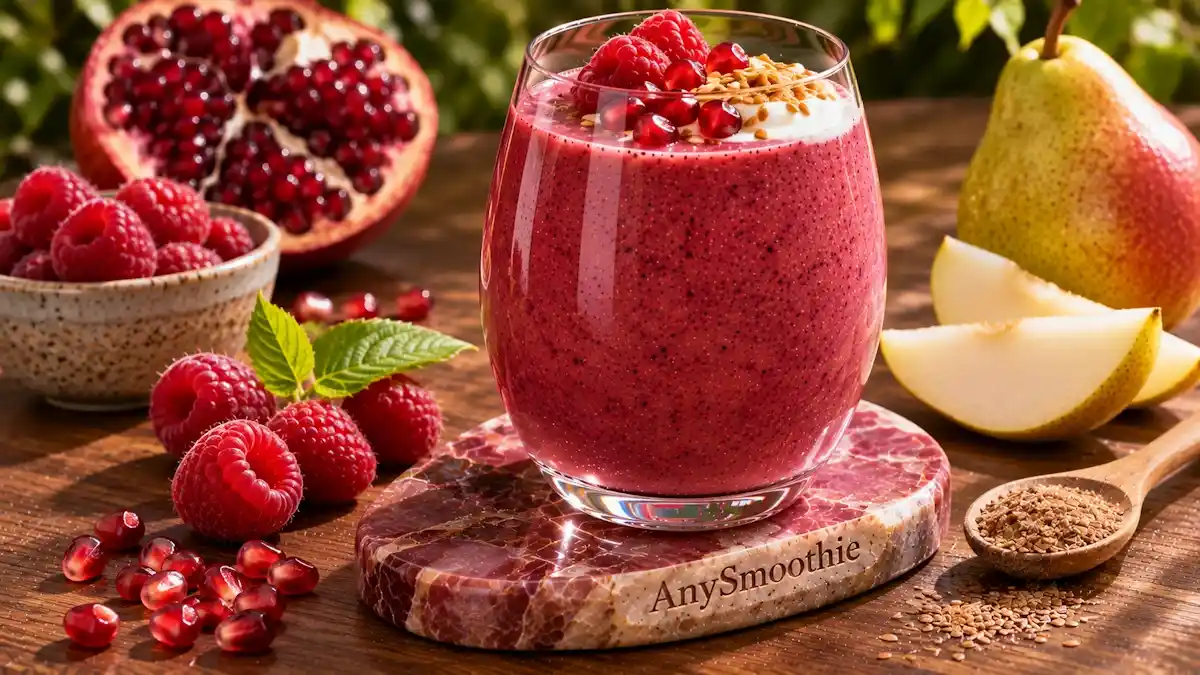
Choosing smoothies for estrobolome and gut ecology support starts with varied plant foods and enough fiber. Food can support normal digestive and metabolic processes, but no smoothie can promise to change hormone levels or treat a condition.
Your overall eating pattern matters more than any single blend. Start with what the estrobolome does, then choose ingredients that suit your taste and digestion.
What the Estrobolome Means for Gut Ecology
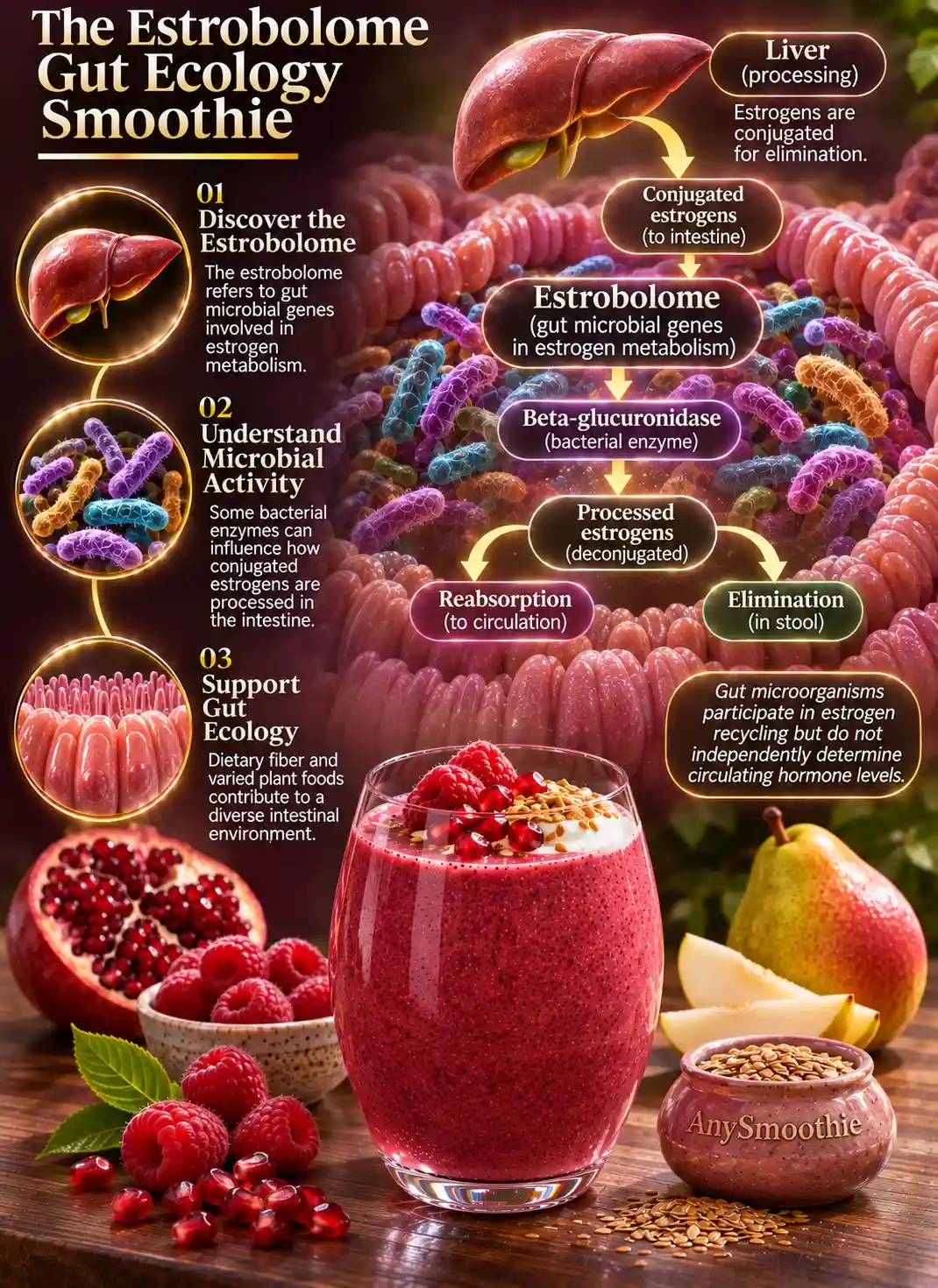
The estrobolome refers to gut microbes and their genes and activities involved in processing estrogens. It’s one part of gut ecology, the broader community of microorganisms and their interactions within your digestive tract.
Your liver processes estrogen compounds, some of which enter the intestine through bile. Microbial enzymes, including beta-glucuronidase, can remove attached glucuronic acid groups from these compounds. That action can make some estrogens available for reabsorption rather than elimination in stool.
For another hormone-related nutrition perspective during the menopausal transition, see nourishing smoothies for menopause wellness habits.
Laboratory research on microbial beta-glucuronidase helps explain this mechanism. However, knowing that an enzyme affects estrogen processing doesn’t establish that a particular food will produce a predictable hormonal effect.
Each person’s gut community differs because of diet, medications, health, and other factors. Microbial activity also depends on more than whether a particular organism is present.
For practical food ideas involving protein, fiber, and dietary variety during perimenopause, see smoothies for perimenopause nutrition routines.
So, a smoothie can’t reliably control estrogen activity or selectively adjust the estrobolome. Its practical contribution is simpler: providing foods and nutrients that fit into a varied diet.
A separate hormone-related nutrition context is explored in smoothies for pms support. That distinction keeps recipe choices grounded in nutrition rather than hormone promises.
3 Smoothies for Estrobolome and Gut Ecology
Berry, Oat, and Flax Smoothie
Ingredients (one serving)
- 1 cup plain low-fat kefir
- 1/2 cup blueberries
- 1/2 cup strawberries
- 1/4 cup rolled oats
- 1 tablespoon ground flaxseed
Instructions
- Blend until smooth, adding a splash of cold water if needed.
- If the oats leave more texture than you prefer, let the mixture stand briefly, then blend again.
Estimated Nutrition (per serving)
- Calories: ~300 kcal
- Protein: ~15 g
- Carbohydrates: ~45 g
- Fat: ~9 g
- Fiber: ~9 g
- Sugars: ~22 g
Green Kiwi, Pear, and Chia Smoothie
Ingredients (one serving)
- 1 cup unsweetened soy milk
- 1 kiwi, peeled
- 1/2 medium pear
- 1 cup baby spinach
- 1 tablespoon chia seeds
Instructions
- Blend until creamy.
- Add a little water or ice to adjust the texture.
- Keep the pear’s skin for its fiber, removing the core before blending.
Estimated Nutrition (per serving)
- Calories: ~240 kcal
- Protein: ~10 g
- Carbohydrates: ~33 g
- Fat: ~12 g
- Fiber: ~10 g
- Sugars: ~20 g
Raspberry, Cocoa, and Yogurt Smoothie
Ingredients (one serving)
- 3/4 cup plain Greek yogurt
- 1/2 medium banana
- 1/2 cup raspberries
- 1 tablespoon unsweetened cocoa powder
- 1 tablespoon pumpkin seeds
Instructions
- Blend until smooth, adding cold water or ice as needed.
- Blend a little longer if the pumpkin seeds leave more texture than you enjoy.
Estimated Nutrition (per serving)
- Calories: ~260 kcal
- Protein: ~21 g
- Carbohydrates: ~32 g
- Fat: ~8 g
- Fiber: ~8 g
- Sugars: ~19 g
Compare These Gut-Friendly Smoothie Options
These options differ mainly in their protein sources, flavor, and texture, so the most useful choice depends on your preferences.
| Smoothie | Fiber sources | Protein profile | Texture and flavor | Best fit |
|---|---|---|---|---|
| Berry, oat, and flax | Mixed fruit, grain, and seed fiber | Moderate protein with a cultured dairy base | Tangy and berry-forward, with a lightly grainy finish | A drinkable breakfast alongside other foods |
| Green kiwi, pear, and chia | Fruit, leafy-vegetable, and seed fiber | Plant-based protein without dairy | Bright and mildly sweet; thickens as it stands | Dairy-free preferences and greener flavors |
| Raspberry, cocoa, and yogurt | Fruit, seed, and cocoa fiber | Highest estimated protein of these options | Thick and tart, with unsweetened chocolate flavor | A spoonable option with more protein |
Choose based on taste, texture, and personal food needs. Dairy-free doesn’t automatically mean suitable for everyone, since soy is also a common allergen. Portion size matters if a fiber-rich drink feels uncomfortable.
Build Smoothies for Estrobolome and Gut Ecology Support
Start with whole fruit, then add another plant food you enjoy. Berries, leafy greens, oats, and seeds offer different combinations of fiber and nutrients. Keep edible peels when appropriate, and blend the pulp rather than straining it away.
Gut microbes can ferment some dietary fibers into compounds called short-chain fatty acids. A review of dietary fiber and gut microbiota describes these interactions, although responses differ among people and fiber types.
For another practical example of a fiber-focused smoothie formula, see the fiber-first weight loss smoothie.
Plain kefir or Greek yogurt adds protein. For a dairy-free option, unsweetened, fortified soy milk contributes protein and can supply calcium and vitamin D, depending on the product.
Variety matters more than a “detox” ingredient. Rotate fruits and vegetables across your meals instead of expecting one blend to cover everything.
If you don’t usually eat much fiber, start with a smaller portion and increase gradually. Large servings of seeds, oats, and fruit can cause discomfort for some people. Adjust the serving to your appetite, tolerance, and other meals.
Conclusion: Keep the Focus on Your Overall Diet
Varied plant foods and fiber-rich ingredients can support gut ecology as part of your overall eating pattern. Smoothies are one convenient food choice within that pattern.
Try the recipe that fits your taste and needs. Treat it as food you enjoy, not a treatment or a guaranteed way to change hormone activity.
🛡️ Safety Notes & Dietary Interactions
- Fiber Adjustment: Oats, flaxseed, chia, berries, kiwi, pear, and spinach make these smoothies fiber-rich. If your usual intake is low, increase gradually to reduce possible bloating or digestive discomfort.
- Dairy and Soy: The berry and raspberry recipes contain kefir or yogurt, while the green smoothie uses soy milk. Check labels carefully and choose suitable alternatives for milk or soy allergies.
- Seed Tolerance: Flaxseed, chia, and pumpkin seeds contribute fiber and fat but can make smoothies thicker. Start with smaller amounts if seeds are new to your diet and add liquid as needed.
- Hormone Expectations: These recipes support dietary variety and normal gut processes, but they cannot selectively control the estrobolome, beta-glucuronidase activity, or estrogen levels. Avoid treating one smoothie as a hormone-targeting intervention.
FAQs
Can these smoothies change estrogen levels through the estrobolome?
No predictable hormonal effect can be assumed. The estrobolome involves gut microbes and their activities in estrogen processing, but microbial communities vary substantially. These smoothies provide fiber and other nutrients that fit a varied diet, without establishing that a particular recipe changes estrogen activity or hormone levels.
Which smoothie provides the most protein?
The Raspberry, Cocoa, and Yogurt Smoothie provides the highest estimated protein, at approximately 21 grams per serving. The Berry, Oat, and Flax Smoothie provides about 15 grams, while the Green Kiwi, Pear, and Chia Smoothie provides approximately 10 grams.
Which smoothie has the most fiber?
The Green Kiwi, Pear, and Chia Smoothie provides the highest estimated fiber, at approximately 10 grams per serving. The Berry, Oat, and Flax Smoothie provides about 9 grams, while the Raspberry, Cocoa, and Yogurt Smoothie provides approximately 8 grams.
Why does the green smoothie use soy milk?
Unsweetened fortified soy milk provides plant protein and may supply calcium and vitamin D depending on the product. It also makes the recipe dairy-free. However, soy is itself a common allergen, so this option isn’t automatically appropriate for everyone avoiding dairy.
Should I drink these smoothies specifically to support the estrobolome?
They are better viewed as convenient ways to include varied plant foods and fiber within your overall eating pattern. There is no established need to use a particular smoothie for estrobolome support, and no recipe can guarantee a specific microbial or hormonal response.

Medical Disclaimer: AnySmoothie content is for educational purposes only and is not a substitute for professional medical advice. Consult a healthcare provider for personalized guidance. See our full Disclaimer & Terms of Use. AI Transparency: AnySmoothie may use AI to support content development. All content undergoes human editorial review for accuracy, clarity, and editorial quality. See our full AI Transparency.