
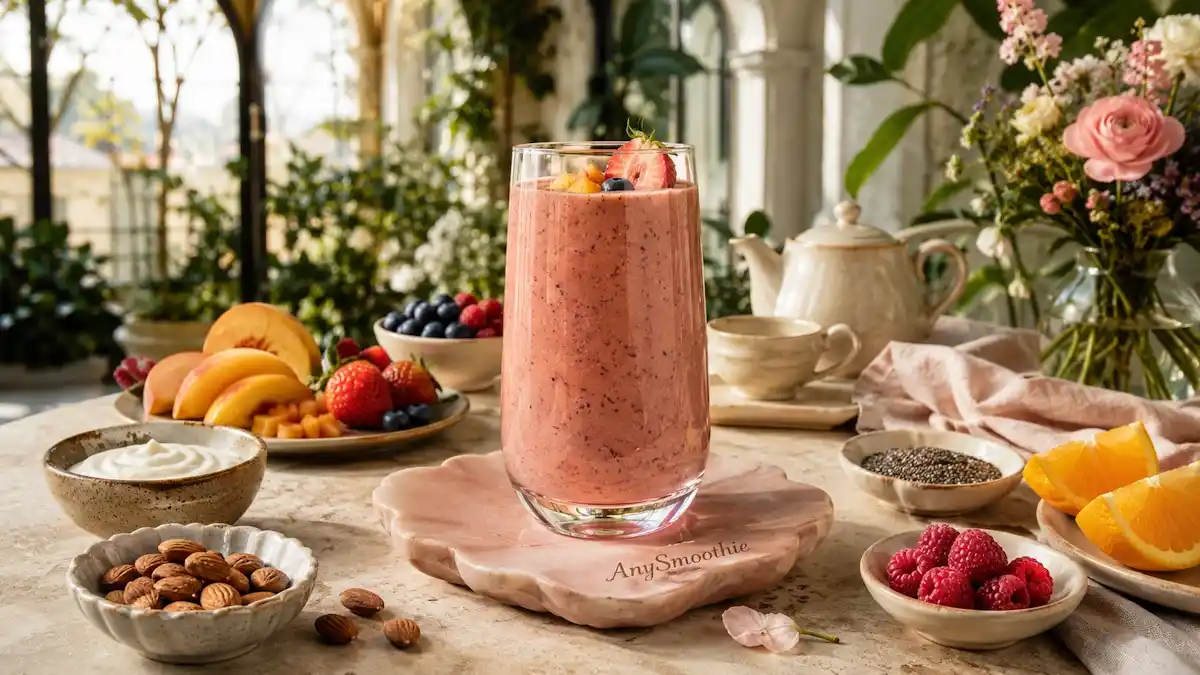
Menopause can make eating feel less predictable. One day you want something light and cold, the next you need a meal that keeps you going.
A well-built smoothie can help during those shifts. It can support steady energy, hydration, and nutrient intake when cravings, sleep changes, or bloating make heavier meals less appealing. That makes nourishing smoothies for menopause wellness habits easy to repeat on busy mornings or slower evenings.
The key is balance. Fruit alone can move blood sugar fast, while protein and fiber slow the ride and help you feel satisfied longer. Start there, then build the rest of the glass around it.
What makes nourishing smoothies for menopause wellness habits work
The best blends do not rely on one ingredient. They work because protein, fiber, healthy fats, and micronutrients all do a different job.
Protein helps slow digestion. Fiber adds more staying power. Healthy fats make the texture richer and help the smoothie feel like a real meal. For a deeper look at balanced eating and fluid intake during menopause, see this review on nutrition in menopause and perimenopause.
| Ingredient type | Why it helps | Best examples | What to limit | Easy swap ideas |
|---|---|---|---|---|
| Protein | Supports fullness and steadier energy | Greek yogurt, kefir, soy milk, protein powder | Sweetened yogurt, fruit-only blends | Plain yogurt or silken tofu |
| Fiber | Slows digestion and supports satiety | Chia, flax, oats, berries, spinach | Juice, strained fruit blends | Whole fruit instead of juice |
| Healthy fats | Improve texture and help the blend last longer | Avocado, nut butter, hemp seeds | Too much added nut butter | Use 1 tablespoon, not a big scoop |
| Hydrating foods | Add fluid without extra sugar | Cucumber, zucchini, melon, berries | Syrups and sweetened mix-ins | Water-rich produce |
| Fortified bases | Add useful micronutrients | Fortified milk, kefir, soy milk | Dessert-style dairy drinks | Unsweetened fortified plant milk |
A smoothie like this feels more like a small meal than a sweet drink.
A smoothie works best when it feels balanced, not like dessert in a cup.
Build each smoothie around protein, fiber, and healthy fats
These three parts work together. Protein slows the emptying of your stomach, fiber keeps the texture thick, and fats make the blend more satisfying.
Greek yogurt, chia seeds, nut butter, and hemp seeds are easy ways to do that. Even one or two of them can change how the smoothie feels an hour later. A fruit-only mix may taste bright, but it often fades fast.
Choose ingredients that support hydration and key nutrients
Midlife needs often point toward calcium, magnesium, potassium, and vitamin D. Smoothies won’t replace a full diet, but they can help you fit more of these in without much effort.
Leafy greens, berries, seeds, and fortified bases work well here. If you use dairy or fortified soy milk, you can add protein and calcium at the same time. Water-rich fruits like melon or berries also help when the day feels dry and hot.
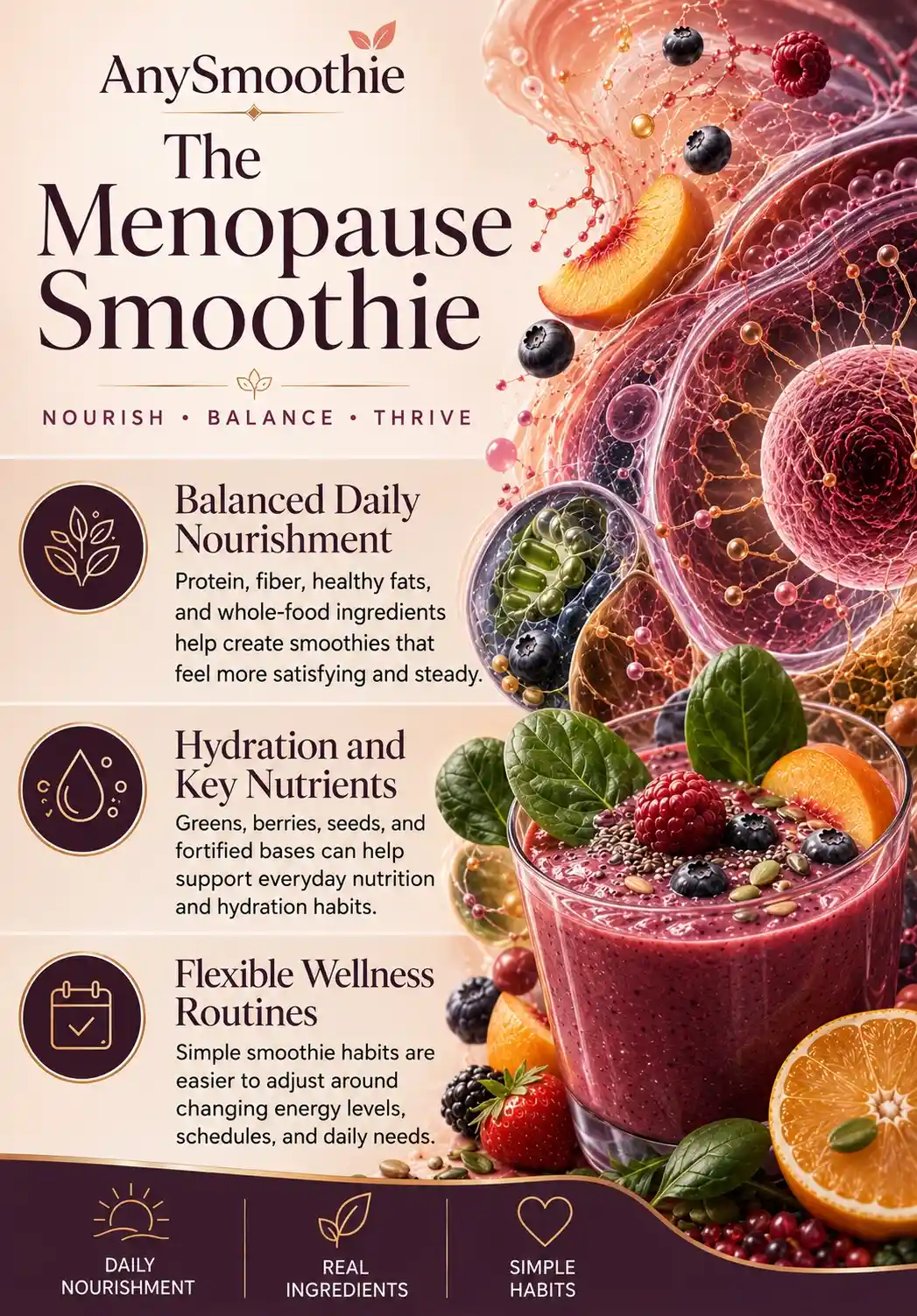
How to make a smoothie that actually supports your day
A practical smoothie formula keeps things simple. Start with liquid, add protein, add fiber, then finish with produce and flavor.
That can work for breakfast, a midafternoon snack, or a light evening option. It also helps you avoid the trap of turning a healthy blend into a sugar-heavy treat. The Academy of Nutrition and Dietetics has a plain-language guide on nutrition and menopause if you want more background.
Pick the right liquid base without adding too much sugar
Unsweetened almond milk keeps calories low and works well with berries or cacao. Dairy milk adds protein and calcium. Kefir brings a tangy taste plus more protein. Water is fine too, especially when the fruit and yogurt already give enough body.
Sweetened milks and fruit juice can push the sugar load up fast. If the smoothie tastes like a milkshake before you’ve added toppings, it probably needs less sweet liquid.
Use smart flavor boosters that add nutrients too
Cinnamon gives warmth and helps a plain blend feel finished. Ginger adds zip. Unsweetened cacao makes a smoothie taste rich without loading it with sugar.
Oats thicken the texture and add fiber. Avocado makes the mix creamier. Flaxseed adds fiber and healthy fat in one spoonful. Berries pull the whole thing together with color, flavor, and a dose of plant compounds.
Avoid common smoothie mistakes that can work against your goals
Too much fruit is the most common issue. So is skipping protein and calling it breakfast. Sweetened yogurt, flavored kefir, and juice can also turn a balanced blend into a fast sugar hit.
A better rule is simple. Build the smoothie so it could hold you for a while. If you’d still be hungry in 30 minutes, it needs more protein or fiber.
3 Nourishing smoothie recipes for Menopause wellness habits
Make smoothies part of simple menopause wellness habits
The best routine is the one you can repeat. Keep freezer packs ready, wash greens ahead of time, and portion seeds or powders in small jars.
That cuts decision fatigue. It also makes healthy choices easier on the days when energy feels low.
Prep ingredients ahead so healthy choices are easier
Frozen fruit, chopped zucchini, and pre-washed greens save time. You can also make small bags with one serving of berries, flax, and spinach.
When the base is ready, you only need to add liquid and blend. That is often enough to keep the habit going.
Adjust your blend based on how your body feels
On workout days, add more protein or oats. On hot days, use extra water and cucumber. If you want a lighter blend, reduce the nut butter and keep the fruit lower.
Your smoothie should match your day, not fight it. That flexibility makes the habit easier to stick with.
Conclusion
Menopause-friendly smoothies work best when they stay simple. Protein, fiber, healthy fats, and hydrating ingredients can turn one glass into a steady part of your day.
Small changes tend to last longer than big ones. Try one recipe this week, then adjust it to fit your appetite, your schedule, and your taste.
🛡️ Safety Notes & Dietary Interactions
- Protein Helps Create Staying Power: Menopause-friendly smoothies often work best when protein is included alongside fruit. Greek yogurt, kefir, soy milk, or protein powders can help create a more satisfying and balanced meal.
- Hydration Supports Daily Comfort: Water-rich ingredients such as cucumber, berries, melon, and unsweetened liquids contribute hydration while helping smoothies stay light and easy to drink throughout the day.
- Fiber Encourages Better Balance: Chia seeds, flaxseed, oats, berries, and leafy greens add fiber that helps improve texture, support fullness, and create a steadier nutritional profile.
- Keep Added Sugars in Check: Sweetened yogurts, flavored dairy drinks, fruit juices, and syrups can quickly increase the sugar content of a smoothie. Whole-food ingredients often provide enough flavor on their own.
FAQ
Why are smoothies often helpful during menopause?
Menopause can bring changes in appetite, energy levels, sleep quality, and food preferences. The article explains that smoothies offer a flexible way to combine protein, fiber, healthy fats, hydration, and micronutrients into one convenient meal. They can be adjusted easily depending on how you feel from day to day, making them a practical option during periods of change.
What nutrients should a menopause-friendly smoothie include?
According to the article, the most balanced smoothies include protein, fiber, healthy fats, and nutrient-dense produce. Ingredients such as Greek yogurt, kefir, soy milk, chia seeds, flaxseed, berries, spinach, avocado, oats, and fortified beverages help create a more complete nutritional profile that supports satiety and everyday wellness habits.
Why is protein so important in these smoothie recipes?
Protein helps slow digestion and increases meal satisfaction. Without enough protein, a smoothie may behave more like a sweet snack than a balanced meal. The article repeatedly highlights Greek yogurt, kefir, soy products, and protein powders because they help create a steadier nutritional foundation that can support energy management throughout the day.
Which ingredients help support hydration during menopause?
Water-rich foods such as cucumber, melon, berries, zucchini, and unsweetened liquids contribute fluid while maintaining a pleasant texture. The article notes that hydration can become especially valuable when dealing with warm days, exercise, or general fluctuations in comfort. Combining hydrating produce with protein and fiber creates a more useful smoothie overall.
What is the biggest takeaway from the article?
The article consistently emphasizes balance and repeatability. Menopause-friendly smoothies are most effective when they combine protein, fiber, healthy fats, hydration, and nutrient-rich ingredients in a way that feels sustainable. Rather than chasing a perfect recipe, the goal is to create a simple smoothie habit that adapts to changing energy levels, schedules, and preferences while remaining easy to maintain.

Medical Disclaimer: AnySmoothie content is for educational purposes only and is not a substitute for professional medical advice. Consult a healthcare provider for personalized guidance. See our full Disclaimer & Terms of Use. AI Transparency: AnySmoothie may use AI to support content development. All content undergoes human editorial review for accuracy, clarity, and editorial quality. See our full AI Transparency.